To improve their unmanned capabilities in the wake
of Operation Sindoor, the Indian armed forces have signed contracts for
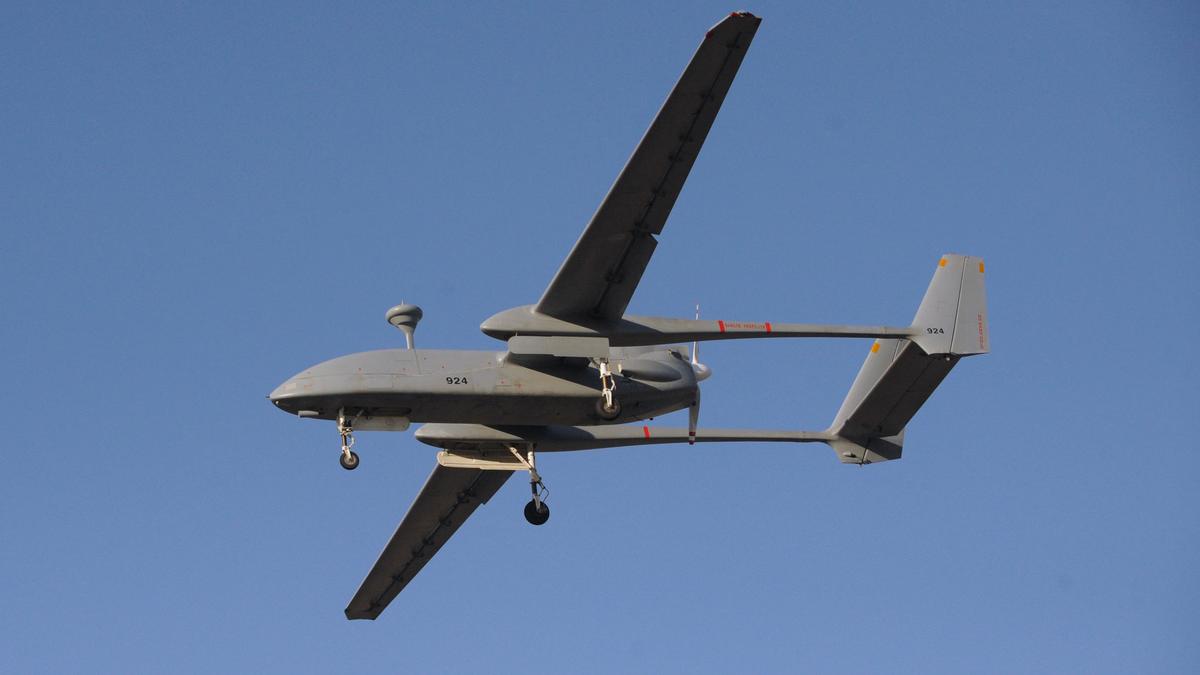
additional satellite-linked Heron Mk II drones under emergency procurement,
sources in the Israeli defence industry said.
As stated by the sources, the Army and Air Force, which by
now operate Heron Mk II drones, have placed further orders, while the Indian
Navy is obtaining them for the first time. The Navy will soon transition to the
more cutting-edge Heron Mk II platform.
According to existing guidelines, under emergency
procurement, the armed forces can obtain weapons systems and entire systems
worth up to INR 300 crore.
To improve their unmanned capabilities in the wake
of Operation Sindoor, the Indian armed forces have signed contracts for supplementary
satellite-linked Heron Mk II drones under emergency procurement, sources in the
Israeli defence industry said.
According to sources, the Army and Air Force, which already
operate Heron Mk II drones, have placed additional orders, while the Indian
Navy is acquiring them for the first time. The Navy, which has long depended on
Israeli-made Searcher UAVs for surveillance, will soon transition to the more cutting-edge
Heron Mk II platform.
According to existing guidelines, under emergency
procurement, armed forces can obtain weapons systems worth up to INR 300 crore.
A senior Israeli defence official informed that drones have
become an integral part of contemporary warfare, with about 70% of battlefield
operations conducted by drones. They play a significant role in countering air
defence systems, allowing the detection, tracking and neutralization of
high-value threats.
The Heron family, particularly the Heron Mk II, is a key
component of this evolving combat environment due to its versatility and proven
reliability. The Indian Army has positioned these drones at forward bases in
the northern sector.
The Heron Mk II is a MALE UAV capable of carrying a payload
of close to half a tonne and sustaining over 24 hours of continuous flight. With
Synthetic Aperture Radar, electro-optical systems and SIGINT sensors, the
platform offers comprehensive ISR capabilities in challenging weather
conditions. Its fully automated take-off and landing systems, in addition to
encrypted satellite communication, allow remote operations, flexible mission
planning and disposition across varied theatres without ground-based
line-of-sight control.
In line with India’s push for defence indigenization, numerous
Israeli defence industries, including state-owned defence manufacturers, are
working with defence PSUs and private partners to improve local production. The
companies are also making training, maintenance and integration competencies
within India, the official said.
Israeli manufacturers are preparing for future Indian tenders
under the “Make in India” framework and discovering deeper partnerships to meet
compliance requirements.
In September this year, the defence ministry issued a Request
for Proposal for a major acquisition of 87 MALE drones, with an emphasis on an
indigenous “Make in India” programme that also consents foreign partnerships.
Source: The Hindu