Insights on Airbus

Explore articles and updates related to Airbus in the aviation and drone industry.

Airbus Expects Indian Airlines to Triple its Fleets over the Next Decade
Airbus New Aircraft

Airbus Expects Indian Airlines to Triple its Fleets over the Next Decade

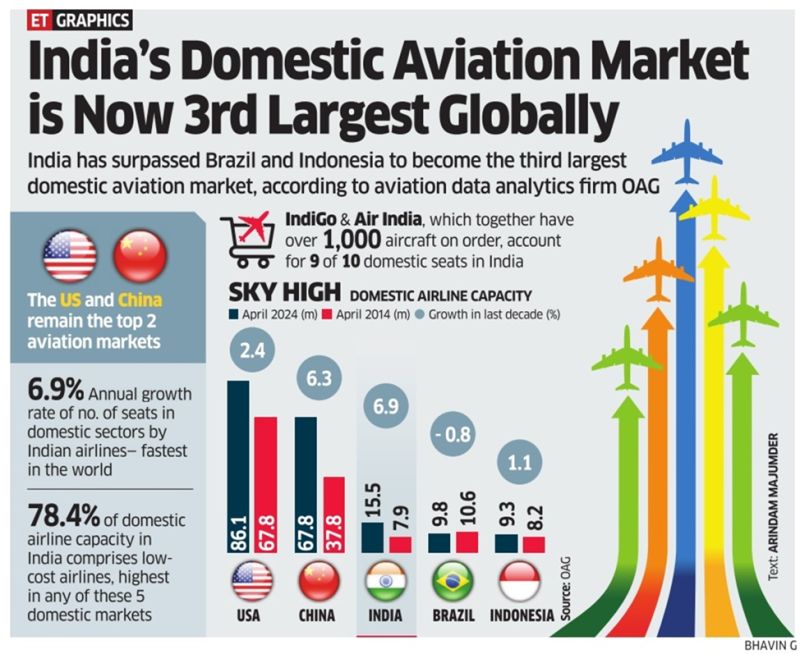
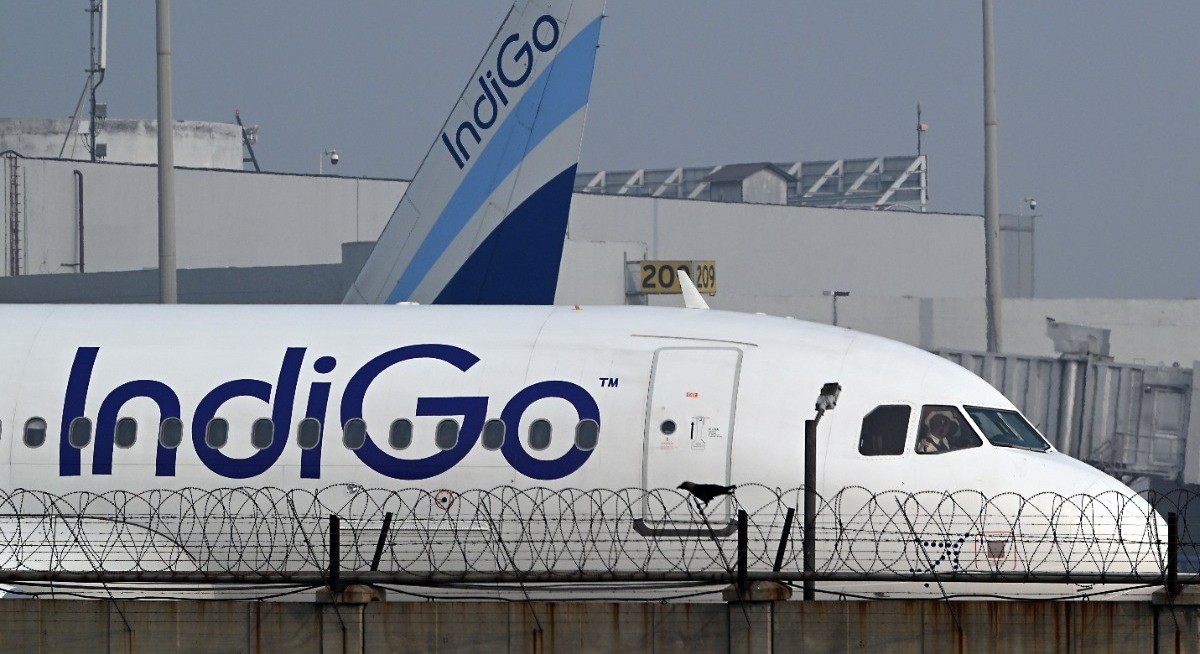
Airbus said on Thursday that Indian carriers will triple their fleets to 2,250 jets over the next 10 years, driven by robust economic growth, a growing middle class, and a surge in first-time flyers. In a similar outlook for India, Boeing said that airlines in the region, a key battleground for plane makers now dominated by Airbus, would need approximately 3,300 new aircraft by 2044. The aerospace industry closely monitors regional forecasts from aircraft manufacturers, as India is the world’s 3 rd largest domestic aviation market after the US and China, led by the two major carriers, IndiGo and Air India. But India’s aviation industry is still at an early stage, with trips per capita at 0.13, well below comparable regions, said Jürgen Westermeier, Airbus president and MD for India and South Asia. This leaves considerable room for more Indians to accept air travel, he added in a forecast. "Some services in aerospace will now benefit from the reduction in tariffs after the India-EU trade agreement," Westermeier said, referring to this week's landmark deal. India has mirrored a global rush for large-aircraft orders as carriers expand capacity, retire older jets, and respond to post-COVID-19 travel demand. Indian carriers have placed large jet orders in recent years, positioning them to scale their fleets, unlike in mature markets, which primarily seek to replace older planes. Airbus was the world’s largest plane maker last year despite headwinds brought by engine shortages, supply chain issues and tariff pressures. Source: The Economic Times

Saheel Singh 02 Feb 2026
India Positioned Third Among the Largest Aviation Markets
AviationTraining Aviation

India Positioned Third Among the Largest Aviation Markets

India is the world’s third-fastest-growing domestic aviation market, with an annual growth rate of 10–12 per cent, according to Ram Mohan Naidu, the Indian Civil Aviation Minister. At the World Economic Forum in Davos, he outlined the government’s longstanding vision for India’s civil aviation industry, highlighting determined expansion plans and growing industry demand. The government will expand India’s airport network to 350 airports by 2047, up from the present 164, while Indian airlines have placed orders for approximately 1,700 new aircraft, signalling robust growth in capacity and passenger demand. On international cooperation, Naidu met with EU Transport Commissioner Apostolos Tzitzikostas to discuss strengthening the partnership between the EU Aviation Safety Agency and India’s DGCA. The main areas of discussion comprised joint certification, cybersecurity and drone regulations. The minister also met separately with Airbus and Boeing , advising them to establish aircraft component manufacturing, maintenance, repair and overhaul facilities in India. He highlighted the development of helicopter services to support tourism, emergency medical services, and regional connectivity. Naidu, the aviation minister, when speaking with global investors at the India Pavilion in Davos, emphasized the importance of fuel competence and the acceptance of Sustainable Aviation Fuel to decrease working costs, thus making air travel more reasonably priced for passengers. He presented India’s aviation transformation through visual presentations, generating strong interest among international delegates. Source: Construction World

Saheel Singh 29 Jan 2026
First ‘Made in India’ C-295 Aircraft to Roll Out Before September:  Jaishankar
Airbus Indian Aircraft

First ‘Made in India’ C-295 Aircraft to Roll Out Before September: Jaishankar

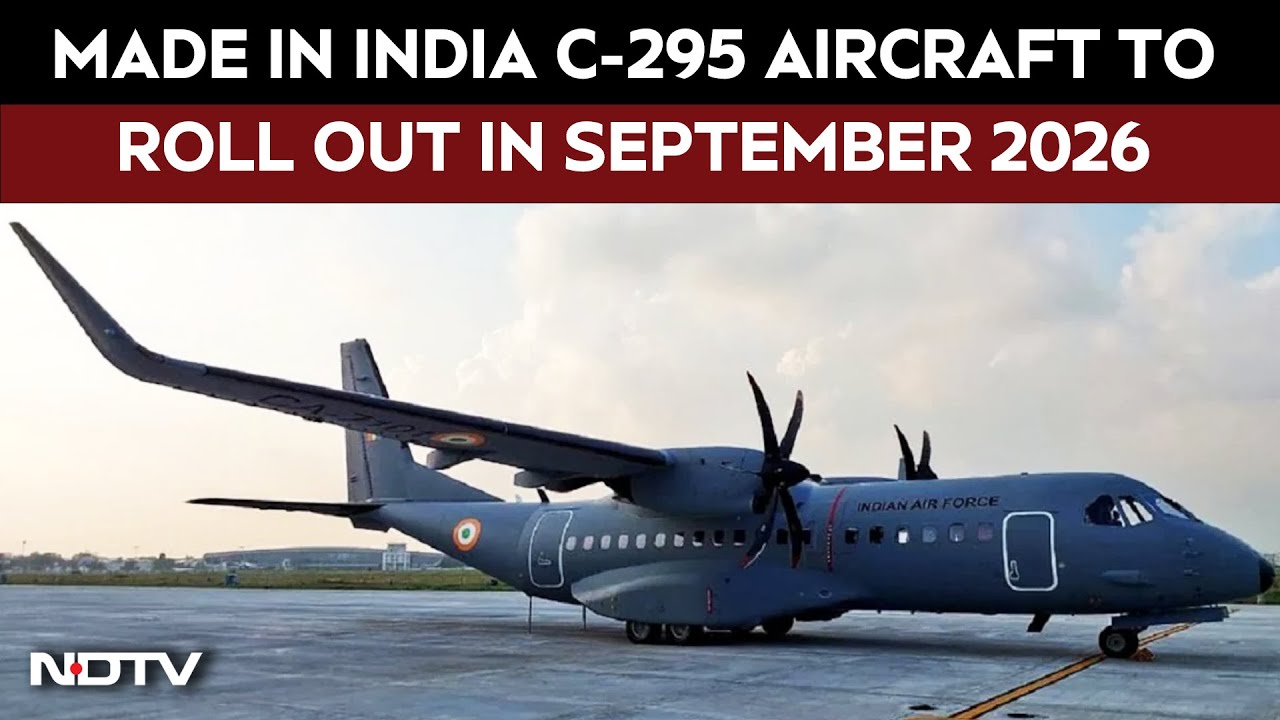
Nearly two years after Airbus–Tata C-295 Final Assembly Line in Vadodara was inaugurated in October 2024, the first ‘Made in India’ C-295 aircraft will roll out of the factory before September 2026, External Affairs Minister S Jaishankar said on Wednesday. Jaishankar met Spain’s Foreign Minister José Manuel Albares in Delhi on Wednesday and said the advance reflects the “growing depth of our defence industrial collaboration” The Airbus C295 is a medium-range twin-engine turboprop tactical transport aeroplane that was initially manufactured by the Spanish aerospace company CASA, now part of the European multinational Airbus Defence and Space division. The Spanish Foreign Minister said they reviewed bilateral relations and main international issues and they also agreed to work together to elevate the association to a strategic partnership in the near future. Jaishankar said India and Spain have friendly relations, rooted in shared democratic values and “respect for multilateralism and a rule-based order”. “Our political engagement has grown progressively, marked by regular high-level exchanges,” he said. Emphasising that “economic partnership is a significant pillar of our relationship”, the EAM said, “Spain is amongst India’s significant trade partners in the EU and our bilateral trade in goods has crossed USD 8 billion recently.” As stated by Spain’s Foreign Ministry, Albares recently assessed the development of trade relations “very positively”, describing it as “characterized by significant and more balanced growth than in previous periods”. India and Spain will celebrate this year the 70th anniversary of the establishment of political relations, along with the Dual Year of Culture, Tourism and AI.   The C-295 Aircraft Manufacturing Deal In 2021, India signed a Rs 21,935 crore deal with Airbus Defence and Space to acquire 56 C295 aircraft. Under the agreement, Airbus promised to deliver the first 16 aircraft in ‘fly-away’ condition from its final assembly line in Seville, Spain,in 4 years and the next 40 aircraft were to be produced by Tata Advanced Systems Ltd in India. Source: The Hindu

Saheel Singh 22 Jan 2026
Air India Long-Haul Flights Hit by Delays After Delhi-New York Flight Engine Damage
Air India Airbus

Air India Long-Haul Flights Hit by Delays After Delhi-New York Flight Engine Damage

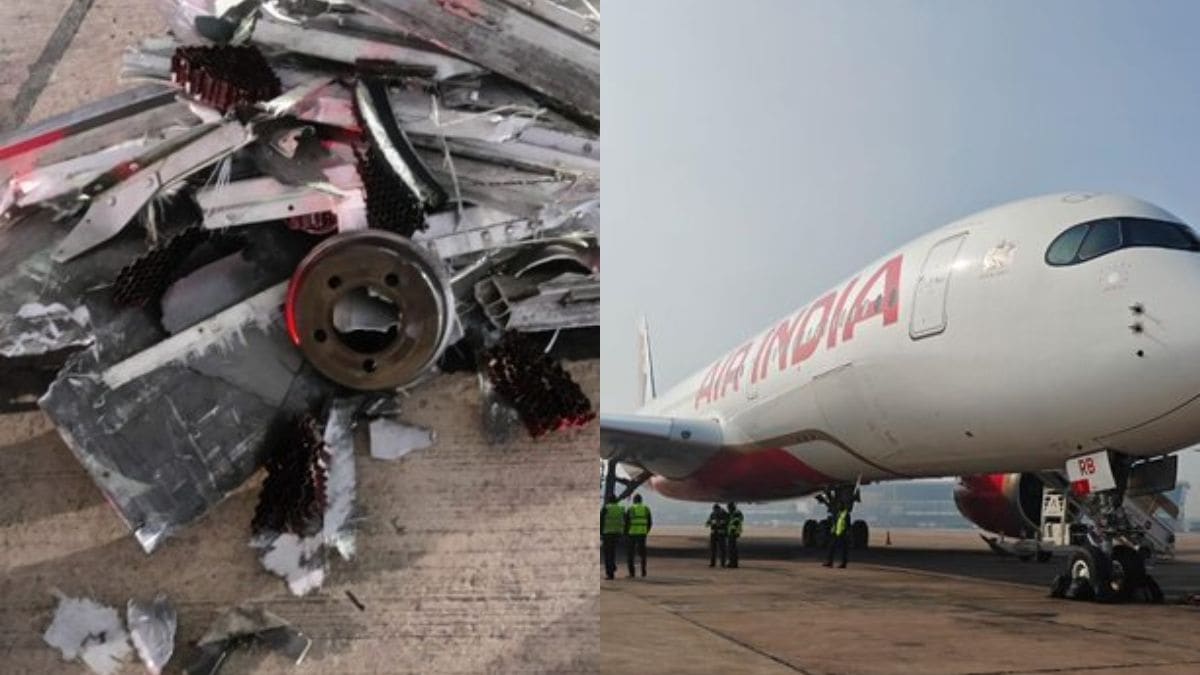
Air India has warned passengers that some long flights may be delayed or disrupted after one of its Airbus A350 aircraft was damaged at Delhi airport on Thursday. The problem occurred after the aircraft landed and was taxiing on the ground in dense fog. The plane struck a foreign object while en route to the parking area. Later, India’s DGCA confirmed that the object was a cargo container that had fallen off a vehicle and ended up on a taxiway. Further investigation is being carried out, the DGCA said. Photos shared on social media showed a hole in the engine’s air intake. Air India A350 Engine Damaged at Delhi  The aircraft, VT-JRB, was operating Flight AI101 from New Delhi to New York. Soon after take-off, the flight had to return to Delhi because Iranian airspace was suddenly closed. After landing safely at Runway 28 at IGI airport, the aircraft started taxiing towards the apron area. At the taxiway N and N4 intersection, one of the engines ingested a cargo container. The episode occurred around 5.25 am, when visibility was poor due to dense fog. The container was sucked into the aircraft’s No. 2 engine, causing the most damage. The civil aviation ministry shared more details about the incident. As stated by the ministry, a tug operated by BWFS was conveying baggage containers to the Baggage Make-up Area of Terminal 3. While crossing the taxiway joint on the vehicular lane, a container fell onto the taxiway. That container was in the aircraft's path and was sucked into the engine as the plane passed. What was Said by Air India? Air India confirmed that Flight AI101, operating from Delhi to New York, returned to Delhi shortly after takeoff because Iran closed its airspace, which affected its planned route. Post landing in Delhi, the aircraft was struck by a foreign object while taxiing in dense fog, which resulted in damage to the right engine.” “The aircraft was safely positioned at the parking stand, guaranteeing the safety of all passengers and crew on board”. What is Revealed by the Initial Investigation? Initial investigation has revealed that a BWFS tug conveying a few containers to the ‘Baggage Makeup Area’ of Terminal 3 crossed this intersection while on the vehicular lane. Throughout crossing, one of the containers collapsed onto the taxiway intersection. This container was downed into the No. 2 engine of the A350 aircraft. The aircraft is grounded as the investigation continues, and authorities are focusing on airside safety, particularly through low-visibility conditions.” Source: Financial Express

Saheel Singh 16 Jan 2026
Air India to Induce New Dreamliner on Long-haul International Routes from February
Air India Boeing

Air India to Induce New Dreamliner on Long-haul International Routes from February

Air India, an Indian aviation giant, will introduce a Boeing 787-9 aircraft for international long-haul routes in February 2026. It is done in line with the airline's effort to advance its fleet and improve the passenger experience. The first line of the aircraft was formally handed over to Air India at Boeing's Everett factory in Seattle, USA, on 7 January. After the transfer, the Dreamliner landed at Indira Gandhi International Airport on 11 January, completing a non-stop ferry flight of 16 hours and 58 minutes. The new Boeing 787-9 will enter international, long-haul commercial service in February 2026, and the operation schedule will be announced shortly. Aircraft to Feature Three Cabin Classes, Custom-Made Interiors As stated by the airline, the new aircraft has 296 seats across three classes: Business, Premium Economy, and Economy. It also has custom-made cabin interiors installed directly on Boeing's production line. More details about the aircraft will be revealed in the coming weeks. Air India last received a line-fit Dreamliner in October 2017 when the carrier was still under government ownership. Though the airline was acquired by the Tata Group in January 2022, it continues to operate to date. As stated by the company, it will induct 5 more wide-body planes this year, for instance A350-1000s and B787-9s. Air India Places Orders for Airbus and Boeing Planes Air India has also ordered 350 Airbus and 220 Boeing aircraft. From the Airbus order, six wide-body A350S have already been inducted into the Air India fleet. In the meantime, 51 narrow-body B737-8s have been transported to Air India Express, the Tata Group-owned low-cost subsidiary of Air India that focuses on short and medium-haul routes. Furthermore, Air India's legacy B787-8 aircraft are being retrofitted, meaning they are experiencing upgrades to their cabins, interiors and onboard systems. Many of these planes will complete the process and return to service with a refreshed nose-to-tail makeover in 2026. By the end of this year, approximately 60% of their wide-body fleet will have contemporary interiors. Source:   The Economic Times

Saheel Singh 13 Jan 2026
half-star-solid phone