
Buy Drones - News & Announcements

Stay informed with the latest updates, events, and developments from our training programs and drone/aviation services.

Infini will Charge Mid-Air and Fly for a Year, Eliminating Surveillance Ships Costing Crores
Surveillance Drone Indigenous Technology

Infini will Charge Mid-Air and Fly for a Year, Eliminating Surveillance Ships Costing Crores

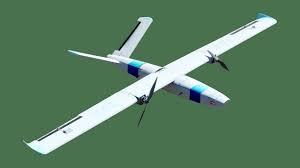
Infini Ultra-Endurance Drone: A startup called Alteon Energy in Bengaluru, Karnataka, is developing a unique drone. This drone can fly for up to a year without landing or refuelling. This ultra-endurance drone, called Infini, aims to fly solely on wind, similar to the albatross, a sea bird. Albatrosses travel long distances using dynamic soaring, a technique in which they repeatedly move up and down between strong winds at high altitude and slower winds below. The Alteon team is trying to replicate this technique in a drone. What Makes it Unique? It is 3 meters long and weighs only 2.8 kg. Infini's onboard computers detect changing wind patterns. This allows the drone to fly in an S-shaped loop, drawing energy from the wind. During initial flights off the Karnataka coast, the drone flew for several hours without motors, powered solely by wind. The team claims that with improved design and the addition of solar film, this time could increase from hours to months and even beyond a year. This will Help the Navy and Coast Guard Alteon is being developed with the Indian Navy and Coast Guard in mind. Today, warships costing crores of rupees must remain at sea for weeks to monitor the country's 7,500 km-long coastline. The company says that for the same amount of money it costs to operate a frontline destroyer in a month, 17,000 Infini drones can fly, monitoring the entire coastline every 10 minutes at a lower cost. ADS-B Transponder Installed Each drone is equipped with a camera, satellite link, and an ADS-B transponder. After 300-400 days, when the battery runs out, it will glide into the sea and sink, eliminating the need for retrieval. Upon mass production, its price is estimated at around USD3,000. Major Technical Challenges However, several significant technical challenges remain. Keeping an extremely lightweight airframe safe during millions of high-G turns. Keeping a 2.8 kg drone airborne during monsoon and cyclone-like conditions. Long-range satellite communications using very little power and achieving airworthiness certification for a pilotless and unmanned system. If Alteon's technology is successful, it could revolutionize coastal surveillance, drug interdiction, disaster management, EEZ security, and search operations. Source: Zee News

Saheel Singh 17 Dec 2025
Varanasi Police Deploy New-Generation Drones for Kashi Tamil Sangamam Security
Drone Products Drone Production

Varanasi Police Deploy New-Generation Drones for Kashi Tamil Sangamam Security

The Varanasi district police have stepped up surveillance for the ongoing fourth edition of Kashi Tamil Sangamam by deploying an advanced fleet of new-generation drones. According to Deputy Commissioner of Police Varanasi Commissionerate Saravanan Thangamani, a dedicated 10-member drone team is ensuring the safety and protection of the people visiting the venue. "We are using new-generation drones. Last year, there was drone use, but it was minimal. We are using the three types of drones, which are mini drones, micro drones and nano drones," Mr Thangamani told the  PTI . Highlighting the role of the drone fleet, Mr Thangamani said the Mini Drone is unique as it can be self-charged, allowing round-the-clock operations unlike other battery-dependent models. "This drone can run 24x7 and ensure constant surveillance in a region," Mr Thangamani explained. On the 'Macro Drone', the official said it is capable of monitoring a vast 2 km area. "It can cover a larger area and will be used in the jungle behind the NaMo Ghat (multi-level riverfront development on the Ganges in Varanasi)," said Mr Thangamani, who is also the Nodal Officer for the Kashi Tamil Sangamam event. NaMo Ghat is the site where Kashi Tamil Sangamam 4.0 was inaugurated by the Uttar Pradesh Chief Minister, Yogi Adityanath, on December 2. The third kind of drone is 'Nano Drones', which can collect images of suspicious activity. Citing an example, Mr Thangamani said if a car is parked in an area for an unusually long time, this drone scans the vehicle and shares the image with the police. "Based on the images it shares, we take action." He also noted that the surveillance data from the three drones is immediately shared with senior police officials for necessary action. Source: The Hindu

Saheel Singh 08 Dec 2025
JSW Setting up USD 90 Million Military Drone Plant in Hyderabad
Drone Products Drone Training

JSW Setting up USD 90 Million Military Drone Plant in Hyderabad

The USD 23 billion JSW Group is setting up an unmanned aerial systems manufacturing facility with an investment of about Rs. 850 crores at the Maheshwaram electronics manufacturing cluster, on the outskirts of Hyderabad. The USD 23 billion JSW Group is setting up an unmanned aerial systems manufacturing facility with $90 million investment at the Maheshwaram electronics manufacturing cluster, on the outskirts of Hyderabad. It has entered into a strategic partnership with the US-based defence technology firm Shield AI to manufacture Shield AI’s Group 3 unmanned aerial system under a long-term licensing arrangement for technology transfer. A fixed-wing, vertical take-off and landing long-endurance intelligence, surveillance, reconnaissance platform, V-BAT, is currently deployed by multiple armed forces globally, including the U.S. Marine Expeditionary Units. The manufacturing, at the facility of JSW Defence, is expected to commence by the last quarter of 2026, JSW Group said after the foundation stone laying ceremony in which IT and Industries Minister D. Sridhar Babu, JSW Group’s Parth Jindal and others participated. The USD 23 billion JSW Group is setting up an unmanned aerial systems manufacturing facility with an investment of about Rs. 850 crores at the Maheshwaram electronics manufacturing cluster on the outskirts of Hyderabad. It has entered into a strategic partnership with US-based defence technology firm Shield AI to manufacture the latter’s Group 3 unmanned aerial system under a long-term licensing arrangement for technology transfer. A fixed-wing, vertical take-off and landing long-endurance intelligence, surveillance, reconnaissance (ISR) platform, V-BAT, is currently deployed by multiple armed forces globally, including the U.S. Marine Expeditionary Units. The manufacturing, at the facility of JSW Defence, is expected to commence by the last quarter of 2026, JSW Group said after the foundation stone laying ceremony in which IT and Industries Minister D. Sridhar Babu, JSW Group’s Parth Jindal and others participated. The investment will enable JSW to establish a local supply chain and create an advanced facility in India for manufacturing, assembling and testing V-BAT. The effort will enable large-scale production of V-BATs in India to serve the needs of the Indian Armed Forces and also function as a global production hub, the Group said. Project Will Create over 300 High-Value jobs. The facility is spread over 16 acres and will have a capacity to manufacture 300 V-BAT drones annually. It will house production, repair, testing, administrative, and support infrastructure. This project will create over 300 high-value jobs, the Minister’s office said. “From manufacturing the globally renowned V-BAT at scale, the facility will lay the foundation for an integrated, end-to-end UAS ecosystem, from advanced manufacturing to operator training, manufacturing repair and operations (MRO) and sustained innovation. This project stands among the most significant defence technology transfers to India,” Mr Jindal said. On the Group’s defence ventures, he said the drone manufacturing project follows the JSW Gecko Motors joint venture, with a Ukrainian company, to make special mobility vehicles in Chandigarh. The facility was commissioned about 18 months ago and supplied nearly 200 vehicles to the Indian Army and the United Nations. In the same facility, JSW has another JV with an American firm to manufacture off-road vehicles. Total Rs 1,200 Crore investment The Group will invest a total of Rs. 1,200 crores in defence ventures, including Rs. 320 crores for technology transfer from Shield. He said India Armed Forces were evaluating the UAS from a localization perspective. The initial order is for importing eight UAS through the emergency procurement route, which is directly catered for by Shield AI. The larger orders will be placed once the facility is up, he said. Telangana Aims to be a Defence Hub The IT and Industries Minister said Telangana is working towards positioning itself as a strategic defence hub of India by developing a strong ecosystem for unmanned systems and advanced defence manufacturing. The State government is preparing a comprehensive roadmap to transform Telangana into a global leader in defence innovation, with a special focus on unmanned aerial systems, drone technologies and aerospace manufacturing. There are plans to establish a drone manufacturing and testing corridor to boost indigenous defence capabilities, Mr Sridhar Babu said. Source: The Hindu

Saheel Singh 08 Dec 2025
NIT-C Students Develop Autonomous Drone for Disaster-Relief Operations
Drone Products Drone Training

NIT-C Students Develop Autonomous Drone for Disaster-Relief Operations

Formed in August, the 15-member team will design a compact aerial system capable of assisting rescue agencies during floods, landslides and other climate-induced emergencies, said a release. The project received vital technical and financial backing from Kokos.AI, whose R&D team worked closely with the students to ensure technological precision and a unified implementation. The group, known as Team Paravai, presented the drone at the SAE Aerothon 2025 in Chennai. Weighing 2 kg, the drone has a frame constructed from 3D-printed PA12 and a carbon fiber composite, providing durability and reduced weight. The quadcopter features several features tailored for practical rescue scenarios. The aircraft supports communication over a 1-km range and can stream live video. A LIDAR-based collision-avoidance system helps navigation in complex terrain, while sensors detect human presence up to 15 metres away. The drone can also transport aid packages of up to 200 grams with high drop precision. Its fully autonomous control system decreases the requirement for continuous operator involvement during hazardous operations, the release said. NIT Calicut officials defined the project as a substantial step towards enhancing technology-driven disaster management. Team Paravai will expand the drone’s endurance and incorporate cutting-edge payload capabilities. Source: The Hindu

Saheel Singh 26 Nov 2025
ideaForge Wins USD11M Indian Military Drone Deal
Drone Products Drone Training

ideaForge Wins USD11M Indian Military Drone Deal

India’s military has placed a key new order for IdeaForge’s latest unmanned systems after putting them through demanding trials in electronic-warfare conditions. IdeaForge confirmed that it will supply its next-generation Zolt tactical drone and the SWITCH 2 vertical-takeoff UAV under a capital emergency procurement worth roughly 1 billion rupees, according to a report by the Economic Times. Zolt accounted for about 750 million rupees of the order, following field assessments that tested its performance in high-altitude and heavily jammed environments. SWITCH 2, already in service with the army, received a follow-on order valued at 300 million rupees. Rather than being a routine replenishment, the deal seems tied to India’s broader effort to harden its ISR and precision-delivery capabilities along contested borders. Zolt’s design reflects that shift as the platform is built for long-range intelligence, surveillance and reconnaissance missions and can carry precision payloads. IndiaForge’s Other Deals with India IdeaForge has progressively expanded its footprint across India’s defence and security ecosystem over the past several years. In June 2025, the company secured an emergency order from the government worth 1.37 billion rupees for mini unmanned aerial vehicles. The deal will see ideaForge deliver fixed-wing vertical take-off and landing drones within 12 months. Apart from the military, government agencies, such as the National Disaster Response Force, state police units and infrastructure authorities, have adopted ideaForge drones for tasks ranging from mapping and search-and-rescue to monitoring critical assets.   Source: The Defense Post

Saheel Singh 24 Nov 2025
NIT Rourkela Develops Autonomous AI-powered Land Mapping Drone System
Drone Products Drone Training

NIT Rourkela Develops Autonomous AI-powered Land Mapping Drone System

NIT Rourkela has developed Bhu Manachitra, an autonomous instantaneous land-mapping drone system. The innovation integrates AI and UAV technology to produce land maps without requiring internet connectivity, external computers or manual intervention. The research team has advanced a deep learning model allowing the drone to recognize land features in real time. Different from conventional drones that take images for later processing, BHU-Manachitra completes all analysis on board, making it autonomous and appropriate for remote, disaster-hit regions and areas lacking communication networks. Speaking about the development, Sambit Bakshi, Associate Professor, Computer Science & Engineering, said, “The invented methodology makes use of a lightweight AI model with 2.48 million parameters, which makes Bhu Manachitra suitable for on-board processing in drones. Drones, being intended lightweight for long flight time, cannot carry heavy dedicated hardware for instantaneous image processing, but can carry a tiny processor for executing this lightweight AI model that performs land mapping.” The technology will support multiple sectors. Government agencies can deploy it for land record modernization, urban planning and smart-city development. Agriculture departments can use it to evaluate crop conditions, soil health and irrigation needs, aiding productivity and sustainability. Throughout natural disasters, the system can offer instant terrain intelligence, enabling faster and more effective response planning. Environmental and forest departments can also use it to track deforestation, encroachments and changes in biodiversity. NIT Rourkela and IIT Patna Vishlesan I-Hub Foundation have jointly secured an Indian patent for the technology. TIH IIT Patna sponsored the research under the National Mission on Interdisciplinary Cyber Physical Systems of the Department of Science and Technology, Government of India.   Source : Economic Times

Saheel Singh 24 Nov 2025
Indigenous Kaal Bhairav Drone Wins Silver in Croatia
Drone Training Drone Flying

Indigenous Kaal Bhairav Drone Wins Silver in Croatia

India’s indigenous Kaal Bhairav drone won a silver medal at the 23rd International Exhibition of Innovations 2025 in Zagreb, Croatia. The shows that Made-in-India defence technology is now competing with some of the world’s best. India is announcing itself as a strong player in cutting-edge defence technology, armed with a fully indigenous AI-powered combat drone that can go toe-to-toe with anything Western nations produce. The Kaal Bhairav E2A2 is India's first AI-driven Medium Altitude Long Endurance autonomous combat aircraft. Built completely by the Indian defence company Flying Wedge Defence and Aerospace, this drone represents a massive breakthrough in India's military technology capabilities. This drone can fly for 30 hours straight and cover a distance of 3,000 km. Its onboard systems manage mission planning, targeting and coordinated swarm actions independently. Built For Future Warfare This drone is good because it’s extremely adaptable. Its smart onboard systems and multi-sensor setup allow it to strike from more than one direction with precision. Even if foes try to jam its signals, a common tactic that forces drones to land, it can fly and complete its mission. Its modular design makes it worthwhile in various roles, including precise attacks, electronic warfare, wide-area maritime surveillance and real-time information sharing on the battlefield. Most prominently, it provides India with a fully homegrown, affordable option compared to the costly foreign drones. India has clearly entered the global drone race with confidence. 'Made In India, For the World' After winning silver, Flying Wedge CEO Suhas Tejaskanda said, "This victory proves India's technological strength. Our goal is clear: Made in India, for the world." He stressed why this matters strategically: "India must build its own weapons and technology to end foreign dependency. Kaal Bhairav represents completely Indian design, manufacturing, and AI innovation. This strengthens Atmanirbhar Bharat." A New Defence Powerhouse Emerges The Croatia silver medal isn't just an acknowledgement; it's an authentication from the international community. Countries worldwide are reassessing India's tech capabilities. The defence export market, long controlled by the US, Russia and China, now has a formidable new competitor. India has entered the global drone market. Source: Zee News

Admin 17 Nov 2025
Indian Army, IAF To Induct 16 Laser-Based Anti-Drone Systems With 2 Km Range
Drone Training Drones In Military

Indian Army, IAF To Induct 16 Laser-Based Anti-Drone Systems With 2 Km Range

At a time when the Indian armed forces are looking to strengthen their capabilities against enemy drones, the Indian Air Force and the Indian Army are set to place orders for 16 indigenous drone detection and interdiction systems, which will be capable of targeting unmanned aerial systems at a range of 2 km with a laser and disabling them. The Defence Ministry will clear the DRDO’s Integrated Drone Detection and Interdiction System, which can hit enemy drones with laser beams at a range of 2 km. The 10-kilowatt laser beam would double the distance at which they can engage drones with a laser, as the first system was capable of targeting at around 1 km only. The DRDO is developing long-range laser-based drone detection and interception systems, as the Pakistanis used a large number of drones in the Operation Sindoor against Indian targets, which were foiled in a big way. The DRDO has also successfully test-fired the direct energy weapon system, which can target systems at a range of 5 km, and is carrying out its trials with the involvement of the Indian defence forces. A 30-kilowatt laser-based direct energy weapon will achieve the 5 km strike capability. India, for the first time this April, showcased its capability to shoot down fixed-wing aircraft, missiles, and swarm drones using a 30-kilowatt laser-based weapon system. By doing so, India joined the list of selected countries, including the US, China, and Russia, that have shown such a capability. The Centre for High Energy Systems & Sciences CHESS, a lab of DRDO, had conducted a successful field demonstration of the Land version of Vehicle-mounted Laser-directed weapon DEW MK-II(A) at Kurnool in Andhra Pradesh. It successfully defeated the fixed-wing Unmanned Aerial Vehicle and swarm drones, causing structural damage and disabling the surveillance sensors. India needs the IDDS in large numbers, as the role of drones in the recent wars, both within and outside the country, has shown a significant use of drones by enemy forces. DRDO chief Dr Samir V. Kamat had said that the DRDO is also working on other high-energy systems, including high-energy microwaves, electromagnetic pulses, and various technologies that will provide the Star Wars capability. Source: ANI

Admin 17 Nov 2025
NASSCOM Opposes New Drone Bill, Calls for Stronger Enforcement Under Existing Rules
Drone Rules Drone Pilot

NASSCOM Opposes New Drone Bill, Calls for Stronger Enforcement Under Existing Rules

The National Association of Software and Service Companies has questioned the requirement in the government’s proposed Civil Drone Bill, 2025, saying it could undo the liberalization achieved under the present regulatory framework. What the Draft Civil Drone Bill Proposes The Civil Aviation Ministry released the draft Bill in September, seeking to start a statutory framework for drones. The Bill will replace the Drone Rules, 2021 and sets out provisions for: Registration and Type Certification of all Drones, with no exemptions for small or hobby models. Compulsory safety and security features to be agreed upon by the government. Obligatory third-party insurance for all drone operators. Criminal consequences for violations, along with imprisonment of up to three years in some cases. Authority for law implementation to detain drones and related apparatus for up to seven days if a violation is suspected. The bill also establishes a compensation mechanism for drone-related accidents Why NASSCOM says a New Law isn’t Needed? NASSCOM’s central argument is that there is “no clear justification” for a complete legislative overhaul. The industry body said the Drone Rules, 2021, together with the Bharatiya Vayuyan Adhiniyam, 2024, already provide a comprehensive framework for safety, accountability and oversight. Instead of introducing a new statute, NASSCOM argued, the government should focus on better enforcement of existing rules. What the Draft Civil Drone Bill proposes The Ministry of Civil Aviation released the draft Bill in September, seeking to create a statutory framework for drones. The Bill will replace the Drone Rules, 2021, and sets out provisions for: Drone Registration, with no exemptions for small drones. Mandatory safety and security features to be arranged by the government. Compulsory third-party insurance for all drone operators. Criminal penalties are levied for violations, including imprisonment of up to three years in some cases. Authority for law implementation to detain drones and related equipment for up to 7 days if a violation is suspected. The bill also introduces a compensation mechanism for drone accidents Why NASSCOM says a New Law isn’t Needed NASSCOM’s central argument is that there is “no clear justification” for a comprehensive legislative overhaul. The industry body said the Drone Rules, 2021, together with the Bharatiya Vayuyan Adhiniyam, 2024, already provide a comprehensive framework for safety, accountability, and oversight. Instead of introducing a new statute, NASSCOM argued, the government should emphasize better implementation of current rules. Exemptions for Educational Projects, Hobbyists Removed : The Drone Bill eliminates earlier exemptions for nano drones, hobbyist models and educational projects, compelling students and researchers to get certification and registration. Criminalization of Minor Offences : The bill recommends imprisonment and criminal liability for procedural violations that may not include safety risks. Lack of Focus on Innovation : The bill lacks provisions to support R&D, domestic manufacturing or export incentives. NASSCOM warned that these provisions could create uncertainty and discourage startups from entering the drone sector. What are the Recommendations of the Industry Body? Instead of scrapping the Drone Rules, 2021, NASSCOM has suggested targeted amendments to strengthen enforcement and compliance mechanisms. Its proposals include introducing a graded penalty framework that distinguishes between civil and criminal offences; establishing a drone claims tribunal to handle accident-related disputes; allowing the digital levy and the payment of penalties through online systems, and so on. Why This Matters? India’s drone industry will reach $USD 4.9 billion by the end of this decade, growing at a 44% CAGR. NASSCOM argued that the sector's growth depends on regulatory certainty and ease of doing business. The Ministry of Civil Aviation is yet to announce a timeline for finalizing the Bill.

Saheel Singh 07 Nov 2025
half-star-solid phone