
Insights on Commercial Pilot

Explore articles and updates related to Commercial Pilot in the aviation and drone industry.

'Regret incident': Air India Issues Statement After Pilot Found Drunk on Vancouver, Delhi flight; Initiates Probe
Aviation Regulation Alcohol Regulation

'Regret incident': Air India Issues Statement After Pilot Found Drunk on Vancouver, Delhi flight; Initiates Probe

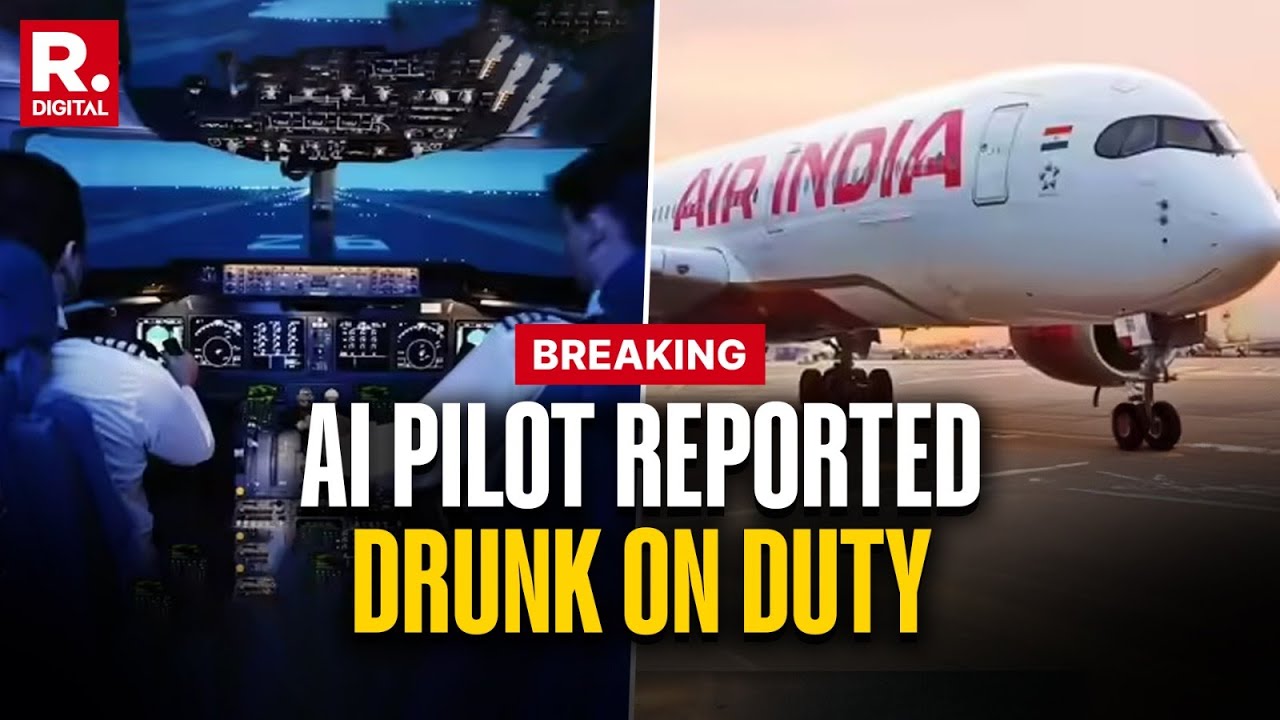
Air India said it regretted the occurrence after one of its pilots on a Vancouver–Delhi flight on December 23 was found to be drunk by Canadian authorities. Flight AI186 was delayed at Vancouver airport after the cockpit crew member was offloaded ahead of departure. In a statement, an Air India representative said Canadian authorities had flagged the issue, after which the pilot was taken for additional inquiry. “Consistent with safety protocols, an alternate pilot was rostered to operate the flight, resulting in the delay. Air India regrets the inconvenience caused to its passengers and is fully cooperating with the local authorities,” the airline said. The spokesperson added that the pilot had been taken off flying duties throughout the enquiry and that strict action would be taken if any violation were confirmed. “Pending the consequence of the investigation, any confirmed violation will attract strict punitive action as per the company policy,” the statement said. Air India said that there is a zero-tolerance policy on violations and said safety is its highest priority. The incident was highlighted after Transport Canada informed Air India that the pilot failed a breathalyzer test before operating the flight. In a letter dated December 24, Transport Canada said the incident resulted in a violation of Canadian aviation regulations and the conditions set out in Air India’s foreign air operator certificate. It also asked Air India to conduct a detailed investigation under its safety management system and to submit a report on the steps taken by January 26, 2026. It also said enforcement action could be pursued by Canadian authorities. The flight operated a long-haul route that now includes a refuelling stop due to Pakistan airspace restrictions. AI186 was to take flight from Vancouver to Vienna with one set of pilots, after which another crew would take over for the Vienna–Delhi leg. Source: Times of India

Saheel Singh 02 Jan 2026
Civil Aviation Ministry Issues Alert for Northern India Airports Amid Dense Fog, Travellers Should Check Flights
Aviation Training Aircraft Flying

Civil Aviation Ministry Issues Alert for Northern India Airports Amid Dense Fog, Travellers Should Check Flights

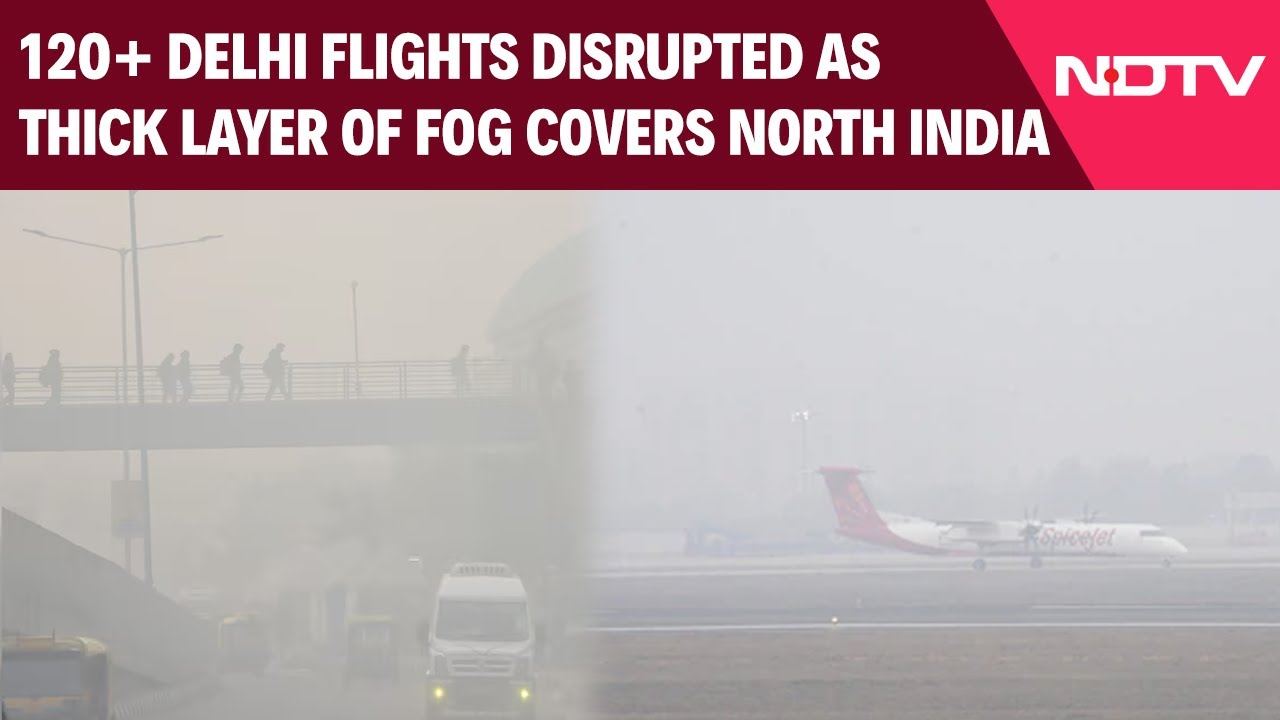
The Civil Aviation    Ministry issued a heavy fog alert for airports across north India, warning that dense fog has reduced visibility and disturbed flight operations, particularly in Delhi. Passengers should check their flight status with the airline before leaving and monitor updates on the airline's website or application. Travellers should allow extra time for their journeys because of possible fog-related delays. On X, the Ministry of Civil Aviation wrote, "Heavy Fog Alert for Northern India, Delhi & other airports in Northern India are experiencing dense fog, affecting visibility. Passengers should check the latest flight status with their airline. Check flight information on the airport website. Please allow extra travel time. Safety is top priority. Our teams & ATC are working diligently to minimize disruptions. I appreciate your patience." The Ministry emphasized that safety is a top priority. Passengers were patient and cooperative during the ongoing adverse weather conditions. In the meantime, IndiGo Airlines also issued an advisory about low-visibility conditions over the national capital, noting that dense fog has affected operations at Delhi and several other airports in northern India. "Low visibility (below minima), because of dense fog, has severely impacted operations at Delhi and airports across northern India, which is beyond our control. Our teams are closely monitoring the situation and coordinating with Delhi airport, in line with established safety protocols," IndiGo said in the press statement. The airline said that while operations are being adjusted according to prevailing weather conditions, some flights may be delayed, and others could be cancelled proactively during the day to prioritize safety and avoid extended waiting times at airports. “We have issued advisories to our customers and proactively informed them to minimize inconvenience," the statement read. IndiGo further urged passengers to regularly check flight status on official airline websites and mobile applications to stay updated on any delays or cancellations before travelling to the airport. Source: Business Line

Saheel Singh 15 Dec 2025
Air India Pilots Grounded Over Expired Licences, Unchecked Training
Aircraft Flying Aviation Training

Air India Pilots Grounded Over Expired Licences, Unchecked Training

Scheduling lapses continue to trouble Air India, nearly five months after the DGCA reprimanded the carrier for regulatory violations. Two pilots have now been grounded, one for flying with a lapsed English Language Proficiency license and another for operating a flight without completing mandatory corrective training after failing a proficiency check. Two Air India Pilots Grounded The latest incidents highlight persistent gaps in Air India’s rostering and compliance monitoring systems. The airline confirmed that an Airbus A320 co-pilot operated a flight despite failing his Instrument Rating–Pilot Proficiency Check and skipping the required retraining. As stated by the procedure, pilots who fail the PPC must complete corrective training and undergo another evaluation before returning to flight duty. Air India stated that both the co-pilot and the scheduling officer responsible were “off-rostered” as soon as the error was detected, and disciplinary action was initiated. The airline said the event had been reported to the DGCA for review. In another case, a senior captain commanded an A320 flight despite holding an expired ELP certificate, a mandatory qualification for operating any commercial flight. Air India confirmed the violation with TOI, grounding the pilot and reporting the incident to the regulator. Regulator’s Ongoing Oversight The DGCA has sought a detailed report from Air India on both incidents, calling them serious breaches of flight safety compliance. The regulator had earlier identified “systemic failures” in Air India’s scheduling processes, including lapses in licensing, rest, and recency requirements. Following a June 12 incident involving a near miss after takeoff from Delhi, the DGCA had warned Air India of strict enforcement measures. The regulator removed three senior officials from their crew scheduling duties and warned that future violations could result in heavy penalties or the suspension of the airline’s operator license. Systemic Accountability and Future Compliance Aviation safety experts are of the opinion that repeated oversights indicate deeper issues in Air India’s internal monitoring mechanisms. They contend that compliance systems must flag expired qualifications automatically before any pilot is rostered for duty. While Air India has taken internal action and reinforced its audit processes, the recurrent nature of these errors continues to raise concerns over the dependability of its flight operations management. The DGCA’s constant scrutiny suggests that stricter enforcement could follow if systemic improvements are not apparent soon. Source: Times of India

Admin 18 Nov 2025
Air India introduces ‘Flexi Contract for Pilots’ to Help Balance Operations
Commercial Pilot Aviation Training

Air India introduces ‘Flexi Contract for Pilots’ to Help Balance Operations

Air India has devised a “Flexi Contract for Pilots,” a new work model that allows flight crews to select shorter duty patterns while upholding smooth operations. The airline says the plan will match pilots’ preferences with roster needs, focusing on work-life balance without compromising competence. Under the policy, Line Pilots and Line Training Captains on A320, B777 and A350 fleets are eligible. Junior First Officers, Type Rating Instructors and Direct Entry pilots are not. The contract provides two fixed patterns: for wide-body aircraft, 15 days on and 15 days off; for narrow-body aircraft, 20 days on and 10 days off. Annual leave line up with these rosters–eight privilege and four sick leaves for wide-body pilots and 12 privilege plus six sick leaves for narrow-body colleagues. The tenure of the contract will be 12 months, which can be extended at the company’s discretion. After the contract ends, pilots return to their original terms. Air India states that selection is made through an Expression of Interest process, with seniority and operational requirements guiding the final list. An exit needs three months’ notice. If a pilot is selected for a fleet or command upgrade, the pilot returns to the original contract from the start of training; if an upgrade is refused, the prevailing career policy on freezes applies. The company might also revert a pilot to the old contract if required and this does not change the pay terms that applied before switching to flexi terms. Pay follows a calculator shared with crew, with minimum monthly availability set at 12 days for wide-body and 15 days for narrow-body to obtain 40 hours of pay under the new structure. Flying more than 40 hours is paid at the same rate as on the original contract. Trainer, wide-body, deadhead and layover allowances stay protected. Car lease and NPS EMIs are adjusted against flexi salary components. On off-days, pilots remain exclusively engaged with the airline and are not permitted to take on outside work. Leave bidding under the flexi track runs on an ad-hoc system, and previous bids are forfeited. Total bid points throughout the tenure are 20 for wide-body and 30 for narrow-body. Loss of License coverage continues, including on off-days. Medical insurance remains unchanged. Seniority is protected, and base and merit/demerit processes remain as per the current policy. When pilots return to the old contract, they join the next regular leave-bidding cycle. The process runs in two cycles, one beginning in January 2025 and the other in March 2025. Slots are allocated by seniority. As stated in the plan, commanders have 50 A320 slots at Bengaluru, Delhi, and Hyderabad, 30 B777 slots at Mumbai and Bengaluru, and 20 A350 slots at Delhi. First officers have 20 A320 slots at Bengaluru, Mumbai and Hyderabad, 70 B777 slots at Delhi, Mumbai and Bengaluru and A350 slots to be announced for Delhi. Source: The Print

Admin 18 Nov 2025
half-star-solid phone