Insights on Drone Technology

Explore articles and updates related to Drone Technology in the aviation and drone industry.

UP Farmers Learn AI, Drone Tech Through ‘Kisan Pathshala’
Drone Training Drone Pilot

UP Farmers Learn AI, Drone Tech Through ‘Kisan Pathshala’

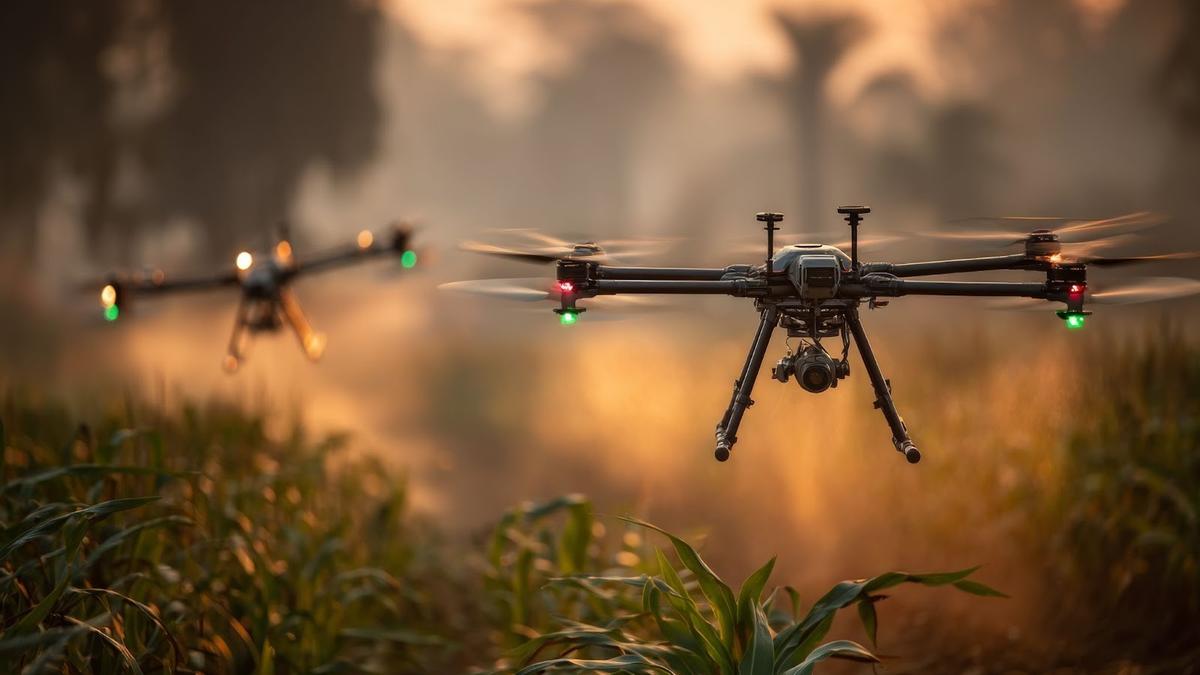
For the first time, women agricultural volunteers recognized as Krishi Sakhis have been allocated key roles alongside farmers, officials from the state agriculture department said. The programme emphases on improving technical knowledge, endorsing modern farming practices and raising consciousness about government schemes amongst cultivators, officials from the state agriculture department said. Farmers in UP are being trained in AI and drone-based farming through the “Kisan Pathshala” programme, an initiative of the state government which links traditional agriculture with contemporary practices, officials said on 20 th December 2025. For the first time, women agricultural volunteers recognized as Krishi Sakhis have been allocated key roles alongside farmers, officials from the state agriculture department said. The programme emphasises improving technical knowledge, endorsing modern farming practices, and raising awareness about government schemes amongst cultivators, officials from the state agriculture department said. In Prayagraj district, Kisan Pathshalas are being organized in 575 villages, benefiting farmers and expanding access to technology-based agricultural solutions, officials said. Deputy director of agriculture in Prayagraj, Pawan Kumar Vishwakarma, said the programme began on December 14. Officials said that drones with multispectral sensors help in crop monitoring, soil assessment and recognizing water stress or nutrient deficiencies. AI-based precision spraying enables targeted use of fertilizers and pesticides, while early detection of pests allows suitable treatment. Data analysis also assists in yield prediction, irrigation planning and nutrient management. The state budget has emphasized strengthening the agricultural sector and growing farmers’ incomes. Officials said access to advanced techniques and technology is vital to attain this goal. The Department of Agriculture is conducting the sessions as part of the initiative “The Million Farmers School 8.0.” He said the initiative decodes budget provisions into on-ground training by connecting farmers with modern technology. Participants are given guidance on cutting-edge practices, including the use of drones and AI in agriculture. The sessions also include interactions with trained “Namo Drone Didis” and experts and resource persons specializing in AI-based farming applications. This year, skilled women farmers are attending the sessions as special guests, accompanied by two progressive male farmers who are sharing their experiences. Officials said farmers’ learning will also be evaluated through a competition, with top performers getting seed and pesticide packets. Source: Hindustan Times

Saheel Singh 29 Dec 2025
Andhra Pradesh Launches India's First Drone City with Aerpace
Drone Technology Drone Pilot

Andhra Pradesh Launches India's First Drone City with Aerpace

The Andhra Pradesh government has inked a strategic partnership with Aerpace Industries to launch what is being billed as India's first 'Drone City' in the Orvakal region, near Kurnool. The project spans roughly 300 acres, chosen for its proximity to Kurnool airport and its feasible connectivity to a growing high-tech expansion corridor. As stated by the announcement, the site will be a complete ecosystem for drone manufacturing, component research, pilot training and testing infrastructure. Aerpace Industries, which brings experience in defence drones, heavy-lift platforms, logistics drones, and AI-enabled systems, has been in discussion with the Andhra Pradesh government through its financial development board for some time. The discussions covered technical assessments, design planning and capability demonstrations. With this partnership now formalized, Aerpace intends to set up a full-scale campus within the Drone City for the production of both civilian and defence drones, support component development, and conduct pilot training. Besides manufacturing, the initiative will have an integrated pipeline of certification and regulatory compliance mechanisms, as well as research into next-generation autonomous platforms, energy systems and improved operational reliability. The training programmes will build a skilled workforce of drone pilots and technicians, thus creating employment prospects and strengthening the regional human capital base in the unmanned systems sector. Drone City line up with Andhra Pradesh's broader objectives of developing innovation, attracting cutting-edge investments and positioning the state as a hub for the aerospace and pioneering mobility sectors. Building domestic capacity in drone manufacturing and related technologies will help the state reduce its dependence on imports and improve homegrown competitiveness in logistics, emergency response, defence and industrial operations . The site selection, Kurnool, and Orvakal seem strategic, allowing rapid testing and deployment in a bounded space without the constraints of an urbanized setting. This partnership is a bold step by the Andhra Pradesh government into the fast-emerging unmanned aviation technologies. By leveraging Aerpace's domain expertise and making a dedicated physical ecosystem, the state is betting on drones as an important axis of future growth, employment and technological leadership. Source: Silicon India

Saheel Singh 27 Nov 2025
India’s First ‘Sky Factory’ Will Build 1,000 Electric Air Taxis a year in Andhra Pradesh
Drone Technology Drone Training

India’s First ‘Sky Factory’ Will Build 1,000 Electric Air Taxis a year in Andhra Pradesh

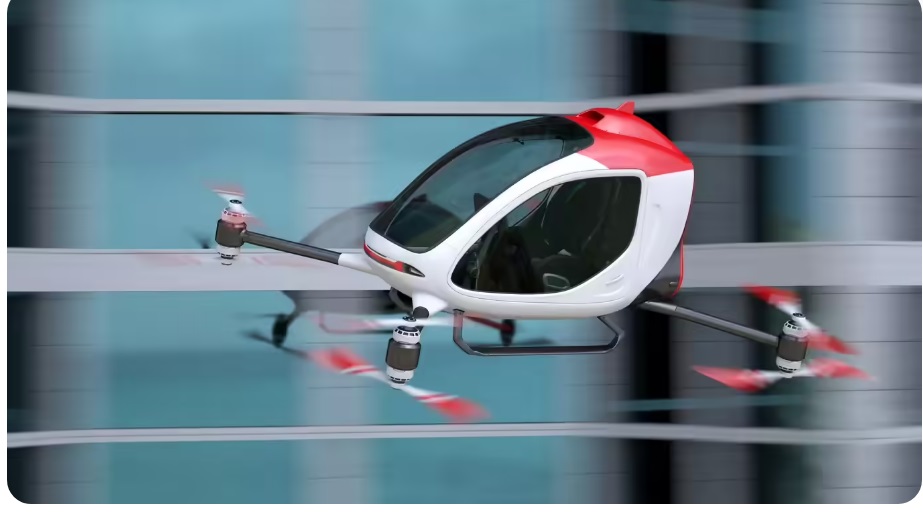
Andhra Pradesh will build India’s first “giga-scale” electric air taxi manufacturing cluster in Anantapur, with Karnataka-based Sarla Aviation committing an investment of INR 1,300 crore. The partnership was announced on 18 th November 2025, following the signing of an MoU by Sarla Aviation and the Andhra Pradesh Airport Development Corporation Ltd at the CII Partnership Summit 2025 in Visakhapatnam. The development follows Chief Minister N. Chandrababu Naidu’s new announcement that the state will begin producing drone taxis in two years. At the centre of the plan is the upcoming “Sky Factory”, which Sarla says will rank amongst the world’s largest facilities for electric vertical take-off and landing (eVTOL) aircraft. In the first phase, the company will invest 330 crores to set up a 150-acre manufacturing and testing campus at Thimmasamduram village in Kalyanadurg mandal. The site will have production lines, R&D labs, composite units and a dedicated 2-km runway for testing and certification. A second phase will increase the facility by another 350 acres. Once fully operational, the Sky Factory will produce up to 1,000 aircraft a year, including Sarla’s Shunya hybrid VTOL and a range of indigenously built electrical harnesses, landing gear systems and composite structures. The project will generate high-value employment by 2027, starting with 40 specialized positions and 140 indirect jobs. Rakesh Gaonkar, cofounder and CTO at Sarla Aviation, said the project is designed to place India at the centre of next-gen aviation. “With the world’s biggest Sky Factory, we want to make India the nerve centre for the next era of flight. This giga facility will shape the aircraft of the future and establish India as a force in sustainable aerial mobility,” he said. APADCL will act as a tactical facilitator to fast-track the project and build the surrounding ecosystem. The state government said the association marks a major step in its push to establish Andhra Pradesh as a hub for cutting-edge manufacturing, aerospace innovation and green mobility.   Source: Business Today

Saheel Singh 21 Nov 2025
Indigenous Kaal Bhairav Drone Wins Silver in Croatia
Drone Training Drone Flying

Indigenous Kaal Bhairav Drone Wins Silver in Croatia

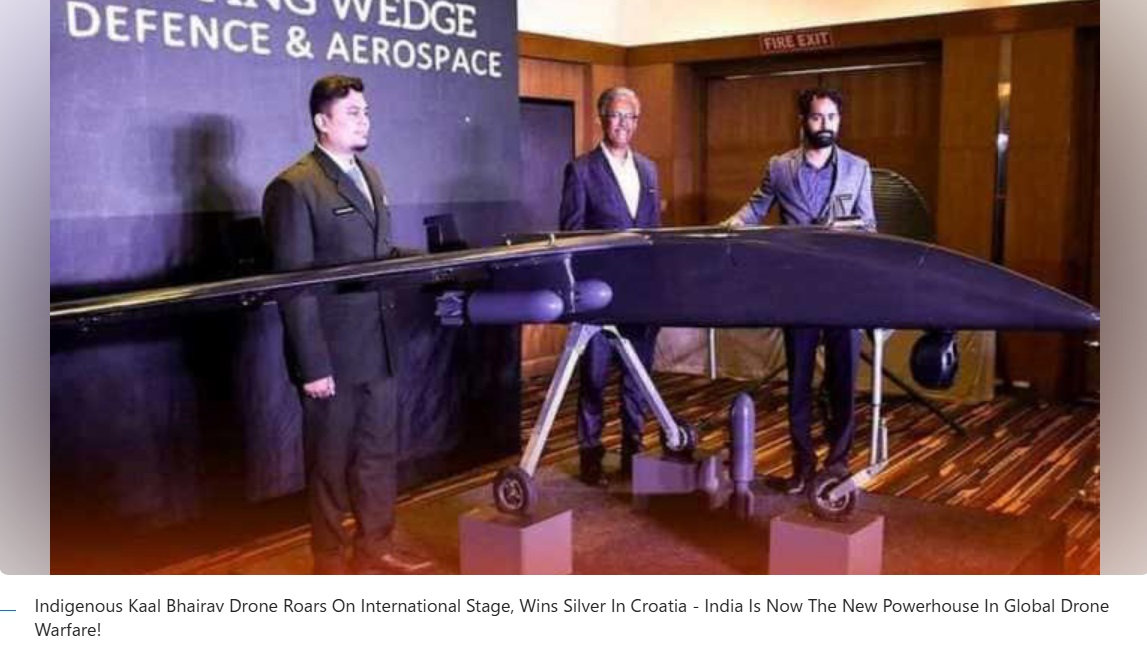
India’s indigenous Kaal Bhairav drone won a silver medal at the 23rd International Exhibition of Innovations 2025 in Zagreb, Croatia. The shows that Made-in-India defence technology is now competing with some of the world’s best. India is announcing itself as a strong player in cutting-edge defence technology, armed with a fully indigenous AI-powered combat drone that can go toe-to-toe with anything Western nations produce. The Kaal Bhairav E2A2 is India's first AI-driven Medium Altitude Long Endurance autonomous combat aircraft. Built completely by the Indian defence company Flying Wedge Defence and Aerospace, this drone represents a massive breakthrough in India's military technology capabilities. This drone can fly for 30 hours straight and cover a distance of 3,000 km. Its onboard systems manage mission planning, targeting and coordinated swarm actions independently. Built For Future Warfare This drone is good because it’s extremely adaptable. Its smart onboard systems and multi-sensor setup allow it to strike from more than one direction with precision. Even if foes try to jam its signals, a common tactic that forces drones to land, it can fly and complete its mission. Its modular design makes it worthwhile in various roles, including precise attacks, electronic warfare, wide-area maritime surveillance and real-time information sharing on the battlefield. Most prominently, it provides India with a fully homegrown, affordable option compared to the costly foreign drones. India has clearly entered the global drone race with confidence. 'Made In India, For the World' After winning silver, Flying Wedge CEO Suhas Tejaskanda said, "This victory proves India's technological strength. Our goal is clear: Made in India, for the world." He stressed why this matters strategically: "India must build its own weapons and technology to end foreign dependency. Kaal Bhairav represents completely Indian design, manufacturing, and AI innovation. This strengthens Atmanirbhar Bharat." A New Defence Powerhouse Emerges The Croatia silver medal isn't just an acknowledgement; it's an authentication from the international community. Countries worldwide are reassessing India's tech capabilities. The defence export market, long controlled by the US, Russia and China, now has a formidable new competitor. India has entered the global drone market. Source: Zee News

Admin 17 Nov 2025
Madhya Pradesh Looks to Become Drone Manufacturing Hub with New Policy
Drone Services Drone Training

Madhya Pradesh Looks to Become Drone Manufacturing Hub with New Policy

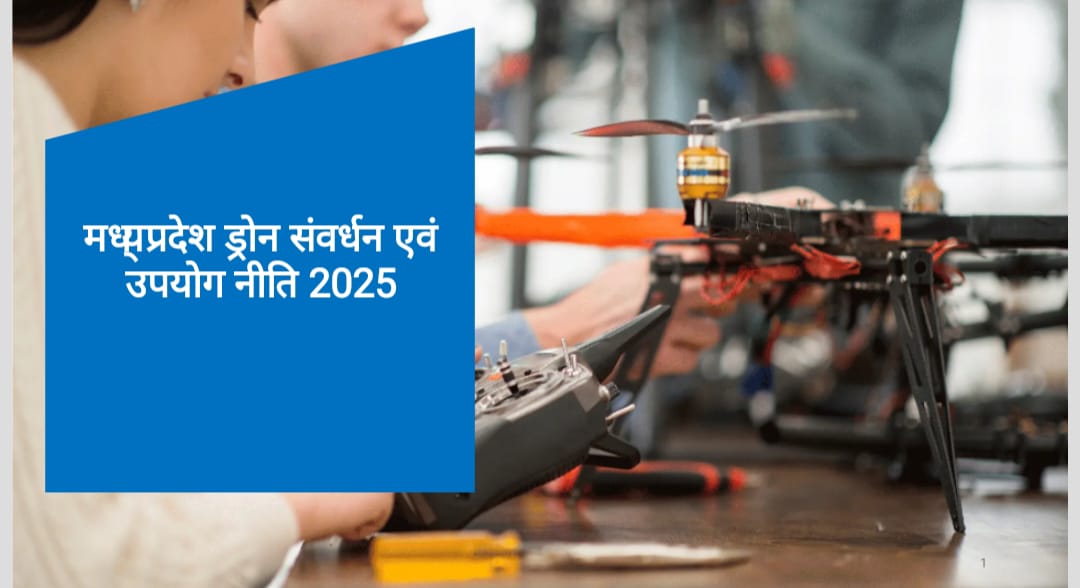
The Madhya Pradesh government has introduced the MP Drone Promotion and Utilization Policy 2025, aiming to boost drone manufacturing and its application across agriculture, logistics, security and governance. The policy offers incentives, including a 40% subsidy, up to Rs. 30 crores for new investments, and a 25% subsidy on lease rents for 3 years. Additional provisions include Rs. 2 crores in R&D grants, skill development incentives under the Seekho-Kamao Yojana, and a waiver of stamp duty and registration fees for industrial land leases. Patent filing, with the government covering Rs. 5 lakhs for domestic patents and Rs. 10 lakhs for international patents, is also supported by this policy. There can be an investment of Rs. 370 crores in the sector over the next five years in Madhya Pradesh, resulting in the creation of 8,000 jobs.  Madhya Pradesh aims to become a leader in the drone industry by harnessing drone technology to attain improved efficiency, cost reduction, and innovation. The state envisions using drones for precision agriculture, including crop monitoring and pesticide spraying, to increase productivity. Drones can augment surveying and mapping, while also reducing costs in logistics and infrastructure. Drones will also be used in surveillance, traffic monitoring, disaster management and law enforcement. With 90% of Indian airspace designated as a "Green Zone" for drone operations, the sector is poised for significant growth, contributing to financial development, job creation and improved service delivery in urban and rural areas.  Source: PIB

Saheel Singh 13 Nov 2025
India Turns Battlefield Into a ‘Drone Factory’ With New Mobile Fabrication Units
Drone Products Drone Training

India Turns Battlefield Into a ‘Drone Factory’ With New Mobile Fabrication Units

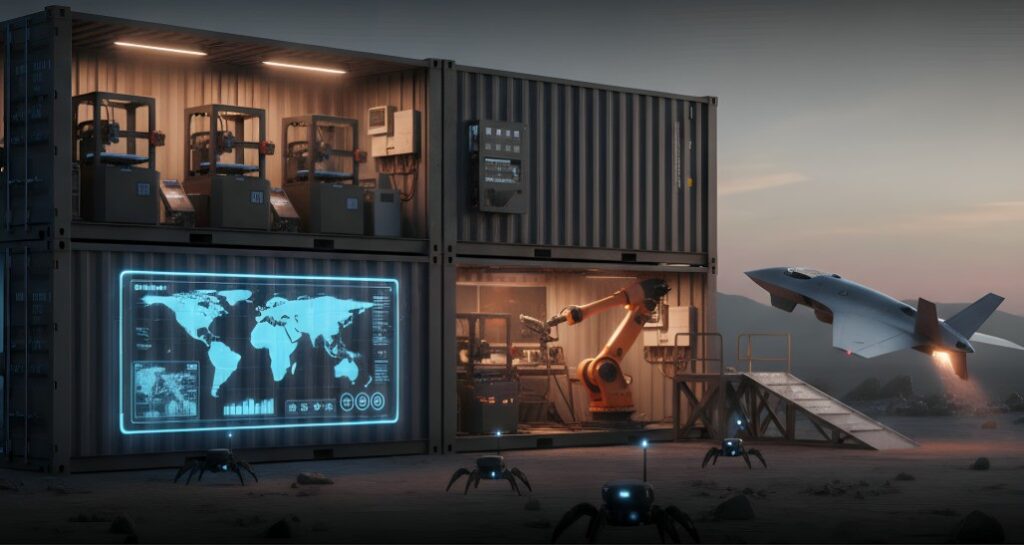
India is taking drone warfare to the next level with mobile drone factories that can print, build and launch drones wherever the mission demands. The initiative comes from Zuppa and Divide By Zero Technologies (DBZ), teamed up to create containerized fabrication units capable of producing drones on the spot. These compact, deployable drone labs slash drone production time from weeks to just hours. By moving manufacturing to the field, the idea also aims to decrease reliance on central amenities and lengthy logistics, improving response speed throughout both combat and disaster operations. “This collaboration is a major step in the direction of Atmanirbhar Bharat in frontline technology,” said Venkatesh Sai, Zuppa co-founder and technical director. “By allowing rapid, on-demand drone manufacturing right at the field, we are giving defence forces unparalleled autonomy and adaptability.” Factory on the Frontline The Rapid Fabrication Container Unit merges DBZ’s industrial-grade 3D printing expertise with Zuppa’s AI-enabled drone systems and mission software. Together, they form a moveable production hub that can function in isolated or risky areas. The setup supports three core tasks: field-based drone creation for tactical, surveillance and logistics roles, repair or modification of present drones, and instantaneous deployment through Zuppa’s autonomous flight network. “Our partnership with Zuppa alters mobile, autonomous manufacturing into reality, bringing production competence directly to the battlefield,” added Swapnil Sansare, founder and CEO of DBZ. Source: The Defense Post

Admin 07 Nov 2025
India Awards USD 32.5M to Zen Technologies for Advanced Anti-Drone Upgrades
Drone Training Drone Products

India Awards USD 32.5M to Zen Technologies for Advanced Anti-Drone Upgrades

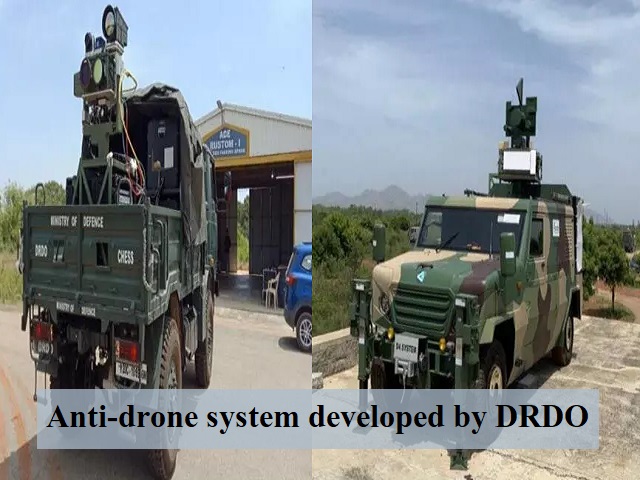
India has awarded 2.89 billion rupees in contracts to Zen Technologies to upgrade its anti-drone systems. The company will complete the upgrades within a year, integrating lessons learned from recent frontline operations such as Operation Sindoor, a May counterterrorism offensive by India in Jammu and Kashmir. The contracts enhance both hardware and software adaptability, a capability that foreign systems frequently cannot offer due to export controls and vendor limitations. The advancements target two critical vulnerabilities: physical hardware compromise and software-level malware attacks, the kind seen in the Stuxnet operation that halted Iran’s nuclear program and in the 2024 pager attacks that killed and wounded hundreds of Hezbollah fighters in Lebanon. Zen Managing Director and Chairman Ashok Atluri said that the company is keeping India one step ahead in the face of rising threats. “Buying Indian-designed, developed and manufactured products is not an option, it’s a prerequisite for survival as drone and cyber threats keep evolving,” he said. Other Anti-Drone Systems Development in India India is actively deploying a range of indigenous counter-drone solutions to protect against emerging challenges. India’s DRDO, in collaboration with BHEL has developed the D4 system, which integrates radar, RF sensors, electro-optical/infrared cameras, jammers and laser-based directed energy weapons. It provides both mobile and static configurations and is intended for rapid induction across the armed forces. Adani Defence & Aerospace and DRDO revealed a vehicle-mounted counter-drone system in February 2025 that combines radar, SIGINT/EO sensors, jammers, a 7.62-mm gun, and a high-energy laser. Intended for mobility, it can protect critical areas at ranges of up to 10 kilometres in varied terrain. Private companies, such as Solar Defence and Aerospace Limited, are developing systems like the Bhargavastra micro-missile anti-drone system, designed to intercept loitering munitions and autonomous drone swarms. These systems validate India’s mounting capability to address sophisticated drone threats beyond commercial drones. Source: The Defense Post

Admin 07 Nov 2025
IIT Bombay Researchers Develop GPS-Free Control Scheme for Autonomous Drone Swarms
Drone Technology Drone Training

IIT Bombay Researchers Develop GPS-Free Control Scheme for Autonomous Drone Swarms

A new control scheme developed by Dwaipayan Mukherjee and Chinmay Garanayak at IIT Bombay enables drones to fly in coordinated swarms without relying on GPS, inter-drone communication, or centralized control systems. The method uses bearing-only measurements obtained through onboard cameras to regulate relative positions and maintain formation. The researchers applied the scheme to Vertical Take-Off and Landing UAVs, which can lift off without a runway and hover mid-air. These drones are appropriate for surveillance and monitoring. “Autonomy in a swarm is an important task,” Mr Mukherjee said. “This means that vehicles in a swarm can decide their ‘actions’ on the basis of variables they can measure with their on-board sensors, rather than having to rely on some global information being fed to them or some human/centralized computer deciding what their action ought to be. This is where our paradigm differs from usual ones,” he added. The planned ‘bearing-only’ control scheme lets each drone use its onboard camera to observe its immediate neighbours and calculate bearing information. “In bearing-only control, the goal is to attain formation control using only interagent bearing measurements,” Mr. Garanayak said. The system does not need GPS or communication with other drones or a central computer. A new control scheme advanced by Professor Dwaipayan Mukherjee and research scholar Chinmay Garanayak at IIT Bombay allows drones to fly in coordinated swarms without relying on GPS, inter-drone communication, or centralised control systems. The method uses bearing-only measurements obtained through onboard cameras to regulate relative positions and uphold formation. The researchers applied the scheme to VTOL UAVs, which can lift off without a runway and hover mid-air. These drones are suitable for operations in confined spaces, such as surveillance and monitoring. “Autonomy in a swarm is an important task,” Mr. Mukherjee said. “This means that vehicles in a swarm can decide their ‘actions’ based on variables they can measure with their on-board sensors, instead of having to rely on some global information being fed to them or some human/centralized computer deciding what their action ought to be. This is where our paradigm differs from usual ones,” he added. The proposed ‘bearing-only’ control scheme allows each drone to use its onboard camera to observe its immediate neighbours and calculate bearing information. “In bearing-only control, the goal is to achieve formation control using only interagent bearing measurements,” Mr. Garanayak said. The system does not require GPS or communication with other drones or a central computer. Camera-based measurements are less prone to noise than conventional distance sensors, simplifying the drone’s sensor system and reducing battery requirements and overall weight. The scheme is designed to operate in areas where GPS is unavailable, making it suitable for stealth-mode operations, such as covert military missions. VTOL drones are underactuated systems that have six degrees of freedom, but fewer directly controllable degrees of freedom. While they can move vertically and rotate around three axes, lateral and forward-backwards movements must be indirectly controlled. “Many of the results in the literature do not address the underactuated dynamics of VTOL vehicles and only focus on the kinematic model. This motivated us to consider the fully underactuated model of the VTOL UAV and explore its applicability to formation control,” Mr. Mukherjee said. Underactuated systems require dynamic models that include position, orientation, velocities, forces, torques, and inertia. Previous attempts to apply bearing-only control to such models have often failed due to instability or breakdowns under certain conditions. Mr Mukherjee and Mr Garanayak proposed a control mechanism that ensures convergence and maintains the desired formation, even when drones start from imperfect positions. They have offered rigorous mathematical proof to support the reliability of the system.  A new control scheme developed by Dwaipayan Mukherjee and Chinmay Garanayak at IIT Bombay allows drones to fly in coordinated swarms without relying on GPS, inter-drone communication or centralized control systems. The method makes use of bearing-only measurements obtained through onboard cameras to determine relative positions and uphold formation. The researchers applied the scheme to VTOL drones, which can lift off without a runway and hover mid-air. These drones are suitable for operations in confined spaces, such as surveillance and monitoring. “Autonomy in a swarm is a critical task,” Mr. Mukherjee said. “This means that vehicles in a swarm should be able to decide their ‘actions’ based on variables they can measure with their on-board sensors, instead of having to rely on some global information being fed to them or some human/centralized computer deciding what their action ought to be. This is where our paradigm differs from usual ones,” he added. The proposed ‘bearing-only’ control scheme allows each drone to use its onboard camera to observe its immediate neighbours and calculate bearing information. “In bearing-only control, the goal is to achieve formation control using only interagent bearing measurements,” Mr. Garanayak said. The system does not require GPS or communication with other drones or a central computer. Camera-based measurements are less prone to noise than conventional distance sensors, simplifying the drone’s sensor system and reducing battery needs and overall weight. The scheme is designed to operate in areas where GPS is unavailable or communication may be jammed, making it suitable for stealth-mode operations, such as covert military missions. VTOL drones are underactuated systems, which means they have six degrees of freedom but fewer directly controllable degrees of freedom. While they can move vertically and rotate around three axes, lateral and forward-backwards movements must be indirectly controlled. “Many of the results in the literature do not address the underactuated dynamics of VTOL vehicles and only focus on the kinematic model. This motivated us to consider the fully underactuated model of the VTOL UAV and explore its applicability to formation control,” Mr. Mukherjee said. Underactuated systems require dynamic models that include position, orientation, velocities, forces, torques, and inertia. Previous attempts to apply bearing-only control to such models often fail due to instability or breakdowns in certain conditions. Mr. Mukherjee and Mr. Garanayak developed a control mechanism that ensures convergence and maintenance of the desired formation, even when drones start from imperfect positions. They have provided rigorous mathematical proof to support the reliability of the system.  Their work addresses two operational scenarios. In the first, drones maintain formation at constant velocity using bearing and bearing-rate data. In the second, where formation and velocity vary over time, drones incorporate their own velocity measurements in addition to bearing data. The system can handle arbitrary time-varying configurations, allowing drones to navigate narrow passages, reconfigure into single-line formations, and adapt to changing mission requirements.  The researchers plan to test the control scheme experimentally, using a drone swarm. On the future roadmap, they aim to address collision avoidance with theoretical guarantees. “Most existing algorithms rely on  ad hoc  collision avoidance schemes that do not come with any theoretical guarantees. Collision avoidance with objects in the environment and among drones is a challenge we are trying to tackle at a theoretical level,” Mr Mukherjee said.  Source: The Hindu

Admin 07 Nov 2025

half-star-solid phone