
India Develops Autonomous Swarm Interceptor 'YAMA' to Counter Drone Attacks
With drones reshaping modern warfare worldwide, India has developed an advanced autonomous swarm interceptor, YAMA. The system is made by the
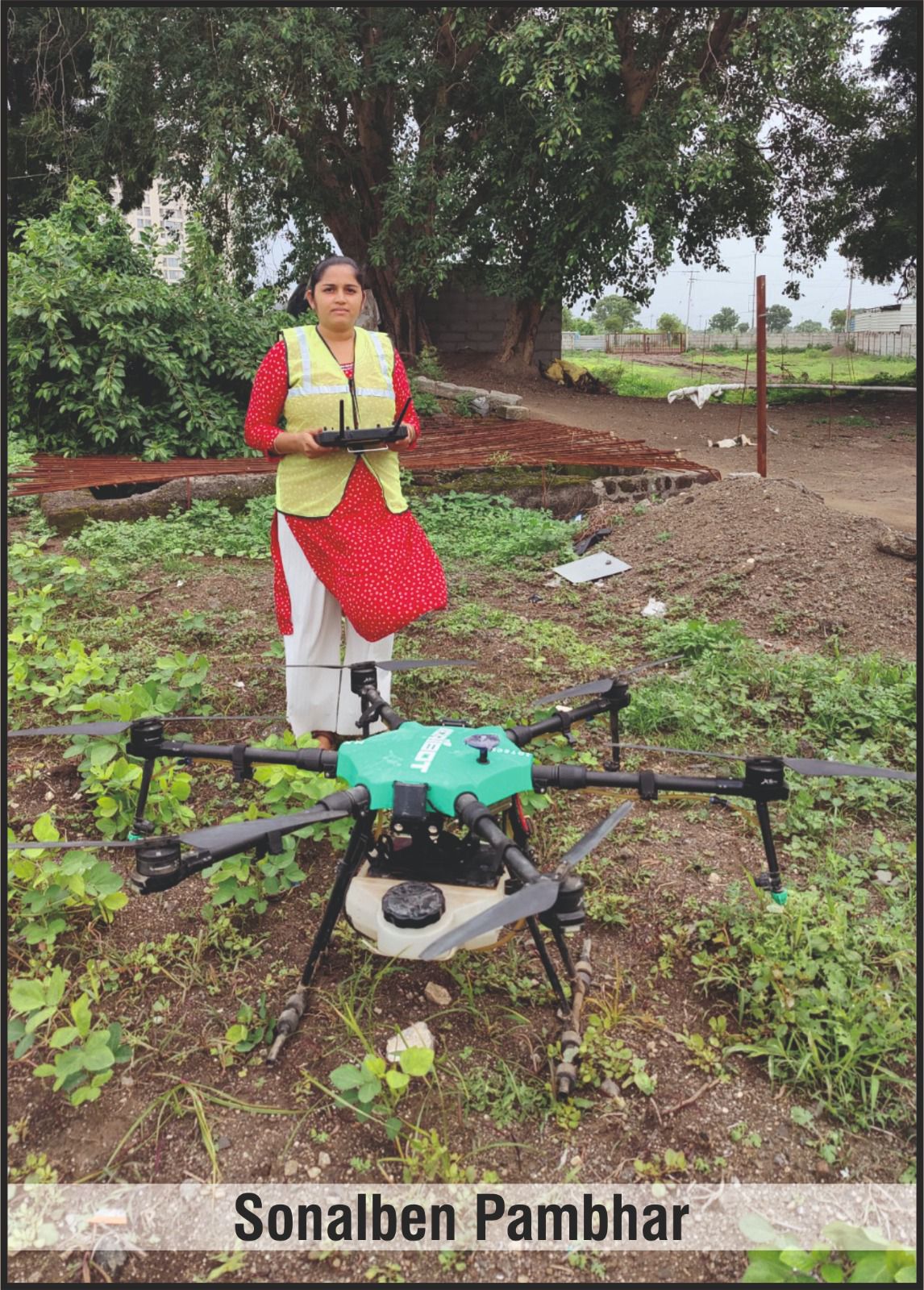

The government has launched several initiatives to guarantee that expansion of drones reaches even the remotest areas of Gujrat and to strengthen women's participation in India's development journey. The Lakhpati Didi Yojana was launched by the government in 2023 to empower 3 crore women by 2027 financially.
In Gujarat, the scheme has been competently implemented under the leadership of CM Bhupendra Patel, resulting in 5.96 lakh women earning over Rs 1 lakh by December 2025, earning the title of Gujarat's Lakhpati Didis.
The CM stated that, guided by the PM's vision, Gujarat has accepted several successful initiatives to strengthen women's empowerment. He added that with the effective implementation of the Lakhpati Didi scheme, the state is well-positioned to enable 10 lakh women to become Lakhpati Didis in the near future.
Kankuben Garva from Kutch earns an annual income of over 10 lakhs
The Lakhpati Didi programme, launched by the Gujarat government at the grassroots level, has had a transformative impact on women's incomes. Kankuben Garva comes from a family engaged in handicrafts.
Through her contribution to the Saras Mela, she extended the platform for showcasing Kutch handicrafts, creating new market scenarios. With support from a Rs 1.5 lakh Community Investment and a Rs 4 lakh loan, she opened a shop by finding other women from her self-help group.
Today, her products are promoted beyond the state, and she continues to scale up her initiative through sales on prominent online platforms, for example, Amazon. Earning more than Rs 10 lakh, Kankuben attributes her success largely to the constant support from the state government under the Livelihood Mission.
Bhavanaben Gains a New Identity Through the Namo Drone Didi Yojana
Bhavanaben Bharatkumar Chaudhary, of Kankrej taluka of Banaskantha district, has earned a different identity in the region as a Drone Didi. Educated up to the bachelor's level, she is engaged in animal husbandry and agriculture.
Selected under the Namo Drone Didi Yojana, she received specialized training in pesticide spraying using drones and is now extensively recognized as a Drone Didi across Kankrej taluka. While continuing to live and work in her village, she is realizing her aspirations and motivating other women to become Aatmanirbhar. Under the Namo Drone Didi Yojana, women aged 18-60 years, with a Class 10 qualification, are qualified to train and work as drone pilots.
Identification of over 10 lakh potential Lakhpati Didis in Gujarat
At present, trained Community Resource Persons in the state have identified 10.74 lakh women with the potential to become Lakhpati Didis. To systematically capture details of their prevailing livelihood activities, accessible resources, spending and income, the Ministry of Rural Development, Government of India, has developed a Digital Livelihood Register. On the basis of data from the Digital Livelihood Register, the recognized Lakhpati Didis are getting need-based support, including training, assets, monetary assistance and marketing support.
How does the Lakhpati Didi scheme Work?
The scheme supports rural women related to self-help groups in starting income-generating activities to help them earn Rs 1 lakh or more annually. Women can start businesses in agriculture, animal husbandry, handicrafts and other nearby pertinent sectors.
To enable this, several government schemes offer support through training, monetary assistance and market linkages, allowing sustained income growth.
As stated by the guidelines of the Central Government, income calculation for a Lakhpati Didi comprises the following details:
* Total annual income from agriculture and related activities.
* Income from non-farm activities, manufacturing, trading and services.
* Income of any family member, salaried/employed.
* Income received from farm and non-farm labour work.
* Monetary Amounts received through the assistance of government schemes.
* Income earned through commissions and honorary salaries.
Training of more than 10,000 Community Resource Persons by 248 Master Trainers.
To guarantee the successful application of the scheme, the Gujarat government has taken more than a few steps. At the taluka level, 248 Master Trainers have been chosen, who have trained over 10,000 Community Resource Persons to date.
These CRPs will support women related to self-help groups. Throughout this process, data are frequently updated in the Digital Livelihood Register, enabling effective monitoring and the provision of training, monetary support, and market linkages to women entrepreneurs.
Source: AWAZ
Whether you're a beginner or looking to upskill, our training advisors can help you choose the right course.