Insights on Military Drones

Explore articles and updates related to Military Drones in the aviation and drone industry.

India Buys Belarus-Made Berkut-BM Attack Drones
Defence Drones Military Drones

India Buys Belarus-Made Berkut-BM Attack Drones

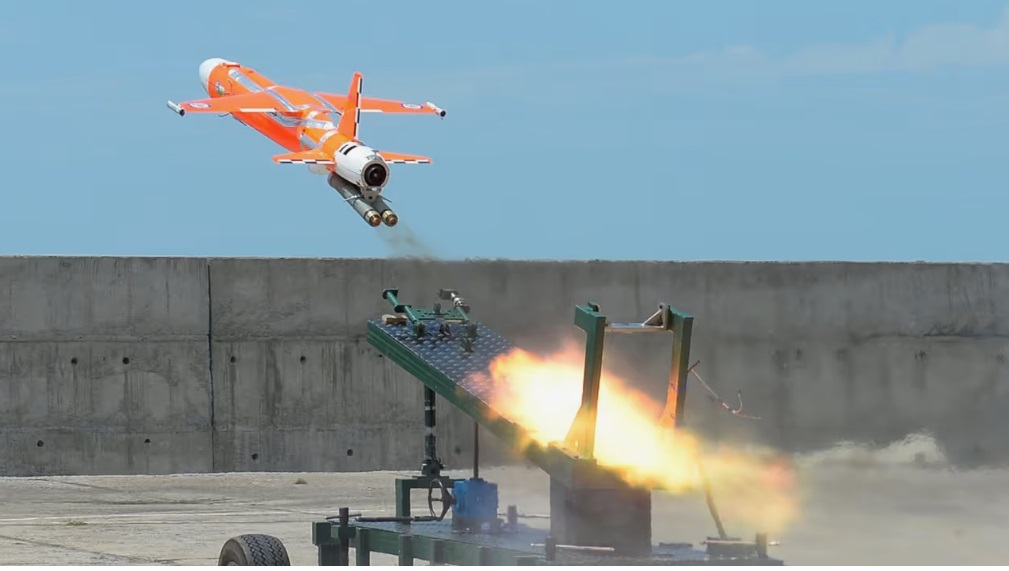
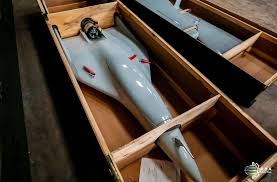
India has acquired dozens of Belarus-made Berkut-BM one-way attack drones. The Berkut-BM is a kamikaze drone developed by the Indela company in Belarus and intended to strike time-sensitive battlefield targets before they can relocate. The system has compact, Chinese-made micro turbojet engines from Swiwin, giving the drone high dash speed and short engagement times that decrease the window for interception. Technical data for the platform demonstrates that the Berkut-BM can reach speeds of up to 410 kilometres per hour, with an operational range of about 150 kilometres, contingent on the mission profile and altitude. The drone is optimized for swift ingress, terminal dive and precision impact against fixed or relocatable targets. The drone carries a 10kg high-explosive fragmentation warhead envisioned for use against radar installations, missile batteries, artillery positions and logistics nodes. Its strike profile is customized for missions where targets must be demolished quickly. The Berkut-BM is a product of a catapult, allowing deployment from forward areas lacking permanent infrastructure. This lets mobile and concealed launch operations, offering field commanders superior flexibility to position launch sites closer to the line of contact. Belarus has previously exported these drones to Venezuela, Russia, Algeria, and the Sudanese Rapid Support Forces. The system is a low-priced alternative to cruise missiles for targeting high-value assets. The reported Indian acquisition comes as loitering munitions and one-way attack drones will reform battlefield operations, primarily in conflicts where air defence systems are under continuous pressure from saturation attacks. Jet-powered drones are a subcategory of this category, ensuring endurance for speed and reduced reaction time for the defence systems. India has extended its drone portfolio, integrating both foreign and domestic systems into its armed forces. The acquisition of Berkut-BM drones would place a moving weaponry in conjunction with India’s existing inventory of propeller-driven systems and precision-guided weapons. Source: Military Watch Magazine

Saheel Singh 21 Jan 2026
An Advanced Nagastra Drone Used in Operation Sindoor has been Developed
Operation Sindoor Nagastra

An Advanced Nagastra Drone Used in Operation Sindoor has been Developed

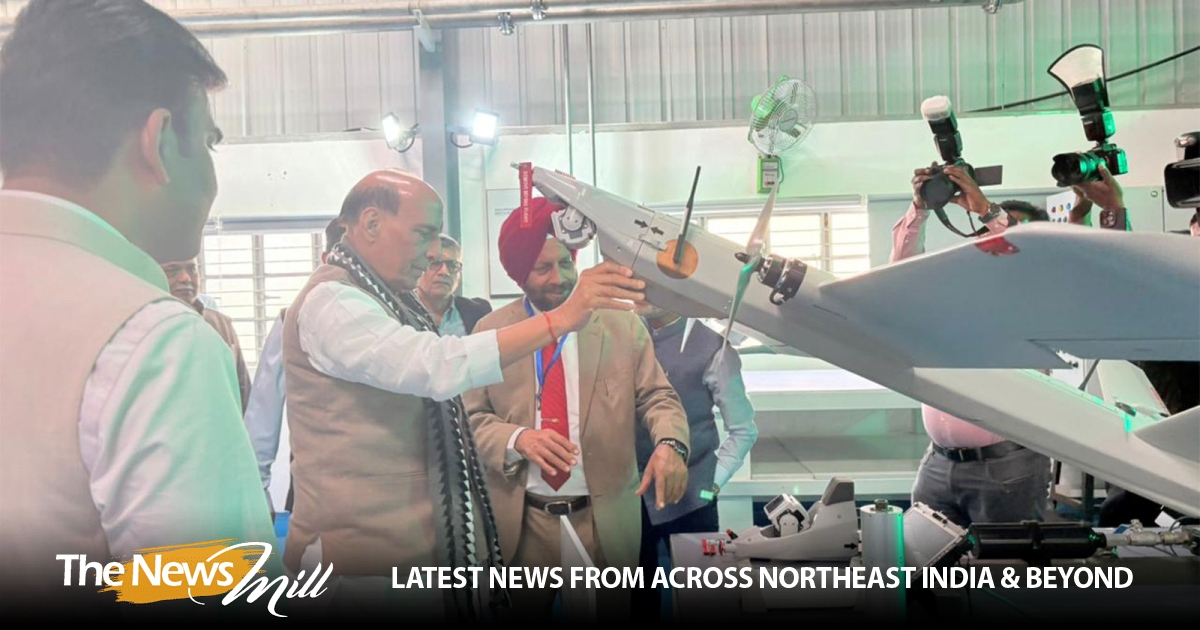
An advanced version of the Nagastra drone, extensively used during Operation Sindoor, has been developed.   The Nagpur-based Solar Defence and Aerospace Plant, which developed Nagastra, has also developed ‘Bhargavastra’, a micro-missile-based system, and conducted a successful test launch. The government is focusing on ensuring that the private sector’s contribution to defence manufacturing reaches 50% or more in the near future. The Nagastra drone advanced by this group was successfully deployed. This drone struck those who harboured ill intentions towards our country. Nagastra-1 is a suicide drone, made for searching and destroying any target by crashing into it. Bhargavastra, instead, is India's first indigenous, low-cost counter-drone system, developed to neutralize hostile drone swarms using micro-rockets and guided micro-missiles, featuring radar detection up to 6 km and engagement up to 2.5 km. The new facility is a fully automated plant manufacturing 30mm ammunition, which the Indian Army and Navy extensively use. Rajnath also visited the Pinaka rocket manufacturing facility and flagged off the first tranche of guided Pinaka rockets bound for Armenia. Operation Sindoor lasted for around 88 hours, but the intensity of those 88 hours couldn’t be described in words. In such operations, every minute, every decision and every resource is vital. Today, there are various kinds of wars. Warfare is becoming increasingly complex and intense. In such a situation, preparation for war is crucial. There was a time when ammunition shortages hampered India’s defence readiness, prompting the government to realize the need to become self-reliant. Commending the contribution of private enterprises in making the defence sector ‘Aatmanirbhar’, the nation is steadily marching forward in ammunition production, manufacturing quality and the production of dependable products. “In such a situation, increased participation of the private sector in manufacturing and R&D is the need of the hour. Source: Times of India

Saheel Singh 20 Jan 2026
Army Chief Outlines India's Mega Drone Push: 5,000 per Command, 100 km Strike Range
Army Drones Defence Drones

Army Chief Outlines India's Mega Drone Push: 5,000 per Command, 100 km Strike Range

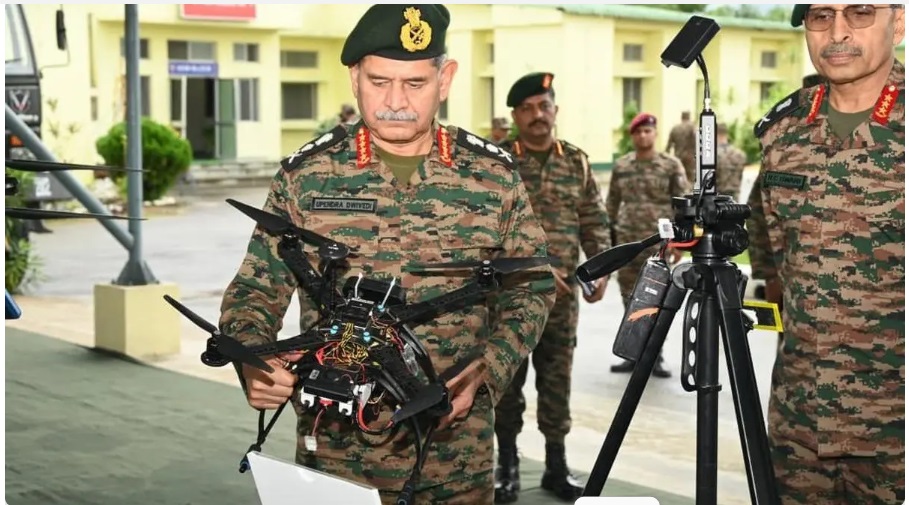
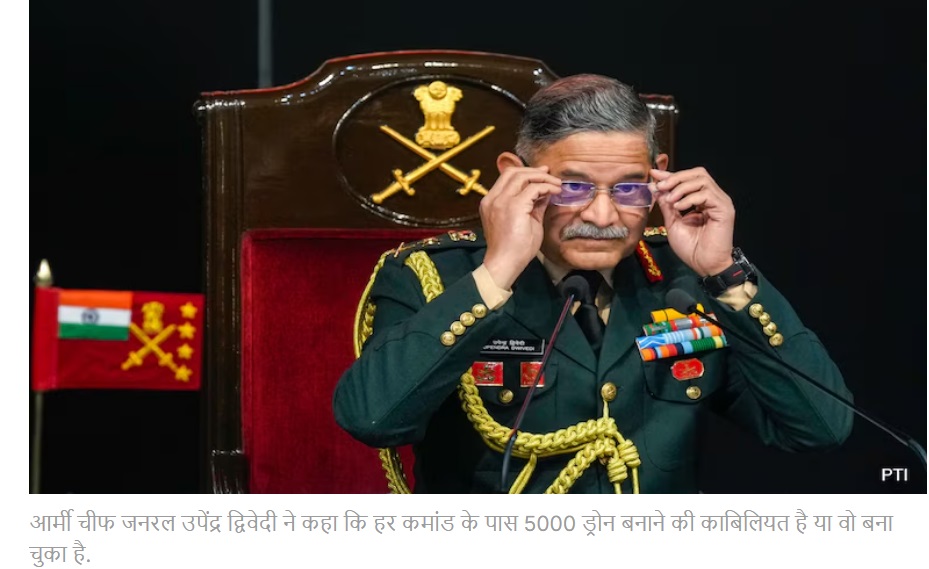
India's Army chief said on 13 th January 2026 that Pakistan's Director General of Military Operations has been asked to rein in what the government views as recurring drone intrusions across the border. Speaking at the annual press conference, General Upendra Dwivedi said the issue had been raised with his Pakistani counterpart and was conveyed as intolerable. Addressing the media, the Army chief also outlined India's push to significantly scale up its drone competencies in preparation for future conflicts. He said the Army has decided to manufacture as many drones as possible in-house, with every command either already producing or able to produce about 5,000 drones. These are not small platforms. India has already test-fired drones with a range of around 100 km and plans to spread this further. General Dwivedi also referred to recent drone sightings in the Nowshera sector along the LOC in Jammu. He said 3 to 5 drones were spotted on the evening of 11th January 2026, with additional sightings over the following days. As he stated, about six drones were observed on January 10 and two to three on January 11 and 12. The Army chief labelled these as small drones flying with lights switched on and at relatively low altitudes, appearing only intermittently. He said the assessment was that these will be defensive drones, perhaps deployed to test India's responses or probe for vulnerabilities that could be exploited to push terrorists across the border. Though he added that the outcome for the other side would have been clear, as the Indian Army is fully alert with no gaps or laxity along the frontier. General Dwivedi confirmed that the issue was discussed in a DGMO-level conversation held earlier in the day, throughout which Pakistan was told clearly that such drone activity would not be tolerated and must be stopped immediately. Source: MoneyControl

Saheel Singh 14 Jan 2026
From Drones to Missiles, An Indigenous Air Defence System will be Deployed in the Capital to Monitor Every Threat
Drone Training Drone Defence

From Drones to Missiles, An Indigenous Air Defence System will be Deployed in the Capital to Monitor Every Threat

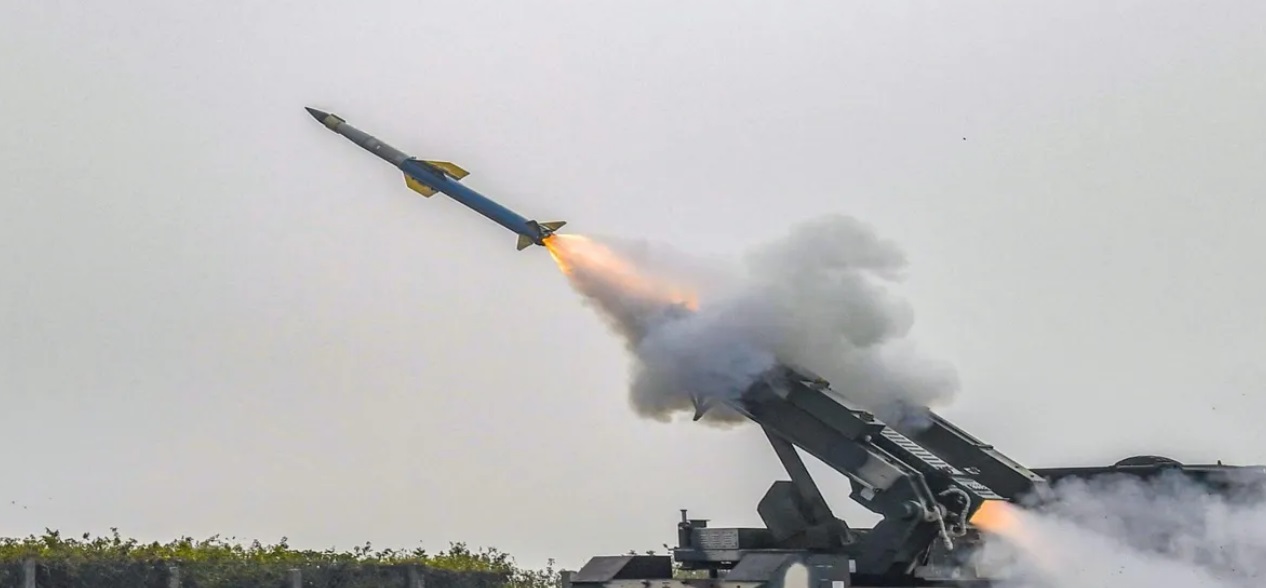
Given the recent escalation of tensions between India and Pakistan, the need to further strengthen the capital's strategic security was felt. In response, a decision has been made to deploy a new indigenously developed air defence system to protect Delhi-NCR from potential aerial threats, including drones, fighter aircraft, and missiles. This system will be based entirely on indigenous technology. DRDO and IAF to Jointly Develop IADWS India is developing the Integrated Air Defence Weapon System in collaboration with the Defence Research and Development Organization. The Indian Air Force will command and operate this system. It will utilize two major indigenous weapon systems: the Quick Reaction Surface-to-Air Missile and the Very Short-Range Air Defense System. Together, the system will be able to target and destroy any high-speed aircraft, enemy missiles, or advanced drones approaching the capital.   Source: Zee News

Saheel Singh 10 Dec 2025
half-star-solid phone