Insights on Pilot Training

Explore articles and updates related to Pilot Training in the aviation and drone industry.

Civil Aviation Ministry Issues Alert for Northern India Airports Amid Dense Fog, Travellers Should Check Flights
Aviation Training Aircraft Flying

Civil Aviation Ministry Issues Alert for Northern India Airports Amid Dense Fog, Travellers Should Check Flights

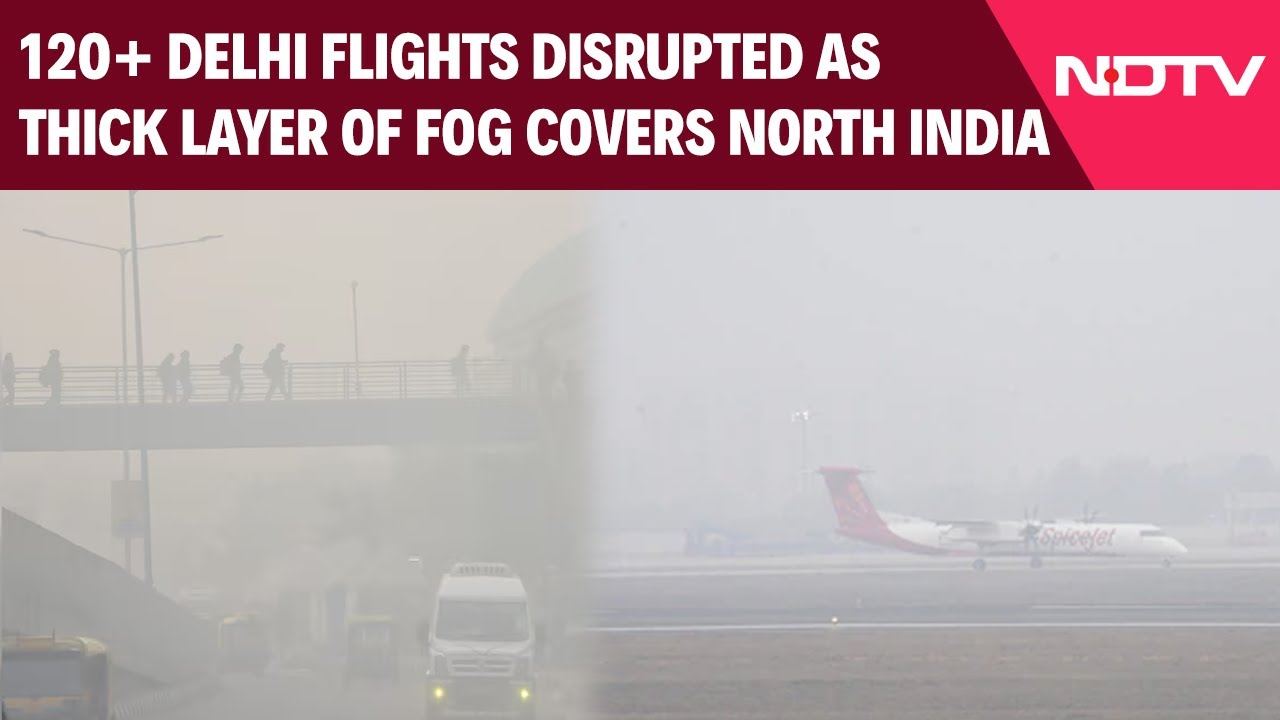
The Civil Aviation    Ministry issued a heavy fog alert for airports across north India, warning that dense fog has reduced visibility and disturbed flight operations, particularly in Delhi. Passengers should check their flight status with the airline before leaving and monitor updates on the airline's website or application. Travellers should allow extra time for their journeys because of possible fog-related delays. On X, the Ministry of Civil Aviation wrote, "Heavy Fog Alert for Northern India, Delhi & other airports in Northern India are experiencing dense fog, affecting visibility. Passengers should check the latest flight status with their airline. Check flight information on the airport website. Please allow extra travel time. Safety is top priority. Our teams & ATC are working diligently to minimize disruptions. I appreciate your patience." The Ministry emphasized that safety is a top priority. Passengers were patient and cooperative during the ongoing adverse weather conditions. In the meantime, IndiGo Airlines also issued an advisory about low-visibility conditions over the national capital, noting that dense fog has affected operations at Delhi and several other airports in northern India. "Low visibility (below minima), because of dense fog, has severely impacted operations at Delhi and airports across northern India, which is beyond our control. Our teams are closely monitoring the situation and coordinating with Delhi airport, in line with established safety protocols," IndiGo said in the press statement. The airline said that while operations are being adjusted according to prevailing weather conditions, some flights may be delayed, and others could be cancelled proactively during the day to prioritize safety and avoid extended waiting times at airports. “We have issued advisories to our customers and proactively informed them to minimize inconvenience," the statement read. IndiGo further urged passengers to regularly check flight status on official airline websites and mobile applications to stay updated on any delays or cancellations before travelling to the airport. Source: Business Line

Saheel Singh 15 Dec 2025
Government Orders IndiGo to Curtail Flight Schedule by 10%, Double of What the Regulator DGCA had Ordered
Aviation Training Pilot Training

Government Orders IndiGo to Curtail Flight Schedule by 10%, Double of What the Regulator DGCA had Ordered

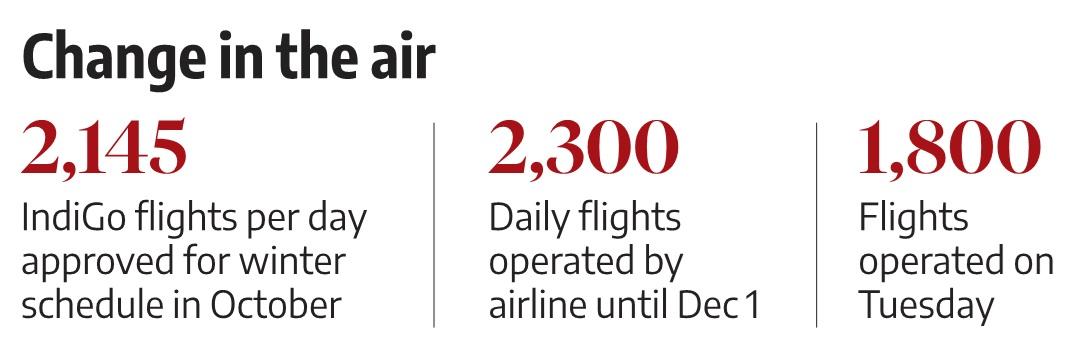
The government on 9 th March 2025, ordered IndiGo to reduce its schedule by at least 10 per cent, doubling the curtailment from 5 per cent that the aviation watchdog (DGCA) had ordered following network-wide disruptions at the country’s largest airline, which led to scores of daily flight cancellations since the middle of last week. The Ministry of Civil Aviation communicated the decision in a meeting with IndiGo CEO Pieter Elbers. IndiGo is India’s largest airline, with a domestic market share of nearly 65 per cent, and its schedule includes over 2,300 daily flights, around 2,150 of which are domestic. A 10% curtailment in domestic flights would mean that the airline’s daily scheduled domestic flights would come down to fewer than 1,950. According to sources, the freed-up slots may be offered to other carriers if they have additional capacity to deploy. “The Ministry considers it necessary to curtail the overall Indigo routes, which will help in stabilizing the airline’s operations and lead to reduced cancellations. A 10% curtailment has been ordered. While abiding with it, Indigo will continue to cover all its destinations as before,” Civil Aviation Minister K Rammohan Naidu said Tuesday in a post on X. Naidu said that Elbers was “summoned” to the ministry to provide an update on the airline’s stabilization measures. “During the last week, many passengers faced severe inconvenience due to Indigo’s internal mismanagement of crew rosters, flight schedules and inadequate communication. While the enquiry and necessary actions are underway, another meeting with Indigo’s top management was held to review the stabilization measures. CEO Pieter Elbers was summoned to the Ministry to provide an update. He confirmed that 100% of the refunds for flights affected till 6th December have been completed. A strict instruction to accelerate the completion of the remaining refunds and baggage handover was given,” Naidu said. In a statement, earlier today, IndiGo announced that its operations have stabilized and normalized. IndiGo operated over 1,800 flights on Tuesday, operating to all destinations on its network, and its on-time performance is back at over 80 per cent. The airline expects to operate around 1,900 flights on Wednesday. Sources close to the airline said that IndiGo was looking to gradually increase its flights to its regular levels over the next few days. But it will now have to abide by the government-ordered schedule curtailment. “IndiGo can confirm that after days of significant and steady improvement across the network, we have reinstated our operations across our network. This means all flights published on our website are scheduled to operate with an adjusted network. Also, nearly all bags that were stuck at airports have been delivered to our customers, and the teams are working on delivering the remaining at the earliest,” IndiGo said in a statement before the MoCA’s 10% schedule curtailment decision was announced. Earlier, the DGCA had ordered a 5% curtailment of IndiGo’s flight schedule, or around 110-115 daily flights, especially on high-demand and high-frequency routes. The regulator directed IndiGo to submit the revised and truncated schedule by 5 pm on December 10. A further rationalization of IndiGo’s flight schedule could be on the cards and will depend on IndiGo’s daily flight operations, sources indicated. Following the announcement from MoCA, the DGCA revised its order to IndiGo to reflect 10% curtailment. The airline’s weekly domestic flights increased to 15,014 in the winter schedule, which took effect on October 26, from 14,158 in this year’s summer schedule. IndiGo, however, faced crew shortages, primarily due to its inadequate preparation for the second phase of the new crew rest and duty norms that took effect on November 1. This led to widespread network-wide disruption in the airline’s operations. In view of the disruption, which brought India’s aviation ecosystem to its knees, pilot associations and aviation experts strongly criticized and questioned the DGCA’s earlier decision to allow an increase in flights in the airline’s winter schedule. The new Flight Duty Time Limitation rules stipulate more rest for pilots and the rationalization of their flying duties, particularly late-night operations, in a bid to better manage pilot fatigue, a key risk to aviation safety. These new norms, which were stipulated in January last year, were delayed in implementation and took effect in two phases, on July 1 and November 1, with the second phase rollout hitting IndiGo particularly hard. The new norms meant that airlines either had to hire more pilots to maintain their schedules or curtail them in line with the new requirements. With the second phase of the new FDTL norms taking effect on November 1, IndiGo started feeling the heat with a higher-than-usual number of cancellations and flight delays throughout November. As delays compounded, with a few other external factors also at play, disruptions became widespread over the past few days. According to the DGCA, IndiGo informed the regulator that it had 1,232 flight cancellations in November, 755 of which were due to crew and FDTL-related constraints. In review meetings, IndiGo also accepted that the disruptions “have arisen primarily from misjudgment and planning gaps in implementing” the second phase of the new FDTL rules, and that the actual crew requirement for the new rules exceeded what it had anticipated, as per the DGCA. The massive disruption at IndiGo threw commercial flight operations out of gear all over the country. Given the scale of the disruption, the DGCA on Friday granted IndiGo a temporary one-time exemption from some night operations-related changes in the new FDTL norms for its Airbus A320 pilots. The temporary rollback, which will be in place till February 10, is likely to help IndiGo to get its act together and stabilize operations from hereon. The DGCA has also granted a few other temporary relaxations to IndiGo. But the government and the regulator have turned up the heat on IndiGo by initiating a DGCA inquiry into the disruption. A show cause notice was also issued to the airline’s CEO, Pieter Elbers and its COO, Isidre Porqueras. Civil Aviation Minister K Rammohan Naidu has blamed lapses on IndiGo’s part for the disruption and said that strict action will be taken based on the inquiry report to “set an example”. He said that sufficient notice was given by the DGCA to all airlines for the implementation of the new FDTL rules. In an answer to the show-cause notices issued by the DGCA to IndiGo’s CEO, Pieter Elbers and chief operating officer Isidre Porqueras, the airline said that it is realistically not possible to identify the precise causes of the disruption at this stage because of the intricacy and vast scale of operations, and a comprehensive root cause analysis is being done. But it did share some preliminary contributing factors, whose combination led to the disruption. “The airline suggests that the disruption resulted from a combination of the following factors, which coincided in lesser or greater measure: 1.  Minor technical glitches. 2.  Schedule changes linked to the start of the winter season. 3.   Adverse weather conditions. 4.  Increased congestion in the aviation system. 5. Implementation of and operation under the updated crew rostering rules,” the DGCA had said in a release. “IndiGo notes they had been engaging with the DGCA regarding challenges in implementing the Flight Duty Time Limitations Phase II and were seeking variations, exemptions, or extensions. The disruptions began in early December when the compounding factors resulted in a lower On-Time Network Performance, which affected crew availability,” the regulator said, adding that it is in the process of examining IndiGo’s response and “appropriate action as deemed appropriate will be taken in due course”, the regulator had said. Source: The Indian Express

Saheel Singh 10 Dec 2025

Air India introduces ‘Flexi Contract for Pilots’ to Help Balance Operations
Commercial Pilot Aviation Training

Air India introduces ‘Flexi Contract for Pilots’ to Help Balance Operations

Air India has devised a “Flexi Contract for Pilots,” a new work model that allows flight crews to select shorter duty patterns while upholding smooth operations. The airline says the plan will match pilots’ preferences with roster needs, focusing on work-life balance without compromising competence. Under the policy, Line Pilots and Line Training Captains on A320, B777 and A350 fleets are eligible. Junior First Officers, Type Rating Instructors and Direct Entry pilots are not. The contract provides two fixed patterns: for wide-body aircraft, 15 days on and 15 days off; for narrow-body aircraft, 20 days on and 10 days off. Annual leave line up with these rosters–eight privilege and four sick leaves for wide-body pilots and 12 privilege plus six sick leaves for narrow-body colleagues. The tenure of the contract will be 12 months, which can be extended at the company’s discretion. After the contract ends, pilots return to their original terms. Air India states that selection is made through an Expression of Interest process, with seniority and operational requirements guiding the final list. An exit needs three months’ notice. If a pilot is selected for a fleet or command upgrade, the pilot returns to the original contract from the start of training; if an upgrade is refused, the prevailing career policy on freezes applies. The company might also revert a pilot to the old contract if required and this does not change the pay terms that applied before switching to flexi terms. Pay follows a calculator shared with crew, with minimum monthly availability set at 12 days for wide-body and 15 days for narrow-body to obtain 40 hours of pay under the new structure. Flying more than 40 hours is paid at the same rate as on the original contract. Trainer, wide-body, deadhead and layover allowances stay protected. Car lease and NPS EMIs are adjusted against flexi salary components. On off-days, pilots remain exclusively engaged with the airline and are not permitted to take on outside work. Leave bidding under the flexi track runs on an ad-hoc system, and previous bids are forfeited. Total bid points throughout the tenure are 20 for wide-body and 30 for narrow-body. Loss of License coverage continues, including on off-days. Medical insurance remains unchanged. Seniority is protected, and base and merit/demerit processes remain as per the current policy. When pilots return to the old contract, they join the next regular leave-bidding cycle. The process runs in two cycles, one beginning in January 2025 and the other in March 2025. Slots are allocated by seniority. As stated in the plan, commanders have 50 A320 slots at Bengaluru, Delhi, and Hyderabad, 30 B777 slots at Mumbai and Bengaluru, and 20 A350 slots at Delhi. First officers have 20 A320 slots at Bengaluru, Mumbai and Hyderabad, 70 B777 slots at Delhi, Mumbai and Bengaluru and A350 slots to be announced for Delhi. Source: The Print

Admin 18 Nov 2025
The Asia Pacific region will Require 19,560 New Planes over 20 years: Airbus
Aviation Training Pilot Training

The Asia Pacific region will Require 19,560 New Planes over 20 years: Airbus

The APAC will require 19,560 new narrow-body and wide-body planes over the next two decades, mainly driven by demand from India and China, Airbus said. The demand, Airbus said, represents 46% of the global requirement for 42,520 new aircraft over two decades. India and China are powering a major portion of the growth, Airbus Asia Pacific President Anand Stanley said. With increasing passenger traffic, the APAC will experience an annual passenger growth rate of 4.4 per cent, surpassing the global average of 3.6%. India is one of the world's fastest-growing civil aviation markets, and airlines have placed important orders as they expand their fleets to meet the increasing demand for air travel. Presenting the forecast during the Association of Asia-Pacific Airlines' Annual Assembly of Presidents in Bangkok, Airbus stated that the region will require around 3,500 wide-body aircraft over the two decades. This number represents 43% of global demand in the larger size aircraft categories. According to the forecast, the APAC region will require approximately 16,100 single-aisle aircraft, accounting for 47% of the new deliveries globally throughout the specified period. “Nearly 68% of the aircraft deliveries will support fleet expansion, while 32% will replace older models, making a substantial contribution to decarbonization efforts. "The next-gen Airbus wide-body aircraft offers an immediate 25% improvement in fuel efficiency and a corresponding reduction in carbon emissions," Airbus said. Stanley said the APAC region is entering an exciting phase of growth. In addition to passenger growth, network development, the penetration of low-cost carriers, and infrastructure are the major drivers of air travel. Source: The Hindu

Saheel Singh 18 Nov 2025
National Aviation Safety Centre To be Established in India; Aircraft Accident Investigations will be Improved
Pilot Training Aviation Training

National Aviation Safety Centre To be Established in India; Aircraft Accident Investigations will be Improved

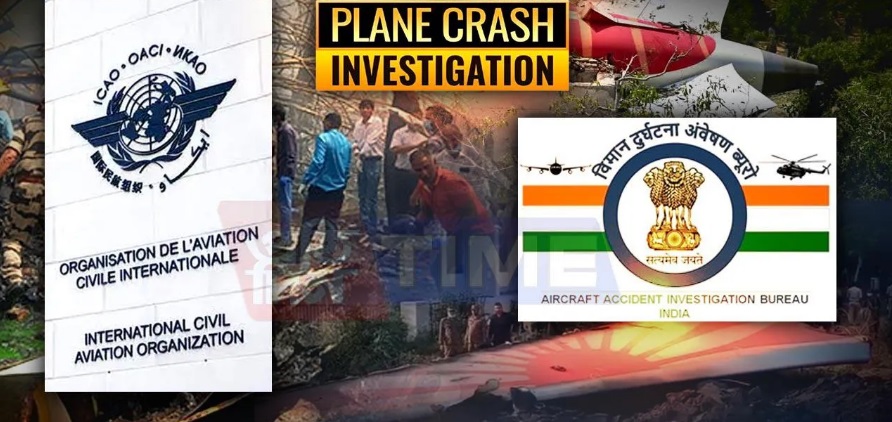
India is planning to establish a National Aviation Safety Centre to train aircraft accident investigators and aviation professionals. The government of India has announced the establishment of a National Aviation Safety Centre in the country. This centre will train aviation professionals and aircraft accident investigators. This centre will be based on global best practices and will be the first of its kind. Civil Aviation Secretary Samir Kumar Sinha said that the number of professionals working in regulatory and investigative roles in the country is being doubled. This initiative is a long-term vision towards creating a world-class safety infrastructure and human resources. Aircraft safety is a shared responsibility. Sinha was speaking at the inaugural ceremony of the 13th Asia-Pacific Accident Investigation Group meeting in Delhi. India is hosting this meeting for the first time, with approximately 90 aircraft accident investigation experts participating in the same. During the opening ceremony, participants observed a two-minute silence to honour the 260 people who were killed in the Air India plane crash in Ahmedabad on June 12. The Aircraft Accident Investigation Bureau (AAIB) is investigating the accident. AAIB Director General GVG Yugandhar stated that the lack of trained investigators is a major challenge faced by almost all countries worldwide. India has advanced aerospace and materials testing laboratories that can assist other countries. The meeting will last four days and aims to strengthen the aircraft accident investigation system further. Source: Amar Ujala

Saheel Singh 29 Oct 2025
Pilot Training Centre to Open at MP Airport, Direct Flights to Delhi
Pilot Training Pilot Qualification

Pilot Training Centre to Open at MP Airport, Direct Flights to Delhi

Along with air services, a pilot training centre will open at the Rewa Airport in Madhya Pradesh. Preparations have begun after getting permission from the Civil Aviation Department. Starlingwings Aviation Company has been entrusted with the accountability for the pilot training centre, which will establish its own station and set up in the airport premises. Training for flying small aircraft will be offered here, with plans to expand to larger aircraft in the future. As stated by the Airport Authority, the initial setup of the training centre might take 1 to 1.5 years, as it will develop hangars, classrooms, technical facilities and other resources. Ample space is presently available on the airport premises and land acquisition will be introduced for future expansion. Rewa-Delhi Air Service Proposed from the 26th Work is also progressing quickly towards expanding air services from Rewa Airport. A direct ATR-72 flight service from Rewa to New Delhi will begin on October 26th. Indore will also be added to this service, offering significant relief to Rewa passengers. Falcon Aviation previously conducted pilot training at the Rewa airstrip. Then, an accident occurred when a plane crashed near a house in the village, killing one person. Several other minor incidents have also occurred. Ongoing Controversy Concerning Falcon Aviation Before the airport in Rewa was constructed, Falcon Aviation conducted pilot training at the airstrip. Falcon Aviation was permitted to provide training for 30 years. During the airport's construction, the company's setup was removed. Falcon Aviation was also asked to conduct pilot training at the Panna airstrip as an alternative. Falcon Aviation objected, stating that the contract was violated. The matter has also reached the court, where both sides have presented their arguments. The Airport Authority states that the opening of a pilot training centre in Rewa will accelerate the expansion of flight services. Services are Expanding - Director, Airport Authority Bhopal Flight services are expanding at Rewa Airport. ATR-72 services will commence soon. Preparations are also ongoing to establish a pilot training academy, for which permission has been sought. This might take some time as the essential resources are developed. Ramji Awasthi, Director, Airport Authority Bhopal. Source : Patrika

Admin 27 Oct 2025
Air India-Airbus Pilot Training Centre inaugurated in Gurugram to Train 5,000 pilots over the Next Decade
Pilot Training Pilot Qualification

Air India-Airbus Pilot Training Centre inaugurated in Gurugram to Train 5,000 pilots over the Next Decade

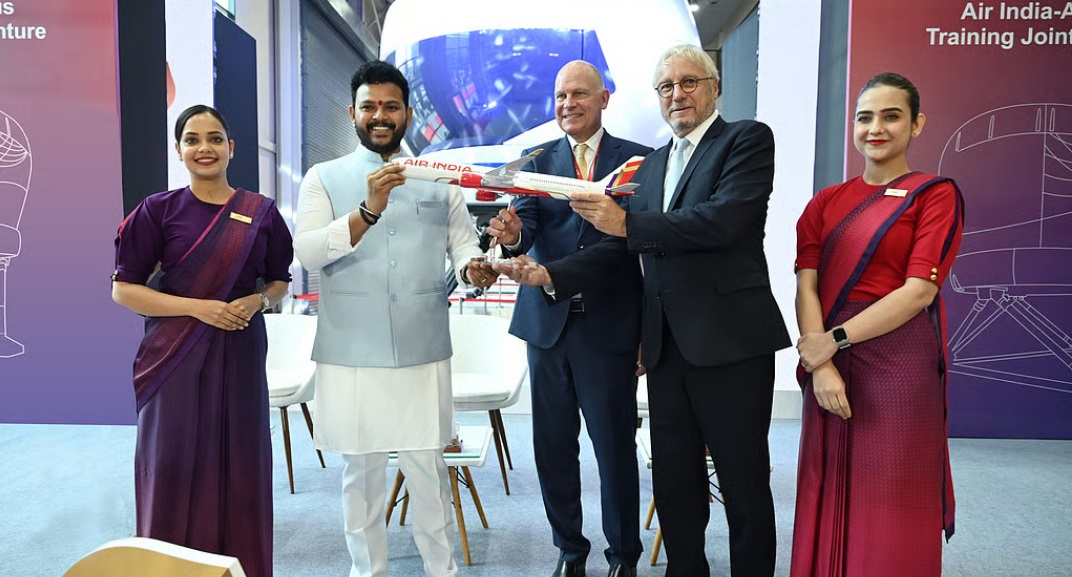
More than 5,000 new pilots will be trained during the course of the next 10 years in the advanced pilot training centre at Gurugram, which was inaugurated on Tuesday by Ram Mohan Naidu, Civil Aviation Minister. The advanced facility is a joint venture between Airbus and Air India. Naidu said, “Through this joint venture, ten trailblazing simulators, including India’s first A350 simulators, will be installed with a planned investment of more than Rs 1,000 crore.” Billing it as a milestone for India’s quickly growing aviation ecosystem, the Minister added, “ This landmark facility will guarantee self-reliance in pilot training, advancing PM’s vision of Atmanirbhar Bharat. ” An official release from the airline said the Air India-Airbus training centre will support the growth of commercial aviation in India. “It is intended to train pilots for the Airbus 320 and A350 aircraft and its courses are approved by both the DGCA and the European Union Aviation Safety Agency.” The 12,000 sqm centre now has two Rull Flight Simulators for the Airbus A320 family aircraft. It will have six A320 simulators and two A350 simulators progressively, the release said. In the words of, JürgenWestermeier, President & Managing Director, Airbus India and South Asia, “This is more than a joint venture; it is a strategic investment in the future of the Indian aerospace industry. India is a powerhouse for Airbus, and this hi-tech facility is a testament to our belief in its enormous potential.” Campbell Wilson, MD & CEO, Air India, said: “Air India is expanding with 570 new aircraft on order and the new pilot training centre at our Aviation Training Academy in Gurugram, a part of which is being executed with Airbus, will help train pilots who will fuel Air India’s ambition of becoming a top-notch airline. This capacity is a step forward in our transformation journey and in making Air India and the Indian aviation industry more self-sufficient.” The existing Air India Aviation Training Academy, which was opened in 2024, is already the largest aviation training academy in South Asia. It is presently training more than 2,000 aviation professionals.   As per the release, within the next few years, it will train more than 50,000 aviation experts. It features the best equipment for immersive training in Safety and Emergency Procedures (SEP), accompanied by grooming, service training, voice and accent training for cabin crew. Moreover, Air India is also setting up South Asia’s largest Flying Training Organisation (FTO) at Amravati in Maharashtra, which will graduate 180 commercial pilots annually, it added.

Saheel Singh 06 Oct 2025
half-star-solid phone