Insights on Air India

Explore articles and updates related to Air India in the aviation and drone industry.

Air India and Saudia Sign Codeshare Agreement
Saudia Air India

Air India and Saudia Sign Codeshare Agreement

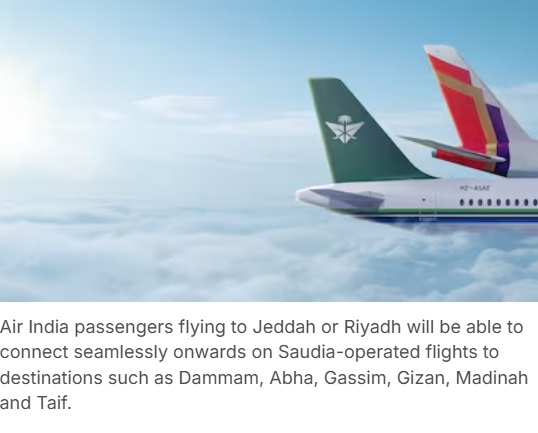
Saudia and Air India have signed a codeshare agreement, which will take effect in February 2026. This brings many benefits for the guests of both airlines, improving connectivity, enhancing the travel experience, strengthening network access, maximizing flight options and supporting growing demand across tourism, business travel and broader guest segments. Through the new corporation, guests will enjoy efficient booking and ticketing, seamless connections with a single itinerary and baggage check-through to their final destination. Air India guests travelling to Jeddah or Riyadh with Air India can take unified onward connections on Saudia-operated flights to Dammam, Abha, Gassim, Gizan, Madinah and Taif. The addition of codeshare flights on the Jeddah-Riyadh route now lets guests more flexibility to arrive in one city and depart from another. Connections to select complementary international destinations will be added later this year. The codeshare will also offer Saudia’s guests access to key cities across India via Mumbai and Delhi, including Ahmedabad, Bengaluru, Kolkata, Kochi, Hyderabad, Chennai, Lucknow, and Jaipur, as well as over 15 other destinations via interline. Campbell Wilson, CEO & MD, Air India, said: “Saudi Arabia is among our most significant markets in the Middle East, with the nation fast transforming into a key international gateway to the region. We are happy to be partnering with Saudia to provide greater access to the large Indian diaspora spread across Saudi Arabia, along with opening up the Kingdom’s rapidly developing and diverse tourism offerings and extraordinary destinations to travellers from India.” H.E. Engr. Ibrahim Al-Omar, DG of Saudia Group, said, “The agreement with Air India marks a tactical step forward, given both airlines’ long histories and their shared commitment to growing connectivity within their home markets and between their nations, while providing guests broader access to more destinations through basic travel procedures that raise the overall travel experience.” He added: “Saudia’s existence in India spans over 60 years, throughout which we have proudly served various guests and helped foster stronger ties between our two countries. Saudia Arabia is an incredible place to visit. With unified e-visas, stopover visas, and visa-on-arrival for suitable Indian passport holders, it has never been easier to visit the Kingdom.” Air India has considerably extended its global network. At present, it has 24 codeshare partnerships and around 100 interline agreements with leading carriers all over the globe, offering access to more than 800 destinations. Source: Aviation World

Saheel Singh 15 Jan 2026
Airlines Issue Advisory for International Flyers as Iran Shuts Airspace
Iran Airspace Airspace Closure

Airlines Issue Advisory for International Flyers as Iran Shuts Airspace

On 15th January, Indian carriers issued advisories for international passengers after Iran momentarily closed its airspace, triggering flight delays, rerouting and cancellations on more than a few overseas routes. Airlines urged travellers to check flight status before heading to airports, describing the expansion as sudden and unforeseen and saying flights were being rerouted in the interest of passenger and crew safety. What is Said by the Airlines? Air India said flights were being rerouted, which could cause delays, while some services had been cancelled where rerouting was not feasible. “As a result of the closure of Iranian airspace, some international flights are rerouted or cancelled.   Passengers should check flight status on our website. Safety of the crew and passengers is our priority,” the airline said. Several international flights were affected and the airline assured passengers alternative arrangements or refunds. SpiceJet directed passengers to check flight status online or contact its round-the-clock helpline, warning of possible disturbances owing to the airspace closure. Why has Iran Closed its Airspace? Iran extended the temporary closure of its commercial airspace early on 15 th January, among mounting tensions with the USA and ongoing nationwide protests. While officials did not quote a formal reason, the move followed warnings by Iranian authorities of fast-track trials and likely executions of protest detainees, together with threats of retaliation if the US or Israel intervened. The closure seems to be a precautionary measure as unrest continues in Tehran and other cities. Distinctly, some US staff in Qatar were counselled to evacuate and President Donald Trump issued various statements within 24 hours signalling likely action against Iran, though without providing details. How long will the Closure Last? Initial notices to pilots recommended the airspace would be closed until 7.30 am (local time) on 15 th January, following an earlier shutdown that lasted just more than two hours. Iranian authorities have not announced a permanent closure and international carriers are closely monitoring the state of affairs for further updates. Indian Embassy Issues Advisory The Indian Embassy in Tehran, on 14th January, advised Indian citizens, including students, pilgrims, businesspersons and tourists, to leave Iran by any means, including commercial flights. It counselled nationals to evade protests, exercise caution, stay in touch with the embassy and keep travel documents ready. More than 2,000 students from J&K are currently in Iran. The External Affairs Ministry has advised against non-essential travel to Iran amid the ongoing unrest. Source: The Business Standard

Saheel Singh 15 Jan 2026
Airlines Warn of Flight Delays as Dense Fog Shrouds North India; Ops Stable
Flight Disruption Fog

Airlines Warn of Flight Delays as Dense Fog Shrouds North India; Ops Stable

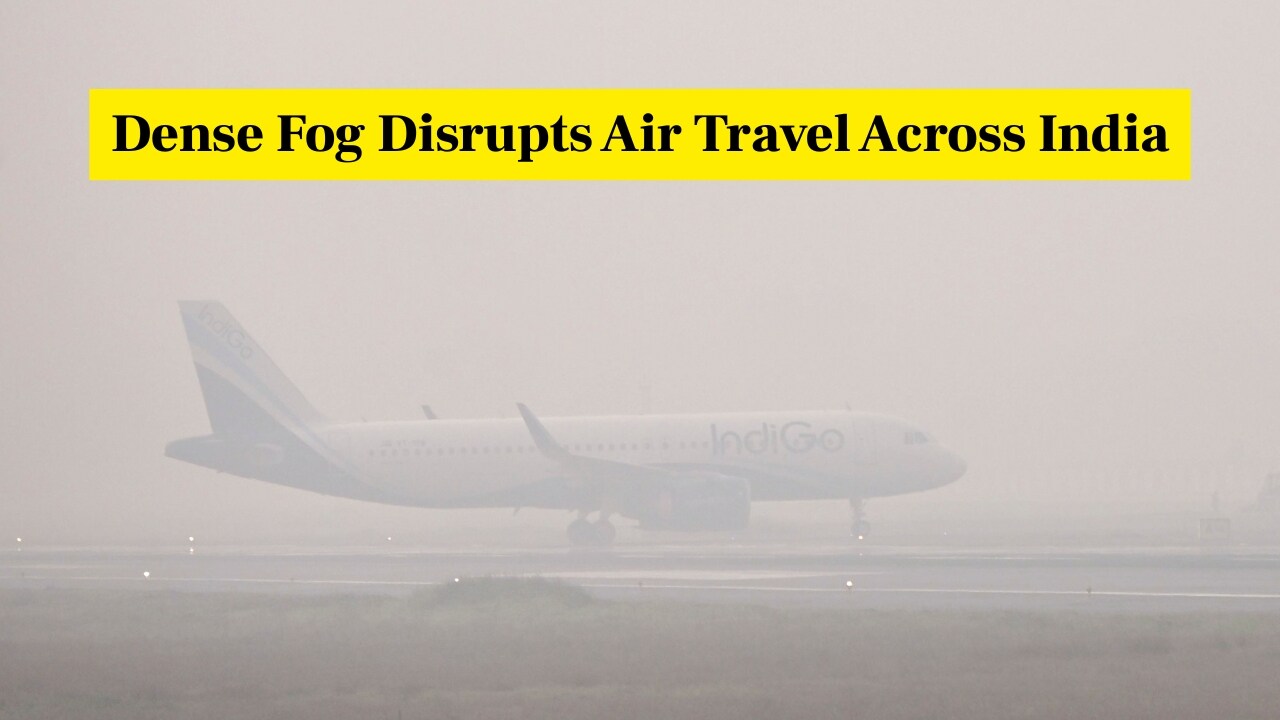
Airlines issued travel advisories on 14 th January as dense fog covered most of northern India, including Delhi-NCR, leading to flight delays. In an advisory issued on Wednesday morning, IndiGo warned passengers about unexpected drops in visibility across several cities. According to the airlines, Early-morning fog could affect visibility across Amritsar, Chandigarh, Jammu and Udaipur, impacting flight operations. Flights Impacted in Chennai, Agartala and Hindon IndiGo also said that low visibility obstructed flights in Chennai, Hindon and Agartala. Departures and arrivals to and from these cities might experience delays due to the weather conditions, and the situation was closely monitored. Operations from UP’s Hindon airport were also affected. Fluctuating visibility at Hindon Airport led to changes in flight schedules and operations may be slower than usual as conditions evolve. According to the Airlines, operations would stabilize once weather conditions improve. Operations of the Airlines Largely Remain Stable The Delhi airport is closely tracking the fog situation and issuing hourly updates. At 8 am, the airport said all flight operations were normal. Numerous airlines, such as Akasa Air, rescheduled a large number of flights on Tuesday due to low visibility in northern India. According to the flight tracking platform FlightRadar24, the departure delay index, which estimates disruption in departures, stood at 1 for Delhi’s IGI Airport as of 8:40 am, indicating negligible disruption. In the meantime, the arrival delay index was at 0.7, signifying even fewer disruptions to landing operations. Fog Situation and Winter Disruptions Fog often leads to flight disruptions in northern India throughout the winter. Air India recently introduced measures to manage fog-related delays. The airline said that poor visibility due to fog is predicted in Northern India, including Delhi, with cascading impacts on our flight operations across the network. It was further added that its 'FogCare' initiative allows affected passengers to change flights without an extra payment or choose a full refund without penalty. Which Airlines Face More Difficulty? Airlines operating aircraft that are not CAT-III compliant will face more difficulty in near-zero visibility conditions. CAT-II and CAT-III-compliant aircraft have cutting-edge landing and navigation systems that allow operations in low-visibility conditions. CAT-II aircraft can land with partial visibility, while CAT-III aircraft can function even when visibility is extremely poor, owing to innovative autoland systems. Source: Business Standard

Saheel Singh 14 Jan 2026
Air India to Induce New Dreamliner on Long-haul International Routes from February
Air India Boeing

Air India to Induce New Dreamliner on Long-haul International Routes from February

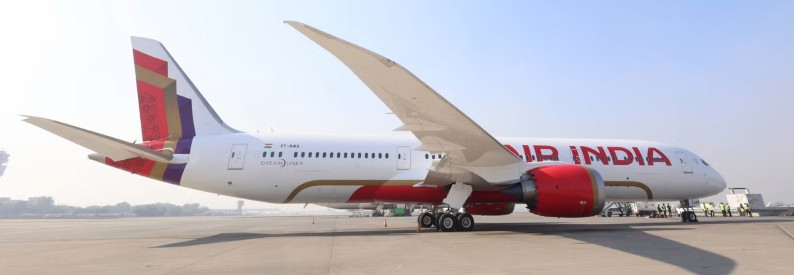
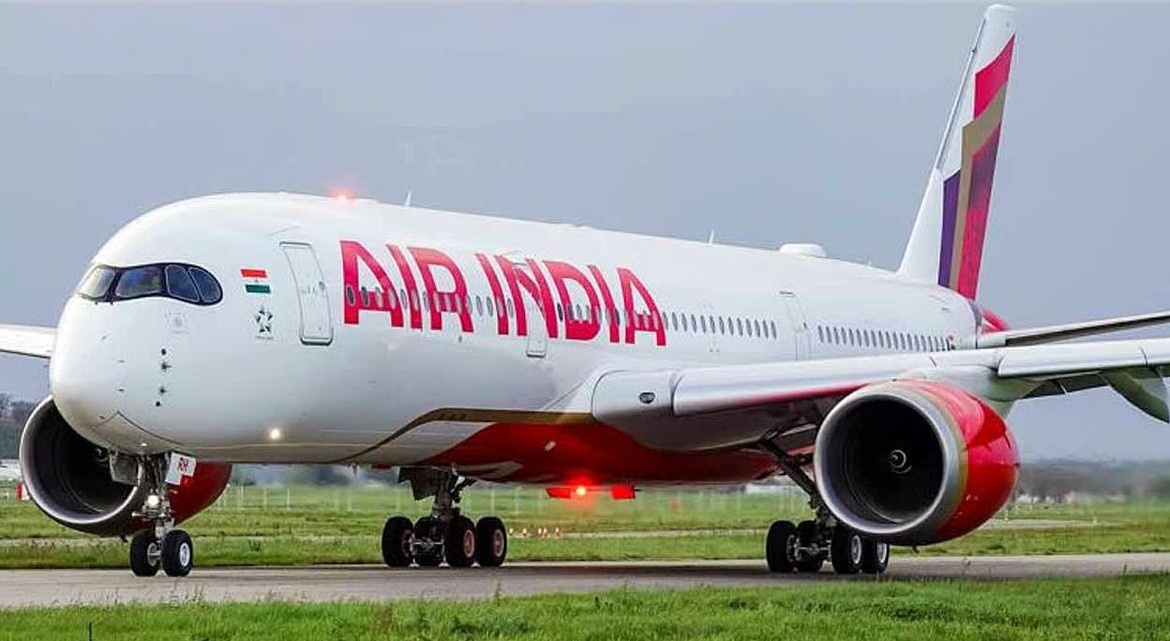
Air India, an Indian aviation giant, will introduce a Boeing 787-9 aircraft for international long-haul routes in February 2026. It is done in line with the airline's effort to advance its fleet and improve the passenger experience. The first line of the aircraft was formally handed over to Air India at Boeing's Everett factory in Seattle, USA, on 7 January. After the transfer, the Dreamliner landed at Indira Gandhi International Airport on 11 January, completing a non-stop ferry flight of 16 hours and 58 minutes. The new Boeing 787-9 will enter international, long-haul commercial service in February 2026, and the operation schedule will be announced shortly. Aircraft to Feature Three Cabin Classes, Custom-Made Interiors As stated by the airline, the new aircraft has 296 seats across three classes: Business, Premium Economy, and Economy. It also has custom-made cabin interiors installed directly on Boeing's production line. More details about the aircraft will be revealed in the coming weeks. Air India last received a line-fit Dreamliner in October 2017 when the carrier was still under government ownership. Though the airline was acquired by the Tata Group in January 2022, it continues to operate to date. As stated by the company, it will induct 5 more wide-body planes this year, for instance A350-1000s and B787-9s. Air India Places Orders for Airbus and Boeing Planes Air India has also ordered 350 Airbus and 220 Boeing aircraft. From the Airbus order, six wide-body A350S have already been inducted into the Air India fleet. In the meantime, 51 narrow-body B737-8s have been transported to Air India Express, the Tata Group-owned low-cost subsidiary of Air India that focuses on short and medium-haul routes. Furthermore, Air India's legacy B787-8 aircraft are being retrofitted, meaning they are experiencing upgrades to their cabins, interiors and onboard systems. Many of these planes will complete the process and return to service with a refreshed nose-to-tail makeover in 2026. By the end of this year, approximately 60% of their wide-body fleet will have contemporary interiors. Source:   The Economic Times

Saheel Singh 13 Jan 2026
Air India under Fire Yet Again. Why has the DGCA issued a Show-Cause Notice this Time?
Boeing Air India

Air India under Fire Yet Again. Why has the DGCA issued a Show-Cause Notice this Time?

Air India has come under the radar once again for operating a Boeing 787-8 Dreamliner despite repetitive technical glitches and system degradations. The DGCA issued a show-cause notice to the airline, flagging non-compliance with the Minimum Equipment List for the flight operated on June 28. The airline has faced complaints in 2025, with the DGCA previously issuing notices over crew and compliance violations, training gaps and maintenance concerns. As reported by PTI, the DGCA has noted safety concerns regarding aircraft dispatch, MEL compliance, and flight crew decision-making throughout the operation of flights AI 258 and AI 357. It is believed that these flights operate on the Delhi-Tokyo route. The regulator also said Air India had operated the plane despite prior knowledge of repeated hitches and system degradation. DGCA Probes Boeing 777 Engine Failure After Mid-Air Shutdown The expansions came days after the DGCA began probing an Air India incident involving a mid-air engine failure and a rushed return to Delhi airport. The Boeing 777-300ER aeroplane had seen the oil pressure in its right-hand engine drop to zero soon after take-off, forcing the crew to shut it down mid-climb. The Ministry of Civil Aviation had also noted the Air India flight AI-887 incident and sought a comprehensive report from the airline. A statement from Air India said the crew operating AI-887 decided to return to Delhi due to a technical issue, in line with standard operating procedures. It added that the aircraft is undergoing necessary checks, while a replacement plane departed with all passengers on board. The aircraft, carrying 335 people, was flying for approximately an hour before returning to Delhi. Air India to Bring Back Boeing 787-8 The Tata Group airline also outlined its 2026 plans on Wednesday, confirming that the first two Boeing 787-8 planes from its legacy fleet will return to service in February after a full interior refit. Air India’s CCO Nipun Aggarwal added in a letter to loyalty programme members that the refit of its 777 fleet will also commence this year. Six new wide-body aircraft, comprising 787s and A350S, are slated to arrive in the future.   Source: The Financial Express

Saheel Singh 02 Jan 2026
Adani Group Presses Government for Liberalization in Aviation
Adani Group Liberalization In Aviation

Adani Group Presses Government for Liberalization in Aviation

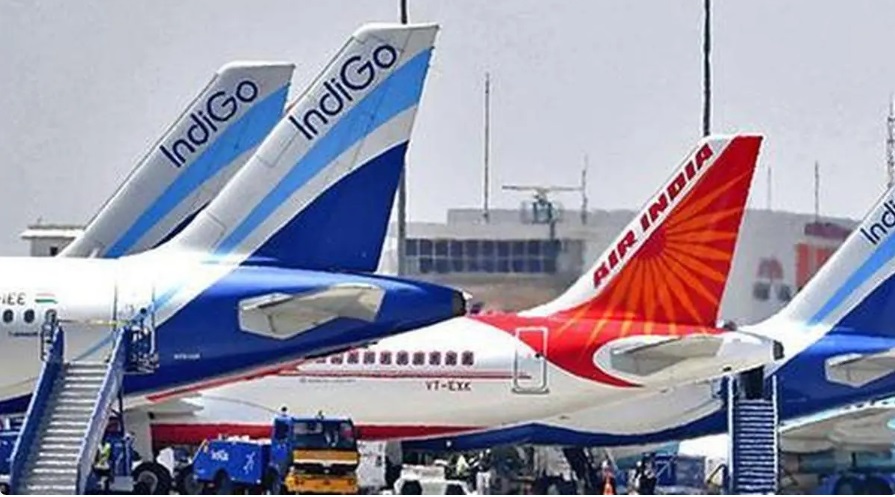
Adani Group is pushing the Union government to expand international flying rights, arguing that greater access is vital to drive traffic at the 8 airports it operates, where it is investing heavily in new terminals, runways, and passenger facilities. The push puts the infrastructure major at odds with India's two largest airlines, Tata Group-owned Air India and IndiGo, which have urged the government to move vigilantly on opening up air traffic rights to foreign carriers. Air India has warned that a fast liberalization could expose Indian airlines to unfair competition from West Asian carriers. The government has been asked by Adani Airports Holdings to initiate negotiations with the UAE, Saudi Arabia, Qatar, Singapore, Indonesia, and Malaysia regarding the expansion of bilateral flying entitlements. The group, which started commercial operations at the Navi Mumbai airport on 25 th December 2025, told the government last month that higher capacity would help Mumbai to become a global aviation hub. Jeet Adani, director at Adani Airport Holdings, has said that the corporation will invest USD 11.1 billion in airport infrastructure by 2030, including terminals, runways, aircraft-handling facilities and passenger amenities. An Adani Group official warned that restricting capacity would amount to "a criminal waste of assets" and hurt passengers through higher fares owing to limited flight options. The official added that turning Indian airports into global hubs needs broader access and passenger choice and should not hinge only on when domestic airlines feel ready to compete. International flying rights are governed by reciprocal bilateral agreements. Since coming to power in 2014, successive Modi-led governments have accepted a conservative approach to expanding rights for foreign airlines, mainly those from West Asia. The stated objective is to shield Indian carriers and develop domestic transit hubs akin to Dubai or Singapore's Changi Airport. India set a rule under the National Civil Aviation Policy of 2016 that further rights for foreign airlines would be considered only after Indian carriers had used a minimum of 80% of their existing entitlements. Consequently, foreign airlines could not add capacity despite increasing demand, contributing to higher airfares. Seats on routes, for instance, Dubai, were last increased in 2014. While both Indian airlines and Gulf carriers like Emirates and flydubai have fully used their allocated rights, the government has not permitted further expansion. The government’s hesitation stems from concerns that passengers could shift to Gulf airlines, which have large fleets of wide-body aircraft and can funnel Indian travellers to Europe and North America through hubs, for instance, Dubai, Abu Dhabi and Doha. Campbell Wilson, the Air India CEO, recently said that, in some cases, over 70% of passengers carried by foreign airlines from India are transit travellers. He claimed that liberalization should advance at a pace that does not dent investments being made by Indian airlines. Though this vigilant approach also risks underutilizing new airport infrastructure, particularly since Air India and IndiGo do not currently have aggressive international expansion plans to absorb the extra capacity being created at key Indian airports. Source: Economic Times

Saheel Singh 31 Dec 2025
half-star-solid phone