Insights on Aviation

Explore articles and updates related to Aviation in the aviation and drone industry.

Singapore Airlines and Air India Sign a Commercial Cooperation Framework Agreement
Air India Singapore Airlines

Singapore Airlines and Air India Sign a Commercial Cooperation Framework Agreement

A commercial cooperation framework agreement has been signed by Singapore Airlines and Air India, paving the way for both airlines to further strengthen their existing partnership through joint business agreements. This collaboration enables airlines to discover ways to expand connectivity between Singapore and India, offering greater benefits for customers. It was signed on 16 January 2026 in Mumbai by Air India CEO and MD, Campbell Wilson, and SIA CEO, Goh Choon Phong. Conditional on regulatory approvals and the signing of definitive joint business agreements, the airlines’ goal is to expand and improve the product and service offerings, allowing seamless connections and additional route options and letting customers book flights across both airlines under a single unified journey. This corporation also envisions a closer coordination of flight schedules between Air India and Singapore Airlines to improve convenience for customers. Today, the airlines codeshare on 61 points in 20 nations and territories. This follows the October 2024 development of their codeshare corporation, which added 51 international and domestic destinations across both networks. Campbell Wilson, CEO and MD of Air India, said: “Air India is committed to growing its global footprint, both by adding new aircraft to our own fleet and by forging stronger commercial partnerships, particularly with our fellow Star Alliance member carriers. We are pleased to take our valued, lasting relationship with Singapore Airlines to the next level through this new commercial cooperation understanding, which starts a clear and structured platform for both airlines to discover and define future areas of closer collaboration. With this measured approach, we will lay a strong foundation for sustainable, longstanding value creation for our customers and other stakeholders.” Goh Choon Phong, CEO, Singapore Airlines, said: “This agreement is a natural evolution of our successful partnership, creating genuine value and offering improved benefits to customers. It is a strategic, win-win collaboration that will fortify connectivity between Singapore and India, support the advance of air travel and tourism in both nations, and deepen their established business and people-to-people ties.” Source: IBEF

Saheel Singh 20 Jan 2026
22 Crore Fined on IndiGo for Massive Flight Disruptions in December
Indigo FDTL

22 Crore Fined on IndiGo for Massive Flight Disruptions in December

A Rs 22.20 crore penalty has been imposed on IndiGo and action has been taken against its management for the massive flight disruptions in December 2025. The chairman and members of InterGlobe Aviation Ltd, the firm that owns Indigo, confirmed they have received the DGCA's orders and will take appropriate action. Why did the Disruptions Happen? An inquiry committee, set up by the DGCA on the directions of the Ministry of Civil Aviation, found that the main causes were over-optimization of operations, insufficient regulatory preparedness, weak software systems and inadequacies in management oversight at IndiGo. IndiGo was unable to maintain adequate operational buffers and did not implement the revised flight duty time limitation (FDTL) norms as required. Crew rosters were designed to maximize use, relying heavily on deadheading, tail swaps and long duty hours, which decreased the time for recovery and compromised working efficacy. Action Against Management The DGCA issued a caution to the IndiGo CEO for insufficient overall oversight and crisis management. A warning is issued to the accountable manager for failing to evaluate the impact of the winter schedule 2025 and revised FDTL norms. A warning was issued to the senior vice president, directing that he be relieved of his current operational responsibilities. Warnings were also issued to the deputy head of flight operations, the AVP of crew resource planning and the director of flight operations for lapses in supervision, workforce planning and roster management. IndiGo has been told to take action against other personnel recognized internally and submit a compliance report to the DGCA. How was the Penalty Calculated? 1.80 crore was levied on the airline as a one-time penalty for six violations of the Civil Aviation Requirements, such as failing to adhere to FDTL norms, inappropriate control of operations and insufficient management oversight. A fine of 20.40 crore was levied on the airline by the regulatory authority for non-compliance with the revised FDTL provisions for an extended period of 68 days, spanning from 5th December 2025 to 10th February 2026. The total fine was Rs 22.20 crore.   Apart from this, the airline will also give a bank guarantee of Rs 50 crore under the IndiGo Systemic Reform Assurance Scheme. Passenger Relief and Reforms IndiGo restored its operations quickly post-disruption. Along with refunds and mandatory compensation to passengers, the airline issued a 'Gesture of Care' voucher of Rs 10,000, valid for a year, to all who suffered due to flight delays or cancellations of over 3 hours during the disruption. The MoCA conducted an internal inquiry within the DGCA for the identification and implementation of systemic improvements. Source: NDTV

Saheel Singh 19 Jan 2026
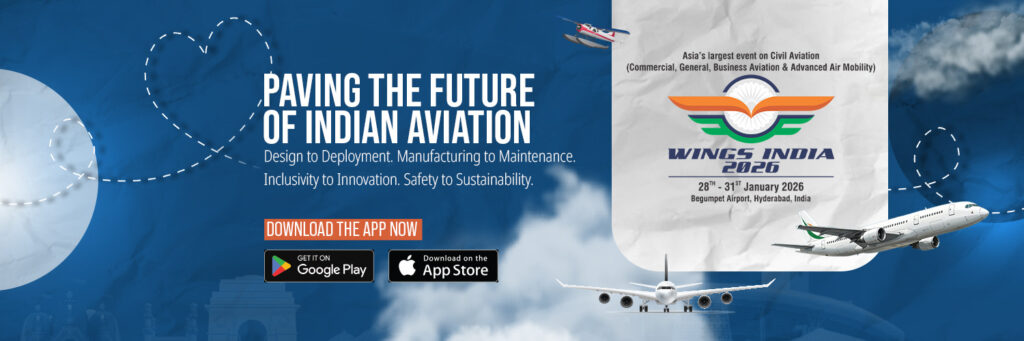
Wings India 2026: Asia’s Largest Civil Aviation Event Will Showcase the Future of Aviation
Wings India 2026 Aviation

Wings India 2026: Asia’s Largest Civil Aviation Event Will Showcase the Future of Aviation

Asia’s largest civil aviation event, Wings India 2026, will be launched by Rammohan Naidu, Minister of Civil Aviation. The launch will start a four-day global aviation event to be held from 28 to 31 January 2026 at Begumpet Airport, Hyderabad.   The theme of the event will be “ Indian Aviation: Paving the Future, From Design to Deployment, Manufacturing to Maintenance, Inclusivity to Innovation and Safety to Sustainability ”. The event will highlight India’s fast-expanding aviation landscape, its growing global footprint, and its vision to develop into a hub for manufacturing, services, innovation, and sustainable aviation solutions. A Global Platform for Aviation Excellence Wings India 2026 will have an expansive international exhibition, static aircraft displays, flying and aerobatic shows, an advanced international conference, CEO roundtables, B2B and B2G meetings, an aviation job fair, an awards ceremony and vibrant cultural programmes. Delegates from across the world will reinforce the event’s stature as a leading global aviation forum. This event will be attended by airlines, aircraft and engine manufacturers, MROs, airport developers, OEMs, technology providers, training institutions and service partners. This will be a meeting point for industry leaders, policymakers, innovators and investors to deliberate on evolving trends, prospects, and pathways shaping the civil aviation future worldwide. The international conference will have 13 thematic sessions, along with the Global CEOs Forum and Ministerial Plenary, covering main areas, for example, Airports, Aircraft Leasing, Helicopters, Airlines, Women in Aviation, MRO, Air Cargo Transportation, Business Aviation and Small Aircraft, Aircraft Component Manufacturing, Sustainable Aviation Fuel, Flying Training and Skilling, Advanced Air Mobility and Drones. Strong International and State Participation This event will be attended by foreign delegations and senior government officials from over 20 countries, as well as official delegations, reinforcing international cooperation in the aviation industry. Indian state participation will showcase aviation-led growth, investment prospects and infrastructure expansion. Spectacular Air Shows and Aircraft Displays Wings India 2026 will have impressive static aircraft displays, flying displays and aerobatic air shows, showcasing various aircraft. Highlight attractions comprise aerial performances by the Indian Air Force’s Surya Kiran Aerobatic Team. Dedicated platforms will be provided by the event for exhibitions, chalets and B2B/B2G meetings, allowing networking, partnerships and investment discussions. An Aviation Job Fair will connect industry leaders with aspiring aviation professionals. A curated Civil Aviation innovation Challenge for students will be organized to endorse innovation, problem-solving and industry-oriented thinking among students and professionals, providing them with practical aviation experience. The event will also have a vibrant Cultural Programme reflecting India’s rich heritage, adding an exclusive experiential dimension for delegates and visitors, together with the aviation showcases. An Award Ceremony, continuing the tradition of recognizing excellence and outstanding contributions in civil aviation will also be held. With its strategic focus, Wings India 2026 will be a landmark event that will not only showcase India’s aviation development story but also strengthen global partnerships, drive innovation and chart the future trajectory of the civil aviation sector. Source: PIB

Saheel Singh 19 Jan 2026

Airlines Issue Advisory for International Flyers as Iran Shuts Airspace
Iran Airspace Airspace Closure

Airlines Issue Advisory for International Flyers as Iran Shuts Airspace

On 15th January, Indian carriers issued advisories for international passengers after Iran momentarily closed its airspace, triggering flight delays, rerouting and cancellations on more than a few overseas routes. Airlines urged travellers to check flight status before heading to airports, describing the expansion as sudden and unforeseen and saying flights were being rerouted in the interest of passenger and crew safety. What is Said by the Airlines? Air India said flights were being rerouted, which could cause delays, while some services had been cancelled where rerouting was not feasible. “As a result of the closure of Iranian airspace, some international flights are rerouted or cancelled.   Passengers should check flight status on our website. Safety of the crew and passengers is our priority,” the airline said. Several international flights were affected and the airline assured passengers alternative arrangements or refunds. SpiceJet directed passengers to check flight status online or contact its round-the-clock helpline, warning of possible disturbances owing to the airspace closure. Why has Iran Closed its Airspace? Iran extended the temporary closure of its commercial airspace early on 15 th January, among mounting tensions with the USA and ongoing nationwide protests. While officials did not quote a formal reason, the move followed warnings by Iranian authorities of fast-track trials and likely executions of protest detainees, together with threats of retaliation if the US or Israel intervened. The closure seems to be a precautionary measure as unrest continues in Tehran and other cities. Distinctly, some US staff in Qatar were counselled to evacuate and President Donald Trump issued various statements within 24 hours signalling likely action against Iran, though without providing details. How long will the Closure Last? Initial notices to pilots recommended the airspace would be closed until 7.30 am (local time) on 15 th January, following an earlier shutdown that lasted just more than two hours. Iranian authorities have not announced a permanent closure and international carriers are closely monitoring the state of affairs for further updates. Indian Embassy Issues Advisory The Indian Embassy in Tehran, on 14th January, advised Indian citizens, including students, pilgrims, businesspersons and tourists, to leave Iran by any means, including commercial flights. It counselled nationals to evade protests, exercise caution, stay in touch with the embassy and keep travel documents ready. More than 2,000 students from J&K are currently in Iran. The External Affairs Ministry has advised against non-essential travel to Iran amid the ongoing unrest. Source: The Business Standard

Saheel Singh 15 Jan 2026
'Regret incident': Air India Issues Statement After Pilot Found Drunk on Vancouver, Delhi flight; Initiates Probe
Aviation Regulation Alcohol Regulation

'Regret incident': Air India Issues Statement After Pilot Found Drunk on Vancouver, Delhi flight; Initiates Probe

Air India said it regretted the occurrence after one of its pilots on a Vancouver–Delhi flight on December 23 was found to be drunk by Canadian authorities. Flight AI186 was delayed at Vancouver airport after the cockpit crew member was offloaded ahead of departure. In a statement, an Air India representative said Canadian authorities had flagged the issue, after which the pilot was taken for additional inquiry. “Consistent with safety protocols, an alternate pilot was rostered to operate the flight, resulting in the delay. Air India regrets the inconvenience caused to its passengers and is fully cooperating with the local authorities,” the airline said. The spokesperson added that the pilot had been taken off flying duties throughout the enquiry and that strict action would be taken if any violation were confirmed. “Pending the consequence of the investigation, any confirmed violation will attract strict punitive action as per the company policy,” the statement said. Air India said that there is a zero-tolerance policy on violations and said safety is its highest priority. The incident was highlighted after Transport Canada informed Air India that the pilot failed a breathalyzer test before operating the flight. In a letter dated December 24, Transport Canada said the incident resulted in a violation of Canadian aviation regulations and the conditions set out in Air India’s foreign air operator certificate. It also asked Air India to conduct a detailed investigation under its safety management system and to submit a report on the steps taken by January 26, 2026. It also said enforcement action could be pursued by Canadian authorities. The flight operated a long-haul route that now includes a refuelling stop due to Pakistan airspace restrictions. AI186 was to take flight from Vancouver to Vienna with one set of pilots, after which another crew would take over for the Vienna–Delhi leg. Source: Times of India

Saheel Singh 02 Jan 2026
Adani Group Presses Government for Liberalization in Aviation
Adani Group Liberalization In Aviation

Adani Group Presses Government for Liberalization in Aviation

Adani Group is pushing the Union government to expand international flying rights, arguing that greater access is vital to drive traffic at the 8 airports it operates, where it is investing heavily in new terminals, runways, and passenger facilities. The push puts the infrastructure major at odds with India's two largest airlines, Tata Group-owned Air India and IndiGo, which have urged the government to move vigilantly on opening up air traffic rights to foreign carriers. Air India has warned that a fast liberalization could expose Indian airlines to unfair competition from West Asian carriers. The government has been asked by Adani Airports Holdings to initiate negotiations with the UAE, Saudi Arabia, Qatar, Singapore, Indonesia, and Malaysia regarding the expansion of bilateral flying entitlements. The group, which started commercial operations at the Navi Mumbai airport on 25 th December 2025, told the government last month that higher capacity would help Mumbai to become a global aviation hub. Jeet Adani, director at Adani Airport Holdings, has said that the corporation will invest USD 11.1 billion in airport infrastructure by 2030, including terminals, runways, aircraft-handling facilities and passenger amenities. An Adani Group official warned that restricting capacity would amount to "a criminal waste of assets" and hurt passengers through higher fares owing to limited flight options. The official added that turning Indian airports into global hubs needs broader access and passenger choice and should not hinge only on when domestic airlines feel ready to compete. International flying rights are governed by reciprocal bilateral agreements. Since coming to power in 2014, successive Modi-led governments have accepted a conservative approach to expanding rights for foreign airlines, mainly those from West Asia. The stated objective is to shield Indian carriers and develop domestic transit hubs akin to Dubai or Singapore's Changi Airport. India set a rule under the National Civil Aviation Policy of 2016 that further rights for foreign airlines would be considered only after Indian carriers had used a minimum of 80% of their existing entitlements. Consequently, foreign airlines could not add capacity despite increasing demand, contributing to higher airfares. Seats on routes, for instance, Dubai, were last increased in 2014. While both Indian airlines and Gulf carriers like Emirates and flydubai have fully used their allocated rights, the government has not permitted further expansion. The government’s hesitation stems from concerns that passengers could shift to Gulf airlines, which have large fleets of wide-body aircraft and can funnel Indian travellers to Europe and North America through hubs, for instance, Dubai, Abu Dhabi and Doha. Campbell Wilson, the Air India CEO, recently said that, in some cases, over 70% of passengers carried by foreign airlines from India are transit travellers. He claimed that liberalization should advance at a pace that does not dent investments being made by Indian airlines. Though this vigilant approach also risks underutilizing new airport infrastructure, particularly since Air India and IndiGo do not currently have aggressive international expansion plans to absorb the extra capacity being created at key Indian airports. Source: Economic Times

Saheel Singh 31 Dec 2025
Why India’s Aviation Crisis Caused a Meltdown?
Airline Crisis Indigo

Why India’s Aviation Crisis Caused a Meltdown?

When the market is controlled by just two airlines, one company’s internal crisis turns into a national emergency. IndiGo’s lack of pilots, triggered by the rollout of fatigue-management rules, should have troubled one airline. As an alternative, it paralyzed India’s entire aviation network. Fares rose to Rs 40,000-80,000, refunds were delayed for days and substitute carriers could not absorb the shock. In a competitive market, passengers would have choices. In India’s duopolistic one, they had none. The fatigue rules were not the villain. Pilot fatigue is a safety threat and aligning India’s Flight Duty Time Limitations with global norms is long overdue. But the transition was mishandled on all sides. Regulators announced the rules approximately two years ago, then delayed and re-delayed enforcement, only to abruptly push through implementation, leaving airlines scrambling. IndiGo, undervalued the number of supplementary pilots it needed. This combination is why passengers ended up paying the price. What’s missing from the conversation is the structural cause; India’s aviation industry lacks depth. When just two airlines, IndiGo and Air India, hold over 90 per cent of the market share, the complete system hinges on their capability to function flawlessly. In India, passengers face a system where, when “one airline hesitates, everyone suffers.” And consumers suffered immensely. People missed job interviews, medical appointments and weddings. Some reached only to determine their flights had been cancelled, with no SMS alert. Refunds trickled in only after government orders. A nation aiming to become the world’s third-largest aviation market cannot function with outdated passenger protection norms. India needs a clear and enforceable Air Passenger Bill of Rights, one that guarantees automatic funds, timely alerts and fair compensation for final cancellations, without burdening airlines under knee-jerk regulations. But consumer rights alone won’t fix a market with little competition. For honest resilience, India must remove barriers that make it hard for new airlines to scale: high ATF taxes that wear away margins, slot allocation policies that reward incumbents, and regulatory unpredictability that discourages investment. The government says India has room for 5 major airlines. That won’t happen without policy reforms that make market entry easier. IndiGo’s crisis wasn’t just about fatigue rules. India’s aviation future hinges on embracing what every competitive, consumer-friendly market eventually learns: choice is stability. If India wants a resilient aviation ecosystem, it must start allowing competition. The skies need more carriers, more capacity and more consumer choice. Then, this won’t be the last time passengers pay for a crisis they didn’t create. Source: Asia News Network

Saheel Singh 26 Dec 2025
Delhi Court Asks Aviation Body to Explain Relaxations in Pilot Fatigue Rules
Pilot Fatigue Aviation Laws

Delhi Court Asks Aviation Body to Explain Relaxations in Pilot Fatigue Rules

The Delhi High Court sought a response from the DGCA on a plea by the Indian Pilots Guild seeking contempt action against authorities for allegedly not fully realizing the new flight duty time limitation norms accepted by the court earlier this year. The plea supposed that airlines were granted extensions and relaxations in pilot fatigue management rules in violation of the Civil Aviation Requirement 2024 framework. Justice Amit Sharma issued notice to the Directorate General of Civil Aviation on the Indian Pilots Guild's contempt petition and asked it to file a response. The court listed the matter for additional hearing on April 17. In its plea, the association sought the initiation of contempt proceedings against the authorities for their alleged wilful and deliberate non-compliance with the court's earlier orders. It said the new Flight Duty Time Limitation norms were meant to address fatigue management for the flying crew; however, by granting variations, exemptions, and relaxations to airlines, DGCA has defied the undertaking and directions of the high court and jeopardized flight and passenger safety. "By approving non-compliant FDTL schemes and granting variations, exceptions and relaxations to the airlines, the actions of the respondents in the implementation of the FDTL CAR constitute wilful non-compliance of the directions of this court...," the plea said. DGCA's counsel opposed the contempt plea, arguing that the court had not frozen the CAR's filings. While application timelines were binding, the regulator retained constitutional powers under the Aircraft Act and Rules to grant temporary, case-specific exemptions. DGCA's counsel argued that such relaxations were limited, subject to review and that the CAR remains in force. Earlier this year, DGCA, in its affidavit before the high court in an alternative matter, said the new FDTL norms will be implemented in a phased manner. Of the 22 proposed clauses, 15 were implemented on July 1, and the remaining are to take effect on November 1, 2025. The watchdog's revised CAR 2024 related to the FDTL provides for more rest time for pilots, among concerns over pilot fatigue. Primarily, the new norms were to take effect on June 1, 2024. The court's decision followed pleas filed by the Indian Commercial Pilots Association, the Indian Pilots Guild, and the Federation of Indian Pilots concerning the regulator's revised FDTL norms. In November 2025, the Federation of Indian Pilots also filed a contempt petition, claiming that the DGCA had deliberately failed to comply with the High Court's directions. The federation demanded that, despite assurances to the court, the regulator allow airlines extensions and relaxations and clear fatigue management schemes that did not align with the CAR 2024 norms or the agreed timelines. Source: NDTV

Saheel Singh 17 Dec 2025
India Likely to Shift to Ethanol-Blended Aviation Fuel by Mid-2027
Ethanol Blended Fuel Aviation Fuel

India Likely to Shift to Ethanol-Blended Aviation Fuel by Mid-2027

India will shift to ethanol-blended aviation fuel by mid-2027, gradually ramping it up in phases, with the addition of over two dozen distilleries supported by federal biofuel incentives. The nation, which has the world’s third-largest aviation market, is introducing 1% ethanol blending in jet fuel by 2027, raising it to 2% in 2028 and further to 5% by 2030. Murlidhar Mohol, Union Minister of State, had shared these targets in Parliament. India has already carried out trial flights using cleaner aviation fuel. In 2023 March, Air Vistara, which has since merged with Air India, operated a long-haul Boeing 787 flight from the USA to India using blended fuel. In the same year, Air Asia flew the nation’s first commercial domestic flight between Pune and Delhi with a fuel blend. As stated in the news report, a long-pending policy on sustainable aviation fuel will be released for public consultation next month, the official said, requesting anonymity. The International Civil Aviation Organization has accepted the Carbon Offsetting & Reduction Scheme for International Aviation as a global market-based measure to decrease emissions from international aviation that need offsetting above a baseline value. Airlines can also use SAF or offset their production by purchasing carbon credits from ICAO-approved Emissions Unit Programmes. SAF offers a direct pathway to emission reduction by lowering the lifecycle carbon footprint of aviation fuel. When airlines adopt CORSIA-eligible SAF certified against ICAO’s sustainability standards and verified through Monitoring, Reporting, and Verification, they can claim these reductions as alternatives for carbon credits, thus reducing their offsetting obligations under the scheme. The Centre is supporting biofuel projects through the Pradhan Mantri JI-VAN Yojana, which offers monetary assistance for setting up plants, including those producing aviation fuel. Under the scheme, the government offers interest support for five years and a one-year repayment break for loans taken out to set up new ethanol distilleries. The support covers interest up to 6% per year or half of the bank’s lending rate, whichever is lower. Several companies/PSUs, namely Indian Oil Corporation Limited, Bharat Petroleum Limited, Hindustan Petroleum Limited, Mangalore Refinery and Petrochemicals Limited, CSIR Indian Institute of Petroleum, Chennai Petroleum Corporation Limited, Indian Institute of Petroleum, etc., are presently working on SAF production/research. Source: Hindustan Times

Saheel Singh 17 Dec 2025
Civil Aviation Ministry Issues Alert for Northern India Airports Amid Dense Fog, Travellers Should Check Flights
Aviation Training Aircraft Flying

Civil Aviation Ministry Issues Alert for Northern India Airports Amid Dense Fog, Travellers Should Check Flights

The Civil Aviation    Ministry issued a heavy fog alert for airports across north India, warning that dense fog has reduced visibility and disturbed flight operations, particularly in Delhi. Passengers should check their flight status with the airline before leaving and monitor updates on the airline's website or application. Travellers should allow extra time for their journeys because of possible fog-related delays. On X, the Ministry of Civil Aviation wrote, "Heavy Fog Alert for Northern India, Delhi & other airports in Northern India are experiencing dense fog, affecting visibility. Passengers should check the latest flight status with their airline. Check flight information on the airport website. Please allow extra travel time. Safety is top priority. Our teams & ATC are working diligently to minimize disruptions. I appreciate your patience." The Ministry emphasized that safety is a top priority. Passengers were patient and cooperative during the ongoing adverse weather conditions. In the meantime, IndiGo Airlines also issued an advisory about low-visibility conditions over the national capital, noting that dense fog has affected operations at Delhi and several other airports in northern India. "Low visibility (below minima), because of dense fog, has severely impacted operations at Delhi and airports across northern India, which is beyond our control. Our teams are closely monitoring the situation and coordinating with Delhi airport, in line with established safety protocols," IndiGo said in the press statement. The airline said that while operations are being adjusted according to prevailing weather conditions, some flights may be delayed, and others could be cancelled proactively during the day to prioritize safety and avoid extended waiting times at airports. “We have issued advisories to our customers and proactively informed them to minimize inconvenience," the statement read. IndiGo further urged passengers to regularly check flight status on official airline websites and mobile applications to stay updated on any delays or cancellations before travelling to the airport. Source: Business Line

Saheel Singh 15 Dec 2025
Government Orders IndiGo to Curtail Flight Schedule by 10%, Double of What the Regulator DGCA had Ordered
Aviation Training Pilot Training

Government Orders IndiGo to Curtail Flight Schedule by 10%, Double of What the Regulator DGCA had Ordered

The government on 9 th March 2025, ordered IndiGo to reduce its schedule by at least 10 per cent, doubling the curtailment from 5 per cent that the aviation watchdog (DGCA) had ordered following network-wide disruptions at the country’s largest airline, which led to scores of daily flight cancellations since the middle of last week. The Ministry of Civil Aviation communicated the decision in a meeting with IndiGo CEO Pieter Elbers. IndiGo is India’s largest airline, with a domestic market share of nearly 65 per cent, and its schedule includes over 2,300 daily flights, around 2,150 of which are domestic. A 10% curtailment in domestic flights would mean that the airline’s daily scheduled domestic flights would come down to fewer than 1,950. According to sources, the freed-up slots may be offered to other carriers if they have additional capacity to deploy. “The Ministry considers it necessary to curtail the overall Indigo routes, which will help in stabilizing the airline’s operations and lead to reduced cancellations. A 10% curtailment has been ordered. While abiding with it, Indigo will continue to cover all its destinations as before,” Civil Aviation Minister K Rammohan Naidu said Tuesday in a post on X. Naidu said that Elbers was “summoned” to the ministry to provide an update on the airline’s stabilization measures. “During the last week, many passengers faced severe inconvenience due to Indigo’s internal mismanagement of crew rosters, flight schedules and inadequate communication. While the enquiry and necessary actions are underway, another meeting with Indigo’s top management was held to review the stabilization measures. CEO Pieter Elbers was summoned to the Ministry to provide an update. He confirmed that 100% of the refunds for flights affected till 6th December have been completed. A strict instruction to accelerate the completion of the remaining refunds and baggage handover was given,” Naidu said. In a statement, earlier today, IndiGo announced that its operations have stabilized and normalized. IndiGo operated over 1,800 flights on Tuesday, operating to all destinations on its network, and its on-time performance is back at over 80 per cent. The airline expects to operate around 1,900 flights on Wednesday. Sources close to the airline said that IndiGo was looking to gradually increase its flights to its regular levels over the next few days. But it will now have to abide by the government-ordered schedule curtailment. “IndiGo can confirm that after days of significant and steady improvement across the network, we have reinstated our operations across our network. This means all flights published on our website are scheduled to operate with an adjusted network. Also, nearly all bags that were stuck at airports have been delivered to our customers, and the teams are working on delivering the remaining at the earliest,” IndiGo said in a statement before the MoCA’s 10% schedule curtailment decision was announced. Earlier, the DGCA had ordered a 5% curtailment of IndiGo’s flight schedule, or around 110-115 daily flights, especially on high-demand and high-frequency routes. The regulator directed IndiGo to submit the revised and truncated schedule by 5 pm on December 10. A further rationalization of IndiGo’s flight schedule could be on the cards and will depend on IndiGo’s daily flight operations, sources indicated. Following the announcement from MoCA, the DGCA revised its order to IndiGo to reflect 10% curtailment. The airline’s weekly domestic flights increased to 15,014 in the winter schedule, which took effect on October 26, from 14,158 in this year’s summer schedule. IndiGo, however, faced crew shortages, primarily due to its inadequate preparation for the second phase of the new crew rest and duty norms that took effect on November 1. This led to widespread network-wide disruption in the airline’s operations. In view of the disruption, which brought India’s aviation ecosystem to its knees, pilot associations and aviation experts strongly criticized and questioned the DGCA’s earlier decision to allow an increase in flights in the airline’s winter schedule. The new Flight Duty Time Limitation rules stipulate more rest for pilots and the rationalization of their flying duties, particularly late-night operations, in a bid to better manage pilot fatigue, a key risk to aviation safety. These new norms, which were stipulated in January last year, were delayed in implementation and took effect in two phases, on July 1 and November 1, with the second phase rollout hitting IndiGo particularly hard. The new norms meant that airlines either had to hire more pilots to maintain their schedules or curtail them in line with the new requirements. With the second phase of the new FDTL norms taking effect on November 1, IndiGo started feeling the heat with a higher-than-usual number of cancellations and flight delays throughout November. As delays compounded, with a few other external factors also at play, disruptions became widespread over the past few days. According to the DGCA, IndiGo informed the regulator that it had 1,232 flight cancellations in November, 755 of which were due to crew and FDTL-related constraints. In review meetings, IndiGo also accepted that the disruptions “have arisen primarily from misjudgment and planning gaps in implementing” the second phase of the new FDTL rules, and that the actual crew requirement for the new rules exceeded what it had anticipated, as per the DGCA. The massive disruption at IndiGo threw commercial flight operations out of gear all over the country. Given the scale of the disruption, the DGCA on Friday granted IndiGo a temporary one-time exemption from some night operations-related changes in the new FDTL norms for its Airbus A320 pilots. The temporary rollback, which will be in place till February 10, is likely to help IndiGo to get its act together and stabilize operations from hereon. The DGCA has also granted a few other temporary relaxations to IndiGo. But the government and the regulator have turned up the heat on IndiGo by initiating a DGCA inquiry into the disruption. A show cause notice was also issued to the airline’s CEO, Pieter Elbers and its COO, Isidre Porqueras. Civil Aviation Minister K Rammohan Naidu has blamed lapses on IndiGo’s part for the disruption and said that strict action will be taken based on the inquiry report to “set an example”. He said that sufficient notice was given by the DGCA to all airlines for the implementation of the new FDTL rules. In an answer to the show-cause notices issued by the DGCA to IndiGo’s CEO, Pieter Elbers and chief operating officer Isidre Porqueras, the airline said that it is realistically not possible to identify the precise causes of the disruption at this stage because of the intricacy and vast scale of operations, and a comprehensive root cause analysis is being done. But it did share some preliminary contributing factors, whose combination led to the disruption. “The airline suggests that the disruption resulted from a combination of the following factors, which coincided in lesser or greater measure: 1.  Minor technical glitches. 2.  Schedule changes linked to the start of the winter season. 3.   Adverse weather conditions. 4.  Increased congestion in the aviation system. 5. Implementation of and operation under the updated crew rostering rules,” the DGCA had said in a release. “IndiGo notes they had been engaging with the DGCA regarding challenges in implementing the Flight Duty Time Limitations Phase II and were seeking variations, exemptions, or extensions. The disruptions began in early December when the compounding factors resulted in a lower On-Time Network Performance, which affected crew availability,” the regulator said, adding that it is in the process of examining IndiGo’s response and “appropriate action as deemed appropriate will be taken in due course”, the regulator had said. Source: The Indian Express

Saheel Singh 10 Dec 2025
IndiGo Chaos Exposes Cracks in India's Aviation Monopoly
Aviation Training Aircraft Flying

IndiGo Chaos Exposes Cracks in India's Aviation Monopoly

IndiGo has plunged the country's skies into turmoil, cancelling over 2,100 flights since December 1 and stranding many passengers. The collapse started quietly but intensified rapidly. On December 5 alone, IndiGo axed over 1,000 flights over half of its daily schedule, plunging its on-time performance to a dismal 8.5%. Airports in Delhi, Mumbai, Bengaluru, Hyderabad, and Chennai have become scenes of desperation, with harassed travellers sleeping on the floor, clashing with security, and venting fury on social media. By Sunday, another 650 flights were grounded; however, the airline vowed stabilization by December 10. At the heart of the debacle are stringent new Flight Duty Time Limitation rules enforced by the DGCA, aimed at ensuring that pilots and crew receive acceptable rest for safety. Weekly rest periods were extended from 36 to 48 hours and daily flying was capped at 8 hours. Night landings were slashed from six to two per week. Pieter Elbers, IndiGo CEO, credited the chaos to a "system reboot" and external factors such as weather and tech glitches, promising refunds and a return to normality between December 10 and 15. But critics, including the Airlines Pilots Association of India, decry it as a deliberate ploy: mass cancellations to pressure regulators into rollbacks. On December 5, the government obliged, granting IndiGo a one-time exemption until February 10, allowing layovers to count toward rest and relaxing night-duty curbs, a move slammed as prioritizing profits over passenger safety. A Viral Critique: From Anti-Corruption Protests to Corporate Cronyism? The crisis has boosted online discourse, with popular YouTuber and commentator Dhruv Rathee's latest video, widely shared on X by activist Jennifer Fernandes, framing it as the bitter fruit of unchecked monopolies during Prime Minister Narendra Modi's tenure. In the nearly three-minute clip, viewed more than 4,000 times since Saturday, Rathee juxtaposes footage of irate crowds at terminals with clips of the 2011 Jantar Mantar anti-corruption protests, once led by a young Modi. "From Jantar Mantar’s scripted 'anti-corruption' theatrics to Modi’s full-blown monopoly model, the arc is complete," Fernandes captioned the post, echoing Rathee's narrative. The video details how IndiGo's 65% market share, alongside Air India's 30%, has crushed competition, recalling a vibrant era of carriers like Jet Airways, SpiceJet, and Kingfisher. Opposition Fires Salvos: "Ease of Doing Business or Cronyism?" The DGCA has issued show-cause notices to Elbers and COO Isidro Porqueras, demanding explanations within 24 hours. IndiGo's board, meanwhile, activated a crisis management group led by Chairman Vikram Singh Mehta. The government capped fares on unaffected routes and deployed extra trains to ease the backlog, but stranded passengers like those at Ranchi's Birsa Munda Airport continue to seethe. As IndiGo scrambles to hire crew and refund tickets, orders that must be completed by Monday, the episode underscores deeper woes in India's aviation boom: a near-oligopoly in which one carrier's stumble grounds a nation. For Fernandes and Rathee, it's a stark reminder that the "ensuing tragedy witnessed by us all in real time" isn't just logistical; it's a fallout of power consolidated in a few hands. With operations limping toward recovery, the question lingers: Will this "first blood" from electoral bond ghosts force real reform, or just more exemptions?   Source: The Hindu

Saheel Singh 09 Dec 2025
Air India to Induct 26 New Planes in 2026
Aircraft Flying Aviation Training

Air India to Induct 26 New Planes in 2026

Air India Group expects 2026 to be the most visible phase of its ongoing overhaul, even as its overall capacity will remain mostly unchanged next year due to concurrent inductions of new aircraft and retirements of older ones. CEO and MD Campbell Wilson said the airline will add 26 aircraft in 2026, six wide-bodies and 20 narrow-bodies, but the net fleet count will stay moderately flat as leased Boeing 777s are returned. Three 777s owned by the airline are retired, and a substantial portion of the fleet remains grounded for retrofits. A stronger surge in capacity is expected in 2027–28 as bulk aircraft deliveries commence. “The number of aircraft in 2026 starts and ends the same, but they are different aircraft. The net growth will really come from the following years,” Wilson said. What did Wilson Say? Wilson, speaking at his first media conference since the June 12 Dreamliner crash, said the programme to upgrade the wide-body fleet will define Air India's 2026. The first two refurbished Boeing 787-8 aircraft will return to service in February, after which 2 to 3 aircraft will be upgraded every month. By the end of 2026, about 66% of the 787 fleet will have new interiors, in-flight entertainment, Wi-Fi and premium seats, with full completion targeted for mid-2027. Overall, the airline will operate about 81% of its international flights with upgraded aircraft by the end of next year. Narrow-body refurbishment is nearing completion, with 83% of the fleet already upgraded. Seventeen legacy narrow-bodies that were earlier planned for retirement will now be retained to offset delays in Airbus and Boeing deliveries. Aircraft from Vistara, which merged with Air India in November 2024, will start accepting Air India livery and interior branding this month. Despite the transformation schedule, global supply-chain pressures will weigh on deliveries. Wilson said Air India should have received 28 brand-new aircraft from its total 570-aircraft order by now, but only “white tail” aircraft, originally manufactured for other customers, have been transported so far. The CEO, though, stressed that the investment plan remains intact even in the face of recent setbacks, such as the fatal AI 171 crash and softer US travel demand driven by visa delays, airspace constraints and longer flying times. Wilson said passengers will notice the most substantial improvement in 2026 across products and operations, including advanced wide-bodies, refreshed narrow-bodies, expanded training and upkeep infrastructure and a uniform customer experience across the merged airline. The Maharaja loyalty programme is being extended across the group, allowing recognition and rewards across all Air India entities. Wilson on Ahmedabad crash Wilson said that 95% families affected by the June 12 Ahmedabad air crash have received interim relief. “About 70 families have also received ex gratia payments from the AI 171 Trust, with another 50 in process. We will reach out to all affected families, as Air India and Tata Sons, to provide whatever support they may require,” he said. Source: Financial Express

Saheel Singh 26 Nov 2025
Indias Domestic Aviation Demand Strengthens in October 2025
Aviation Training Aircraft Pilot

Indias Domestic Aviation Demand Strengthens in October 2025

India’s aviation landscape for October 2025 indicates that domestic air passenger traffic, ICRA's projections, and passenger load factor trends reflect underlying resilience in the nation’s travel ecosystem. There is a noticeable rise in overall travel interest, driven mainly by renewed confidence among leisure travellers, improved fleet availability, and seasonal tourism peaks that frequently inspire movement across key states and cities. According to the latest analysis by ICRA, passenger movements across Indian airports have been supported not only by higher flight occupancy but also by sustained recovery in aviation-related operations, which have contributed significantly to travel and tourism in the country. In October, domestic air passenger traffic in India grew in line with broader improvements across the national aviation network, suggesting the sector has efficiently adapted to operational challenges. Encouraging numbers in capacity deployment, combined with consistently strong interest amongst travellers heading to established and emerging destinations, have helped create a stable foundation for the aviation outlook. This expansion is significant for India’s travel sector, where air connectivity is important in linking tourism hubs and supporting regional economies. Steady Growth Reflected in India’s Domestic Aviation Activity The domestic aviation sector in India has been observed moving through a phase of renewed momentum in October 2025, with ICRA estimating that passenger traffic reached 14.28 million during the month. This signified a 4.5% increase over the 13.6 million passengers who travelled in October 2024. The month-on-month growth of 12.9% compared to September 2025 further indicated that the aviation landscape is benefiting from a surge in holiday travel, festival-related movement, and improved connectivity across the country’s major travel corridors. India’s domestic aviation network, supporting vital tourism flows across states such as Goa, Rajasthan, Himachal Pradesh, Kerala, and Jammu and Kashmir, has anchored the resurgence of intra-country travel. With improving convenience and accessibility, the sector has played a central role in revitalizing local tourism economies that depend heavily on air-linked visitors. Passenger Load Factors Highlight Sustained Travel Demand The average passenger load, one of the strongest indicators of aviation demand, stood at 84.7% during October 2025. This marked an improvement over the 82.4% recorded in October 2024. This shift is a clear reflection of strong, consistent consumer appetite for travel within India. A high PLF has also been advantageous for airlines operating in the country, allowing more efficient seat use and improving operational stability. Tourist-heavy routes, for example, those connecting Delhi to Leh, Mumbai to Kochi and Bengaluru to Port Blair, have contributed to these strengthened load factors. Seasonal demand for hill stations and beach destinations has a big role in shaping this positive trajectory. Return of Grounded Aircraft Helps Ease Operational Pressure In October, domestic capacity deployment rose 1.7% year on year, with a 10.8% consecutive increase. These improvements were due to the return of grounded aircraft to service and by airlines' improved fleet utilization. India’s aviation sector has been experiencing periodic constraints due to supply chain delays, upkeep requirements and global market uncertainties. The reintroduction of grounded aircraft has therefore been instrumental in stabilizing seat availability across the country. This enhanced capacity has supported tourism-dependent regions where flight frequencies are vital for maintaining tourist arrivals. Improved seat supply has also helped travellers visiting pilgrimage sites, wildlife reserves, luxury resort destinations and remote hill regions in India that depend heavily on-air connectivity. Performance Overview for the First Seven Months of FY26 From April to October 2025, India’s domestic air passenger traffic is projected at 94.45 million, a modest year-on-year increase of 1.6 per cent. Though this increase has been measured against the more robust recovery phase witnessed in FY25, it has nevertheless indicated stability in the sector among various global and domestic challenges. In the corresponding seven months of FY25, domestic air passenger traffic was about 1,653.8 lakh, which reflected a stronger 7.6% year-on-year expansion. This earlier growth aligned with ICRA’s projections of 7-10% for FY25. Broader financial sentiment, temporary disruptions and evolving passenger behaviour patterns in business and leisure travel have influenced the shift from high to moderate growth in FY26. External Factors Shaping the Aviation Environment While travel demand remains healthy, ICRA has highlighted numerous factors that could shape growth consequences in the near future. Cross-border tensions have introduced doubts into aviation routes, while ATC disruptions have added operational intricacy to flight scheduling. Also, a mild softening in business travel sentiment has been observed due to shifting corporate priorities, remote-work dynamics, and ongoing global market conditions. Despite these influences, tourism-driven demand continues to anchor the domestic travel ecosystem. Enthusiasm amongst holidaymakers has remained high, particularly as India offers diverse travel landscapes that attract both repeat and first-time flyers. Augmented interest in short-haul trips, experiential tourism and flexible weekend travel has helped preserve consistent passenger movement across domestic airports. Stability Expected for FY26 Aviation Outlook ICRA has placed a Stable outlook on India’s aviation industry for FY26. Domestic traffic growth is projected at 4 to 6%, while international traffic is projected to rise by 13 to 15%. These projections confirm that India’s aviation system is well-positioned for gradual, sustained growth, supported by strong fundamentals such as airport upgrades, enhanced airline efficiency, and expanding networks serving key tourism circuits. International travel demand linked to routes connecting India to Southeast Asia, the Middle East and Europe has also been contributing to a positive aviation environment. As new flights and restored routes, such as Air India’s planned resumption of Delhi–Shanghai operations, become available, India’s position in the global travel network is expected to strengthen further. Source: Travel and Tour World

Saheel Singh 19 Nov 2025
Air India Pilots Grounded Over Expired Licences, Unchecked Training
Aircraft Flying Aviation Training

Air India Pilots Grounded Over Expired Licences, Unchecked Training

Scheduling lapses continue to trouble Air India, nearly five months after the DGCA reprimanded the carrier for regulatory violations. Two pilots have now been grounded, one for flying with a lapsed English Language Proficiency license and another for operating a flight without completing mandatory corrective training after failing a proficiency check. Two Air India Pilots Grounded The latest incidents highlight persistent gaps in Air India’s rostering and compliance monitoring systems. The airline confirmed that an Airbus A320 co-pilot operated a flight despite failing his Instrument Rating–Pilot Proficiency Check and skipping the required retraining. As stated by the procedure, pilots who fail the PPC must complete corrective training and undergo another evaluation before returning to flight duty. Air India stated that both the co-pilot and the scheduling officer responsible were “off-rostered” as soon as the error was detected, and disciplinary action was initiated. The airline said the event had been reported to the DGCA for review. In another case, a senior captain commanded an A320 flight despite holding an expired ELP certificate, a mandatory qualification for operating any commercial flight. Air India confirmed the violation with TOI, grounding the pilot and reporting the incident to the regulator. Regulator’s Ongoing Oversight The DGCA has sought a detailed report from Air India on both incidents, calling them serious breaches of flight safety compliance. The regulator had earlier identified “systemic failures” in Air India’s scheduling processes, including lapses in licensing, rest, and recency requirements. Following a June 12 incident involving a near miss after takeoff from Delhi, the DGCA had warned Air India of strict enforcement measures. The regulator removed three senior officials from their crew scheduling duties and warned that future violations could result in heavy penalties or the suspension of the airline’s operator license. Systemic Accountability and Future Compliance Aviation safety experts are of the opinion that repeated oversights indicate deeper issues in Air India’s internal monitoring mechanisms. They contend that compliance systems must flag expired qualifications automatically before any pilot is rostered for duty. While Air India has taken internal action and reinforced its audit processes, the recurrent nature of these errors continues to raise concerns over the dependability of its flight operations management. The DGCA’s constant scrutiny suggests that stricter enforcement could follow if systemic improvements are not apparent soon. Source: Times of India

Admin 18 Nov 2025
Air India introduces ‘Flexi Contract for Pilots’ to Help Balance Operations
Commercial Pilot Aviation Training

Air India introduces ‘Flexi Contract for Pilots’ to Help Balance Operations

Air India has devised a “Flexi Contract for Pilots,” a new work model that allows flight crews to select shorter duty patterns while upholding smooth operations. The airline says the plan will match pilots’ preferences with roster needs, focusing on work-life balance without compromising competence. Under the policy, Line Pilots and Line Training Captains on A320, B777 and A350 fleets are eligible. Junior First Officers, Type Rating Instructors and Direct Entry pilots are not. The contract provides two fixed patterns: for wide-body aircraft, 15 days on and 15 days off; for narrow-body aircraft, 20 days on and 10 days off. Annual leave line up with these rosters–eight privilege and four sick leaves for wide-body pilots and 12 privilege plus six sick leaves for narrow-body colleagues. The tenure of the contract will be 12 months, which can be extended at the company’s discretion. After the contract ends, pilots return to their original terms. Air India states that selection is made through an Expression of Interest process, with seniority and operational requirements guiding the final list. An exit needs three months’ notice. If a pilot is selected for a fleet or command upgrade, the pilot returns to the original contract from the start of training; if an upgrade is refused, the prevailing career policy on freezes applies. The company might also revert a pilot to the old contract if required and this does not change the pay terms that applied before switching to flexi terms. Pay follows a calculator shared with crew, with minimum monthly availability set at 12 days for wide-body and 15 days for narrow-body to obtain 40 hours of pay under the new structure. Flying more than 40 hours is paid at the same rate as on the original contract. Trainer, wide-body, deadhead and layover allowances stay protected. Car lease and NPS EMIs are adjusted against flexi salary components. On off-days, pilots remain exclusively engaged with the airline and are not permitted to take on outside work. Leave bidding under the flexi track runs on an ad-hoc system, and previous bids are forfeited. Total bid points throughout the tenure are 20 for wide-body and 30 for narrow-body. Loss of License coverage continues, including on off-days. Medical insurance remains unchanged. Seniority is protected, and base and merit/demerit processes remain as per the current policy. When pilots return to the old contract, they join the next regular leave-bidding cycle. The process runs in two cycles, one beginning in January 2025 and the other in March 2025. Slots are allocated by seniority. As stated in the plan, commanders have 50 A320 slots at Bengaluru, Delhi, and Hyderabad, 30 B777 slots at Mumbai and Bengaluru, and 20 A350 slots at Delhi. First officers have 20 A320 slots at Bengaluru, Mumbai and Hyderabad, 70 B777 slots at Delhi, Mumbai and Bengaluru and A350 slots to be announced for Delhi. Source: The Print

Admin 18 Nov 2025
Aviation Training Aviation Exams

"Its More Than Tech Glitch": Air Traffic Controllers on Delhi Airport Chaos

The ATCs' Guild has raised concerns over the current failure of the Automatic Message Switching System at IGI Airport, describing it as "more than a technical glitch in India's air traffic infrastructure." In a letter to the Civil Aviation Minister, the Guild stated that the fiasco was a reflection of inadequacies in the nation's aviation communication and navigation preparedness. The disruption, which occurred between November 6 and 8, 2025, required ATCs to manually handle more than 2,500 daily aircraft movements, including in excess of 1,500 scheduled flights and about 1,000 overflying aircraft. Describing the failure as "infrastructural, a clear lapse in system maintenance and timely replacement", the Guild noted that the AMSS supplied by Electronics Corporation of India Limited failed because of technical reasons and was restored only after direct ECIL intervention. The system had already surpassed its OEM-supported validity period, while procurement and upgradation had been delayed. The letter criticized the Airports Authority of India for maintaining an expensive, manpower-heavy model in its Communication, Navigation and Surveillance systems. It stated that while OEMs such as Thales, Indra, Raytheon, ECIL, Honeywell, and BEL offer global lifecycle support with smaller teams, AAI employs approximately 500-600 CNS personnel just to manage about 50 MSSR radar systems. By comparison, OEM ELDIS Pardubice functions radar systems worldwide with only about 250 staff. The Guild argued that this domestic approach doubles AAI's costs without improving competence, calling for OEM-backed maintenance and support contracts to guarantee accountability and dependability. It also cautioned that such outdated infrastructure and procurement delays could have extensive safety implications. "ATC is the only real-time safety-critical service in AAI governed by ICAO and DGCA guidelines, where minor errors have direct safety consequences". The Committee's 380th report, tabled in August 2025, recommended urgent review and modernization of air traffic automation. To avert future breakdowns, the Guild proposed more than a few structural reforms, including a government-led investigation into the AMSS failure, holding officials accountable, and reviewing automation upgrades at other major airports such as Mumbai and Bengaluru. It also urged the acceptance of redundancy systems, such as parallel AMSS servers and modern automation tools, to guarantee operational continuity. The Guild stated that despite the AMSS malfunction, ATCs guaranteed safe operations under extreme pressure by generating flight plans manually and coordinating closely with the Air Defence and ECIL engineers for restoration. Source: NDTV

Saheel Singh 18 Nov 2025
The Asia Pacific region will Require 19,560 New Planes over 20 years: Airbus
Aviation Training Pilot Training

The Asia Pacific region will Require 19,560 New Planes over 20 years: Airbus

The APAC will require 19,560 new narrow-body and wide-body planes over the next two decades, mainly driven by demand from India and China, Airbus said. The demand, Airbus said, represents 46% of the global requirement for 42,520 new aircraft over two decades. India and China are powering a major portion of the growth, Airbus Asia Pacific President Anand Stanley said. With increasing passenger traffic, the APAC will experience an annual passenger growth rate of 4.4 per cent, surpassing the global average of 3.6%. India is one of the world's fastest-growing civil aviation markets, and airlines have placed important orders as they expand their fleets to meet the increasing demand for air travel. Presenting the forecast during the Association of Asia-Pacific Airlines' Annual Assembly of Presidents in Bangkok, Airbus stated that the region will require around 3,500 wide-body aircraft over the two decades. This number represents 43% of global demand in the larger size aircraft categories. According to the forecast, the APAC region will require approximately 16,100 single-aisle aircraft, accounting for 47% of the new deliveries globally throughout the specified period. “Nearly 68% of the aircraft deliveries will support fleet expansion, while 32% will replace older models, making a substantial contribution to decarbonization efforts. "The next-gen Airbus wide-body aircraft offers an immediate 25% improvement in fuel efficiency and a corresponding reduction in carbon emissions," Airbus said. Stanley said the APAC region is entering an exciting phase of growth. In addition to passenger growth, network development, the penetration of low-cost carriers, and infrastructure are the major drivers of air travel. Source: The Hindu

Saheel Singh 18 Nov 2025
India Eyes 30,000 Pilots to Power Economic Lift-Off
Aviation Training Aircraft Flying

India Eyes 30,000 Pilots to Power Economic Lift-Off

India’s growing civil aviation sector is on a collision course with a massive workforce shortage, as Union Civil Aviation Minister K Ram Mohan Naidu revealed India will need an additional 30,000 pilots to manage the expansion of the domestic fleet. The strict requirement stems from the pending orders placed by Indian carriers for about 1,700 new aircraft from manufacturers, for example, Boeing and Airbus. Speaking at the CII Partnership Summit, Naidu quantified the scale of the impending challenge. He explained that to operate a single commercial aircraft on a proper schedule, the industry requires between 10- 15 pilots. Multiplying this ratio across the 1,700 aircraft on order translates directly to a demand for about 25,000 to 30,000 new aviators in the near future, as these planes enter service. The minister highlighted the contrast between future demand and current capacity. India currently operates a fleet of approximately 834 commercial aircraft, with a total pilot strength of around 8,000. Crucially, Naidu pointed out that 2,000 to 3,000 of these licensed pilots are not actively flying, further worsening the immediate operational gap. The shortfall necessitates an urgent and significant overhaul of the country’s training infrastructure. Naidu focused that the existing ecosystem of Aviation Training Organizations is inadequate to meet this future demand, as they produce limited CPLs annually. He emphasized the importance of scaling the training ecosystem to guarantee that a lack of trained professionals does not deter the rapid growth of the market.   The minister also stated that every job created in the aviation sector in India generates approximately 15 indirect jobs, making the push for pilot training a vital component of employment generation and financial growth. The government is looking to augment training capacity and is also considering a FedEx-style model of dedicated cargo airports to lift the air freight sector. Source: News 18

Saheel Singh 17 Nov 2025
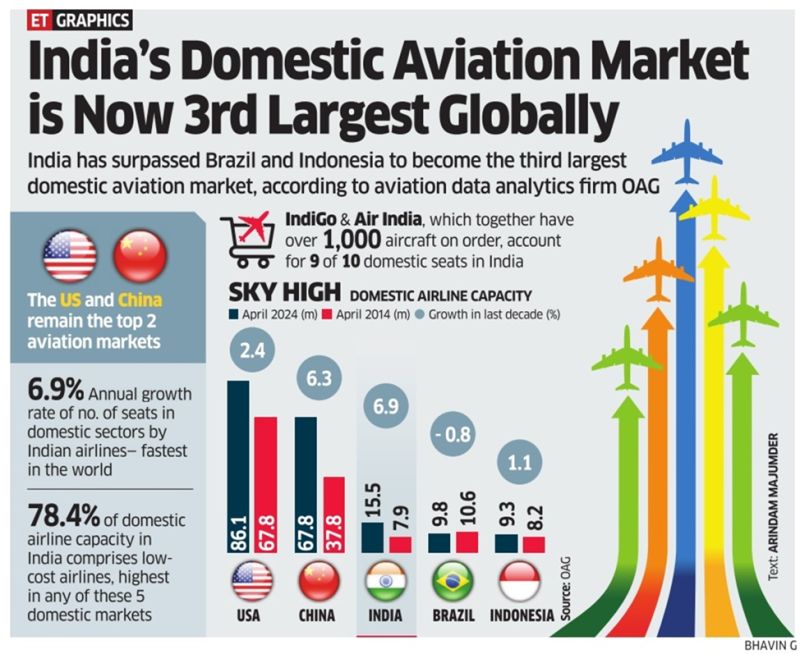
India has Emerged as the World's Fifth-Largest Aviation Market in 2024
Aviation Training Aircraft Flying

India has Emerged as the World's Fifth-Largest Aviation Market in 2024

India has emerged as the world's fifth-largest aviation market, handling 211 million passengers, with Mumbai-Delhi being one of the busiest airport pairs in 2024. This was stated by the International Airport Transport Association (IATA), which released the latest edition of World Air Transport Statistics (WATS) for 2024. According to IATA, India handled 211 million air passengers in 2023, a 11.1 per cent increase compared to 2022, surpassing Japan, which handled 205 million passengers with an annual growth rate of 18.6 per cent. The US remains the world's largest aviation market, with 876 million passengers in 2024, a 5.2% year-over-year increase, driven by its domestic market. China was the second-largest passenger market, with 741 million passengers, representing an 18.7% increase compared to 2023. The UK ranked third with 261 million passengers, while Spain ranked fourth with 241 million. Among the top 10 airport pairs, Mumbai-Delhi was the 7th busiest, carrying 5.9 million passengers in 2024. Asia Pacific dominated the ranking of the world's busiest airport pairs, with Jeju-Seoul being the most popular route globally, with 13.2 million passengers flying between the two airports in 2024. Source: Aakashwani

Saheel Singh 05 Nov 2025
Will Dassault be Ready to Manufacture Rafale Fighter Jets in India?
Aviation Training Aircraft Flying

Will Dassault be Ready to Manufacture Rafale Fighter Jets in India?

The Indian Air Force has submitted a proposal to the Defence Ministry to purchase 114 Rafale fighter jets. The proposal is at present under consideration within the Ministry. No decision has been made yet on whether to purchase the Rafale. Given the dwindling number of fighter jets in the Indian Air Force, the government is under pressure to reach a swift conclusion. In the meantime, a report recently emerged suggesting that China might delay delivering J-35 stealth fighter jets to Pakistan at India's request. The report specified that India had requested China not to transport the J-35 so soon. France ready to manufacture Rafales in India! A report in The Print states that French Ambassador Thierry Mathou has given positive signals regarding the production of Rafales in India. He stated that France has already signed two deals with India for fighter jets and is ready to sign a new one. He added that France understands the importance of India to achieve self-reliance in the defence sector. "When we compare our approach with other stakeholders in these areas, our industry is totally in the Make in India mood," he said, adding that discussions on the issue will take place soon. He added, "And I can tell you that we are very keen not only to sell Rafales, but also to manufacture Rafales in India." Is it possible that India won't buy the Rafale? Some defence experts, speaking to Navbharat Times, said that "rather than signing a $22-25 billion deal with France, it may be better to take a little risk and wait for the Tejas-2. Then, the AMCA program will also be available by 2035." Though, there are more than a few caveats. For instance, if the Tejas-2 is built by 2032, what will be its production speed? How will the Indian Air Force be ready for a two-front war with a limited number of advanced fighter jets? The Indian Air Force currently has approximately 29-30 squadrons, whereas the requirement is for 42 squadrons. Though, if India is truly focused on the indigenous Tejas, the country may block the Rafale deal. This is why questions are being raised: is this why France is reluctant to manufacture the Rafale in India? Source: Navbharat Times

Saheel Singh 05 Nov 2025
SJ-100 Civil Aircraft to be Manufactured in India Using Russian Technology
Aircraft Flying Aviation Training

SJ-100 Civil Aircraft to be Manufactured in India Using Russian Technology

Russian SJ-100 civil commuter aircraft will now be manufactured in India. HAL has signed a Memorandum of Understanding with Russia's United Aircraft Corporation for this purpose. This could prove to be a game-changer for the UDAN scheme, which provides air connectivity to smaller cities and towns. This MoU was signed in Moscow on October 28th. Prabhat Ranjan of HAL and Oleg Bogomolov of PJSC-UAC signed it in the presence of HAL Chairman and Managing Director DK Sunil and PJSC-UAC Director General Vadim Badeka. The last full-fledged passenger aircraft manufacturing project in India ran from 1961 to 1988. This HAL project was named AVRO HS748. After that, we started importing aircraft. This tie-up with Russia could reduce India's dependence on imports. Background of HAL and PJSC-UAC HAL (Hindustan Aeronautics Limited): An Indian state-owned company that manufactures military aircraft primarily, such as the Tejas fighter jet, but is now entering civil aviation. HAL states that this MoU is part of its "diversification." PJSC-UAC (Public Joint Stock Company United Aircraft Corporation): Russia's state-owned aerospace joint manufacturer of military and civil aircraft. They possess the full technology and experience of the SJ-100. UAC has built over 200 SJ-100 aircraft, which are flying with 16+ commercial airline operators. This partnership extends Russia and India's long-standing defence tie-up into the civilian sector. HAL will receive the "rights" to manufacture the SJ-100, enabling local production in India. SJ-100 Aircraft : Twin-engine, narrow-body commuter plane This plane is ideal for short-haul routes, carrying 75-100 passengers. Its range is approximately 3,500 kilometres. It is successful in Russia.   Aircraft Model SJ-100 (Sukhoi Superjet 100) – Twin-engine, narrow-body regional jet Passenger capacity up to 100 passengers Range approximately 3,000 km (short- to medium-haul routes) Global production 200+ aircraft in service India Partner Hindustan Aeronautics Limited (HAL) · Russia Partner United Aircraft Corporation (UAC) Projected Indian demand for 200+ regional jets in the next 10 years SJ-100 – Benefits for India HAL says, "The SJ-100's production in India will be a game-changer for the UDAN scheme. This plane is fuel-efficient, and local production will reduce costs." Under the UDAN (Ude Desh Ka Aam Nagrik) scheme, small cities like Gorakhpur, Deoghar, and Port Blair are being connected. Regional Connectivity: India requires over 200 such jets within the next 10 years. 100+ new airports are being built under the UDAN scheme. The SJ-100 will be their lifeline. Jobs and Skills: Local manufacturing will create thousands of jobs. Engineers, technicians, and the supply chain will receive a boost. Reduced Import Dependence: Currently, India imports 90% of its planes. This MoU will increase self-reliance. It can be called a perfect example of "Make in India." International Reach: There is a demand for 350+ aircraft in the Indian Ocean region. The SJ-100 can connect tourist destinations like the Maldives or Sri Lanka. HAL CMD DK Sunil said, "This MoU will give a new direction to India's civil aviation." Russia's UAC DG Vadim Badeka called it a strategic partnership. Financial and Technical Details Financial details have not yet been revealed, but it is estimated that the production cost of the SJ-100 will be $20-25 million (approximately INR 170-200 crore) per unit. Russia will provide HAL with design, engine, and assembly support. Production Roadmap In the short term, a joint working group will be established following the signing of the MoU. Prototype testing and certification are expected to occur within 1-2 years. In the long run, the goal is to produce over 200 SJ-100s within the next decade. These could be exported not only to India but also to the Asia-Africa markets.   Source: Dainik Bhaskar

Saheel Singh 04 Nov 2025
National Aviation Safety Centre To be Established in India; Aircraft Accident Investigations will be Improved
Pilot Training Aviation Training

National Aviation Safety Centre To be Established in India; Aircraft Accident Investigations will be Improved

India is planning to establish a National Aviation Safety Centre to train aircraft accident investigators and aviation professionals. The government of India has announced the establishment of a National Aviation Safety Centre in the country. This centre will train aviation professionals and aircraft accident investigators. This centre will be based on global best practices and will be the first of its kind. Civil Aviation Secretary Samir Kumar Sinha said that the number of professionals working in regulatory and investigative roles in the country is being doubled. This initiative is a long-term vision towards creating a world-class safety infrastructure and human resources. Aircraft safety is a shared responsibility. Sinha was speaking at the inaugural ceremony of the 13th Asia-Pacific Accident Investigation Group meeting in Delhi. India is hosting this meeting for the first time, with approximately 90 aircraft accident investigation experts participating in the same. During the opening ceremony, participants observed a two-minute silence to honour the 260 people who were killed in the Air India plane crash in Ahmedabad on June 12. The Aircraft Accident Investigation Bureau (AAIB) is investigating the accident. AAIB Director General GVG Yugandhar stated that the lack of trained investigators is a major challenge faced by almost all countries worldwide. India has advanced aerospace and materials testing laboratories that can assist other countries. The meeting will last four days and aims to strengthen the aircraft accident investigation system further. Source: Amar Ujala

Saheel Singh 29 Oct 2025
half-star-solid phone