Insights on Aviation

Explore articles and updates related to Aviation in the aviation and drone industry.

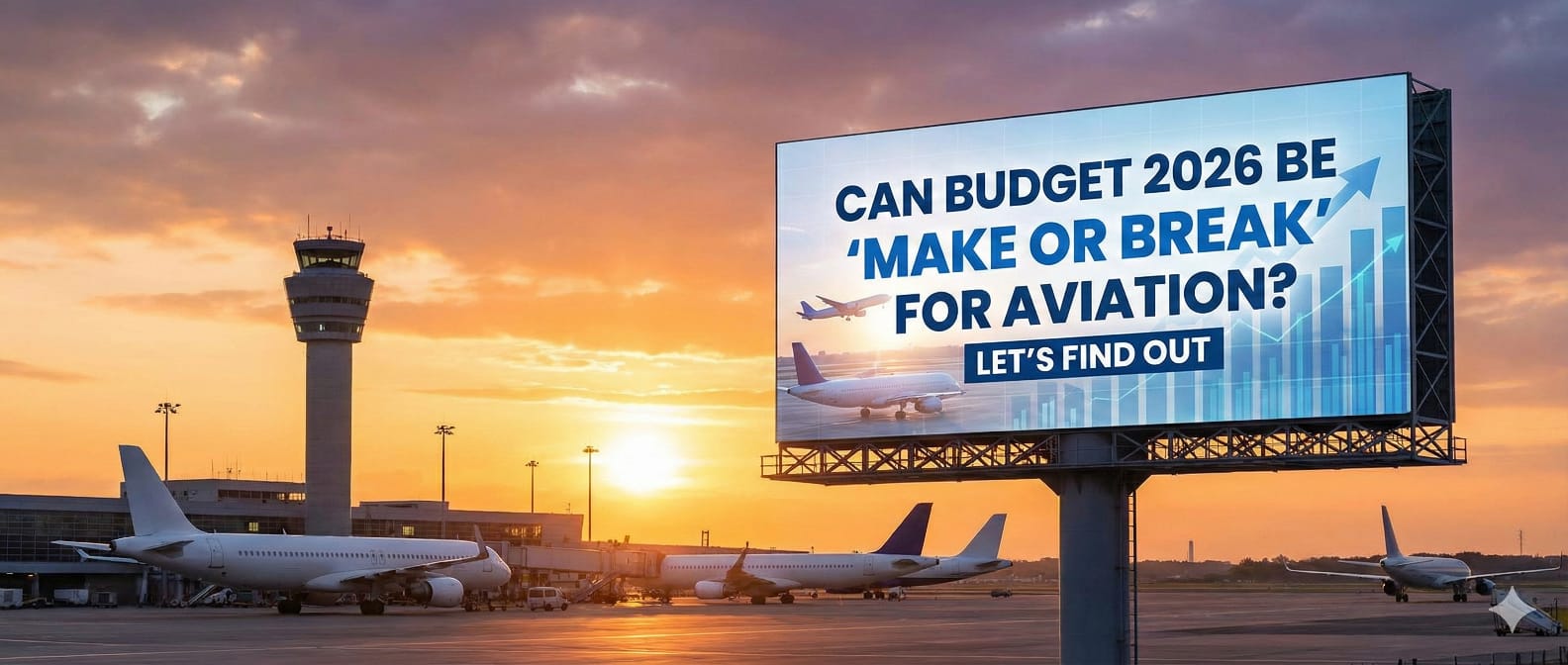
Can Budget 2026 be ‘Make or Break’ for Aviation? Let Us Find Out
Budget 2026 Airports

Can Budget 2026 be ‘Make or Break’ for Aviation? Let Us Find Out

The 2026 Indian Union Budget is expected to reiterate the importance of improving regional connectivity through the Regional Connectivity Scheme (UDAN).   The aviation sector is less focused on new declarations and more on delivery. According to an ICRA report, domestic air passenger traffic for the seven months of FY26 was 944.5 lakh, while infrastructure constraints at major airports turned out to be more visible.

Saheel Singh 14 Jan 2026
Finding Out the Real Reason Why All Indian Aeroplanes Have the ‘VT’ Call Sign
Aircraft Regulation VT Call Sign

Finding Out the Real Reason Why All Indian Aeroplanes Have the ‘VT’ Call Sign

There is a VT on an Indian aircraft. Have you ever wondered what it represents? According to experts, a radio call sign or registration code is assigned to each aircraft, and the prefix 'VT' is the nationality mark of each aircraft registered in India. "The registration character set for an Indian aircraft is VT. The International Telecommunication Union has selected three call sign series for India, but the 'VT' prefix is currently in use.

Saheel Singh 13 Jan 2026
India Wants Five New Big Airlines: What Will the Main Opportunities Be?
Indian Airline Carriers Indigo

India Wants Five New Big Airlines: What Will the Main Opportunities Be?

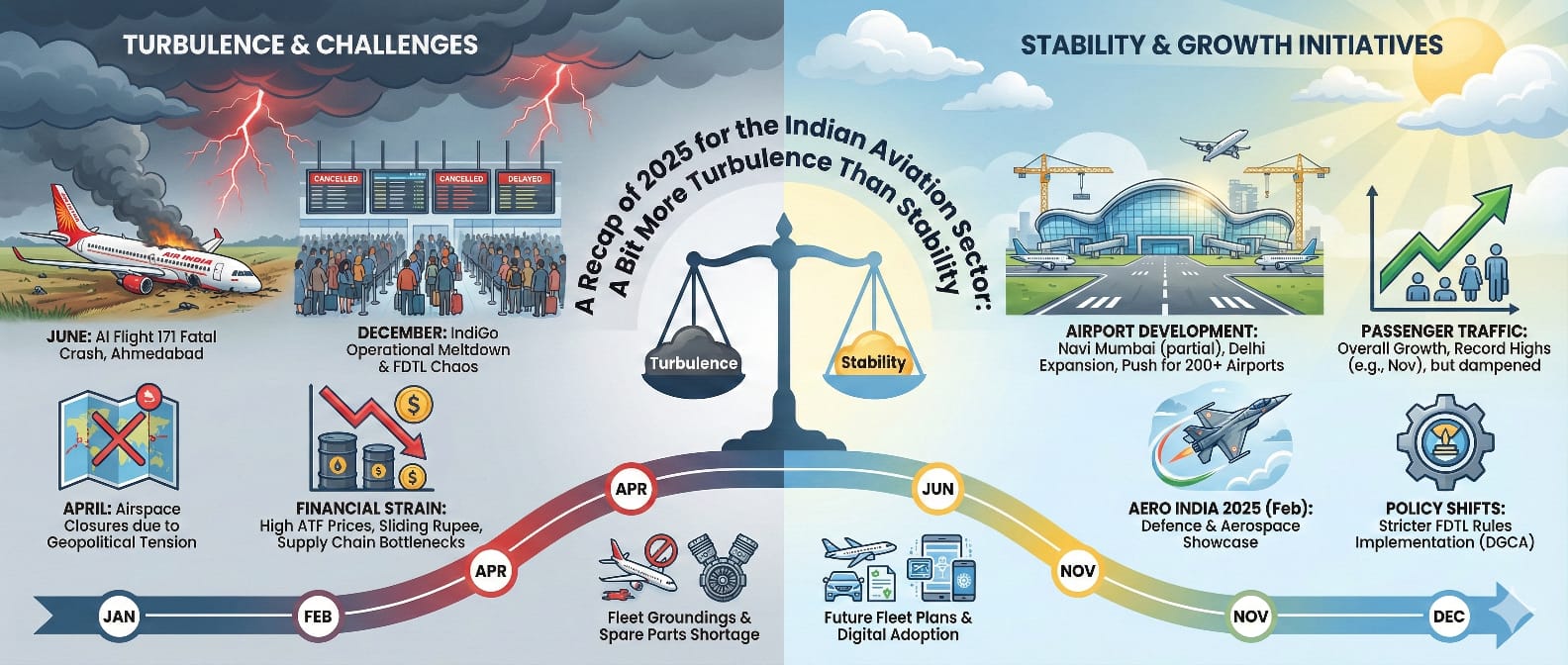
Indian airports descended into chaos recently, with many flights cancelled by Indigo, the largest airline in India, toppling travel plans for passengers. Air India, which is the main competitor to Indigo, is trying to cope with these issues on its own. In 2025, one of its planes crashed, killing all of its 242 passengers on board. And recently, Canadian authorities ordered the airline to examine a pilot who failed two breathalyzer tests before departure. The Tata Group, which owns Air India together with Singapore Airlines, is considering replacing Chief Executive Campbell Wilson to accelerate the airline’s reversal. If the government succeeds in its plans of bringing five new airlines on board, there are endless opportunities for future pilots and other people associated with them . Let us examine the possibilities and how much time it will take for this to come to fruition in this blog.

Saheel Singh 12 Jan 2026
Airports of the Future: Smart and Autonomous Infrastructure
Smart Airports Artificial Intelligence

Airports of the Future: Smart and Autonomous Infrastructure

If you think that the aviation industry is free from challenges, then you are definitely on the wrong foot.   This industry also faces challenges like environmental degradation and climate change; the need for innovative solutions has never been more important. Smart Airport Systems can help improve operational efficiency and promoting sustainability in aviation. These systems power technologies that improve airport operations, reduce noise and pollution, and enhance the overall passenger experience.

Saheel Singh 06 Jan 2026
The History of Commercial Aviation and Passenger Travel
Commercial Aviation Aircraft Travel

The History of Commercial Aviation and Passenger Travel

In 1903, the Wright brothers made the dream of human flight possible by inventing the first-ever aeroplane.   It is no hyperbole to say that this brought about a revolution in the world, which could not have even imagined that flying was possible. Commercial aviation is much more than just a mode of transport. It also brings cultures together, advancing economies and creating new prospects. There have been many important events along the way from wooden aeroplanes to wide-body jets.

Saheel Singh 31 Dec 2025
Airport Ground Staff Course & Salary in India
Aviation Qualification Aviation Training

Airport Ground Staff Course & Salary in India

  There is a great deal of fascination associated with the aviation sector in India, and it is this fascination that has led to exceptional growth in recent years, making it one of the most dynamic industries in the nation's economic spectrum. While pilots   and cabin crew   are often regarded as the mainstay of the industry by the folks, airport ground staff is the backbone of the entire system. They are often the unsung heroes who ensure safe flight operations while offering a fine experience for passengers. With the Indian government's push to make India the third-largest aviation market by the end of this decade, the requirement for skilled ground staff has increased sharply. This blog provides a thorough look into the working of the ground staff, the courses essential to join this career and most notably, the airport ground staff salary and growth prospects available in India in the current scenario.

Admin 21 Nov 2025
Distance Learning for Aviation: Is it Possible to Prepare for the DGCA Exams While Working?
Aviation Training Pilot Training

Distance Learning for Aviation: Is it Possible to Prepare for the DGCA Exams While Working?

The aviation industry in India is experiencing rapid growth in the current scenario. As stated by the Ministry of Civil Aviation, the industry will require approximately 20,000 in India in the near future. Similarly, according to various industry reports, India is expected to require approximately 10,900 additional pilots by the end of this decade. In response to this rapidly increasing demand, distance learning is becoming a viable option for individuals seeking to obtain a Commercial Pilot License while working.

Saheel Singh 12 Oct 2025
What Are the AME CET 2026 Exam Important Dates and Much More?
Aviation Exams Aviation Training

What Are the AME CET 2026 Exam Important Dates and Much More?

The Aircraft Maintenance Engineering Common Entrance Test (AME CET) is one of India’s most important examinations for aviation enthusiasts. It is important to pass the same to take admission in a diploma or a graduate degree program, for example, Aircraft Maintenance Engineering, B.Sc. Aviation etc. This blog will provide you with all the important information regarding dates, eligibility, exam pattern and preparation strategies for AME CET 2026.

Saheel Singh 22 Sep 2025
Cabin Crew Perks & Benefits Beyond Salary: Travel, Health, and More
Cabin Crew Aircraft Flying

Cabin Crew Perks & Benefits Beyond Salary: Travel, Health, and More

The aviation industry is one of the most attractive fields for a career in India. It offers glamour, adventure and financial stability. Cabin crew members, such as flight attendants, stewards and air hostesses, are the mainstays who ensure passenger comfort in the aviation sector. The cabin crew salary or air hostess salaries are the main focus of many and beyond this, the additional perks are also considered highly by the aspirants. These are travel concessions, health insurance, layover allowances and retirement benefits, which boost the salary for cabin crew in India in the current scenario. The cabin crew career in India is multifaceted, providing not only a stable income but also widespread non-salary assistance that redefine its overall value. While the cabin crew salary, air hostess salaries and flight steward salary provide the monetary base, the additional perks for example discounted travel, layover allowances, health benefits, training and retirement provisions increase the lure of the profession. It is for this reason that many people put the career of a cabin crew member on high priority.

Saheel Singh 14 Sep 2025
Landing in the Dark: Night Landings Without Runway Lights
Aviation Training Commercial Pilot Training

Landing in the Dark: Night Landings Without Runway Lights

There is no doubt that when we talk of air travel, we are perhaps talking about the safest mode of transportation. It might bring in a surprise to many, but it is true.   This is because safety is always at the left, right and centre of air travel. Landing of an aeroplane is equally important as its takeoff and mid-air operation and it becomes even more sensitive at night. Normally, almost all the runways have special lighting systems providing the pilot with an idea of direction, distance and altitude. But have you ever wondered what would happen if a plane had to land on a runway without any runway lights? Is landing even possible in this case? In this blog, we will have our focus on a situation where a plane has to land on a runway without a pilot at night without runway lights. We will explore the significance of runway lights, the challenges of landing without them and the rare instances where a plane has successfully landed without runway lights, both in India as well as around the world.

Saheel Singh 27 Aug 2025
It is Never Too Late: Switching to a Pilot Career in Your 30s or 40s
Aviation Training Commercial Pilot

It is Never Too Late: Switching to a Pilot Career in Your 30s or 40s

In the current scenario, it is quite common to change career paths and seek new opportunities.   People explore new paths at different stages of their lives, and this change is never associated with age. If one is in their 30s or 40s and wants to become a pilot , they can achieve this goal. There are several things to consider before embarking on this change. This blog will let you know how to start a pilot career in your 30s or 40s, what benefits and challenges are in store and what opportunities are there in this field.

Saheel Singh 20 Aug 2025
When Do the Wheels of an Aeroplane Open and Close?
Pilot Training Pilot Qualification

When Do the Wheels of an Aeroplane Open and Close?

The landing gear of an aircraft is an essential component. It helps the plane to land on the runway and take off. A pilot needs to know when to open and close the wheels of the plane. This process is followed for technical reasons and also to ensure safety, efficiency and aerodynamic performance of an aircraft. The wheels of an aircraft are in contact with the runway during takeoff and landing.   The Landing gear usually consists of three or more wheels, shock absorbers, a brake system and a hydraulic or electro-mechanical retraction system. In larger aircraft, these wheels are recessed into the fuselage after takeoff to decrease aerodynamic drag and save fuel. This blog will help you learn about the details of how the process of opening and closing the wheels of an aircraft works and how aviation academies assist pilots in learning it.

Saheel Singh 16 Aug 2025
Do Planes Have Reverse Gears Also? Finding an Answer
Aviation Training Aircraft Flying

Do Planes Have Reverse Gears Also? Finding an Answer

If you want to take a car, bus, or truck backwards, then it can be easily done with the help of a reverse gear. If the same is to be done with an aeroplane, then does it also have a reverse gear?   Auto companies provide reverse gear in vehicles so that the vehicle can be driven backwards if needed. In such a situation, reverse gear is very useful. If this weren’t the case, then the vehicle would have to be pushed backwards manually.   It is common to see reverse gear in cars, buses, trucks, and other vehicles. We have talked about vehicles on the road, but do aeroplanes also have reverse gear or not? If the plane is to be taken backwards, then how will pilots do it? The plane is very large. Is it not possible to take it backwards by pushing? Do the companies that make planes provide a reverse gear? In this blog, we will try to find an answer to this question.

Saheel Singh 15 Aug 2025
What Happens When a Commercial Pilot is Incapacitated?
Pilot Training Aviation Training

What Happens When a Commercial Pilot is Incapacitated?

Pilot alertness and physical and mental state are paramount in aviation. Pilots undergo wide-ranging training and medical tests, but unexpected events can still take place during flight.   One of the most problematic situations occurs when a pilot suddenly becomes incapacitated; they are incapable of performing their duties. But airlines, regulators and trained personnel deal with such emergencies. This blog will shed light on the details of pilot incapacitation, such as causes, management and effects on the Indian aviation sector.

Saheel Singh 09 Aug 2025
Why Aviation Is a Smart Career Shift for Mid-Level Professionals?
Aviation Training Pilot Training

Why Aviation Is a Smart Career Shift for Mid-Level Professionals?

In today's time, when the technological, economic and corporate world is constantly changing, mid-level professionals, people with 7 to 15 years of work experience, often find themselves at a point where they are unable to decide the future direction of their career. After working for so long in any industry, the novelty in the work decreases, growth stops and salary increment also slows down.   At this point, a person looks for new opportunities that not only satisfy from a professional point of view, but also empower them financially, socially and mentally. The aviation sector is an emerging option which can be a smart career shift for mid-level professionals in India.

Saheel Singh 24 Jul 2025
Why a Net or Mesh Is Not Used to Protect Aircraft Engines?
Aviation Training Aviation School

Why a Net or Mesh Is Not Used to Protect Aircraft Engines?

There is no net or mesh on the front of the engine to stop birds, debris or objects from entering. Placing a mesh over an aircraft engine is a practical safety measure. Although the reasons for not using these are engineering, aerodynamics, performance efficiency, and aviation regulations.   This blog will help you understand why a net or mesh is not placed in front of an aircraft to protect the engine.

Admin 18 Jul 2025
Understanding the Consequences of Flight Hijacking
Aviation Training Aviation School

Understanding the Consequences of Flight Hijacking

The advent of the aviation sector in the travel industry streamlined the transportation process. It allowed people to go worldwide within a few hours and also convenient. With the expansion of the airline industry, numerous challenges have arisen. One of them is hijacking aircraft. Even with enhanced security and a more robust surveillance system, instances of aircraft hijacking have been reported in the news in recent times.

Admin 17 Jul 2025
Where Is Fuel Stored in Aircraft? Finding the Real Answer
Aviation Training Aviation Fuel

Where Is Fuel Stored in Aircraft? Finding the Real Answer

Considering fuel storage in an aircraft is a crucial aspect of both aviation engineering and safety. Whether it's a commercial aircraft or a fighter jet, fuel should be stored safely. But if you are thinking about where the fuel is stored in the aircraft? This blog will help you arrive at the answer to this question and provide you with additional information.

Admin 13 Jul 2025
Alcohol and Aviation: Understanding the Pilot Regulations in India
Aviation Training Aviation School

Alcohol and Aviation: Understanding the Pilot Regulations in India

Aviation is an industry where safety holds utmost importance,not just in India but worldwide . To ensure the safety of passengers and all crew members present on the flight, the DGCA, the regulatory body for aviation activities in India, enforces strict regulations to guarantee that pilots and crew members are fit for aircraft operations, thereby ensuring passenger safety. Amongst these regulations, the ones regarding the consumption of alcohol are the most important of all, as even slight negligence in these can have appalling consequences. This blog discusses the DGCA's alcohol-related policies, examining the basis behind these regulations, their implementation and their significance in maintaining aviation safety.

Admin 01 Jul 2025
Can You Be a Pilot with Glasses or Contact Lenses?
Aviation Training Pilot Training

Can You Be a Pilot with Glasses or Contact Lenses?

At the time when one thinks of becoming a pilot or decides firmly regarding the same, various questions often spring up in the mind. One of the most common questions of all is whether I can become a pilot with glasses or not. We will give a detailed answer to this question, going forward, in this blog. Many of the aspiring commercial pilots are always confused about whether it is possible to fly if I wear glasses. What are the dangers and alternatives to becoming a Commercial Pilot ? Over 60% of people in this world are visually impaired and require the use of glasses or contact lenses. This means all these people require glasses to perfect their vision. How can this affect your probabilities of becoming a capable pilot?

Admin 30 Jun 2025
Understanding the Concept of Nautical Mile in Aviation
Aviation Training Pilot Training

Understanding the Concept of Nautical Mile in Aviation

Aviation is a field that has various technical aspects in store for you. Have you ever wondered how it is used to measure the distance travelled by an aircraft? It is a nautical mile. While most land-based activities depend on kilometres or miles, the aviation industry makes use of nautical miles. But what is a nautical mile and why has it become the gold standard in the sky? We will discuss this and much more in this blog.

Admin 30 Jun 2025
What Happens When Aircraft Engines Fail Mid-Air?
Aviation Training Aircraft Pilot

What Happens When Aircraft Engines Fail Mid-Air?

Most multi-engine aircraft have engines underhung from the wings. The engines are placed at a distance from the aircraft's Centre of Gravity. This distance is recognized as arm length. The thrust produced by the engines acts through the CG, which acts like the pivot of a seesaw. In usual conditions, both engines produce the same thrust. Though when an engine fails, there is a thrust disparity as the dead engine no longer produces any thrust, while the functioning engine continues to do so. The moment generated by the live engine swerves the aircraft on the way to the inoperative engine. This yaw requires that the aircraft be arrested to guarantee that the aircraft does not enter a spiralling dive. To counter the unwanted yaw from the functioning engine, a force needs to be produced in the yaw axis. This comes from the tail or the vertical stabilizer. The pilots can differentiate the force created by the tail using the rudder attached to it. So, in the event of an engine failure, the pilots use their feet and press on the rudder pedal to deflect the rudder until the yaw is controlled. If the engine on the right side fails, the left rudder is applied; if it is on the left, the right rudder should be applied. In a twin-engine aircraft, the failure of an engine results in a 50% decrease in total thrust. Regarding performance, an engine failure results in a loss of approximately 70% of performance. This is because an engine failure results in drag due to control surface deflection and sideslip.

Admin 27 Jun 2025
What are the Different Types of Aviation Fuels Used in Aircraft?
Sustainable Aviation Aviation Training

What are the Different Types of Aviation Fuels Used in Aircraft?

Fuel is anything that produces force by converting energy. The characteristics of petroleum and synthetic fuel generate sufficient power for flight. Commercial aircraft need incredible power to lift off the ground while carrying a load of passengers and cargo. Wide-body jets, such as the Boeing 777, have a maximum takeoff weight of 247,200 kg. The aircraft can cruise at 905 km/h, powered by the enormous GE-90 engines. The fuel used for the rotation of the heavy compressor shafts and turbine of the jet engine is Jet A1.

Admin 18 Jun 2025
Why Can We Not Use Autopilot All the Time in Aviation?
Aviation Training Commercial Pilot Training

Why Can We Not Use Autopilot All the Time in Aviation?

If aeroplanes have autopilot systems, then what is the need for pilots? The autopilot systems are extremely sophisticated and can handle the entire flight. But is it the full reality?   No, the reality is much more complex. While automation has a big role to play in modern aviation, there are reasons why we cannot depend entirely on autopilot systems. Human pilots are essential to flight operations because the systems need human judgment, flexibility and oversight.

Admin 17 Jun 2025
What Happens During a Bird Strike on an Aircraft?
Aviation Training Aircraft Flying

What Happens During a Bird Strike on an Aircraft?

Accidents are unfortunate in any field. Aviation is not an exception to this, as accidents of different magnitudes take place here as well.   One reason for the aircraft accidents and malfunctions is a bird striking the aircraft. These incidents occur frequently in the world of aviation, but the impact on an aircraft and its passengers is rather significant. A lot of you can get confused by the name, but bird strikes are not just limited to birds, but also bats and other wildlife. Bird strikes only have an immediate impact, but they can also attain fairly serious proportions in the future as well.

Admin 16 Jun 2025
Can Planes Fly Through a Rainbow? What You Need to Know
Pilot Training Aviation Training

Can Planes Fly Through a Rainbow? What You Need to Know

Rainbows are among nature's most lovely phenomena, appearing as if painted in the sky. They create a sense of magic.   Rainbows are not just beautiful but are also governed by particular optical principles. This raises a question: Can planes fly through a rainbow? The answer is no. This blog will talk about the science behind rainbows and why planes can't fly through rainbows.

Admin 15 Jun 2025
Why Aircraft Use Red, Green and Other Lights
Aviation Training Aviation School

Why Aircraft Use Red, Green and Other Lights

I am sure that you must have seen an aircraft flying in the sky, but I don’t know how many of you have noticed the lights blinking on the aeroplane. Yes, there are green and red lights on the wingtips. Have you ever wondered what the purpose of both lights is? The green and red lights are for navigational purposes. They enhance the visibility of the aeroplane to other pilots and air traffic controllers in the tower, thereby decreasing the risk of collision. Navigational lights serve various purposes. This blog will tell you everything about green and red lights on an aircraft.

Admin 14 Jun 2025
Chasing the Skies: Turning Your Childhood Dream of Flying into Reality
Aviation Training Pilot Training

Chasing the Skies: Turning Your Childhood Dream of Flying into Reality

As per a famous saying, dreams are not what you see when you sleep. Instead, dreams are the ones which don’t let you sleep.   If you have dreamt of becoming a pilot since your childhood, then it is better to chase it before it is too late. Failing to do so, you will regret it for the rest of your life, seeing a plane in the air.   When the time passes, the best you can do is think and say, ‘those were the days,’ and you will not be able to enjoy life to the fullest.

Admin 10 Jun 2025
 The Future of Sustainable Aviation: Electric Planes and Hydrogen Fuel
Aviation Training Commercial Pilot

The Future of Sustainable Aviation: Electric Planes and Hydrogen Fuel

There is a lot of talk about sustainability in this tech-driven world, and a lot has been taking place to move toward a sustainable future. Like many other industries, aviation is also on the path to attaining sustainability by moving toward sustainable fuels. Hydrogen fuel and electric planes are two alternatives for achieving sustainability in aviation. The aviation fuels, like any other fuel, are exhaustible and threaten the environment. Decarbonizing aviation is quickly gaining momentum, with electric and hydrogen-powered aircraft becoming common and leading towards a sustainable future. IDTechEx’s report, “Sustainable Future Aviation 2025-2045: Trends, Technologies, Forecasts,” concerns the technical progressions and constant challenges associated with these revolutionary aircraft. The aviation industry is moving towards addressing environmental concerns through battery storage and hydrogen propulsion innovations, paving the way for sustainable air travel.

Admin 04 Jun 2025
How Indian Students Can Join International Cadet Pilot Programs?
Aviation Cadet Programs Aviation Training

How Indian Students Can Join International Cadet Pilot Programs?

The aviation industry is experiencing rapid growth, not only in India but also worldwide. The primary reason for this is the increased air travel, technological advancements and a growing demand for pilots. For Indian students aspiring to become pilots , an international cadet pilot program offers top-notch training and the opportunity to join reputable airlines. These programs also offer a direct pathway into commercial aviation. This blog will provide an overview of how Indian students can join international cadet pilot programs, including eligibility criteria, qualifications, top training destinations, preparation tips, and more.

Admin 03 Jun 2025
Boeing vs Airbus: Which Cockpit Is Easier for New Pilots?
Aviation Training Aviation School

Boeing vs Airbus: Which Cockpit Is Easier for New Pilots?

The debate over the better choice between Boeing and Airbus is a highly popular one in the aviation industry. There are two distinct philosophies behind how pilots operate the two brands of airplanes. Often, a question arises about which of the two is simpler for pilots to operate. The Boeing 737 and the Airbus A320 are, respectively, the two most widely sold jetliners ever made in the history of aviation. They have safely flown millions of hours. Let's explore the answer to the aforementioned question in this blog.

Admin 03 Jun 2025
CPL Graduates: How to Find Your First Job as a Pilot?
Pilot Job Commercial Pilot Training

CPL Graduates: How to Find Your First Job as a Pilot?

Taking the first step in anything is not easy; it involves a lot of patience to get started and that too with a bang. The same principle applies when seeking a job after completing the required studies. Finding your first job as a pilot is no different either. For a CPL graduate to start their career as a pilot, it is essential to keep their eyes and ears open for good job opportunities and seize them once they arise. In this blog, we will talk about how to find your first pilot job when you are a CPL graduate.

Admin 28 May 2025
Drone Pilot vs Commercial Pilot – Which Profession is Better in India?
Drone Pilot Commercial Pilot

Drone Pilot vs Commercial Pilot – Which Profession is Better in India?

Which career is better in India, drone piloting or commercial aviation? The answer to this question isn’t black and white. Both of them have their advantages, demands, and future potential. It is all about concerns, aspirations, monetary circumstances, and lifestyle goals. Let’s discover both paths to comprehend which one might be suited for you in India.

Admin 17 May 2025
 Which are the Top Aircrafts Used in Pilot Training in India?
Aviation Training Aircraft Flying

Which are the Top Aircrafts Used in Pilot Training in India?

The new generation has a lot of fascination with becoming a pilot, not just in India but worldwide. This job is a challenging yet rewarding career and one has to tick a lot of boxes to train to become a pilot. It needs both theoretical knowledge and practical experience to become a skilled pilot. Undoubtedly, a considerable amount of money is required to become a pilot in India , as training on an aircraft is required. The expenses incurred need to be borne by an aspiring commercial pilot. It has been a trend that, more recently, more and more people are aspiring to train as commercial pilots. India's aviation sector has grown exponentially, leading to an augmented demand for skilled pilots. To meet this demand, many aircraft are used all over the country for pilot training. These aircraft cater to diverse stages of pilot training, from the beginner to the expert levels. This blog explores some of India's top aircraft used in pilot training in recent times.

Admin 12 May 2025
Top Careers for Women in the Aviation Industry
Women In Aviation Women Pilots

Top Careers for Women in the Aviation Industry

Many people, not just in India but all around the globe, might think of women in the aviation industry   as uncommon, but it has become a reality. Women in the aviation industry are not confined to being pilots or cabin crew members; many alternative careers exist for women. We have listed a few careers that are pretty suitable for women. Every career has unique requirements regarding education, eligibility, physical attributes, etc.

Admin 11 May 2025
AI in Aviation: How Artificial Intelligence Is Reshaping Air Travel?
AI In Aviation Commercial Pilot

AI in Aviation: How Artificial Intelligence Is Reshaping Air Travel?

Artificial intelligence (AI) is a force transforming industries worldwide. Its impact is profound in aviation. From improving safety to taming operational efficiency and uplifting the passenger experience, AI is transforming every aspect of the aviation industry . The value of the artificial intelligence market increased from USD 152.4 million in 2018 to USD 2,222.5 million by 2025. What is driving this upward trend? Let's have a look. This blog delves into AI's role in aviation, examining its applications, paybacks, challenges, and the future.

Saheel Singh 06 May 2025
Impact of 5G Technology on Aviation Communication and Safety
Pilot Training 5g In Aviation

Impact of 5G Technology on Aviation Communication and Safety

In the aviation world, staying ahead of tech progressions is important. Recently, a significant development in this industry was the rollout of 5G technology. This next-gen wireless technology will revolutionize several industries, including aviation. This blog will analyze how 5G technology will improve aviation communication systems, safety protocols, and passenger experience.

Admin 05 May 2025
Opportunities Beyond Airlines: Alternative Careers with a CPL
Commercial Pilot Commercial Pilot Training

Opportunities Beyond Airlines: Alternative Careers with a CPL

If you are a CPL holder, then the sky is the limit for you, and you can go far beyond the traditional norms of piloting. If you want to do something different from just working as a commercial pilot for an airline, you can go far beyond the traditional route. There are many exciting career paths available for CPL holders. Each of these jobs has unique rewards and challenges, attracting pilots who are interested in a less conventional flying career. This blog will help you learn about some non- airline pilot   jobs to consider, adding a touch of thrill to your life.

Admin 01 May 2025
How to Become an Aircraft Maintenance Engineer?
Aviation Training Aviation Careers

How to Become an Aircraft Maintenance Engineer?

In the current scenario, the aviation sector is on the boom, not just in India but all over the world. For the people who think that the aviation sector is just limited to becoming a pilot, they are surely caught on the wrong foot. There are a lot of careers in the aviation industry that can also be taken up if one does not become a pilot. This blog will discuss one such career, Aircraft Maintenance Engineer. Becoming an Aircraft Maintenance Engineer requires dedication and a clear educational path.

Admin 25 Apr 2025
Women in Aviation:  Journey of Zoya Agarwal and Her Peers
Women Pilots Women In Aviation

Women in Aviation: Journey of Zoya Agarwal and Her Peers

Historically, the aviation industry was largely male-dominated. However, times have changed. Today, women are breaking barriers and inspiring generations. Captain Zoya Agarwal represents determination, brilliance, and empowerment among the trailblazers. This blog sheds some light on women's initiation into aviation, the hurdles they have overcome, the milestones and the role models such as Zoya Aggarwal who have become torchbearers.

Admin 22 Apr 2025
Breaking Into Commercial Aviation Without a Traditional CPL Pathway in India
Aviation Training Aviation Industry

Breaking Into Commercial Aviation Without a Traditional CPL Pathway in India

The aviation industry is vast, and there are several exciting ways to break into commercial aviation even without a CPL. These alternative pathways are no less thrilling and rewarding and can lead to fulfilling careers in aviation. This blog will explore alternative routes into commercial aviation, such as becoming an airline dispatcher, air traffic controller, or drone pilot.

Admin 18 Apr 2025
How to Build Flight Hours After Earning a Commercial Pilot License (CPL)?
Commercial Pilot Commercial Pilot Training

How to Build Flight Hours After Earning a Commercial Pilot License (CPL)?

If you are a commercial pilot seeking to enhance your flying skills, amassing flight hours is vital. Flight hours are the total time spent operating an aircraft. The more hours one has logged, the more flight experience one will have in their career as a commercial pilot. Accumulating additional flight hours within a short period can pose a significant challenge, especially after obtaining a Commercial Pilot's License (CPL). Factors such as schedule, weather, and aircraft availability can hinder a person from accruing additional flight hours, which are essential for gaining practical experience and advancing toward future promotions as an airline pilot. There are several avenues you can take to accrue a considerable number of flight hours. Depending on where you are in your flying journey, one of the subsequent options may suit you better than the others.

Admin 11 Apr 2025
Is the Pilot Shortage Real? Opportunities and Challenges in Commercial Aviation in India
Commercial Pilot Aviation Training

Is the Pilot Shortage Real? Opportunities and Challenges in Commercial Aviation in India

It was after the outburst of the pandemic that the airline and travel industry came to a standstill. But after the restrictions were lifted, travel started again at full throttle, and the aviation business picked up after a major setback. Though, airlines are still trying to recover after all those layoffs. Also, many senior pilots are about to retire. So, if you are thinking about whether it is the correct time to enroll in a flight school , it is! Dive into this blog to know that there was a pilot shortage in the airline industry some time back, but now there is an increasing demand for pilots, not only in India but all over the world. In India, in particular, the flight schools are packed with aspiring pilots who want to gain theoretical knowledge and rack up flight hours. If you are ready, your services are in demand. The pandemic destroyed the pilot ranks, but the recovery has created an opportunity.

Saheel Singh
What is an Aviation Certificate? All You Need To Know
Aviation Training Aviation Certificate

What is an Aviation Certificate? All You Need To Know

Are you thinking of becoming a pilot? If the answer to this question is yes, then you need to be very clear about what you need to have under your belt for the same. You need an aviation certificate to be a pilot. You might ask, now what on earth is this? Well, to answer this question of yours in detail, I am penning down this piece. Let us start, In general terms, a certificate is a document stating that a person is licensed to perform a certain task. The certificate is provided to a person when he/ she ticks all the boxes regarding eligibility, qualifications, and examinations. This holds true with aviation certification as well.

Admin
Why It is Important to Explore Work-Life Balance as a Commercial Pilot?
Commercial Pilot Pilot Course

Why It is Important to Explore Work-Life Balance as a Commercial Pilot?

Almost everybody around the world is aware of the charisma attached to the profession of commercial pilot . It can be rightly said that after becoming a pilot, you get the power to shape your life in the way you want. Be it healthy remuneration, opportunities to travel, added monetary perks, or, most importantly, the thrill of being above the clouds, this profession has it all. When a profession has so much to give to you, it will take something from you as well. What it takes is a lot of your time and commitment to your work. Attaining a work-life balance can be a tough ask for commercial pilots because the profession is demanding in many ways. This blog will help us discover strategies for maintaining a healthy balance, such as setting boundaries, prioritizing self-care, staying connected with pals, and using layovers to your advantage. By accepting these methods, pilots can endorse their complete well-being and enjoy a satisfying personal and professional life. Striking a balance between personal and professional life is important for general well-being, but striking the correct balance can be particularly challenging for pilots. With uneven schedules, long hours, and everyday travel, pilots face obstacles with regard to balancing their personal and professional lives. These are some strategies to achieve a work-life balance as a pilot: Come, let us talk about them one by one.

Saheel Singh
The Future of Aviation: Innovations from Leading Aviation Academies
Aviation Training Aviation Academy

The Future of Aviation: Innovations from Leading Aviation Academies

Most of you would have heard the statement that change is the only constant, and this holds in every field. Technology and innovation are changing the world, and the aviation landscape is also not holding back, which impacts aviation training modules as well. Traditional aviation training methods, somewhere, fail to inspire aspiring pilots. To get them inspired and engaged in the training program, an aviation academy must undergo an innovation in the pilot training process. By including new technologies, aviation schools can create an interactive learning environment. These approaches cater to the needs of today's students and make the entire process more and more engaging. Innovations Undertaken by Aviation Academies Flight Simulators Make the Way Easy Flight simulators are becoming a prominent part of aviation training. They can replicate various flight conditions and emergencies and offer a safe environment for practice, reducing dependence on a real aircraft. Moreover, these are not restricted to pilot training but to various other aspects of aviation. Simulators replace real aircraft, making flight training safer. With this advanced equipment, flight training can occur on the ground. VR and AR: The Transformative Technologies AR and AR are transformative technologies in aviation training. VR offers an immersive experience, placing aspiring pilots in a realistic simulated cockpit. By replicating the practical conditions, VR enables the growth of consciousness, decision-making, and crisis management skills. Furthermore, VR's flexibility is an advantage. It allows for the creation of an array of training scenarios, from routine operations to emergency situations, making VR an important technology in aviation training. AR brings the real and digital worlds together, and it is hard to figure out whether you are doing something real or doing the same in the virtual world. By covering virtual information in the real environment, it improves pilots' perception of their environments. This is valuable for maintenance, technical training, and decision-making. Data Analytics and ML The aviation training industry is undergoing a rapid transformation in the current scenario, with ML and analytics emerging as innovations bringing about change. The data generated by modern aircraft and progressions in computing power have created opportunities to update operations and boost safety. Pilot training is benefiting from data-driven insights. By tracking performance in simulators and actual flights, an aviation academy can tailor training programs to distinct learning styles. Advanced analytics can also recognize risky areas for pilots, allowing training to ease potential hazards. The Future of Flight Training with Technologies Today, customized training is no longer a thought but has become a reality through data analytics and machine learning. By accurately examining vast datasets regarding pilot performance, learning patterns, and aptitude, these technologies bring about a lot of various tailored training programs. Through advanced algorithms, pilot courses can be tailored, keeping in mind the person's unique needs, achieving learning outcomes and boosting skill development. Flapone Aviation, one of the best pilot schools in India, has joined hands with all the innovations and technologies that make aviation training more advanced and feasible for all aspiring pilots.

Admin
The Importance of Ground School in Pilot Training
Aviation Training Aviation School

The Importance of Ground School in Pilot Training

The art of piloting involves mastering aircraft propulsion, understanding aviation systems, and ensuring the safety of crew members and passengers. Ground school is an integral part of a pilot course , providing aspiring pilots with the knowledge needed to succeed as aviation professionals. Now, let us discuss the major reasons why ground school is important for pilots. Have a look. Be Clear About the Fundamentals of Aviation Ground school covers subjects such as aircraft systems, aerodynamics, navigation, and meteorology, which are vital for safe and efficient flying. Learning about aerodynamics helps pilots grasp the flight principles, including how drag, lift, thrust, and weight interact to keep a plane airborne. Knowledge of aircraft systems guarantees that pilots can perform essential maintenance and fix issues, if any. A thorough understanding of these ideas is vital before entering the cockpit. By mastering these concepts, pilots can make wise decisions during flights. Know About the Rules and Regulation s Ground school helps aspiring pilots understand the safety aspects of flying. It communicates knowledge about air traffic control procedures, aviation regulations, and safe operating practices, which is essential for any pilot. Ground school is a part of the complete pilot training process, but that doesn’t make it any less imperative. The emphasis on regulations highlights why ground school is an important part of the aviation training process. Pilots should be aware of the regulations laid out by the regulatory bodies. This includes knowing the requirements for different airspaces, understanding flight instructions, and following the safety protocols. The ground school offers instruction, guaranteeing that pilots operate within the legal framework and keep safety as the top priority. Building a Strong Foundation Ground training in a flight school offers a solid theoretical base for completing cutting-edge flight training for all future pilots. This is important for understanding complex concepts and procedures, which are important in practical flying situations. Theoretical knowledge attained in a ground school is directly related to flying aircraft in the sky. For instance, understanding aerodynamics aids pilots in managing aircraft performance throughout takeoff, flight, and landing. Familiarity with airspace rules guarantees that pilots can plan effective routes and communicate well with air traffic control. In addition, the ground school helps prepare pilots for advanced training in multi-engine operations and commercial aviation. Building a robust foundation in aviation allows pilots to smoothly go through their training and attain higher certification. Summing Up the Scene Understanding the key reasons why a ground school is an important part of a pilot course is a major step in escalating your aviation career. You must polish your knowledge in ground school to help build a good career as a pilot. We at Flapone Aviation are the pioneers in aviation training, whether it is ground classes or practical flying. Our focus is very clear: to give equal heed to practical flight training and ground school training so that aspiring pilots have their basics covered, and the same is applied in the practical environment as well.

Admin
How Technology is Used to Improve Flight Safety?
Aviation Training Technology In Aviation

How Technology is Used to Improve Flight Safety?

In the aviation industry, dedicated skills, technical and mechanical applications, and critical calculations in which technology has played a key role are desired. The use of new aviation technology has progressed over time, both within aircraft operations and the pilot training procedure. These advances in aviation technology have permitted pilots to use simulation for various flight scenarios, access live weather and positional info, and much more. This has brought about advanced levels of flight training and better pilots.

Saheel Singh
How to Clear DGCA CPL Exams in the First Attempt?
Aviation Exams Aviation Qualification

How to Clear DGCA CPL Exams in the First Attempt?

Are you thinking of how to become a pilot? Becoming a certified commercial pilot in India is a step-by-step process. Firstly, one has to be very careful about all the eligibility criteria and other prerequisites. To get a commercial pilot license, the most important thing to do is to pass the commercial pilot exams. It is a dream of all aspiring pilots to pass the exam on their first attempt, and there is a lot of talk about the same as well. In this piece, we will discuss the various tips the students can implement to get over the exam in the first attempt. Apart from this, you will also get an answer to one more question striking in your mind about the exam: is there a negative marking in the DGCA commercial pilot exam?

Saheel Singh
Discovering the Importance of Simulator Training in Aviation
Aviation Training Aviation School

Discovering the Importance of Simulator Training in Aviation

If you are enthusiastic about flying aircraft, then there is every chance that you have learned about simulators. Yes, simulators are instruments that can provide students with a realistic learning environment. It is wanted by every aviation academy today, but not many have it in their armoury. Many are mounted on hydraulics that imitate startling and unforeseen movement inside the cockpit. This offers students the chance to practice the diagnostic and troubleshooting procedures in realistic situations. So, students are familiar with the common process in real cockpit scenarios. Pilots Experience Various Weather Conditions Simulator training lets pilots experience flying in diverse weather conditions. The pilots are not just exposed to flying in local weather but can also acquaint themselves with flying methods in diverse flying conditions. These instruments can also recreate any weather conditions, so it is possible to practice suitable flying and landing methods, whether it’s rainy, windy, or snowy weather outside. Additionally, simulators can be an alternative to an aerial lesson. Students can continue with their lessons and progress with flying lessons. Preparing Pilots for Emergency Situations Pilots should always be prepared for any sort of emergency while training in the flight school itself. Since flight simulators have the ability to recreate several scenarios, they can offer a learning environment with similar risky circumstances without real danger. These situations can include engine glitches, electrical faults, and manoeuvre mistakes. While the suitable procedures for these situations are by now outlined in their flight manuals, students are given a factual perspective on handling these emergencies in flight simulators. During the simulation, students can identify, assess, and respond to urgent situations. They also learn to evade dangerous scenarios and also stay safe. Stress-Free Learning Environment Being accountable for an aircraft can be nerve-wracking, particularly for new students. Every so often, people make more mistakes since they are anxious and nervous. Since flight simulators reconstruct different flight situations, students can polish their abilities in a perfectly safe environment. Knowing that they are on the ground and not in the air, students are also calmer and can pay more attention to their training. They also won’t worry about making mistakes and can have more time to learn from them. Flight simulators are tools for building pilots' confidence. By simulating actual flying scenarios without posing the actual dangers attached to them, they let pilots practice flight skills and controls in a safe environment. This allows students to perform manoeuvres and standard protocol peacefully, keeping them assured about their skills and abilities. Coming to a Concrete Conclusion As it has been told earlier in the piece, every aviation academy wants flight simulators, but not many have them up their sleeve. But this is not the case with us. Flapone Aviation is among the top aviation schools for a reason: that is, we are laden with all the advanced facilities, top instructors, and competitive prices of the courses. So, if you want to have the best aviation training, come to us.

Admin
Types of Pilot Courses: Which One is Right for You?
Pilot Training Pilot Qualification

Types of Pilot Courses: Which One is Right for You?

Do you want to fly an aircraft and experience the thrill of being in the air? If yes, then you have to be aware of the pilot course s that you need to undertake. With different types of courses, be ready to fly into the clouds, challenging gravity and enjoying the limitless freedom of the sky! Let’s start with the types of pilot courses and their eligibility and age criteria. Apart from that, you will also get an answer to the question of which course is best for you, so let us start.

Admin
How to Choose the Right Aviation Academy: A Comprehensive Guide
Aviation Training Aviation School

How to Choose the Right Aviation Academy: A Comprehensive Guide

Aviation is a career that requires particular knowledge and skill, and choosing the right aviation academy is a significant step towards becoming a pilot, both for experiencing the thrill and earning a living. This piece will provide all the information you need to select the correct academy of aviation and turn your dreams into reality. Importance of Choosing the Right Aviation Academy? Choosing the right flight school is a vital cog in the wheel if you want to advance the knowledge and skills required to become a pilot . An aviation academy will provide quality instruction, ground school instruction and access to aircraft. It will also offer the support to reach your aviation goals. How to Choose an Aviation School Accreditation: This is important when choosing an aviation school. It is an official approval that the school is run according to industry standards and provides quality education. The accredited pilot schools can give the students the DGCA-approved flight certificates they require to become professional pilots. Facilities : These are essential for successful flight training. There should be sufficient classroom and simulator space and a modern aircraft fleet for practising in the sky. The school should offer complete, up-to-date resources and equipment to help you learn to fly more effectively. Instructors : The instructors play an important role in the learning process. The best pilot schools have instructors with experience in the aviation industry as well as knowledgeable in-aircraft flying, guaranteeing the best instruction and support for their students. Cost : Cost is always taken into account when choosing an aviation academy, as flight training is expensive. It’s imperative to compare quotes from aviation schools and compare the cost to ensure you get the best value in terms of the training you’re getting and the resources you have access to. Reputation : Safety plays an important role when selecting an aviation school. One should always check the safety record and see how the aircraft are kept, what their detection reporting system looks like, etc. Be aware of any safety matters that might arise, such as a lack of flight simulators or inconsistencies regarding the part of the curriculum. You should also consider the aviation school's rep. Reviews : Give heed to the reviews from students who have attended the aviation school. It’s important to get a sense of a school's quality from the viewpoints of people who have been students there. Reviews from aviation magazines might also be helpful in getting a correct picture of the school. Coming to a Close Choosing the right academy of aviation for flight instruction training is vital for making a successful aviation career. Taking the time to comprehend the importance of each factor and finding the best aviation school for your requirements can help guarantee quality instruction for aspiring pilots to reach their goals. We at Flapone are among the finest flight training schools, and when we enroll with us, it will be the first step towards a grand career in aviation. So, what are you waiting for? Take admission now!

Admin
Common Myths About Pilot Courses Debunked
Aviation Training Aviation School

Common Myths About Pilot Courses Debunked

If you have a passion for flying an airplane in your bloodstream, then there should be no holding back from enrolling in an aviation academy  for a pilot course. But there are quite a few myths about flight training. Now, it is time to debunk all the myths about pilot training that might hold you back from pursuing your dream.

Admin
How Aviation Academies Prepare Students for Careers in Aviation?
Aviation Training Aviation Qualification

How Aviation Academies Prepare Students for Careers in Aviation?

Are you looking for a high income and a lifetime of fulfilment? Going to an aviation academy can be the best thing for you to do. In addition to being trained in different facets of aviation, there is a sense of enjoyment which comes with an additional benefit. There are flight aviation academies that can help you in developing your skills. Finding a suitable training institute that meets your training requirements is easy, as many institutes offer detailed info about the courses and the training imparted to aviation buffs. Join Aviation Academies for an Excelling Career Aviation academies offer flight training programs to students so that they can think of making a wonderful career in aviation. Simulator training is an important element of the entire process of pilot training, it comes in handy with providing real-life scenarios and practical training in different aspects of aviation. This approach is advantageous for rookie pilots who, at times, are apprehensive about taking their initial flights. Spending time on the simulator can help them overcome this anxiety and build confidence in their abilities. The Significance of Training with a Simulator A simulator experience isn’t provided by most aviation academies, but we at Flapone Aviation Academy have the best-in-class simulator training. So, choosing us will significantly help you to learn how to fly. Since a simulator helps an aspiring pilot to feel more confident and comfortable with operating aeroplane controls, there will be fewer to no jitters, and you will feel all the more confident, even when taking the initial flights. Exposure to the simulator gives greater confidence, making the learning process of flying fairly simple. Be conscious that flying lessons can be expensive, so make sure you are in your groove before taking to the task. Anyone who is looking to become a commercial pilot, private pilot, or airline pilot can easily look for various aviation academies near me toassist them. There are quite a few academies available in India, and if you are looking for one of the top ones. As an aspiring pilot, you must check and compare the details of numerous academies. What Makes Flapone Aviation Stand Apart? Aviation academies located in Delhi offer more affordable and focused training than aviation schools elsewhere in the country. The practical training and ground lessons provided in these academies are handy and could be helpful for your local training. If you are still wondering which is the best academy in the entire Delhi-NCR, it is Flapone Aviation. With the best facilities, trainers and a track record of providing the best education and pilot training , we are right up there in terms of the top aviation academy in the country. We also prove the statement wrong that ‘good things are always expensive’ as we provide the best aviation training , and that too at the most competitive price. So, what are you waiting for? Join us now and turn your dream of becoming a pilot into a reality and start earning big, along with the thrill of flying high into the sky. 

Admin
How to Become a Pilot After 12th in India?
Aviation Training Aviation School

How to Become a Pilot After 12th in India?

A pilot does not just experience the thrill of flying but also considers the safety of the passengers in the aircraft. They are skilled individuals with flight licenses, and they operate aeroplanes or helicopters. If you want to become a pilot, learn how to become a pilot after 12th in this piece in detail. Becoming a pilot after the 12th requires selecting the appropriate program that can be both emotionally and financially rewarding. This propels emerging aviation professionals toward becoming full-time aviation professionals. 

Admin
What is the Cost of Getting a Commercial Pilot License in India?
Commercial Pilot Pilot Training

What is the Cost of Getting a Commercial Pilot License in India?

There is much talk of people becoming commercial pilots to have a rewarding aviation career. But to start a career as a commercial pilot, one should be trained and also possess a commercial pilot license. CPL training prepares people to operate commercial aircraft. The costs are based on the flight school chosen, the aircraft used for training, and the location of the training institute. The estimated  commercial pilot license cost In India  is about INR 45 lakhs to INR 60 lakhs or more. However, these figures can be influenced by numerous factors in the aviation industry. The training gets completed with pilots obtaining a CPL. Role of Flight Training Schools in CPL Training Flight schools in India provide diverse training programs, and the cost can vary with that. Some flight schools in India are entitled to offer integrated programs providing CPL training , while other institutions offer modules where each stage can be completed separately. Factors Affecting the Cost of Commercial Pilot License As mentioned above, the kind of aircraft has a significant impact on the overall cost of the training program. Training in a single-engine aircraft is usually less expensive than training in a multi-engine aircraft. The total cost also comprises the expenses associated with fuel prices, flight hours, instructor fees, study material, and other miscellaneous fees. The total number of flight hours needed to complete commercial pilot training is also a deciding factor in the cost. The DGCA regulates the total hours needed to obtain a CPL in India. There are minimum flight hour requirements for getting a CPL. The cost per flight hour can differ based on the type of aircraft and the flight school’s pricing structure. Also, apart from flight hours, ground school is a vital part of pilot training. Ground school takes care of all the theoretical aspects of aviation and provides theory instruction and knowledge to the students. The cost of ground school includes the cost of study materials, tuition, and examinations . The location of the piloting school also has an important role to play in determining the commercial pilot license costs in India. Those in the metros have higher costs. Additionally, the choice of location can influence the accommodation and living expenses of students who might need to relocate for the length of their training. Aspiring pilots need to research and select a reputable flight school. Factors that they need to take into account comprise the accreditation, the qualifications of the instructors, and the reputation of the institution. Reading reviews can provide you with some valuable insights into the quality of training provided by a particular school. Coming to a Conclusion Becoming a commercial pilot in India involves a considerable financial investment. Aspiring pilots should take admission in one of the government-approved pilot training institutes in India like Flapone Aviation. It provides theoretical training to aspiring pilots and with its associations with various flying schools all over India, the practical training can also be done. So, all in all, you will get the license at a fairly competitive price in the industry.

Admin
Extended Reality in Drone Pilot Training: A New Era of Immersive Training
Aviation Training Aviation School

Extended Reality in Drone Pilot Training: A New Era of Immersive Training

The aviation and drone industry faces numerous safety challenges with changing times. With pilots returning to flight decks after the pandemic, how can it be ensured that their skills remain fresh? What is the best way to give drone pilot training? Is it likely to prepare pilots better for spatial disorientation in the air?  Extended reality, or “XR,” systems address important safety and workforce training concerns. Though XR systems can't replace highly skilled instructors, they are effective teaching tools, mostly for next-gen drone pilots. The technology is also available at various prices depending on the training. Simulation Has a Big Role to Play Simulation is important in drone pilot training. Yet, some thought a simulator could never replace time in the air. Simulation training tools became more important in 2020, particularly for aspiring pilots. Incorporating XR training into drone pilot training proved beneficial and augmented the speed at which the students can learn complex concepts of drone flying and perform well under pressure. Research Going on in the World of XR Researchers have invented an affordable version of a spatial disorientation trainer, a sophisticated equipment that might be expensive for numerous flight-training programs . Combining motion simulation and VR, the aviation illusion trainer will subject student pilots to a deadly yet common scenario, an unexpected transition from visual to instrument meteorological conditions.  XR teaching tools are not used just for fun but because they prove their worth in the real world. Research shows that virtual, mixed, and XR training tools work well in the context of a holistic educational program under the guidance of skilled instructors.  Why is the Use of XR Technology Preferred? Evidence-based validation of VR, AR, and MR training technologies, including computer-based systems and haptic feedback devices, will be a vital step in expanding their use. Simulation training tools are extensively accepted in the industrial and medical fields.  Value of XR for Drone and Aviation Professionals XR systems are a safe, efficient way of training new talent in drone and flight piloting. For drone piloting professionals, XR reduces the number of mistakes, lets them train well, and also puts their piloting skills on display while evading the grave consequences.  For aspiring drone pilots, high-fidelity interactive XR environments make it likely to prepare for risky scenarios in the air. The tech also lets students complete assignments remotely, which acted as a major plus throughout the pandemic and at a considerably low cost. Summing Up the Scene The Incorporation of XR in drone piloting is making the entire process fast and efficient at the same time. If you, too, want to take advantage of this state-of-the-art technology, try to get admission to one of the best flying schools in India , Flapone Aviation . Here you will get the training, with the use of all the latest technologies, and that too at an affordable cost.

Admin
Exploring the Role of Technology in Modern Aviation Training
Aviation School Aviation Training

Exploring the Role of Technology in Modern Aviation Training

The aviation sector is developing at a consistent pace in India. The relentless evolution in technology and innovation has also infused the realms of aviation training. The aviation industry is a regulated and complex field that needs training and expertise. Almost every  aviation training institute in Delhi tries to integrate the latest technologies in their training module. Technology has a significant role to play in aviation training, helping pilots improve their skills. Technology has transformed the training process, allowing pilots to obtain and improve their skills more competently and rapidly through trailblazing learning and development practices. Furthermore, technology has enabled skills assessment and allowed the creation of flexible training programs for overcoming location and time limitations. Flight Simulation Technology Modern flight simulators have cutting-edge features, including sophisticated avionics, high-resolution graphics, and motion systems, allowing pilots to have an immersive training experience. These simulators can imitate numerous environmental conditions, such as wind shear, turbulence, snowfall and other weather phenomena. Also, they can simulate mechanical failures such as hydraulic system and engine malfunctions and emergency procedures for example, fast decompression and fire suppression. This technology is available with only a handful of institutes in Delhi, as a considerable cost is incurred to acquire the stimulators. Online Training The advancement of technology has given rise to the online training module in the world of aviation training. As educational approaches progress, e-learning, virtual classrooms, and webinars have become more popular among students than traditional methods. Online training allows aviation professionals to learn at their own pace and maintain a work-life balance. Online training courses also offer aviation professionals access to the latest info and training materials. Revisions to training materials can be made easily, guaranteeing that aviation professionals are up to date with the latest regulations. AR and VR Technology AR and VR are used a lot in the aviation industry, chiefly in training and safety practices. These technologies allow the creation of immersive environments, both in the aircraft and at airports, improving the learning experience for pilots and ground service operators. VR allows pilots to experience realistic simulations of numerous scenarios and conditions, providing them with a near-real experience. Furthermore, VR enables new crew members to become familiar with the aircraft and its equipment without physical access. The adoption of AR and VR technologies in aviation training institutes in Delhi  are making a lot of difference. Wearable technology powered by AR and VR formats is also getting popular in pilot training . These devices are laden with sensors that can assess the psychological state of the learner and cognitive load and overlay digital info onto their real-world view. They provide a dynamic learning experience in real-time, customized to the learner’s physiological health conditions and mental state. Data Analytics Technology has transformed data analytics in aviation training. By analyzing data from flight simulators, aviation experts can get insights into pilot performance and pinpoint areas needing additional training. This data advances training programs and makes sure that pilots receive top-notch instruction. Also, monitoring heart rate, psychological state, and various other indicators allows trainers to keep a check on the performance in training programs, eventually offering more effective learning solutions. Technology has impacted aviation training, helping to advance safety, decrease costs, and increase the efficiency of training programs. With the evolution of technology, more innovations will take place in aviation training, helping to advance the knowledge and skills of aviation professionals. The Final Sum Up Technology has advanced modern aviation training big time. The above-mentioned technologies have taken pilot training to the next level, and Flapone Aviation, a leading aviation training institute in Delhi is changing the lives of aspiring pilots by providing top-notch training at an affordable price.

Admin
How Important are Soft Skills for Making a Career in Aviation?
Aviation Training Aviation School

How Important are Soft Skills for Making a Career in Aviation?

The worth of soft skills in aviation careers is increasing every day. Helping people to keep pace with this transformation are the  airline training institutes in Delhi . Only tech expertise is insufficient for aviation professionals to survive in the dynamic world. The aviation industry requires a distinct talent that extends beyond tech knowledge and stresses the significance of soft skills training. What are the Essential Soft Skills? Teamwork  Aviation is an industry where there is a sheer need for partnership, with pilots having trust in air traffic controllers, ground staff banking on each other for rapid turnarounds, and the members of the cabin crew forming a team for in-flight service. The use of soft skills in aviation holds a lot of importance in building teams, efficient collaboration, and support. Communication Efficient communication is the basis for efficient operations in aviation. It is required to relay precise info between air traffic controllers, pilots, ground crew and cabin crew for a smooth and safe flight. Communication soft skill training advances clarity and encourages a collaborative workplace. Customer Service The aviation industry is service-oriented. Passengers want a comfortable experience and a safe flight. Soft skills training is needed to interact with customers. With that, one can handle issues, and ensure that the customers have a pleasant experience on the flight This contributes to customer loyalty. Leadership An important skill in aviation is leadership. It is highly important in the cockpit, where captains make important decisions. These capabilities transfer from the cockpit to executive positions on the ground, developing future leaders of the industry. A composed leader with amazing soft skills can handle any condition with ease. Diving In the Pool of Importance of Soft Skills Improving Safety Measures If the communication is good, it ensures that key information is given precisely and promptly, decreasing the risk of mistakes. Soft skills make a balanced environment for teamwork with effective communication. It guarantees that everyone is working together to address the challenges. Enhances the Efficiency of Operations In the aviation sector, soft skills advance teamwork and communication skills, which streamlines specialized procedures. Efficient collaboration and communication decrease turnaround times and guarantee punctuality. Positive Experiences of Passengers Soft skills have a direct impact on passenger experience in the aviation sector.  The professionals who succeed at customer service and communication foster an atmosphere of comfort and trust. It contributes to optimistic reviews and business and enhances the reputation of the airline. Adaptability in a Dynamic Industry From tech expansions to global events, all things are a part of the  aviation courses in Delhi to cope with the continuously evolving aviation sector. Adaptation and resilience allow aviation professionals to effectively traverse these changes.  The sector can stay dynamic and robust by getting adeptness in critical thinking and soft skill training for staff. Soft skills are of utmost importance for fostering success in aviation. Coming to a Concrete Conclusion The aviation career is not just about flying planes or managing operations. Everybody should work together to ensure safety. As the industry advances, investing in soft skills training becomes not a necessity. Soft skills in the aviation career are a commitment to the sustained excellence of the entire industry.  If you are searching for the top airline training institutes in Delhi , getting trained from which you can have both CPL as well as ATPL, under your sleeve and also have all the soft skills, then Flapone Aviation can be the result of your search.

Admin
Why Choose Delhi for Aviation Education?
Aviation Training Aviation School

Why Choose Delhi for Aviation Education?

An aviation career can be rewarding for you if planes fascinate you to the core. Aspiring aviation professionals want to step on the gas to achieve their dreams by taking themselves through training, skill development, and dedication to enter into the world of aviation. The capital city of India, Delhi has some of the finest aviation training schools in the country to give wings to the dreams of aspiring aviation professionals. For starters, you have to choose an aviation training institute. Making a correct choice out of so many options can sometimes be tough. Selecting the best aviation academy in Delhi will enable you to go from strength to strength as far as your aviation career is concerned. There are a few things that should be in order and top-notch in the aviation training institutes in Delhi, but one should never be complacent and double-check all these before enrolling in any of the institutes. Accreditation and Certification : Before you decide, check that the DGCA recognizes the aviation academy. Also, check for all the certifications from the regulatory bodies, as any top aviation institute should tick this box. Course Offered: An aviation training school should offer a wide range of courses according to the syllabus prescribed by the DGCA, keeping in mind the ever-evolving field of aviation. Quality and Experience of the Teaching Staff: Aviation education and training are greatly influenced by the faculty's instructing style and their own experience and knowledge of the field. So, in any of the ace aviation training institutes, the faculty should be knowledgeable and seasoned campaigners. How Good are the Infra and Facilities : To learn about the facilities and infra, tour the campus and check whether there is proper infra or facilities for carrying out aviation instruction and training. An ideal institute for aviation training should have flying simulators, aviation labs, and all the other necessary technologies and equipment. What the Alumni have Achieved : Find out about the accolades of the alumni of the pilot training institute . This can boost your confidence about the quality of the institute and also act as an inspiration for you to excel in your career. How Good are the Placement Records : One should always review the academy's placement records. The number of placements proves its dedication to providing jobs for its students after the aviation training is completed. Regulatory Compliance : It is very important that the aviation academy follows all aviation regulations. This involves abiding by all legal regulations, safety standards, and other factors. Personal Goals : Be confident about all of your goals. Select the aviation academy in Delhi that offers training, keeping in mind your professional goals and providing an environment with good choices for you to succeed.  Final Few Words  If you are looking to take admission to one of the best aviation colleges in Delhi, then Flapone Aviation can take the search to its conclusion. We can propel you toward a successful career with our top-notch courses, experience of the faculty, infrastructure, industry connections, and placement records.

Admin
What it Takes to Become a Pilot After 12th Standard?
Pilot Training Pilot Qualification

What it Takes to Become a Pilot After 12th Standard?

Many people want to become pilots and turn their dreams into reality. If you want to know how to become a pilot after 12th , this piece will illuminate every aspect, from qualifications, training programs, licensing requirements, and career prospects. Educational Qualifications and Medical Fitness If you consider becoming a pilot after the 12th, ensure you have all the educational requirements. You should have completed their 12th with Physics and Mathematics. It is essential for pilots to undergo a medical examination conducted by a DGCA-approved medical practitioner. This ensures that candidates meet the physical fitness standards. Choosing a Pilot Training Course Empower yourself by choosing the right training program. The main types of courses are Commercial Pilot License and Private Pilot License course. Understanding the differences between these licenses is crucial for making an informed decision about your future as a pilot. Choosing a DGCA-approved flying school is essential in becoming a pilot. You should consider various factors such as accreditation, infra, faculty, and training aircraft. Ground School Training and Practical Training It forms the theoretical foundation of a pilot’s education. It covers meteorology, air navigation, air regulations, and aircraft systems. This training ensures the theoretical knowledge is current before entering the practical field. Only theoretical knowledge is not enough if you are looking for an answer to the question of how to become a pilot in India and make it big.  Obtaining a CPL or PPL or becoming an airline pilot requires accumulating a specified number of flying hours. Simulator training is essential to a pilot’s education. It offers an environment for practising various scenarios, which can enhance a pilot’s overall competence. License Acquisition and Requirements Private Pilot License The PPL training course is provided to people who want to become Pilots in training for a program for business transportation or who want to experience the freedom of flying. The PPL course lasts 3 to 4 months and gives 40 hours of flying time. By completing this program, a person becomes a pilot, not for hire or remuneration. Commercial Pilot License   This course requires 200 hours of flying training. This 8–10-month course provides dual/ solo, general flying, circuit, and landing sorties. It also comprises instruments and cross-country flights, skill tests, route checks, and a night flying rating per the DGCA requirement.  The candidate must be 18 years old when issuing his/her Commercial Pilot License and have a minimum qualification of 10+2. This license is valid internationally. The candidate can be employed as a pilot in Government and civil airlines and has numerous career opportunities. Coming to a Concrete Conclusion We hope that this blog has helped answer your question about how to become a pilot after 12th . If you want to give wings to your career by being a pilot, and if you tick all the prerequisites, then it is time to start the journey. Enroll with  Flapone Aviation and start chasing your dream of becoming a pilot. Whether theory or practical training, we have everything under one roof.

Admin
Key Qualities That are Essential for a Commercial Pilot
Commercial Pilot Aviation Qualification

Key Qualities That are Essential for a Commercial Pilot

Piloting is an industry that has been gaining traction with people in recent scenarios. This is because people are fascinated with piloting planes. The lifestyle and pay associated with this career are some other factors taken into consideration as well. Due to this, there is an increase in the number of people who have a commercial pilot license in their kitty. While a DGCA Certified pilot certificate is a basic need to testify piloting skills, employers look for additional qualities that make a great commercial pilot. One Should be Attentive to Detail Commercial pilots should be detail-oriented. They should always follow Logbooks and checklists, establish safety procedures, and always be attentive to any changes in the safety conditions. If these steps are not followed, they can hamper the efficiency and safety of a commercial pilot. Cool as a Cucumber Under Pressure Flying a commercial plane can be stressful and can lead to severe consequences. Weather and geographical conditions contribute to pilot stress while flying a commercial aircraft. It is extremely important for a good commercial pilot to not get flustered by suggestions and can effectively manage stress before and during a flight.  Discipline is Key Commercial pilots must comprehend the consequences of their actions. Adherence to rules and regulations is important when it comes to flying a commercial aircraft, as the safety of the passengers is at stake. A good commercial pilot does not take shortcuts and always considers the possible outcomes of the decision they take. Power of Punctuality A responsible commercial pilot must arrive on or before the scheduled time of the flight and conduct detailed assessments of the weather conditions, potential hazards, and functionality of the parts of the aircraft. If one is late to work, then it can lead to rushed procedures, increasing the possibility of accidents that can even lead to fatal consequences. Continuous Learning & Adaptability Due to India's rapidly evolving aviation technology and flight regulations, a commercial pilot should always be ready to learn and adapt. This skill has to be developed on your own, but the best pilot training institute can work to inculcate a thirst for knowledge in an aspiring pilot. You should be prepared to search for solutions as you improve your skills continuously. Decisiveness and Leadership A commercial pilot must embrace their role as the Pilot in Command. the PIC is responsible for the outcomes of their decisions. Making sound Go/No Go decisions and establishing flight limitations are vital skills. A good commercial pilot can take up leadership and guide their co-pilot and other crew members effectively, guaranteeing the safe completion of each flight. Physical Fitness is Essential Commercial pilots fly in varying weather and geographical conditions. Their fitness is tremendously valuable, and they can endure demanding use cases. Aviation companies are always on the lookout for able commercial pilots to ensure customer safety and the completion of flights. Reaching to a Conclusion Before stepping on the gas to become a commercial pilot in India, take time to assess if you possess all the above-mentioned qualities. You could at all times inculcate the aforementioned qualities to fly a successful commercial piloting career. We at Flapone Aviation will give you all the theoretical and practical knowledge which is essential for obtaining a commercial pilot license and starting a career as a commercial pilot.

Admin
What are the Things to Consider While Choosing a Flight School?
Flight School Aviation School

What are the Things to Consider While Choosing a Flight School?

If flying planes excite you to the core, then getting both theoretical and practical knowledge is essential. Choosing the best flight school is important for future pilots. Selecting a reputable flying school offering top-notch instruction and assistance is important for successful career growth. Certification and Accreditation When selecting a flight school, ensure it has received DGCA approval and accreditation. This ascertains that the school has fulfilled all criteria approved by the DGCA. Before enrollment in any program, also make sure that all the certifications are done right. Experience and Reputation Reputation is an essential thing to consider when thinking of taking admission to a flight school. A reputed one will have up-to-date training materials, competent instructors, and established training programs . Also, it reflects the level of contentment of the students. To ensure a prosperous career in aviation, pick a reputed school. Quality of Faculty and Staff It is important to be sure of the expertise of the teachers before selecting a flight school. Check the instructor-to-student ratio and their background in the aviation industry. If the instructors are skilled, you can get all the teaching and training for a successful aviation career. Training Programs and Curriculum Training programs and course curriculum are important to take into consideration. The flight school should have a thorough training curriculum, well-structured and covering all facets of flying. The curriculum should satisfy both regulatory standards and the aviation industry. The training programs offered by an aviation academy in India should have sufficient flight hours. The students are instructed on various aircraft. The flight school should also provide instruction in navigation, meteorology, and other crucial subjects. There should be full and part-time courses to accommodate the students' preferences. Cost and Financing Cost is also to be given heed, as flight training incurs considerable cost. The price of flying instruction includes tuition, rent for the aircraft, fuel, and other related costs. The cost and services of a flying school should always be compared to others. It is possible to pursue your ambition of becoming a pilot without monetary stress by enrolling in a school providing affordable financing alternatives. Career and Placement Support When selecting a flying school, placement and career support are essential considerations. Additionally, there should also be networking opportunities provided by the institute. Also, qualified career counsellors should assist students in selecting the best career route and provide career guidance. Before making up your mind about a certain flight school, it is important to look into the success rate of the institute with placements. Summing Up the Scene All these considerations are to be considered while selecting the flying school. If you are still in the process of equating between the flight schools but have still not made up your mind, then visit the website of Flapone Aviation, and maybe that could bring an end to your search. This is because you will find the greatest instruction and assistance for an affluent aviation career there.

Admin
Discovering What All is Trending in the Aviation Training Industry
Aviation Training Aviation School

Discovering What All is Trending in the Aviation Training Industry

There is a rapid development in the civil aviation industry, powered by progressions in technology and changes in regulatory frameworks. One of the important areas of growth is aviation training , vital for ensuring the safety and expertise of pilots. With the progression of technology and sophistication of training methods. Here is what is trending in the flight training industry.  AR/VR Both of these technologies are bringing about a revolution in pilot training. These offer immersive environments mimicking real-life flying conditions without the risks. AR/VR improves the learning experience by simulating challenging scenarios and makes training affordable and accessible. More and More Use of Flight Simulators in Aviation Training Flight simulators are becoming more prevalent because they are effective in training pilots in a safe and sound environment. Modern simulators can replicate various flight conditions, emergencies, and scenarios. This not only helps improve the skills of trainees but also allows experienced pilots to put their skills to the test. Focus on Eco-Friendly Solutions With a rising importance on sustainability, the flight training industry is looking to reduce its carbon footprint. Simulator-based training reduces the amount of fuel used and emissions produced as opposed to traditional flight training. Moreover, simulators are designed to consume less energy and use more environmentally friendly materials. Integration of AI AI is being integrated into aviation education in India  to offer more dynamic and responsive training scenarios. AI can produce realistic air traffic environments, automate the control of simulator systems, and offer real-time feedback to trainees. This incorporation not only augments the realism of training sessions but also aids in the analysis of pilot performance to further tailor training programs. Adaptive Learning Technologies These technologies are being progressively integrated into flight training programs. These make use of algorithms to adapt the training environment to the learner’s pace and skill level, offering personalized learning experiences. This approach advances learning results and efficiency, as students can emphasize areas where most improvement is needed. Remote and Distance Learning The pandemic has augmented the acceptance of remote and distance learning in aviation training . Online theory courses, VR setups, and remotely operated simulators are becoming common. This trend allows for incessant learning and certification progress, even when physical presence is not possible, therefore ensuring that training schedules are not interrupted by outside conditions. Coming to a Conclusion With all these trends becoming increasingly common, we can expect better-trained pilots equipped to handle the demands of the contemporary aviation industry safely and efficiently. This development in training technology enhances the quality of training and supports the overall growth of the aviation industry. All these trends can only be fruitful when you are admitted to a recognized aviation school , such as Flapone Aviation, where with the help of seasoned aviators, aspiring pilots can master their flying skills. If the knowledge and training are foolproof, rest assured that you will have a prosperous career waiting for you in the wings.

Admin
Aviation Training Can Boost the Prospects for Urban Air Mobility
Aviation Training Aircraft Flying

Aviation Training Can Boost the Prospects for Urban Air Mobility

Urban air mobility is becoming the go-to mode of urban transport. This will replace traditional modes of transport because of their advantages. Almost all major metros have traffic congestion, environmental pollution, etc., which can be dealt with by urban air mobility. The number of smart cities is growing in the country. The main views of ‘smart cities’ are smart architecture, a pollution-free environment, hassle-free communication facilities, and easy mobility modes. Since India is the most populous country in the world, keeping up with these objectives and the pace of urbanization is a tough job. Managing urban transport traffic is one such challenge. If urban air mobility has spanned its wings, then there is also a need for good and reliable aviation training  to make aviation enthusiasts knowledgeable and trained, whether they fly full-fledged aeroplanes or air taxis. What is Urban Air Mobility? To tackle vehicular congestion in urban areas, urban air mobility has been developed. This involves the use of an efficient aviation transportation system and cutting-edge aircraft to transport passengers or cargo within an urban or suburban area. These aircraft fly at lower altitudes than normal aeroplanes and also cover short distances. Advantages of Urban Air Mobility The future of urban air mobility is bright as it will reduce traffic on the roads, especially in the cities and the suburbs. Almost all metros face the problem of commuting. Air taxis can help in solving the problem of congestion, therefore reducing the travel time in megacities and increasing the productivity of the people. This also helps reduce carbon emissions in urban areas. In the years to come, air taxis will replace normal vehicles and reduce emissions. Most developing and developed nations have vowed to reduce their carbon emissions and attain net zero emissions in the next 40-50 years. Urban air mobility is, hence, important to achieving this fate. Electric vertical take-off and landing vehicles, which are the basic units of the urban air transport system, take off, off, and land just like helicopters, and hence don’t need long runways or large spaces for take-off and landing. Also, these vehicles don’t require any special roads, tracks, or e-charging stations for travelling; only helipads need to be made wherein these air taxis can be parked and charged. All these features will help free up urban space while simultaneously helping to fully use unused resources. Reduction in environmental pollution, improvement in people's health, increase in overall productivity, and improvement in the living standard of the general public are some of the potential outcomes of urban air mobility. Coming to a Concrete Conclusion If you are also looking to be a pilot, considering the growth potential of the concept of urban air mobility or even otherwise, and looking to get aviation training that can help you get a kickstart, then Flapone Aviation can provide you with that and help you achieve your dreams in the field of aviation.

Admin
Why are DGCA Exams Important for Pilots in India?
Aviation Training Aviation School

Why are DGCA Exams Important for Pilots in India?

Many want to become pilots and achieve their aspirations, but they should pass pilot exams. The pilot written exam, conducted by the DGCA in India, is one important step in this journey. Each year, aspiring pilots prepare thoroughly to attain their goals. In 2023, the DGCA exams saw more than 5,000 candidates, but only about 50% passed on their first attempt. This figure underscores the significance of adequate preparation and education strategies. It's about the numerous hours you put in and how you use your time and resources. Significance of the DGCA Exam for Pilots To become a commercial pilot in India, you must pass the DGCA exam. This exam is important because it shows that you comprehend and can apply main aviation concepts. Studying the topics in the DGCA syllabus and getting appropriate flight training from a good flight school are vital steps. This combination of knowledge and training helps you excel in the exam and makes you for a safe career in the aviation sector. Scoring high on the DGCA Pilot Exam shows that you are ready for the challenges of being a commercial pilot. The exam is hard, so having a robust grasp of the material and good flight training is essential. Passing this exam not only gets you a commercial pilot license but also opens up numerous opportunities in the mounting Indian aviation sector. With hard work and good preparation, you can become a commercial pilot. Eligibility for DGCA Exam for Pilots If obtaining a commercial pilot license is on your mind, then you should have passed 12th with physics and mathematics. The first step is to apply for a computer number through the DGCA portal. With a computer number, you can register for the exams during the exam sessions.  The fee is Rs. 2500. The CPL exams for pilots have five subjects: Aviation Meteorology, Air Regulations, Technical General, Air Navigation, and Technical Specific. You must score at least 70% to pass, with no grace marks. The exams are computer-based MCQs conducted at designated centres with no negative marking. Written Exam for Becoming a Pilot The eligibility for a Private Pilot License is somewhat different. You must have passed 10th. Like the CPL procedure, you should apply for a computer number on the DGCA portal. With this number, you can register for the exams, which cost Rs. 2500 per exam.  The PPL exam comprises Composite, Technical General, and Technical Specific. A passing score of 70% is needed. These exams are also computer-based, MCQ, and conducted at chosen centres with no negative marking. Conclusion Passing the pilot written exam is challenging but achievable. A clear understanding of the syllabus, a structured study plan, accurate study materials, and regular practice can improve your chances of success.  Remember, constant effort and thoughtful preparation are the keys to passing the DGCA examination and achieving your dream of becoming a pilot. If you want to score well in the DGCA exams, then proper theoretical training is required, and we at Flapone Aviation are among the best aviation schools in the world and will help you to achieve success in the field of aviation.

Admin
Women in Aviation: Breaking Barriers and Inspiring Futures
Aviation Training Aviation School

Women in Aviation: Breaking Barriers and Inspiring Futures

If history is to be believed, the world has never been a bed of roses for women. Like every other field, the aviation field was ruled by men only. But then, women gradually managed to make their mark in every field, and aviation is also not an exception. They are making it big in the aviation industry. This write-up will focus on the increasing participation of women in attaining pilot training and becoming pilots, the challenges they face, and their contributions to aviation. Making the Sky, their Own Den Women have defied social norms and are going forward with their passion for flying. Durga Banerjee, who was the first female Indian aviator to attain a commercial pilot license, opened the gates for future generations of female pilots in India. Her courage and willpower still inspire young women to take up a career in commercial piloting. Gender is No Boundary The aviation industry has been dominated by males in the past, with women finding it difficult to enter it and progress to greater heights. Discrimination based on gender and lack of opportunities have posed challenges for women looking to be commercial pilots by going through commercial pilot training during their journey. However, women have persisted, overcoming problems and proving their capabilities in every aspect of aviation. Women, just like men, have to be aware of the fact that how to become a pilot after 12th and make sure that they fulfil all the requisites. Shattering the Prevailing Stereotypes With time, things have started to ease out for women in the field of aviation, and they have also made the most of it. From tearing the stereotypes apart and remoulding the deep-rooted perceptions of what it means to be a pilot, female pilots have made it clear to the world that gender is no parameter for success in the field of aviation. Not only that, but they have also shone brightly in the sky and are inspiring other girls to do so. Empowering Future Generations of Aviators With women continuing to break the doors to make an entry into the field of aviation, efforts to endorse gender diversity and inclusion in the industry are gaining momentum. Organizations nationwide are providing pilot training to women to encourage them to pursue careers in aviation, offer support, and create pathways in the industry. By empowering young girls to become commercial pilots, female aviators have made it evident that the comprehensive and diverse aviation industry, where they are breaking the barriers and attaining new heights. If women are given equal opportunities in aviation, they will come out on top, time sky's the limit for female pilots. Coming to a Close Women have played a big role in the evolution of the aviation field. Their attainments, resilience, and mental fortitude have paved the way for a more and time again. Not only that, they will do a world of good to inspire future generations of female aviators to dream big. We at Flapone Aviation , one of the best aviation schools in the world , think that we can help all aspiring aviators, irrespective of gender, to create a brighter future.

Admin
Requirements for Becoming a Pilot: From Private Pilot to Airline Captain
Aviation Training Aviation School

Requirements for Becoming a Pilot: From Private Pilot to Airline Captain

A career holds a lot of importance in a person's life. It is the career that enables one to discover the skills and techniques that can help in earning a livelihood and leading a respectable and comfortable life. People want to become aeroplane pilots not only to make money and lead a luxurious life but also to fuel their passion for flying. More than a few aviation careers are available for those who have undergone pilot training. Then, it is up to them to pick a career of their choice. They can become private pilots, commercial pilots, or even airline pilots. But, before proceeding any further, they have to be very sure about the fact that they fulfil all the requirements for becoming a pilot , whether it is commercial or airline.  Difference Between a Private and a Commercial Pilot Let us look at the basic difference between private and commercial pilots. Private pilots are generally entitled to fly smaller aircraft, while commercial pilots can fly large aeroplanes. There are more considerations for the different types of pilots, which are discussed below. What Helps You To Be a Private Pilot? The minimum flight time in training for a private pilot is about 40 hours. All pilots must maintain their licenses and stay informed on the newest safety regulations and will have to pass skill tests every year. Pilots have other career opportunities, such as flight instructors or aircraft dispatchers. They can also join a major corporate airline. Aircraft pilots have multiple careers, and each offers its benefits. If you are interested in making a career in aviation, it is important to make sure that you tick all the boxes of requirements for becoming a pilot because only then can you walk on the ways of aviation with considerate ease.  A private pilot license, or PPL, is a must for people who wish to become private pilots. With this, a pilot can fly private aircraft for recreational purposes and rent aircraft. What Makes a Person a Commercial Pilot? If a person wants to shape his/ her aviation career as a commercial pilot, then he/she should clock a minimum of 1,500 hours of flight time, and a commercial pilot license is a must. With a CPL, a pilot can fly a commercial aircraft, such as a jet or a turboprop. Commercial pilots work for air taxi companies, charter companies, or airlines. The minimum qualification to become a pilot apart from flight time is passing class 12th in the Science stream.  Commercial Pilot Becoming Airline Captain The next step for a commercial pilot aspirant is to get an Airline Transport Pilot license. With this, a pilot can fly a commercial airline. Most commercial pilots have an ATP license to work with an airline, so if you are to work in an airline, having this license up your sleeve is a must.  A Concrete Conclusion Awaits If you want to shape your career as a commercial, private, or airline pilot, you must be well-equipped with theoretical and practical flight training. We at Flapone Aviation take care of all the aspects necessary for an aspiring pilot and prepare them for an illustrious career in the field of aviation.

Admin
half-star-solid phone