

Chasing the Skies: Turning Your Childhood Dream of Flying into Reality
As per a famous saying, dreams are not what you see when you sleep. Instead, dreams are the ones which don’t let you sleep. If you have dreamt
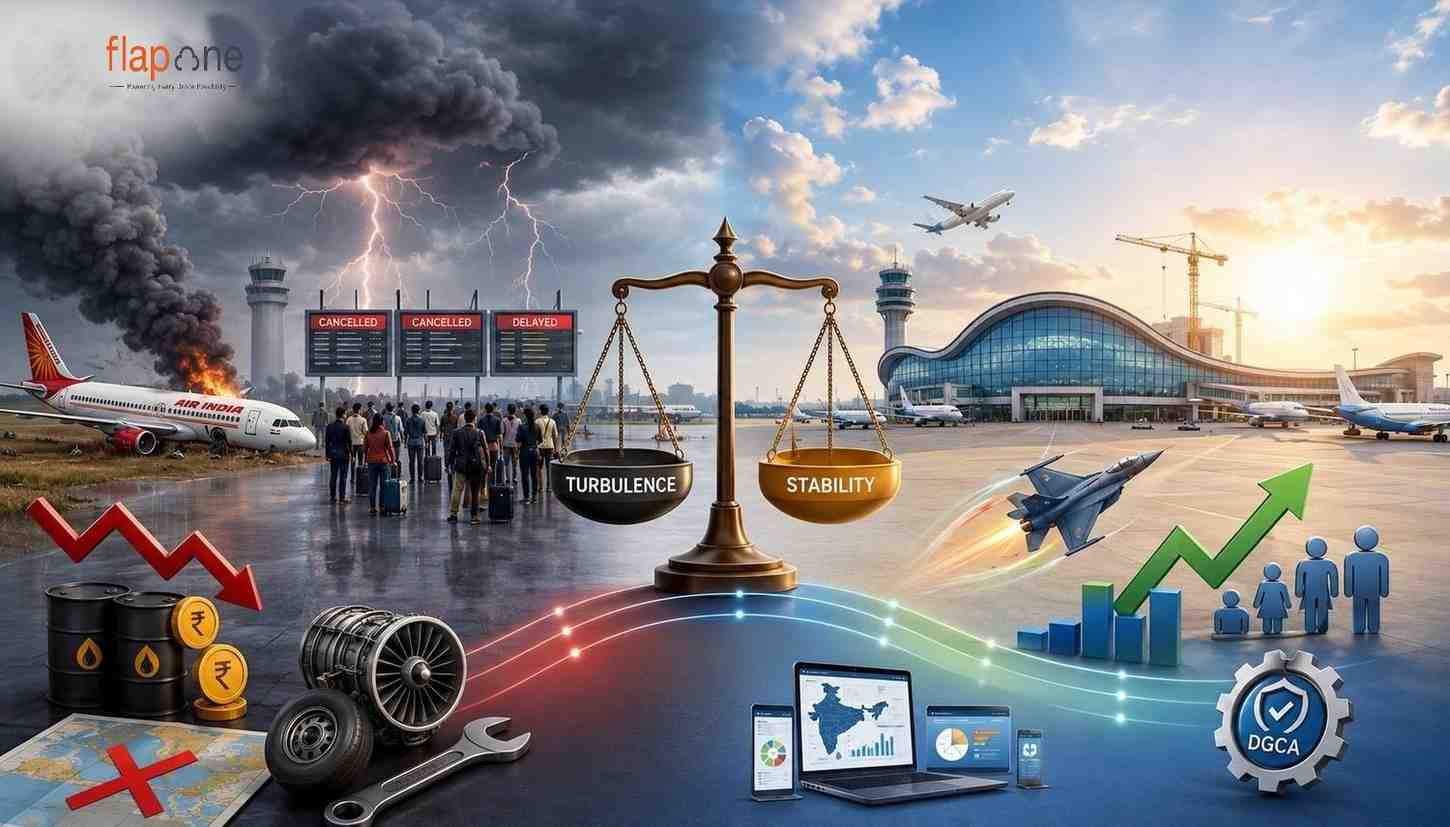
As 2025 has flown by, it is important to look back at what has happened in the world of aviation in India. This industry has been ruling the roost even when the world was still reeling under COVID-19. The IATA predicted that the world would recover to pre-COVID-19 levels by 2024. Indian domestic aviation rather exceeded pre-pandemic levels in 2023, indicating that the industry has only gone from strength to strength.
Though India has one of the fastest-growing aviation industries, it faced turbulence in 2025 due to massive flight disruptions, monetary fluctuations, safety crises and structural holdups. IndiGo’s ascendency in the Indian aviation industry eroded under regulatory pressures, while Air India’s merger struggles and a fatal crash worsened its vulnerability. As a result, passengers were stranded, passenger trust declined greatly and government interventions were necessary to control the soaring operational costs.
IndiGo, which has 65% market share, caused chaos in December with over 1,000 daily cancellations, grounding thousands of passengers. The crisis stemmed from inadequate planning for phase two of DGCA’s Flight Duty Time Limitations (FDTL) rules, effective November 1, which called for longer pilot rest periods and restricted the number of night landings.
Airports in Delhi and Mumbai experienced all domestic departures paused, with passengers sleeping on the floors amid technical glitches, fog and congestion. For an airline, such a situation is very different from any of the situation encountered in its nearly twenty-year history in Indian skies, where it has seen its competitors die out.
The government regulated the fare and capped what could be charged for a particular distance. The ministry also highlighted the point that there is over- reliance on a single carrier. This fiasco, along with regulatory and geopolitical disturbances across carriers, highlighted the fragility of rostering in high-demand skies. This affected a lot of passengers and prevented a new high in domestic passenger traffic in December, when the industry hoped to exceed 5.5 lakh passengers per day.
The fatal Air India Flight 171 crash in Ahmedabad in June, which killed 241 of 242 passengers on the Boeing 787-8, dropping into a medical college minutes after takeoff. The tragedy called for a thorough scrutiny of the matter, with risk reduction and oversight targeted. DGCA’s stricter FDTL and penalties highlighted fatigue concerns, though the implementation backfired.
The crash was one of the foulest disasters in recent Indian aviation history and the first one for the Dreamliner. The following handling of the investigation, the black box, and the preliminary reporting was extensively questioned and did not appear to reflect a developed market’s approach to the case.
The depreciating rupee, with respect to the US dollar, has been a challenge for airlines. While the widespread international network has been a valuable buffer for airlines for instance Air India, it is not true for IndiGo, seeking to surge its share of international customers in its total capacity.
Costs, for example, leasing, are dollar-designated and, with Indian carriers, depend on the leasing model; leasing costs have increased as a result of the depreciating value of the Indian rupee. The ticket sales in international markets partly offset the costs. Though IndiGo reported considerable losses in Q2, with foreign exchange losses being the key driver.
While IndiGo’s disaster stemmed from the reviewed Flight Duty Time Regulations, the FDTL regulations were eventually changed after years of debate. Not only does this offer relief to the crew, but it also brings into line the FDTL with global benchmarks, which makes India appear to be a maturing market. With the third-largest domestic market, India is leading the aviation market, with approximately 2000 aircraft on order across airlines.
After Akasa Air, several new airlines secured a No Objection Certificate (NOC) to enter the Indian aviation market, but progressing to the Air Operator Certificate (AOC) stage has proven far more demanding. Jettwings Airways received its NOC in June 2023 with plans to improve regional flight connectivity across Northeast India, yet it is still awaiting its Embraer aircraft before commercial operations can begin. Similarly, Shankh Air obtained an NOC in September 2024 and established an office at Lucknow Airport, but without an AOC, no plane has taken off despite announcements involving Boeing, Airbus, and Embraer models. Al Hind Airlines also secured its NOC in 2024 and selected the ATR 72-600 for its fleet, though its engines, wings, thrust, and lift have yet to power a commercial flight, highlighting the significant regulatory and operational milestones required before any new aircraft can successfully enter service.
The previous year was also just like any other year for the Indian aviation industry, with various ups and downs. The new year, 2026, will definitely bring in some new positives for the industry as well as for the people associated with it. With several of the new Indian Airlines planning to take off, this will open the doors for new commercial pilots to make an entry. If you also want to become a pilot, then enrolling at FlapOne Aviation can be a good thing for you to do.
Here, you will learn all about the practical as well as the theoretical facets of flying an aircraft, know all about the aviation regulations and how many hours you need to clock for going up the ladder. So, what are you waiting for? The sky is waiting for you to spread your wings and embrace life, king-size.
The changing Indian aviation sector is creating new opportunities for aspiring aviation professionals, particularly those planning careers in commercial flying. Understanding pathways such as a Commercial Pilot Licence and Private Pilot Licence (PPL) can help students evaluate training requirements, flying experience, and long-term career options as India’s aviation industry continues to develop and expand.
From selecting the right drone to finding a course, our team can guide you through every step of your drone journey.