

Why Aviation Is a Smart Career Shift for Mid-Level Professionals?
In today's time, when the technological, economic and corporate world is constantly changing, mid-level professionals, people with 7 t
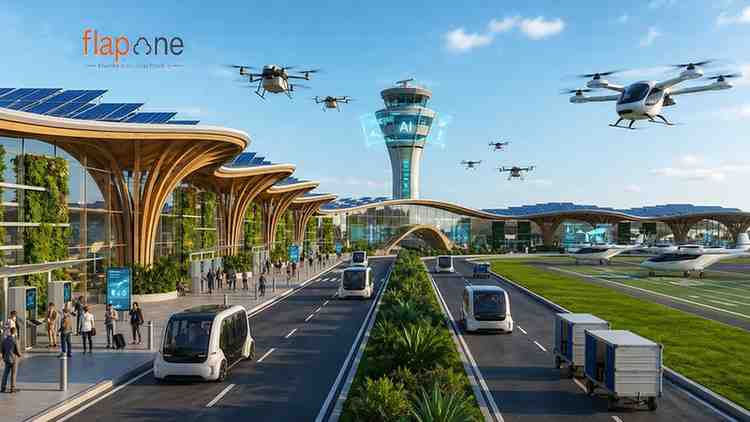
If you think that the aviation industry is free from challenges, then you are definitely on the wrong foot. This industry also faces challenges like environmental degradation and climate change; the need for innovative solutions has never been more important. Smart Airport Systems can help improve operational efficiency and promoting sustainability in aviation. These systems power technologies that improve airport operations, reduce noise and pollution, and enhance the overall passenger experience.
These include various technologies and strategies that are improving airport operations. These systems use data analytics and interconnected devices to boost efficiency, safety and sustainability. International Air Transport Association, in one of its research studies, states that implementing smart technologies in airports can change the lookout by reducing operational costs and environmental impact, eventually benefiting airlines and passengers as well.
Internet of Things
This technology is at the core of smart airports because it enables real-time data collection and analysis by connecting devices and systems. IoT sensors can monitor baggage handling at the airports, which ensures that luggage of the passengers is tracked effectively. A research report states that implementing IoT can increase operational efficiency at airports by up to 20%.
AI and ML
These new-age technologies are important for improving decision-making processes at airports. Both of them are used for analyzing data to predict passenger behaviour, optimizing resource allocation and improving the efficiency of operations. AI-driven analytics can improve the operational efficiency of airports by up to 30%, enhancing the experience of the passengers. The global travel industry has been able to gain over USD 400 billion per year through the adoption of AI, as stated by research.
Renewable Energy Systems
The incorporation of renewable energy systems is vital for achieving sustainability goals. Smart airports use solar panels, wind turbines and other renewable energy sources for powering their operations. It will highlight how partnerships with governments, the finance industry, and the energy industry will be mandatory, working alongside aviation experts.
Smart Grids and Energy Management
Smart grids prove worthwhile for effective energy distribution and management within airports. By combining pioneering energy management systems, airports can monitor energy consumption, identify inefficiencies and implement measures to diminish energy use.
These smart systems integrate several technologies for producing a cohesive operational framework. Data collected from IoT devices is analyzed using AI and big data analytics, enabling airports to make informed decisions. This approach advances operational efficiency at airports, reduces delays and enhances the passenger experience.
Many airports are embracing these technologies to improve their operations and meet sustainability targets. Airports are investing in ground power units and other energy-efficient solutions to reduce their carbon footprint and diminish noise and pollution.
The environment can also be prioritized with the use of Smart Airport systems. By implementing these solutions, carbon emissions of the airports can be significantly reduced by curbing their reliance on traditional energy sources. Noise pollution is also curtailed quite a bit, and people living in the vicinity of airports can enjoy a better quality of life.
A European Aviation Safety Agency study found that smart airports can significantly cut down on GHG emissions by up to 30% with effective energy management and operational efficiencies.
Beyond their environmental advantages, Smart Airport Systems also deliver significant financial benefits. By improving operational efficiency, airports can reduce energy consumption, optimize resource management, and lower operating costs. These intelligent systems support smoother flight operations by helping monitor aircraft movements, coordinating plane departures and arrivals, and enhancing ground handling processes. Efficient management ensures that engines, wings, lift, and thrust-related maintenance activities are better scheduled, reducing delays and improving safety. As a result, airports enhance the overall passenger experience while increasing long-term revenue and operational reliability.
Smart Infrastructure
Smart infrastructure development is important for the new-age airports. This comprises integrating innovative communication systems, automated processes, and energy-efficient buildings to increase operational efficiency, on the whole.
Intelligent Transportation
Intelligent transportation systems are important in boosting the passenger and goods movement at an airport. Smart Airport Systems use real-time data to optimize traffic flow, reduce congestion and improve the passenger experience.
Data-Driven Decision Making
Data-driven decision-making can be called a masterstroke of Smart Airport Systems. With the help of data analytics, informed decisions can be made by the airports, which can subsequently improve operational efficiency and sustainability.
Smart Airport Systems can pave the way to sustainable aviation. By integrating trailblazing technologies and state-of-the-art solutions, airports can improve operational efficiency, decrease environmental impact and enhance the experience of the passenger. With the aviation industry going from strength to strength, embracing smart solutions will make a huge difference, the icing on the cake. If the growing aviation industry also enthralls you and you want to become a pilot and start an aviation career, FlapOne Aviation is the right place for you to visit.
From selecting the right drone to finding a course, our team can guide you through every step of your drone journey.