Why Aviation Is a Smart Career Shift for Mid-Level Professionals?
In today's time, when the technological, economic and corporate world is constantly changing, mid-level professionals, people with 7 t
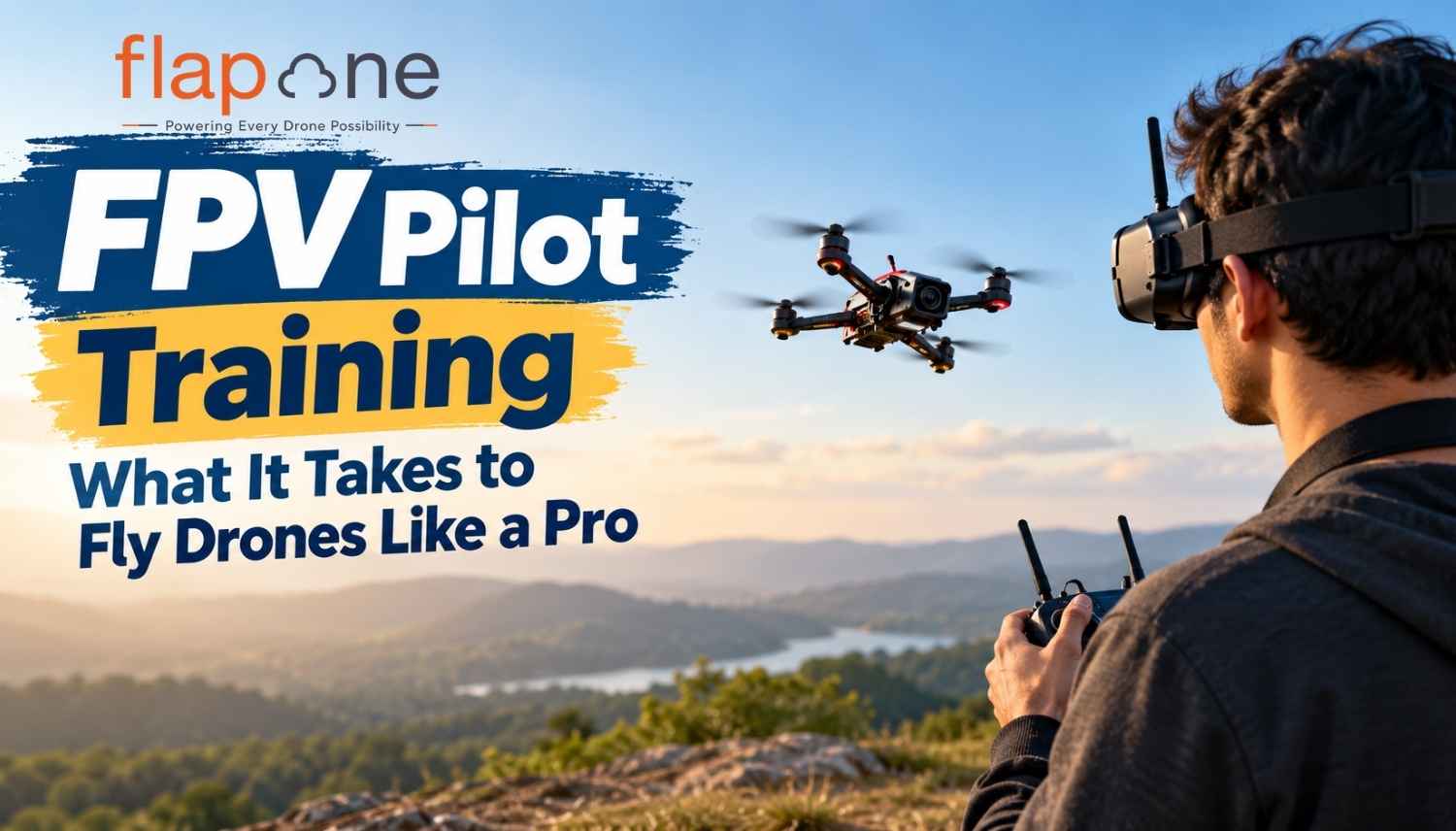
FPV pilot training, or first-person view pilot training, is a 3-day program offered by FlapOne Aviation. The program teaches individuals how to pilot a drone using the real-time goggles that simulate the drone cockpit.
FPV drones need to be controlled manually, which makes them more agile, faster, and challenging, yet interesting at the same time. In contrast, other traditional drones have automatic GPS stabilization and altitude hold.
This guide will teach you how to fly drones like a pro.
A well-structured FPV training program follows a step-by-step learning process that lets drone enthusiasts progress from basic to advanced drone flying.
Simulator Practice: The safe development of muscle memory for basic and acrobatic manoeuvres through the use of computer software (such as Liftoff or VelociDrone) and an actual remote controller.
Flight Theory and Safety: Comprehending the regulations of airspace, emergency protocols, and pre-flight inspections.
Hardware and Maintenance: Acquiring the ability to assemble, configure, calibrate, and repair components of FPV drones.
Real-World Piloting: The transition from line-of-sight fundamentals to immersive, high-speed, or acrobatic outdoor flight using digital goggles
Simulators have a reputation for being "not the real thing," yet in FPV training, they should account for the majority of your initial errors. Crashing in a simulator costs nothing. Crashing a real FPV quad can result in the loss of a prop, an arm, or perhaps the entire frame.
The finest training programs use simulators to quickly develop stick-time and reflexes before transitioning pupils to real-world flying after the fundamentals are mastered. By the time you're flying an actual FPV drone, you're not learning to fly while also learning to control your nerves; you've already mastered the first part.
FPV (First-Person View) pilot training is perfect for people who want to learn how to fly a drone in real time while wearing special goggles. People who can benefit from FPV pilot training are:
Drone Racer Aspirants: For those who want to take part in high-speed drone racing where they should be able to control the drones manually in a split second.
Aerial Cinematographers and Content Creators: These are professionals who want to record dynamic, fast-moving, and cinematic video that regular drones can't do.
FPV Fans & Hobbyists: Beginners who want to safely build muscle memory on simulators and learn how to properly put together hardware, maintain it, and handle batteries.
Defence & Tactical Personnel: Highly skilled workers who need to be able to plan missions, deal with stress, and make quick decisions about how to protect others.
India FPV training duration and eligibility criteria are as follows:
Eligibility Criteria:
A person should be between 18 to 65 years of age.
A person should be at least 10th (SSLC) certified
They should have a valid ID such as an Aadhaar card, voter ID, PAN card, passport, or driving license.
Course Duration:
It's a 3-day program offered by FlapOne Aviations. The program provides practical knowledge in the following areas:
Radio controller handling and throttle management
FPV drone components and system overview
Stabilized Horizon and Acro flight modes
Simulator-based FPV flying and crash recovery
Practical FPV takeoff, landing, and manoeuvring
Orientation, recovery, and emergency disarm procedures
Obstacle-based FPV flying and precision control
Battery management, safety checks, and pre- and post-flight inspection
Cost of FPV Training in India:
FPV training programs in India can cost somewhere around ₹ 30,000 to ₹ 100,000+, depending on the training level you choose.
If you opt for basic FPV training, it can cost you around ₹ 30,000 to ₹ 60,000
Whereas, if you opt for an advanced-level training, then the cost can go up to ₹ 100,000+
Here’s a list of the top 10 career paths after FPV certification.
Commercial Drone Pilot
Aerial Photography
Agricultural Drone Pilot
Survey and Mapping Drone Pilot
Construction and Infrastructure Inspection Pilot
Mining and Industrial Drone Pilot
Public Safety and Disaster Response Drone Pilot
Drone Instructor or RPTO Instructor
Drone Maintenance and Technical Support Specialist
Drone Entrepreneur or Drone Service Provider
FlapOne Aviation offers a 3-day FPV Drone Flying Specialist Course, which includes basic orientation to confident manual flying, covering modes such as Stabilized, Horizon, and Acro modes in a structured progression rather than getting directly into the deep end.
These sessions run from 10:00 AM to 6:00 PM and combine FPV simulator practice with real-world flying.
FlapOne Aviation focuses on:
DGCA-compliant pilot training
Career guidance
Skill advancement
Industry-related practical exposure
Advanced upskilling modules
What is a drone pilot salary?
A drone pilot's salary ranges from ₹3 lakh to ₹6 lakh per year.
What is the purpose of a flight simulator?
A flight simulator artificially recreates aircraft flight and its surrounding environment safely and realistically, and is also used in pilot training, aircraft design, and research.
Do I need to have a drone flying license before applying to the FPV Pilot Training Program?
No, even a beginner can apply for an FPV training program. You don’t need an RCP to enroll.
Who is eligible to apply for the FPV Program?
People aged 18 to 65 with a 10th-grade certificate are eligible to apply for the FPV program.
Does the FPV training program lead to a paid career?
Yes, FPV training programs lead to a well-paid career. It offers career opportunities such as cinematography, content creation, drone racing, and specialized inspection roles where manual precision in tight spaces is valuable.
From selecting the right drone to finding a course, our team can guide you through every step of your drone journey.