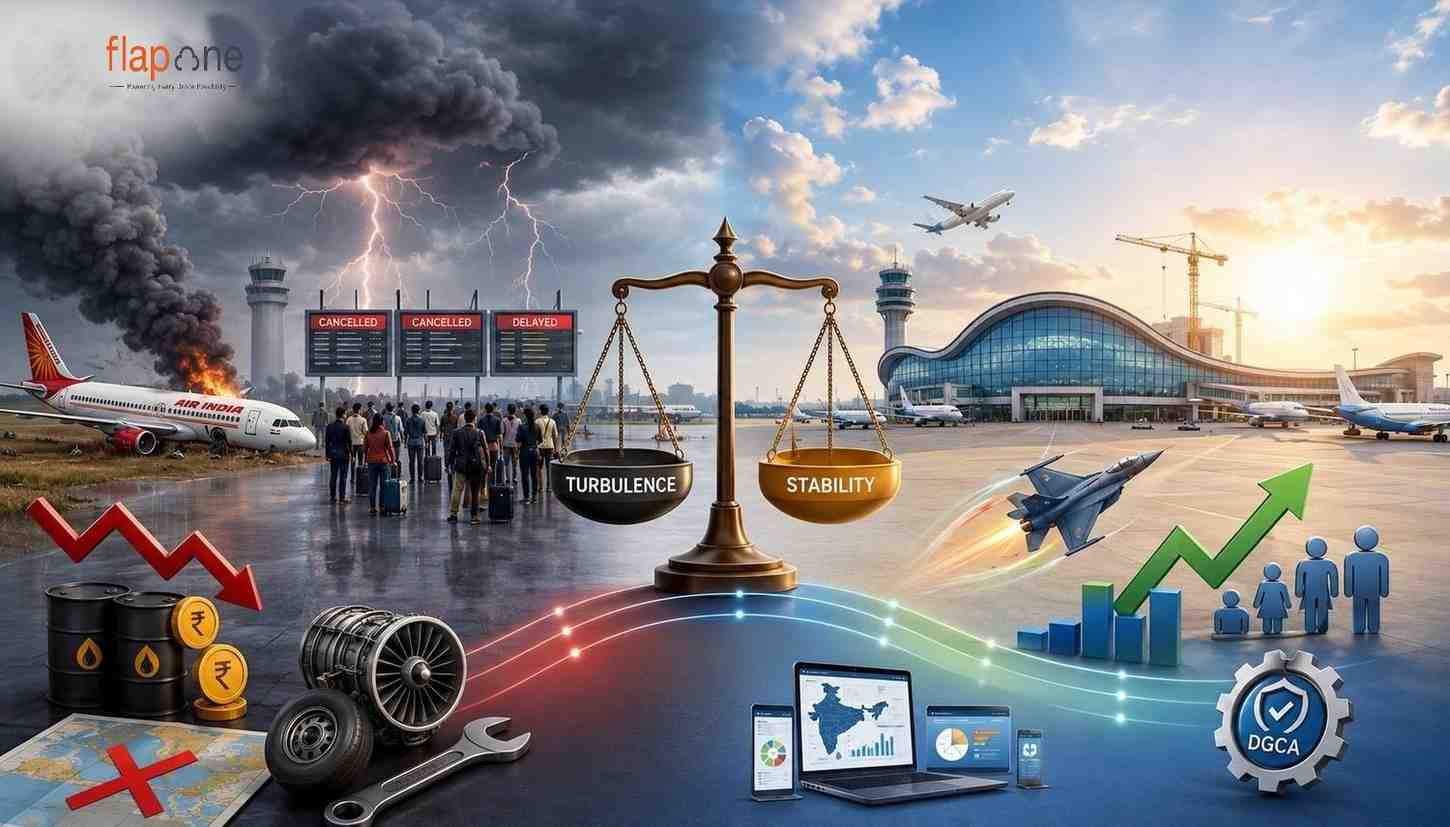
How is the Boom in Private Jet Travel Creating New Career Opportunities for Pilots in India?
The private jet industry in India is growing at a rapid pace. With the Indian aviation market expected to double by the end of this decade, reaching U
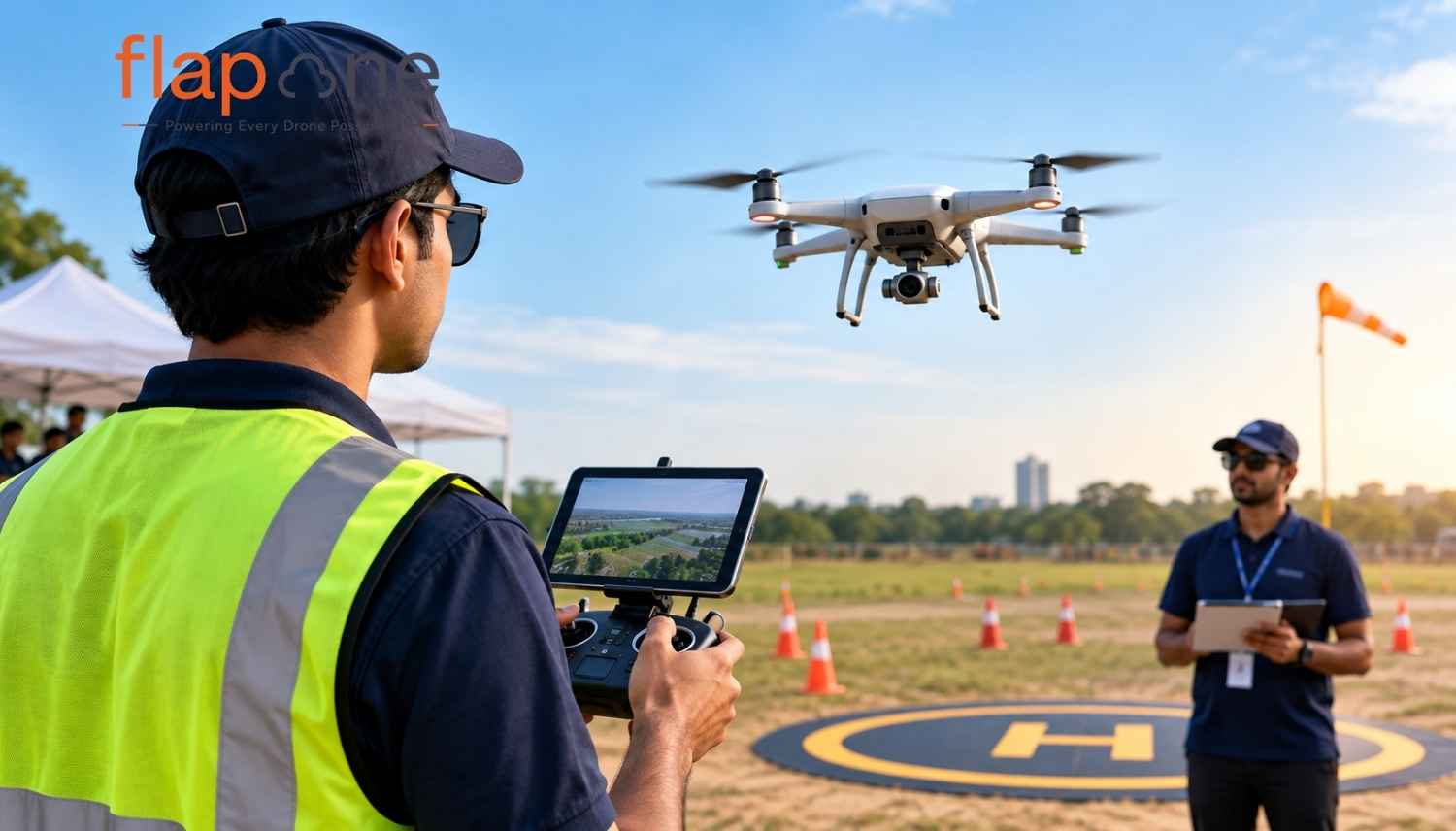
If you are looking to learn new skills or upgrade your existing skills, FlapOne Aviation has you covered. In this blog, we are going to talk about the basics that you need to know when learning to fly drones. What is RPC? Who needs a DGCA-approved RPC? Why is it important?
The Remote Pilot Certificate (RPC) is authorized by the government and allows you to legally fly drones in India.
A DGCA Remote Pilot Certificate is very important.
Legal Compliance To fly a drone in India, you need to have a Directorate General of Civil Aviation (DGCA) Remote Pilot Certificate (RPC).If you have a remote pilot certificate, you can fly drones weighing more than 250 grams for commercial agriculture or for professional purposes.
Safety & Compliance: The Remote Pilot Certificate requires that the pilot has been fully trained and has completed formal training.
The DGCA Remote Pilot Certificate is a must for those who want to fly a drone in India for business, commercial, and non-exempted activities.
Commercial Operators: Those interested in flying the drone for business, corporate projects or paid services would need a DGCA RPC.
Specialized Industries: People doing aerial photography or cinematography would need an RPC. Also, people who use drones for agricultural pesticide spraying, industrial inspections, real estate marketing, or GIS mapping.
Large Drone Classes: Pilots operating micro (commercial), small, medium, or large category drones weighing above 250 grams
Nano Drone Pilots: If your drone weighs less than 250 grams, then you do not require a DGCA RCP.
Non-Commercial Micro Drone Pilots: If the drone weighs between 250 grams and 2 kg and is being used for non-commercial purposes, then you don’t need to have a DGCA RPC.
In India, can anyone learn how to fly a drone? Do you need to meet certain requirements before you can start training?
This is a question many students ask before they start working with drones. They see drones used in farming, tracking, making movies, and disaster relief. But often they don't know the eligibility rules, the certifications they need, or even where to start.
To become a drone pilot, a student should be 18 years of age and should have completed basic education.
The Directorate General of Civil Aviation lays down the rules for who can fly under India’s Drone Rules regime. These rules make sure that pilots know about safety, the rules of the airspace, and their operating duties.
What Our Experts Say
A lot of students think they need technical degrees. But in the drone business, real skills are more important than formal engineering degrees.
In India, there are institutes like FalpOne Aviation which offer courses like the UAV Foundation Course that help beginners to easily understand the basics of drones.
At least 18 years old
Education: At least Class 10 pass
It is suggested that you understand basic English.
Proof of identity is needed.
Here is the process to obtain a Remote Pilot Certificate from DGCA in India:
Step 1: Sign up for Digital Sky.
You have to register yourself as a remote pilot on digitalsky.dgca.gov.in. You will be asked to provide an Aadhaar-linked mobile number to verify through OTP. Keep your Aadhaar and PAN details handy.
Step 2: Get a certificate of health.
Visit a hospital on the list or visit a DGCA-approved aviation medical examiner (AME). They will test your eyesight, hearing, and general health. People under 40 years old can use the medical certificate for two years, and people over 40 years old can use it for one year.
Step 3: Sign up with a recognized RPTO.
The DGCA has given permission to a lot of remote pilot training organizations in India. There are plenty of RPTOs in large cities such as Bengaluru, Hyderabad, Mumbai, and Delhi. Training consists of:
Ground school (theory)—the rules of the air, weather, airspace, navigation, and emergency procedures
Simulator training (if available)
Practical flying hours (minimum required by the drone category)
The training cost is generally between ₹15,000 to ₹50,000 depending on the RPTO and the duration of the course. The current cost is advised to be checked with the RPTOs.
Step 4. Get a good score on the DGCA theory test.
Take the DGCA online theory exam after you're done with your training. You take the test on the Digital Sky page itself. 70% is enough to pass. You can try three times.
Step 5: Finish the practical training and test.
Once you have passed your theory test, you will need to go to your RPTO and do the practical flying test. An approved examiner will test your ability to fly the drone safely, to respond to emergencies and to operate within the rules for airspace.
Step 6: Fill out an RPC form on Digital Sky.
You need to upload the following files to Digital Sky:
RPTO certificate of completion of training
Proof that you passed the theory test
Certificate of practical testing
Certificate of medical fitness
Copy of Aadhaar card
Passport-size photo
Step 7: Get your certificate as a remote pilot.
DGCA usually handles applications in 7–15 business days. You can get your RPC digitally through the Digital Sky portal. You can then download it and print it.
Fees for RPTO training range between Rs. 35,000 to Rs. 90,000. These fees include ground school, simulator, and flight instruction.
The local medical fitness certificate costs ₹500-₹1,000 for the medical and verification services.
The fee for Digital Sky and DGCA is between ₹100 to ₹3,000 as per the official certificate processing and portal charges.
Transportation and lodging costs are variable, depending on how close you are to the nearest Remote Pilot Training Organization (RPTO) that has been approved by the DGCA.
After becoming a professional drone pilot in India, you have these top 10 career options.
Commercial Drone Pilot
Aerial photography or cinematography
Agricultural Drone Pilot
Survey and Mapping Drone Pilot
Construction and Infrastructure Drone Pilot
Mining and Industrial Drone Pilot
Public Safety and Disaster Response Drone Pilot
Drone Instructor / RPTO Trainer
Drone Technical Support Specialist
Drone Entrepreneur/Service Provider
Here are a few common mistakes to avoid while applying for a DGCA Remote Pilot Certificate.
Mismatched Personal Information
Incomplete Background Check Documents
Neglecting to Track Application Status
Written Exam Preparation Errors
Training and Practical Knowledge Gaps
Immediate Post-Certificate Compliance Blind Spots
What does RPC stand for?
RPC stands for Remote Pilot Certificate.
What is DGCA RPC?
The DGCA Remote Pilot Certificate is a government-authorized certificate that allows you to legally fly drones in India.
How to download RPC?
To download a DGCA RPC, you need to log in to the DGCA Digital Sky Portal.
Use the official DGCA or Digital Sky portal to log in to your account. Enter your login information.
Proceed to Profile: To access the portion of your profile or license where the results of your completed training and exams are updated, navigate to the profile section.
To save your digitally signed Remote Pilot Certificate (RPC) as a PDF file, click the download link provided in the previous sentence.
How to get DGCA RPC?
To get your DGCA Remote Pilot Certificate, you need to complete the 5- to 7-day training program from an authorized DGCA Remote Pilot Training Organization.
What is the 1:1 rule of drones?
The 1:1 rule for drones states that your drone's flight altitude must not exceed its horizontal (lateral) distance from any uninvolved person
From selecting the right drone to finding a course, our team can guide you through every step of your drone journey.