Insights on Drone Flying

Explore articles and updates related to Drone Flying in the aviation and drone industry.

India’s 900-km Loitering UAV to Fly on Homegrown Wankel Engines, Reducing Foreign Reliance
Drone Flying Drone Pilot

India’s 900-km Loitering UAV to Fly on Homegrown Wankel Engines, Reducing Foreign Reliance

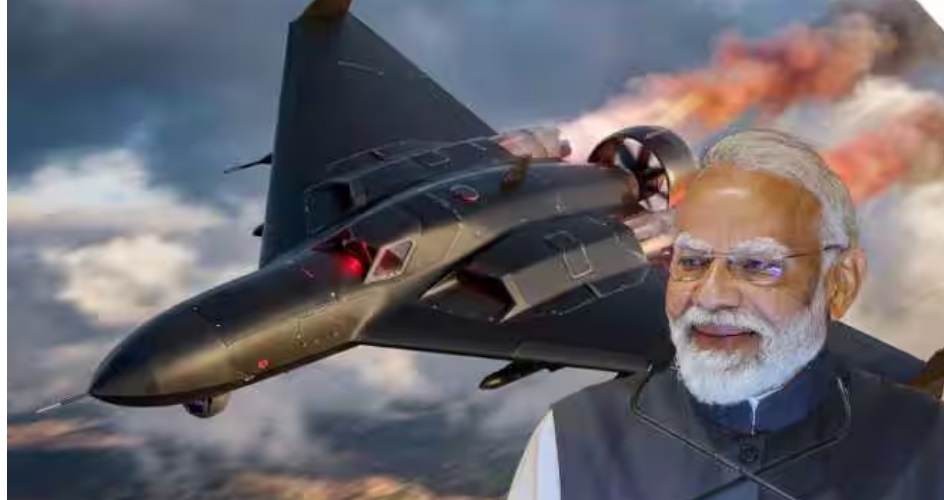
India is planning to develop cutting-edge long-range drones and 150-kilogram class loitering munitions powered by indigenous Wankel rotary engines, strengthening its strategic drive toward self-reliance in defence technologies. The initiative will reduce the need for foreign suppliers of propulsion systems. This segment is a bottleneck in India’s drone ecosystem, despite key progress in domestic airframe, software and weapons development. The first system to appear from this effort is a 150-kilogram loitering munition-drone hybrid platform, tentatively named ‘Loitering Munition-UAV’. Early specifications specify a standoff strike range of about 900 kilometres and an in-air time of about 9 hours per mission. If validated in trials, the platform would fall into the long-loiter category, providing deep-reach precision-strike capability, extended surveillance, target tracking and instantaneous engagement flexibility. The CSIR-National Aerospace Laboratories will partner with a private company to advance and manufacture long-range drones, marking a shift toward deeper industry participation in strategic drone programmes. The partnership signals a move away from largely PSU-led prototypes to a model combining a state-backed R&D strength with private-sector speed, scale and production capability. Wankel rotary engines are a favoured power source for small- and medium-sized drones worldwide because of their compact size, high power-to-weight ratio, low vibration signature and mechanical simplicity compared to traditional piston engines. India’s decision to localize this technology is significant because these engines power many imported loitering systems at present in use or under assessment by the country. Indigenizing the propulsion stack ensures that future Indian unmanned platforms can operate with sovereign supply-chain security, resist geopolitical leverage and integrate more seamlessly with classified mission systems. This would benefit defence PSUs and startups alike by lowering development costs, shortening iteration cycles, and enabling deeper integration with domestically developed strike, navigation and sensor packages. It may also unlock India's export potential in the unmanned-propulsion market, mainly amongst countries seeking non-Western supply alternatives. The headline range figure of 900 kilometers will also depend on aerodynamic efficiency, flight profile optimization, and fuel tank design, making full-scale validation during flight trials essential. The strategic value of the programme lies not only in the 150-kilogram strike platform itself, but in providing a domestic propulsion system that future drone families could inherit. Once flight-tested and production-qualified, the Wankel engine could expand into maritime-surveillance UAVs, swarm-drone nodes and potentially heavier rotary-powered loitering or cruise-type platforms. For now, the announcement carries significant signaling; India is committing to indigenous propulsion in the long-range unmanned-strike segment. The next milestones that will shape market and military confidence will be prototype flight trials, thermal-performance benchmarks, real-world endurance validation and the decision to transition the programme into scaled production.   Source: Indian Express

Saheel Singh 02 Dec 2025
India's First Fully Mobile, AI-Enabled Anti-Drone Patrol Vehicle Launched
Drone Flying Drone Pilot

India's First Fully Mobile, AI-Enabled Anti-Drone Patrol Vehicle Launched

In a substantial upgrade to India's border defence strategy, Indrajaal Drone Defence on 26 November 2025 announced the launch of the 'Indrajaal Ranger', the nation's first Anti-Drone Patrol Vehicle. This innovative, fully mobile, AI-enabled counter-drone system will detect, track, and neutralize hostile drones while they are actively in motion, addressing a critical national security vulnerability. The 'Ranger' is a combat vehicle intended to break away from traditional, stationary anti-drone solutions. Its core competence lies in delivering on-the-move drone detection, instantaneous patrolling and instantaneous interception- a requirement driven by the growing sophistication of cross-border threats. The company's insistence to develop the ADPV was heightened by recent national security incidents that highlighted drones as a key channel for illegal activity. Incidents involving ISI-linked weapon smuggling deep into Indian territory and the reliable neutralization of hundreds of Pakistani drones this year, serving as the main transport for India's massive Rs 3-lakh-crore drug-trafficking network, made the requirement for a fast, mobile response undeniable. Speaking at the launch, Lieutenant General Devendra Pratap Pandey (Retd), PVSM, UYSM, AVSM, VSM, praised the innovation. "India's youth deserve a safer nation, free from the shadow of international crime networks," said Lt Gen. Pandey. "Technologies like the Anti-Drone Patrol Vehicle are not just machines; they are shields protecting our children, our farmers and our future. With this new Ranger launch, India and the brave men guarding our borders will be truly grateful for such a transformative contribution." The Indrajaal Ranger will deliver a transformative layer of national security. By cutting off logistical supply routes and monetary channels for criminal operations, it weakens recruitment pipelines of smuggling and extremist networks, reinstating a sense of safety and dignity to vulnerable border communities. Indrajaal is an autonomous counter-UAS and air-defence technology company. Its proprietary autonomy engine, SkyOS, fuses multi-sensor intelligence and instantaneous decision-making into a unified C5ISRT framework.  This lets the company create dynamic "security domes" that protect intricate environments, such as airports, refineries, and military formations, at unprecedented scale. The company has already achieved operational success and is well-positioned for national-level rollouts, having obtained ARDTC certification for the disposition of Counter-UAS systems. Source: NDTV

Saheel Singh 28 Nov 2025
Mumbai To Launch Drone-Based Delivery System in Early 2026
Drone Flying Drone Pilot

Mumbai To Launch Drone-Based Delivery System in Early 2026

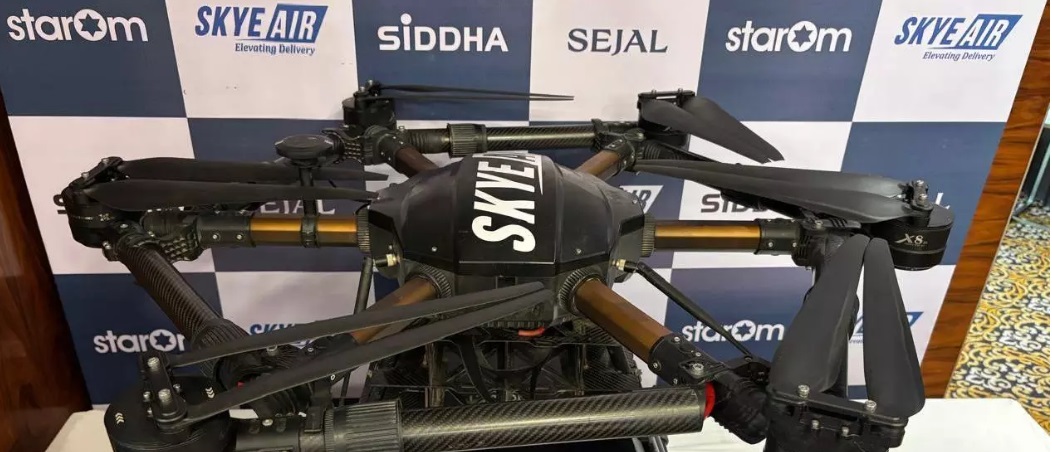
Mumbai is set to launch a futuristic drone delivery system, where residents will receive daily essentials, packages and e-commerce orders via drones. The delivery service will commence in the first quarter of 2026 in a Wadala society, marking Mumbai's first residential drone delivery initiative. Drone Firm, Developer Partner for Smart Urban Living A drone delivery company and a real estate developer have come together to acquaint with smart, sustainable urban living solutions in Mumbai. Skye Air will present the first drone delivery infrastructure in Mumbai for the residents of Wadala's Siddha Sky housing society, with its first skye-pod installation at the society. The residents will receive daily essentials, packages, and e-commerce orders via drones at a designated Skye-Pod zone set up on the premises for safe and seamless collection. According to Skye Air, each drone can cover 1km in 60 seconds, with a maximum range of 30 km, offering residents doorstep deliveries in minutes. The company has claimed to leverage its flagship drone, Skye Ship One, which can lift 10kg of shipment in one flight through coordinated drone corridors, the Skye Tunnel. The first phase of drone-enabled delivery services is scheduled to commence in the first quarter of 2026, marking Mumbai's first residential drone delivery initiative. Successful Operations in NCR, Bengaluru Skye Air claims to deliver more than 2 lakh monthly shipments in Delhi-NCR, serving 27 locations in Gurugram, two in Faridabad and one each in Ghaziabad and Bengaluru. They have partnered with delivery platforms like Bluedart, Flipkart, Shiprocket, and others, guaranteeing that residents enjoy faster, safer and greener delivery experiences right at their doorstep. The initiative will also reduce traffic congestion, minimise carbon emissions and promote sustainable logistics by taking a portion of last-mile delivery off Mumbai's crowded roads. ‘A Defining Step for Mumbai,’ Says Skye Air CEO Ankit Kumar, founder and CEO of Skye Air, said, "We are marking a defining step in shaping the future of drone-powered deliveries in Mumbai. With advanced skye-pods and AI-based route optimization via Skye UTM, we are setting a new standard for tech-enabled urban mobility, transforming the residential complex into a smart logistics node. This is more than a delivery revolution; it is the beginning of a new era in smart city infrastructure." Drone Delivery to Cut Congestion and Emissions Capt. Eshaan Khullar, vice president at Skye Air, said, "Mumbai, like most major metros, faces rising challenges from traffic congestion, delivery delays and increasing carbon emissions. With over five lakh daily last-mile deliveries across the city, traditional logistics systems are struggling to keep pace with demand. Drone-based delivery offers a futuristic, sustainable solution, making faster, safer, and contactless access to goods while significantly reducing on-road traffic and pollution.” Source : Free Press Journal

Admin 18 Nov 2025
Indigenous Kaal Bhairav Drone Wins Silver in Croatia
Drone Training Drone Flying

Indigenous Kaal Bhairav Drone Wins Silver in Croatia

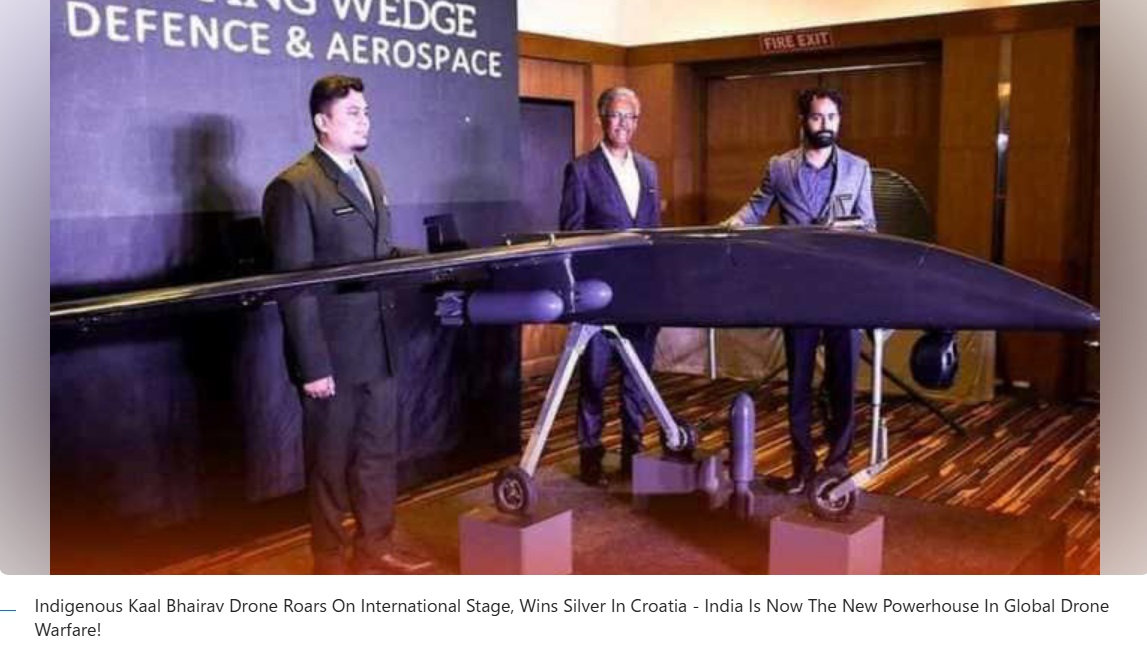
India’s indigenous Kaal Bhairav drone won a silver medal at the 23rd International Exhibition of Innovations 2025 in Zagreb, Croatia. The shows that Made-in-India defence technology is now competing with some of the world’s best. India is announcing itself as a strong player in cutting-edge defence technology, armed with a fully indigenous AI-powered combat drone that can go toe-to-toe with anything Western nations produce. The Kaal Bhairav E2A2 is India's first AI-driven Medium Altitude Long Endurance autonomous combat aircraft. Built completely by the Indian defence company Flying Wedge Defence and Aerospace, this drone represents a massive breakthrough in India's military technology capabilities. This drone can fly for 30 hours straight and cover a distance of 3,000 km. Its onboard systems manage mission planning, targeting and coordinated swarm actions independently. Built For Future Warfare This drone is good because it’s extremely adaptable. Its smart onboard systems and multi-sensor setup allow it to strike from more than one direction with precision. Even if foes try to jam its signals, a common tactic that forces drones to land, it can fly and complete its mission. Its modular design makes it worthwhile in various roles, including precise attacks, electronic warfare, wide-area maritime surveillance and real-time information sharing on the battlefield. Most prominently, it provides India with a fully homegrown, affordable option compared to the costly foreign drones. India has clearly entered the global drone race with confidence. 'Made In India, For the World' After winning silver, Flying Wedge CEO Suhas Tejaskanda said, "This victory proves India's technological strength. Our goal is clear: Made in India, for the world." He stressed why this matters strategically: "India must build its own weapons and technology to end foreign dependency. Kaal Bhairav represents completely Indian design, manufacturing, and AI innovation. This strengthens Atmanirbhar Bharat." A New Defence Powerhouse Emerges The Croatia silver medal isn't just an acknowledgement; it's an authentication from the international community. Countries worldwide are reassessing India's tech capabilities. The defence export market, long controlled by the US, Russia and China, now has a formidable new competitor. India has entered the global drone market. Source: Zee News

Admin 17 Nov 2025
NASSCOM Opposes New Drone Bill, Calls for Stronger Enforcement Under Existing Rules
Drone Rules Drone Pilot

NASSCOM Opposes New Drone Bill, Calls for Stronger Enforcement Under Existing Rules

The National Association of Software and Service Companies has questioned the requirement in the government’s proposed Civil Drone Bill, 2025, saying it could undo the liberalization achieved under the present regulatory framework. What the Draft Civil Drone Bill Proposes The Civil Aviation Ministry released the draft Bill in September, seeking to start a statutory framework for drones. The Bill will replace the Drone Rules, 2021 and sets out provisions for: Registration and Type Certification of all Drones, with no exemptions for small or hobby models. Compulsory safety and security features to be agreed upon by the government. Obligatory third-party insurance for all drone operators. Criminal consequences for violations, along with imprisonment of up to three years in some cases. Authority for law implementation to detain drones and related apparatus for up to seven days if a violation is suspected. The bill also establishes a compensation mechanism for drone-related accidents Why NASSCOM says a New Law isn’t Needed? NASSCOM’s central argument is that there is “no clear justification” for a complete legislative overhaul. The industry body said the Drone Rules, 2021, together with the Bharatiya Vayuyan Adhiniyam, 2024, already provide a comprehensive framework for safety, accountability and oversight. Instead of introducing a new statute, NASSCOM argued, the government should focus on better enforcement of existing rules. What the Draft Civil Drone Bill proposes The Ministry of Civil Aviation released the draft Bill in September, seeking to create a statutory framework for drones. The Bill will replace the Drone Rules, 2021, and sets out provisions for: Drone Registration, with no exemptions for small drones. Mandatory safety and security features to be arranged by the government. Compulsory third-party insurance for all drone operators. Criminal penalties are levied for violations, including imprisonment of up to three years in some cases. Authority for law implementation to detain drones and related equipment for up to 7 days if a violation is suspected. The bill also introduces a compensation mechanism for drone accidents Why NASSCOM says a New Law isn’t Needed NASSCOM’s central argument is that there is “no clear justification” for a comprehensive legislative overhaul. The industry body said the Drone Rules, 2021, together with the Bharatiya Vayuyan Adhiniyam, 2024, already provide a comprehensive framework for safety, accountability, and oversight. Instead of introducing a new statute, NASSCOM argued, the government should emphasize better implementation of current rules. Exemptions for Educational Projects, Hobbyists Removed : The Drone Bill eliminates earlier exemptions for nano drones, hobbyist models and educational projects, compelling students and researchers to get certification and registration. Criminalization of Minor Offences : The bill recommends imprisonment and criminal liability for procedural violations that may not include safety risks. Lack of Focus on Innovation : The bill lacks provisions to support R&D, domestic manufacturing or export incentives. NASSCOM warned that these provisions could create uncertainty and discourage startups from entering the drone sector. What are the Recommendations of the Industry Body? Instead of scrapping the Drone Rules, 2021, NASSCOM has suggested targeted amendments to strengthen enforcement and compliance mechanisms. Its proposals include introducing a graded penalty framework that distinguishes between civil and criminal offences; establishing a drone claims tribunal to handle accident-related disputes; allowing the digital levy and the payment of penalties through online systems, and so on. Why This Matters? India’s drone industry will reach $USD 4.9 billion by the end of this decade, growing at a 44% CAGR. NASSCOM argued that the sector's growth depends on regulatory certainty and ease of doing business. The Ministry of Civil Aviation is yet to announce a timeline for finalizing the Bill.

Saheel Singh 07 Nov 2025
87 MALE Drones will Wreak Havoc; the Defence Ministry's 30,000 Crore Plan
Drone Training Drone Flying

87 MALE Drones will Wreak Havoc; the Defence Ministry's 30,000 Crore Plan

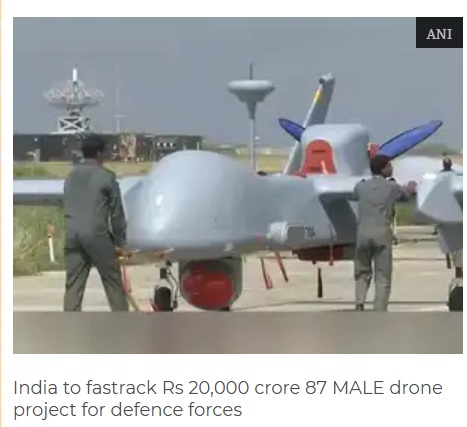
87 MALE Drones will Wreak Havoc; the Defence Ministry's 30,000 Crore Plan The Indian Army, positioned around the clock to make India's borders impregnable, will receive a major boost in its strength. This will not only suit modern warfare conditions but also modernize the army's entire fleet. The Indian Defence Ministry is preparing to launch a major revolution in the country's drone manufacturing sector. The Medium Altitude Long Endurance (MALE) drone program has now entered an important phase, aiming to improve instantaneous surveillance and intelligence along the land and maritime borders with China and Pakistan. The Defence Acquisition Council has accepted the acquisition of 87 indigenous MALE drones, which will cost about INR 30,000 crore. How Will the Purchase be Conducted? The most significant aspect of this major procurement is that the contract will be divided between two competing Indian firms in a 64:36 ratio. This essentially means that two separate and independent manufacturing units for MALE drones will be established in India, increasing production speed and enabling faster fulfilment of future orders. The armed forces will soon seek expressions of interest from Indian companies, following which extensive testing will be conducted. What is the Ministry of Defence's Plan? The Ministry of Defence has issued specific guidelines for this ambitious project, emphasizing the importance of indigenization. The total order, worth over ₹30,000 crore, will be divided between the two lowest bidders. The prime contractor will receive 64 per cent, and the other 36 per cent. As such, the selected companies will be required to manufacture the airframe and primary components locally. The engines will also be assembled and tested in India. At least 60 percent of the content must be indigenous. What is the Speciality of MALE Drones? These drones will act as a force multiplier for the Indian Army, Air Force, and Navy, significantly enhancing India's combat capability. These MALE drones will be capable of performing a variety of tasks, including intelligence (ISR), surveillance, reconnaissance missions, electronic warfare, and precision strike. Furthermore, these drones will be designed to fly for over 30 hours at altitudes exceeding 35,000 feet, enabling them to conduct continuous surveillance over long distances. India has previously procured MALE drones from foreign suppliers, such as Israel. The feat of this indigenous program will reduce foreign dependence. Source: Zee News

Saheel Singh 05 Nov 2025
800 Swarm Drone Systems are in the Pipeline, IAF is Preparing for Major Deployments
Drone Flying Drone Training

800 Swarm Drone Systems are in the Pipeline, IAF is Preparing for Major Deployments

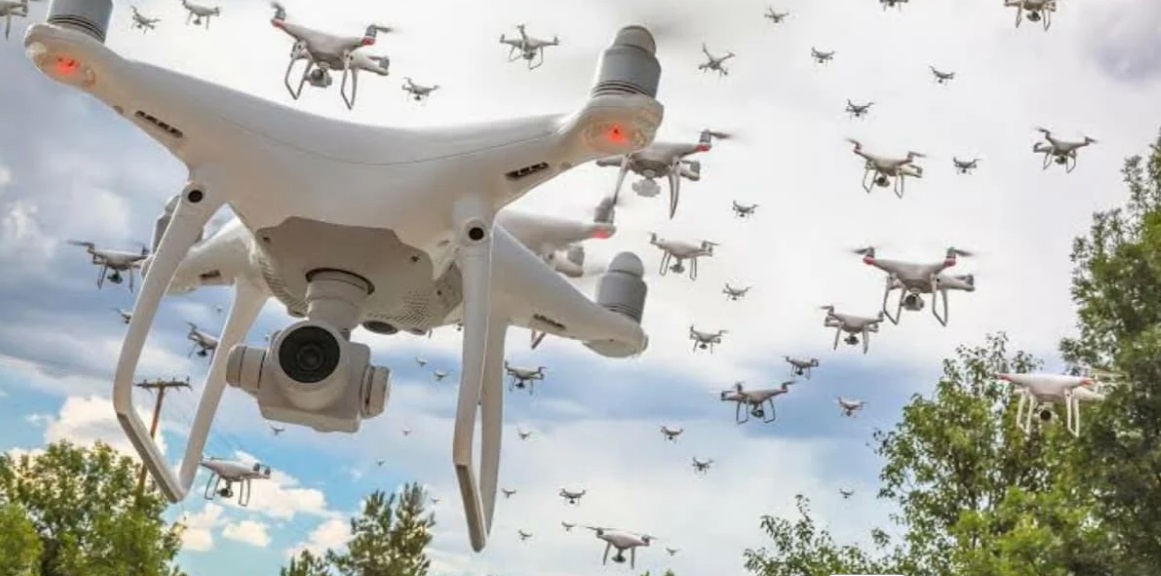
The Indian Air Force (IAF) is planning to acquire 800 Medium Range Swarm Unmanned Munition Systems (SUMS). According to a report, these swarm drones can target enemy positions at ranges of over 350 kilometres with pinpoint accuracy. These drones, equipped with loitering munitions, locate enemy positions, identify them and then attack them with pinpoint accuracy, destroying them. This System can Deploy 20 Drones at a Time According to a Tribune India report, each Medium Range Swarm Unmanned Munition System (SUMS) can deploy a swarm of at least 20 drones in sequence. They can hover for at least half an hour over a designated area of ​​over 350 kilometres, identify targets and then launch a full-scale attack. They can identify both stationary and moving targets. These Swarm Drones are Extremely Lethal According to a Request for Proposals received by the Ministry of Defence on October 25, these drones will jam enemy air defence systems, evade radar and enable the Indian Air Force to target enemy command-and-control systems within a few hours. The Air Force requires fixed-wing drones that can run on both jet engines and batteries. These drones can carry weapons weighing up to 30 kg. They will also be equipped with essential sensors, electronic jammers, communication systems, and navigation equipment.   They Can Fly in Temperatures Ranging from -20°C to 50°C These drones will operate effectively at altitudes ranging from sea level to 16,000 feet. They can be launched and recovered from rough roads and ship decks. These drones will operate reliably over a temperature range of -20°C to 50°C. The Rising of Drones in Modern Warfare Drones have transformed battlefields in the modern era. They are used for attacks, surveillance and even for cargo transportation. Following their success in Operation Sindoor and ongoing conflicts with other countries, drones have been adopted by every branch of the Indian Army. They are seen as cost-effective and a tool that reduces risk for soldiers. Source : Navbharat Times

Saheel Singh 29 Oct 2025
You will be on the Radar as soon as the Drone is Flown, and the Portal will have Data on Every Purchase, an Order from the Yogi Government
Drone Pilot Drone Flying

You will be on the Radar as soon as the Drone is Flown, and the Portal will have Data on Every Purchase, an Order from the Yogi Government

Flying a drone without permission will no longer be easy. You'll be on radar as soon as you fly it. The UP government has taken a major step in the realm of security. Under this initiative, the seller is required to provide complete information on the portal, from the drone's purchase to its intended use. As a pilot project, this system has been implemented in 10 police Commissionerate districts, including Gorakhpur, Ayodhya and Mathura. Later, it will be implemented across the state. The online portal "Unified Drone Application and Authorization Network (UP UDAN), developed under the state's "Drone Operations Security Policy-2023," is now officially live. The portal is available at https://udaan.up.gov.in and will operate under the operational support period until August 4, 2026. Through this, all processes related to drone operations, permits, sales and monitoring will be recorded and controlled online on a single platform. Flying drones without registration has been prohibited. Security Headquarters, Lucknow, has directed the Police Commissioners of the state's Police Commissionerate districts and the Senior Superintendents of Police of Gorakhpur, Ayodhya, and Mathura to conduct a registration drive for drone operators and sellers in their respective districts and submit action reports to Headquarters. A "Drone Register" should be maintained in each district, and all drone information should be recorded on the "UP UDAN" portal. Officials say this system will not only strengthen security and surveillance, but it will also play a vital role in surveys, traffic monitoring, and disaster relief operations. Immediate Action will be taken on Illegal or Suspicious Flights. Omninet Technology Private Limited has developed this portal. According to the platform, it will make drone operations transparent and accountable. A digital record will be maintained for every registered drone, and security agencies will be able to take immediate action on any illegal or suspicious flight. Districts Included in the Pilot Project Under the pilot project, the following districts have been included in this system: Gorakhpur, Lucknow, Ayodhya, Mathura, Kanpur, Prayagraj, Varanasi, Agra, Gautam Buddha Nagar, and Ghaziabad. Later, there are plans to implement it across the state. What Did the Police Say? City SP Abhinav Tyagi said that all police station in-charges have been instructed to register drones compulsorily. So far, 171 drones have been registered in Gorakhpur, and registration for the remaining is ongoing. The government has issued guidelines regarding where and at what altitude registered drones should be flown. Legal action will be taken against those who fly drones in violation of these instructions. Source: Hindustan

Saheel Singh 27 Oct 2025
half-star-solid phone