
Insights on Drones

Explore articles and updates related to Drones in the aviation and drone industry.

MQ-9B AEW: The Drone that Could Transform India’s Airborne Early Warning
Drones mq9b

MQ-9B AEW: The Drone that Could Transform India’s Airborne Early Warning

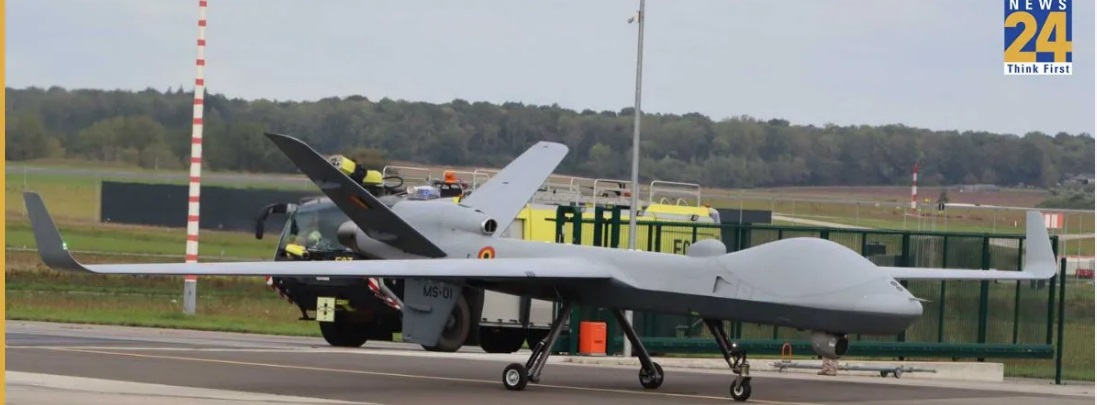
US General Atomics is preparing to introduce a new Airborne Early Warning (AEW) variant of its MQ-9B drone. If inducted, this could have a big positive impact on India’s long-range surveillance and air defence capabilities. The CEO of General Atomics Global said the MQ-9B-AEW would be the first high-altitude, long-endurance drone equipped with an airborne early warning radar, a role initially performed by large, crewed AWACS aircraft. What are MQ-9B Drones? These drones have long battery life, can fly at substantial altitudes, and are designed for intelligence, surveillance, and reconnaissance, as well as precision strike missions. They have an in-air time of more than 30 hours, operate at more than 40,000 feet, and cover vast maritime and land areas. India has already signed a USD 3 billion deal to obtain 31 MQ-9B drones from General Atomics for tri-service use. The future AEW variant will integrate early warning radar onto the same long-endurance platform, efficiently turning the drone into a flying surveillance node which can detect aircraft, drones and missile threats over extended ranges. Airborne early warning systems operate as airborne radar stations, tracking threats and transmitting data to commanders in real time. By mounting these systems on an unmanned drone rather than a large aircraft, militaries can achieve longer endurance, lower operational costs and reduced risk to personnel.   The CEO of the company said that modern conflict “rewards speed, integration and command clarity,” adding that drones help “shorten the sense-decide-act loop” by offering incessant, high-quality intelligence. However, he cautioned that drones are not decisive on their own. “What they actually do is compress time. They expose movements that were hidden and make it harder for any force to manoeuvre without being detected. He emphasised the requirement for a layered architecture, from small tactical drones near the front lines to medium ISR platforms and long-endurance systems operating over land and sea, backed by communications networks, electronic warfare protection and counter-drone capabilities. “The prospect in India is not just to build platforms. It is to build an ecosystem, components, payload integration, software, training and sustainment. If those basics are in place, India will be more than a customer; it will be a strategic hub,” The CEO said, referring to General Atomics’ partnership with Larsen & Toubro to manufacture drone components in India. Source: Money Control

Saheel Singh 24 Feb 2026
India Currently has More Than 38,500 Registered Drones, due to the Growing Drone Ecosystem
Registered Drones Drone Didi Scheme

India Currently has More Than 38,500 Registered Drones, due to the Growing Drone Ecosystem

The adoption of drones in India is on the rise; as a result, the total number of registered drones in the country crossed 38,500 and there are 39,890 certified drone pilots as of February 2026. There are more than 240 approved training organizations present in India, providing skilled drone pilots and maintenance professionals. This rising acceptance of drones reflects the maturation of a complete ecosystem, including manufacturers, software and component developers, service providers, training institutions, certified pilots, start-ups, research organizations, and digital platforms operating within a unified regulatory framework. Drones are now used across sectors such as agriculture, land and property surveys, infrastructure monitoring, disaster assessment and delivery, demonstrating their potential to improve competence, transparency and precision in governance. A total of 3.28 lakh villages were surveyed using drones across the country under the SVAMITVA Scheme. With initiatives supporting women's entrepreneurship, rural access, and domestic manufacturing, the country has developed a coherent framework that drives technological innovation and extensive adoption of drones   To date, women SHGs have received 1,094 drones, including more than 500 units under the Namo DroneDidi initiative , thereby improving productivity and job creation. Indigenous manufacturing, skill development for remote pilots and integration with state and central programmes position India to use drones for infrastructure inspection and national security.   Drones can also monitor the country's railways and highways. With drone adoption in India receiving increasing government support, India will soon become a global leader in drones, developing an ecosystem that balances commercial growth, technological self-reliance, and inclusive development. Source: DD News

Saheel Singh 18 Feb 2026
What Are Sheshnaag 150 Swarm Drones? India’s 1,000 km Deep Strike Loitering Munition
Swarm Drones Defence Drones

What Are Sheshnaag 150 Swarm Drones? India’s 1,000 km Deep Strike Loitering Munition

The Sheshnaag 150 swarm drone, launched at the World Defence Show 2026 in Riyadh, signals that the Indian government is now thinking way beyond battlefield systems. Developed by NewSpace Research and Technologies, it is a loitering munition capable of striking targets over 1,000 kilometres away.   The system sits somewhere between short-range drones and expensive standoff cruise missiles. This swarm drone system offers deeper penetration and longer endurance and can carry a 25-40 kg warhead, with sufficient destructive capacity to neutralize high-value fixed targets. Built For Distance, Designed for Precision The drone is fairly compact and has a rather simple configuration. The design provides sufficient internal fuel storage and stable cruising with extreme manoeuvrability. This provides a total endurance of about five hours, suggesting a small-engine configuration rather than battery-only propulsion. The precision of the Sheshnaag 150 places it in the guided-missile category rather than the one-way attack drone category. Swarm Logic and Collaborative Attack The Sheshnaag 150 will not operate as a lone projectile. Instead, it forms part of what the company calls a collaborative attack ecosystem. These swarm drones can perform different functions. Some might act as decoys to extend enemy radar emissions. Others might gather intelligence or jam communications. The strike elements then exploit the exposed vulnerabilities. Rather than responding to a single inbound threat, air defence systems must process more than a few simultaneous signatures arriving from different directions and with different profiles. This model is much more than attrition-based drone use; it is about networked, adaptive engagement. In contested environments, where electronic warfare and jamming are predominant, the ability to dynamically re-task assets mid-flight could prove decisive. Where Sheshnag 150 Fits in India’s Strike Matrix? A 1,000-kilometre reach of the drone system enables engagement with command centres, air defence nodes, ammunition depots and airfields without exposing manned aircraft to risk. Its closest international parallels are long-range loitering platforms intended for strategic suppression roles. No procurement contracts have been disclosed as yet. The programme is funded privately and will meet the requirements of the Indian Armed Forces while remaining export-ready. The Sheshnag 150 launch marks a clear shift, representing that India’s private defence sector is now preparing for long-range precision warfare. Source: Times Now

Saheel Singh 17 Feb 2026
Madhya Pradesh and Chhattisgarh Lag in Drone Adoption as Parliament Data
Drone Adoption Chhatisgarh

Madhya Pradesh and Chhattisgarh Lag in Drone Adoption as Parliament Data

According to a written reply tabled in the Lok Sabha, drone adoption in Madhya Pradesh and Chhattisgarh remains low, despite the government’s repeated claims that it has significantly relaxed India's drone ecosystem. The Government of India introduced and implemented the Drone Rules, 2021, to ensure safe and regulated drone operations, mainly in remote areas. The amendments to the drone rules enacted in 2023 and 2024 simplified compliance by removing the mandatory passport requirement for obtaining Remote Pilot Certificates and by streamlining drone registration and transfer requirements. Most of the Indian airspace falls under the Green Zone, permitting drone operations without prior permission. A Certification Scheme for drones was also introduced in 2022 for creating a global validation framework. To prevent misuse, mandatory UIN, valid RPCs, DGCA-authorized training institutions, and strict restrictions on the carriage of weapons remain in force. Though the state-wise registration data tells a different story for central India. Till January 31, 2026, MP had 480 registered drones, while Chhattisgarh had just 161. Maharashtra leads in the number of registered drones, with 8,210. The total number of registered drones in India is 38,475. The data has raised questions for MP, mainly in light of CM Mohan Yadav's ambitious push to position the state as a "drone hub. “There is a 40% subsidy on drones, capped at Rs 30 crore, and grants of Rs 2 crore for R&D. MP ranks only 13th in India in drone registrations, despite these initiatives. Its position is lower than that of Haryana and Andhra Pradesh. Chhattisgarh also has only 161 registered drones, despite substantial requirements for forest monitoring, disaster response and remote healthcare logistics.   The data indicate that, despite India's liberal regulatory framework for drones, the drone ecosystem development varies across regions. Source: NDTV

Saheel Singh 17 Feb 2026
After Operation Sindoor, India Starts Working On First Dedicated Drone Runway In Meerut
Defence Drones Military Drones

After Operation Sindoor, India Starts Working On First Dedicated Drone Runway In Meerut

Following Operation Sindoor, a key security upgrade that demonstrated how contemporary warfare is changing in real time, India will acquire its first dedicated drone runway to keep a hawk-eye in the sky. The Indian Army will have this base of more than 900 acres in Meerut. The Border Roads Organization, under the Defence Ministry, has initiated the process to construct a dedicated military aviation base for High-Altitude Long-Endurance Remotely Piloted Aircraft. The BRO has requested bids for Project Management Consultancy services for the Rs 406-crore project. The base will feature a 2,110-metre-long, 45-metre-wide runway, intended not only for drones but also for transport aircraft in the C-295 and C-130 classes. The runway will have ICAO CAT-II-compliant lighting and contemporary navigational aids, allowing operations even in low visibility. Two large hangars, each 60 by 50 metres, will house aircraft and RPAs, enabling maintenance and rapid deployment. The scale of planned activity is substantial. The facility will support the movement of heavy aircraft annually, accompanied by about 1,500 RPA operations, roughly four drone sorties per day. During Operation Sindoor, drones were widely used for surveillance, reconnaissance and precision targeting. Military planners observed how sustained drone operations improved situational awareness while minimizing risk to personnel. Lessons from such operations have reinforced the significance of dedicated infrastructure to sustain high-tempo unmanned missions. HALE RPAs, particularly, are intended to stay airborne at high altitudes for long durations, providing instantaneous intelligence across vast stretches of terrain. In border situations, that endurance can mean the difference between reacting to events and anticipating them. The Meerut base stretches across 85 months. 7 months are owed for pre-award planning and DPR preparation, followed by 18 months of supervised construction. A two-year defect liability period and 3 years of maintenance oversight will guarantee operational readiness over time. The base will not just be an airstrip; it will be a strategic nerve centre. And in Meerut, the steady drone engines may soon become a reminder that the future of defence is increasingly unmanned, data-driven and persistent in the skies. Source: News 18

Saheel Singh 16 Feb 2026
IG Defence to Set-Up a Rs 300-Cr Advanced Drone Manufacturing Hub in Odisha
Defence Drones Kamikaze Drones

IG Defence to Set-Up a Rs 300-Cr Advanced Drone Manufacturing Hub in Odisha

Reinforcing Odisha’s emergence as a key aerospace and defence manufacturing hub, IG Defence, India’s leading indigenous defence technology company, will start a Rs 300-crore cutting-edge multi-drone manufacturing facility in Ganjam district. The project will boost the state’s strategic industrial ecosystem and India’s self-dependence drive in defence production. The proposal was approved by the 144th State Level Single Window Clearance Authority as part of a broader push to expand Odisha’s manufacturing and strategic industrial base. The forthcoming facility will produce advanced drones and related defence technologies, including high-performance tactical and mission-specific drone platforms. By leveraging Odisha’s conventional defence ecosystem, comprising DRDO labs, HAL facilities, the Ordnance Factory network, and the AD Gopalpur test range, the unit will support the expansion of indigenous electronic-warfare drones and other mission-critical defence competencies. India can enhance its safety, security, and national sovereignty by deploying these advanced drones and exporting them to friendly countries. The project will boost the domestic aerospace and defence manufacturing capacity, aligning with the national self-reliance objectives. IG Defence has a reputation for producing drones for real operational environments. Its drone and counter-drone platforms have been used in Operation Sindoor and numerous patented platforms have been inducted by the Indian Navy and Army. There were orders for more than 5,000 FPV Kamikaze Striker drones from several defence forces, which the company has delivered in recent years, underscoring rising confidence in the products. The Odisha facility will further reinforce IG Defence’s national production network and support the scaling of reliable, Made-in-India drones to meet the developing operational requirements of India’s armed forces, while allowing compliant exports that support regional security partnerships. IG Defence’s investment adds impetus to Odisha’s aerospace and defence ecosystem. It supports India’s broader objective of building a resilient, self-reliant defence manufacturing base under the Make in India and Atma Nirbhar Bharat initiatives. Source: United News of India

Saheel Singh 11 Feb 2026
IG Defence says its Fixed-Wing Tactical Drone to Boost India's Modern Battlefield Capabilities
IG Defence Defence Drones

IG Defence says its Fixed-Wing Tactical Drone to Boost India's Modern Battlefield Capabilities

IG Defence, a Drone Technology firm, on 10th February 2026, said its newly patented fixed-wing tactical drone integrates precision strike and surveillance into a single, multipurpose unmanned system, thus strengthening India’s indigenous defence competencies. IG Defence said it has been granted a patent for its Fixed-Wing drone, developed to meet the changing demands of contemporary battlefield operations. Focus on operational readiness is becoming increasingly significant as warfare continues to advance, it said in a statement. Operations are faster, more complex and increasingly driven by technology. The threats are no longer limited to traditional battlefields; they require faster response cycles, heightened situational consciousness and the intelligent use of drones. IG Defence's patented fixed-wing tactical drones having these realities in mind. It enables the armed forces to detect, track and engage targets with precision while reducing the risk to ground personnel. In strenuous environments, this ability to gather intelligence and act swiftly can be decisive. The fixed-wing drone has a longer range, higher endurance and stable performance over long missions. With a 5 kg payload, the drone can have mission-specific munitions or equipment. This flexibility enables the drone to support multiple operational roles, from intelligence, surveillance and reconnaissance to precision strike and other strategic tasks. Its lightweight makes it easier to transport. With a negligible logistical footprint, the drone is suitable for missions where speed, precision and adaptability are critical. The patented platform "brings together precision strike, surveillance and terminal engagement in one versatile drone, strengthening India’s indigenous defence capabilities. Bodhisattwa Sanghapriya, founder and CEO, IG Defence, said, "This is our way of contributing to Aatmanirbhar Bharat and to building defence competences that India can truly depend on." Source: Business Line

Saheel Singh 11 Feb 2026
IIT Roorkee Develops Drone-Led Cloud Seeding Method for Artificial Rain
Drone Rainfall IIT Roorkee

IIT Roorkee Develops Drone-Led Cloud Seeding Method for Artificial Rain

Scientists at IIT Roorkee have developed a drone-based system to improve artificial rainmaking through cloud seeding. The capability experimental trials were held in collaboration with AccelESG, a Hyderabad-based technology firm. In the early phase, researchers flew drones at an altitude of 100m to evaluate system stability, dispersal mechanisms and data-collection processes. Calcium chloride, a hygroscopic compound that attracts and absorbs moisture from the surrounding air, was used by the researchers. This technology could help alleviate dry spells, improve soil moisture and decrease farmers' dependence on groundwater for irrigation. We have effectively achieved weather-modification results in the lab," said Professor A.S. Maurya, principal investigator from the institute's earth sciences department. The team wants clearances from the Uttarakhand government, other regulatory agencies and local air traffic control authorities for conducting trials at higher altitudes. The permissions are significant for assessing the ability of drone-based cloud seeding under practical conditions, where clouds form at much greater heights. Drone-assisted cloud seeding can address local agricultural challenges, mostly in regions with erratic rainfall. Drones enable precise targeting of cloud systems, reduce operational costs relative to aircraft-based seeding and facilitate the rapid disposition of short-lived clouds. Using this system, rainfall can be induced over a 10km area via drone operations, making it a suitable method for district- or block-level agricultural interventions. Additional trials and ongoing monitoring are important before this system is used in large-scale deployment. The initial results are promising for supplementing natural rainfall through scientific intervention. Source: Times of India

Saheel Singh 05 Feb 2026
Defence Gets Big Firepower Amidst Pakistan, China Threats
Make In India Atamnirbhar Bharat

Defence Gets Big Firepower Amidst Pakistan, China Threats

A total of INR 63,733 crore is owed to aircraft and aeroengines, and INR 25,023 crore to the naval fleet. The Defence Ministry has received a 15% increase in its budget, with capital expenditure rising from INR 1.80 lakh crore in the previous year to INR 2.19 lakh crore in FY 2026-27, a 21.84% increase. Recently, India has emphasized on air power. The promotion of indigenous weapons and defence equipment production under the 'Make in India' and 'Atmanirbhar Bharat' is now clearly visible. The increased defence budget will boost indigenous defence production, enable the acquisition of contemporary weapon systems, and strengthen the armed forces' operational capabilities. Strengthening India's Air Power: The Current Fleet of 36 Rafale Fighter Jets The Defence Ministry is currently working on several large and important projects and will launch new schemes. The Indian Air Force currently operates 36 Rafale fighter jets, which have significantly improved its operational capabilities. The plans to procure additional Rafale jets are also under consideration to meet the Air Force's requirements. UAVs' Role Clarified After Operation Sindoor The Russia-Ukraine war and Operation Sindoor have highlighted the power of air power for India.   It was a firsthand experience for India when drones were used extensively to demolish the Pakistani terrorist camps. This has underlined their increasing role in contemporary warfare. Drones are increasingly used for surveillance, gathering information and precision strikes. The expansion of drone manufacturing and related technologies is a top priority for the Indian government. Many projects are underway, including the acquisition of MQ-9B drones, the development of indigenous drones and the deployment of counter-drones. The government wants to increase domestic production, indigenous weapons production and exports. Following Operation Sindoor, tensions with Pakistan have increased and there are also border challenges with China. Defence Secretary Welcomes the Decision The Defence Secretary welcomed the Budget 2026-27. The allocation for defence pensions has also augmented, with the government assigning INR 1,71,338.22 crore for this purpose. Source: Economic Times

Saheel Singh 03 Feb 2026
Indian Army Ties up with US Drone Company that Made its Name in the Ukraine Conflict
Indian Army Defence Drones

Indian Army Ties up with US Drone Company that Made its Name in the Ukraine Conflict

A deal was signed by the Indian Army with Shield AI, an American defence technology company, to procure the V-BAT unmanned aerial system, which will be mass-produced in India. Shield AI’s V-BAT is a Group 3 UAV that can take off and land vertically without runways or launch infrastructure. With a heavy-fuel engine, the aircraft has an air time of more than 12 hours and operates in environments with weak communications and GPS signals. Under the agreement, Shield AI will offer V-BAT VToL drones, along with licenses to its exclusive autonomy software, Hivemind. The software will be integrated into the aircraft and made accessible to select Indian partners, allowing local expansion of autonomous military systems tailored to India’s operational requirements. “India’s selection of V-BAT and Hivemind echoes a clear understanding of the kind of strong, expeditionary autonomy contemporary militaries now need,” Sarjan Shah, Shield AI’s MD for India, said in a statement. He added that the aircraft’s ability to operate without runways and deliver long-endurance intelligence made it well-suited to India’s varied geography. The company has partnered with India’s JSW Defence, which, in December 2025, began construction of a manufacturing facility at EMC Maheshwaram, Hyderabad. This USD 90 million investment will enable significant production of V-BATs in India to meet the requirements of the Indian Armed Forces and establish it as a global production hub. Before India, the company signed a deal with the Japanese Navy on 22 January, calling the Japanese Navy “a significant ally in the Indo-Pacific region and critical in the regional deterrence efforts”. From Ukraine to the Middle East Shield AI is part of a new generation of US defence startups focused on AI and autonomy rather than traditional weapons manufacturing. The company’s first product, a small autonomous quadcopter named Nova, was designed to enter buildings and tunnels ahead of soldiers to gather intelligence. While that system saw usage in West Asia, it was used in October 2023 by Israeli forces to explore Hamas’ tunnel network below the Gaza Strip. The V-BAT has gained recognition, in part due to its performance in Ukraine. Shield AI spent much of 2024 integrating Hivemind into the aircraft. According to the company, V-BAT drones have conducted dozens of missions in Ukraine, helping recognize hundreds of targets. In 2025, the drones executed more than 35 missions and recognized over 200 Russian targets in the warzone. The company now operates across the US, Europe, West Asia and the APAC and produces aircraft at a production site outside Dallas. The partnership with India marks an international expansion to date, combining foreign technology transfer with local manufacturing and software development. The deal aligns with broader efforts to modernize its military and reduce dependence on imports, mainly in unmanned systems and AI, reshaping modern warfare. Source: The Week

Saheel Singh 29 Jan 2026
India Buys Belarus-Made Berkut-BM Attack Drones
Defence Drones Military Drones

India Buys Belarus-Made Berkut-BM Attack Drones

India has acquired dozens of Belarus-made Berkut-BM one-way attack drones. The Berkut-BM is a kamikaze drone developed by the Indela company in Belarus and intended to strike time-sensitive battlefield targets before they can relocate. The system has compact, Chinese-made micro turbojet engines from Swiwin, giving the drone high dash speed and short engagement times that decrease the window for interception. Technical data for the platform demonstrates that the Berkut-BM can reach speeds of up to 410 kilometres per hour, with an operational range of about 150 kilometres, contingent on the mission profile and altitude. The drone is optimized for swift ingress, terminal dive and precision impact against fixed or relocatable targets. The drone carries a 10kg high-explosive fragmentation warhead envisioned for use against radar installations, missile batteries, artillery positions and logistics nodes. Its strike profile is customized for missions where targets must be demolished quickly. The Berkut-BM is a product of a catapult, allowing deployment from forward areas lacking permanent infrastructure. This lets mobile and concealed launch operations, offering field commanders superior flexibility to position launch sites closer to the line of contact. Belarus has previously exported these drones to Venezuela, Russia, Algeria, and the Sudanese Rapid Support Forces. The system is a low-priced alternative to cruise missiles for targeting high-value assets. The reported Indian acquisition comes as loitering munitions and one-way attack drones will reform battlefield operations, primarily in conflicts where air defence systems are under continuous pressure from saturation attacks. Jet-powered drones are a subcategory of this category, ensuring endurance for speed and reduced reaction time for the defence systems. India has extended its drone portfolio, integrating both foreign and domestic systems into its armed forces. The acquisition of Berkut-BM drones would place a moving weaponry in conjunction with India’s existing inventory of propeller-driven systems and precision-guided weapons. Source: Military Watch Magazine

Saheel Singh 21 Jan 2026
 iCreate Drone Challenge: Enhancing India’s Indigenous Drone Innovation and Manufacturing
ICreate Drone Startups

iCreate Drone Challenge: Enhancing India’s Indigenous Drone Innovation and Manufacturing

Bringing together India’s best drone innovators for a Prototype Acceleration Programme, Ahmedabad, on 20 January 2026, iCreate, India’s leading deep-tech incubator, announced the start of the Prototype Acceleration Programme for the iCreate Drone Challenge 2025, held from 20 January to 13 February 2026. This Programme marks a development from a national search to a high-intensity prototype acceleration stage, proceeding India's advanced drones and indigenous components. The event was launched in October 2025, in association with Startup India, as part of the Bharat Startup Grand Challenge initiative. iDC 2025 is India’s first significant platform focused on redefining global benchmarks in drone speed, endurance, and payload capacity. The challenge’s primary focus is to prioritize component indigenization, thereby reducing India’s reliance on imported critical subsystems, such as propulsion, avionics, energy systems and advanced materials. Following nationwide outreach across all states and UTs, iCreate received more than 500 applications and accepted 14 startups for the rigorous Prototype Acceleration Programme. Demonstrating a substantial shift in India’s innovation landscape, about 43% of the applications were from Tier-II and Tier-III cities. Bringing Together India’s Finest Drone Innovators for a High-Intensity Prototype Acceleration Programme, Ahmedabad, 20 January 2026, International Centre for Entrepreneurship and Technology, India’s leading deep-tech incubator, proclaimed the start of the Prototype Acceleration Programme for the iCreate Drone Challenge 2025, being held from 20 January to 13 February 2026. This Programme marks a key transition from a national search to a high-intensity prototype-acceleration stage, advancing India's next-gen drones and indigenous components. The chosen startup will focus on Aerial Excellence and Component Indigenization, developing indigenous drone components and trailblazing drone platforms for civil and defence applications. There was a virtual address from the Head of Startup India, Ms Mamatha Venkatesh, who was highlighting Startup India’s vision of manufacturing-focused development as a matter of national importance for building competitive startups. She noted that the iCreate Drone Challenge, launched in association with Startup India, brings together startups, industry and government to support founders at an important stage. Emphasizing drones as a strategic industry for India, with use in agriculture, infrastructure, logistics, surveillance and public services, she encouraged all the participating startups to leverage the platform, industry access, and institutional support to accelerate their journey from innovation to scalable impact. Source: The Tribune

Saheel Singh 21 Jan 2026
An Advanced Nagastra Drone Used in Operation Sindoor has been Developed
Operation Sindoor Nagastra

An Advanced Nagastra Drone Used in Operation Sindoor has been Developed

An advanced version of the Nagastra drone, extensively used during Operation Sindoor, has been developed.   The Nagpur-based Solar Defence and Aerospace Plant, which developed Nagastra, has also developed ‘Bhargavastra’, a micro-missile-based system, and conducted a successful test launch. The government is focusing on ensuring that the private sector’s contribution to defence manufacturing reaches 50% or more in the near future. The Nagastra drone advanced by this group was successfully deployed. This drone struck those who harboured ill intentions towards our country. Nagastra-1 is a suicide drone, made for searching and destroying any target by crashing into it. Bhargavastra, instead, is India's first indigenous, low-cost counter-drone system, developed to neutralize hostile drone swarms using micro-rockets and guided micro-missiles, featuring radar detection up to 6 km and engagement up to 2.5 km. The new facility is a fully automated plant manufacturing 30mm ammunition, which the Indian Army and Navy extensively use. Rajnath also visited the Pinaka rocket manufacturing facility and flagged off the first tranche of guided Pinaka rockets bound for Armenia. Operation Sindoor lasted for around 88 hours, but the intensity of those 88 hours couldn’t be described in words. In such operations, every minute, every decision and every resource is vital. Today, there are various kinds of wars. Warfare is becoming increasingly complex and intense. In such a situation, preparation for war is crucial. There was a time when ammunition shortages hampered India’s defence readiness, prompting the government to realize the need to become self-reliant. Commending the contribution of private enterprises in making the defence sector ‘Aatmanirbhar’, the nation is steadily marching forward in ammunition production, manufacturing quality and the production of dependable products. “In such a situation, increased participation of the private sector in manufacturing and R&D is the need of the hour. Source: Times of India

Saheel Singh 20 Jan 2026
Army Chief Outlines India's Mega Drone Push: 5,000 per Command, 100 km Strike Range
Army Drones Defence Drones

Army Chief Outlines India's Mega Drone Push: 5,000 per Command, 100 km Strike Range

India's Army chief said on 13 th January 2026 that Pakistan's Director General of Military Operations has been asked to rein in what the government views as recurring drone intrusions across the border. Speaking at the annual press conference, General Upendra Dwivedi said the issue had been raised with his Pakistani counterpart and was conveyed as intolerable. Addressing the media, the Army chief also outlined India's push to significantly scale up its drone competencies in preparation for future conflicts. He said the Army has decided to manufacture as many drones as possible in-house, with every command either already producing or able to produce about 5,000 drones. These are not small platforms. India has already test-fired drones with a range of around 100 km and plans to spread this further. General Dwivedi also referred to recent drone sightings in the Nowshera sector along the LOC in Jammu. He said 3 to 5 drones were spotted on the evening of 11th January 2026, with additional sightings over the following days. As he stated, about six drones were observed on January 10 and two to three on January 11 and 12. The Army chief labelled these as small drones flying with lights switched on and at relatively low altitudes, appearing only intermittently. He said the assessment was that these will be defensive drones, perhaps deployed to test India's responses or probe for vulnerabilities that could be exploited to push terrorists across the border. Though he added that the outcome for the other side would have been clear, as the Indian Army is fully alert with no gaps or laxity along the frontier. General Dwivedi confirmed that the issue was discussed in a DGMO-level conversation held earlier in the day, throughout which Pakistan was told clearly that such drone activity would not be tolerated and must be stopped immediately. Source: MoneyControl

Saheel Singh 14 Jan 2026
Will the Indian Army Soon Have a Solar-Powered Spy Drone? Start-up Tech will Boost Surveillance Capabilities Along Borders
Solar Drone Spy Drone

Will the Indian Army Soon Have a Solar-Powered Spy Drone? Start-up Tech will Boost Surveillance Capabilities Along Borders

As part of efforts to improve the surveillance competencies of the Indian Army, it placed an order for the Medium Altitude Persistent Surveillance System (MAPSS) from NewSpace Research & Technologies, a Bengaluru-based start-up developing multiple programmes in Next Generation Mission & Technologies for aerospace and defence, military and civilian use. MAPSS is a solar-powered, fully electric UAV. The induction of this system will improve the security forces' border surveillance capabilities by providing persistent, high-resolution Intelligence, Surveillance, and Reconnaissance coverage along India's vast and diverse borders, enabling instantaneous threat detection without recurrent refuelling. NRT platforms can function from 5km to 20 km with diverse endurance. This will mark the first deployment of solar-powered surveillance drones by the Indian armed forces, substituting the battery-powered, tethered drones presently in use. As stated by The Print, the order, worth Rs 168 crore, originates from the Innovations for Defence Excellence programme of the defence ministry. The solar-powered durability enables the lightweight MAPSS to remain on station for days in remote regions, such as Ladakh or Rajasthan, offering constant monitoring of troop movements, smuggling or incursions with minimal logistical support.  Its low acoustic and thermal signatures help avoid detection by enemy sensors, making MAPSS highly suitable for forward operations in border regions where manned platforms or short-endurance drones are ineffective. “The drone will offer long-endurance intelligence, surveillance and reconnaissance, electronic intelligence and communications relay support.” Source: The Week

Saheel Singh 12 Jan 2026
Indian Army Gears Up for Drone Warfare with 20 New 'Shaktibaan' Regiments
Defence Drones Drone Defence

Indian Army Gears Up for Drone Warfare with 20 New 'Shaktibaan' Regiments

To boost its drone warfare capability, the Indian Army is raising 15 to 20 Shaktibaan regiments with swarm drones, loitering munitions and long-range drones, which can strike targets from 5 km to 500 km. These regiments will function under the Artillery of the Indian Army. The move is part of a substantial force restructuring intended by General Upendra Diwedi, the Army Chief, to prepare the force for contemporary warfare. The new regiments will bridge the gap in striking targets between 50 km and 500 km. For ranges more than 400–500 km, the Army already fields BrahMos supersonic cruise missiles and is initiating the Pinaka multi-barrel rocket system, which has a 120-km range. To prepare the first Shaktibaan regiments, the Army will shortly issue a tender under an advance procurement process for about 850 loitering munitions accompanied by their launchers. Indian manufacturers will supply the systems under the fast-track route, with deliveries expected in the next two years. Indian defence firms, for example, Solar Defence and Aerospace, Adani Defence and RapheM will be key contenders for the project, which will be around Rs 2,000 crore. The Army has already trained over one lakh drone operators and has started equipping its formations with a wide range of drone-based weapons. Together with the Shaktibaan regiments, the Regiment of Artillery will also raise 35 to 40 Divyastra batteries within artillery divisions, each with multiple types of strike-capable drones. The Infantry is also experiencing parallel modernization by raising Ashmi platoons in every infantry battalion. Furthermore, a new Special Forces unit, Bharav, is created to improve special operations capability at the Corps headquarters level, with each operative trained to launch drones for precision strikes. Throughout Operation Sindoor, Indian forces widely used loitering munitions, for example, Sky Striker, Nagastra, Harpy and Harop, to target enemy positions and Pakistani military bases following the growth of hostilities by Pakistan. Source: ANI

Saheel Singh 12 Jan 2026
Indian Army Creates Modern Warfare Force 'Bhairav' with More than One Lakh Drone Operatives
Defence Drones Drone Pilot

Indian Army Creates Modern Warfare Force 'Bhairav' with More than One Lakh Drone Operatives

At a time when the Centre is pushing for restructuring the defence forces, the Indian Army has undergone one of the most significant transformations to meet modern warfare challenges, creating a pool of more than one lakh drone operators across the force. Bhairav, the latest Special Force raised by the Indian Army, is formed to meet the challenges of contemporary warfare, as all operatives can handle drones and use them in real operations to target bases and formations in enemy territory. The Bhairav battalions, raised by Army Headquarters with lessons from global and individual conflicts in mind, have been formed to provide a dedicated force for high-speed, offensive operations, performing Special Forces tasking at several levels as required. The Indian Army has, by now, raised about 15 battalions, which are assigned to diverse formations along both borders and plans to raise about 25 more in the near future. The Bhairav battalions would also bridge the gap between the Para Special Forces and the regular Infantry battalions. The Bhairav would also be tasked to perform Special Operations at strategic to operational depth. “Modern warfare is altering at a rapid pace.   Today’s conflicts are hybrid and there is a need for a fully equipped force with contemporary technology to cope with the Challenges. The Bhairav battalions are also formed as part of the force restructuring, which is raised because of the needs of modern technology, new thought process and according to the latest operational requirements,” Commanding Officer of the 2 Bhairav Battalion said. “I am the CO of the Desert Bhairav Battalion of the Southern Command of the Indian Army. The desert presents its own challenges, requiring specialized skill sets, endurance and technology to be used effectively. That is why Bhairav is a technology-driven system which can work self-reliantly and perform multidomain operations in the future,” he added. Explaining about the development of the unit, the CO said, “The desert Bhairav Battalion is formed on the concept of ‘Sons of the Soil’ as most of the troops are from Rajasthan who can comprehend the terrain, language, weather and the area. The battalion has been built on the legacy of Rajanghan's valour and gallantry and that is our biggest strength. We can counter any challenge in the desert sector.” Source: Times of India

Saheel Singh 07 Jan 2026
ideaForge and C-DAC Collaborate to Deploy Drones for Faster Emergency Response
Emergency Response Drones Drone Partnership

ideaForge and C-DAC Collaborate to Deploy Drones for Faster Emergency Response

ideaForge Technology Limited has signed an MoU with the Centre for Development of Advanced Computing. This partnership will integrate drone technology into India’s emergency response network, refining the efficiency of Dial 112 services and evolving research in next-gen drones, semiconductor and data-driven technologies. Partnership to Enhance Emergency Response Through Drone Technology   The strategic partnership will combine ideaForge’s FLYGHT platform, a ready-to-deploy Drone-as-a-Service solution, with C-DAC’s Emergency Response Support System. ERSS lets citizens access police, fire and medical assistance through a single nationwide number. With India’s average emergency response time nearing 20 minutes, deploying drones as quick first responders will improve efficiency. FLYGHT drones can be dispatched ahead of ground teams to transport instantaneous situational consciousness, accelerate threat assessment and improve both responder and citizen safety, even in traffic conditions. FLYGHT Platform: On-Demand Drone Services for Public Safety The FLYGHT platform lets government agencies and organizations access drone capabilities without owning hardware, managing software, or training specialized personnel. Its pay-per-use model makes drones more accessible. Beyond emergency response, FLYGHT drones are deployed for: ·       Traffic Management ·       Assessment of disaster in Urban areas ·       Inspection of assets and infrastructure ·       Inspection of sanitation facilities and environment ·       Public safety and security operations Collaborative Innovation in Deep-Tech and UAV Research The MoU also lays the basis for joint research and innovation between ideaForge and C-DAC. Key areas of collaboration comprise: ·       Assessment and incorporation of the indigenous VEGA processor into UAV platforms. ·       Expansion of VEGA-based system-on-chip architectures for flight control systems. ·       Research into autonomous swarm drones, AI-led analytics and trailblazing computing applications. Both organizations will do research, development and training programs, aimed at speeding up India’s deep-tech ecosystem and endorsing indigenous innovation.   Leadership Insights on the Collaboration Sachin Pukale, AGM, Product Management at ideaForge, stated :   “Integrating FLYGHT with ERSS will allow Automated Aerial Dispatch of drones, reaching incidents within minutes and providing critical situational consciousness to ground responders. This association demonstrates our commitment to leveraging indigenous technology to improve national security and public welfare.”   The C-DAC team added: “This partnership lets us harness drone-generated data for faster, data-driven decision-making in emergencies. Together, we ensure that drone data is efficiently processed, analyzed and secured, allowing AI-led analytics, autonomous operations and instantaneous situational awareness.”   Supporting India’s Atmanirbhar Bharat Vision   The collaboration aligns with India’s priorities of secure digital infrastructure, data sovereignty, and indigenous technology development. By integrating aerial intelligence with safe computing frameworks, the partnership guarantees that drones are operationally effective while following to national security and public safety standards.   This initiative will accelerate drone adoption in emergency response, advance India’s deep-tech capabilities and support Atmanirbhar Bharat by endorsing scalable, secure and indigenous solutions.   Source: BIS Infotech

Saheel Singh 29 Dec 2025
Army Will Acquire 850 Indigenous Kamikaze Drones Worth Rs 2000 Crore
Defence Drones Kamikaze Drones

Army Will Acquire 850 Indigenous Kamikaze Drones Worth Rs 2000 Crore

The Indian Army, in a move to improve its military prowess, will acquire 850 kamikaze drones worth Rs 2000 crore. Leveraging lessons from India's ‘Operation Sindoor’, the Indian Armed Forces is strengthening its defence forces. The acquisition will be cleared by the Defence Acquisition Council later this month, will be a big step in India's approach to contemporary warfare.  According to reports, indigenous drones, sourced from domestic manufacturers, will equip the Army, Navy, and Air Force with pioneering technology to tackle emerging threats. The deal is another example of India's push for self-sufficiency in defence production, aligning with the government's 'Make in India' initiative. As   India is looking to strengthen its position in the region, the kamikaze drones will provide an edge, allow precise strikes and minimizing collateral damage. The Army's experience during Operation Sindoor, where drones were key in targeting terrorist hideouts, has informed this decision. The Indian Army, with plans to invest 30,000 loitering munitions in the near future, is bringing a key change in warfare competencies. The drones will be integrated into infantry battalions, with each unit forming an Ashni platoon dedicated to working these unmanned aerial vehicles.  What Are Kamikaze Drones? The officials stated that Kamikaze drones are drones designed to hover over a target area before crashing into it with explosive payloads. They are cost-effective, high-precision tools used for surveillance and strikes, diminishing collateral damage. As officials stated, the Army plans to have each infantry battalion include an Ashni platoon accountable for operating these drones against enemy locations and in counterinsurgency roles, with the induction of about 30,000 loitering munitions in the near future. Kamikaze Drones Effectiveness During Operation Sindoor The Indian Army has formerly used drones efficiently during Operation Sindoor, targeting terror headquarters inside Pakistan and neutralizing 7-9 terrorist targets. The drones also took on the Pakistan Army, causing enormous damage and casualties. The drones will be sourced from indigenous manufacturers, aligning with India's push for self-dependence in defence technology. Companies such as InsideFPV Ventures and Maharshi Industries are leading the expansion of affordable, high-precision kamikaze drones priced at about $400 per unit. Source: Republic Bharat

Saheel Singh 29 Dec 2025
UP Farmers Learn AI, Drone Tech Through ‘Kisan Pathshala’
Drone Training Drone Pilot

UP Farmers Learn AI, Drone Tech Through ‘Kisan Pathshala’

For the first time, women agricultural volunteers recognized as Krishi Sakhis have been allocated key roles alongside farmers, officials from the state agriculture department said. The programme emphases on improving technical knowledge, endorsing modern farming practices and raising consciousness about government schemes amongst cultivators, officials from the state agriculture department said. Farmers in UP are being trained in AI and drone-based farming through the “Kisan Pathshala” programme, an initiative of the state government which links traditional agriculture with contemporary practices, officials said on 20 th December 2025. For the first time, women agricultural volunteers recognized as Krishi Sakhis have been allocated key roles alongside farmers, officials from the state agriculture department said. The programme emphasises improving technical knowledge, endorsing modern farming practices, and raising awareness about government schemes amongst cultivators, officials from the state agriculture department said. In Prayagraj district, Kisan Pathshalas are being organized in 575 villages, benefiting farmers and expanding access to technology-based agricultural solutions, officials said. Deputy director of agriculture in Prayagraj, Pawan Kumar Vishwakarma, said the programme began on December 14. Officials said that drones with multispectral sensors help in crop monitoring, soil assessment and recognizing water stress or nutrient deficiencies. AI-based precision spraying enables targeted use of fertilizers and pesticides, while early detection of pests allows suitable treatment. Data analysis also assists in yield prediction, irrigation planning and nutrient management. The state budget has emphasized strengthening the agricultural sector and growing farmers’ incomes. Officials said access to advanced techniques and technology is vital to attain this goal. The Department of Agriculture is conducting the sessions as part of the initiative “The Million Farmers School 8.0.” He said the initiative decodes budget provisions into on-ground training by connecting farmers with modern technology. Participants are given guidance on cutting-edge practices, including the use of drones and AI in agriculture. The sessions also include interactions with trained “Namo Drone Didis” and experts and resource persons specializing in AI-based farming applications. This year, skilled women farmers are attending the sessions as special guests, accompanied by two progressive male farmers who are sharing their experiences. Officials said farmers’ learning will also be evaluated through a competition, with top performers getting seed and pesticide packets. Source: Hindustan Times

Saheel Singh 29 Dec 2025
Indian Army Tests Indigenous Long-Range Drone Built to Beat Electronic Warfare
Autonomous Drones Long Range Drones

Indian Army Tests Indigenous Long-Range Drone Built to Beat Electronic Warfare

The Indian Army has moved toward strengthening its indigenous drone competencies with the successful trial of a new long-term drone designed to function even under intense electronic warfare conditions. The test was conducted at the Mahajan Field Firing Ranges in Rajasthan by the artillery division of the Kharga Corps. The drone, a fixed-wing platform with a range of about 100 kilometres, has been advanced through a collaboration between Chennai-based start-ups and Army engineers from the artillery arm. Senior military leadership observed the trial, which the Army defined as a milestone in its push for self-sufficiency in important technologies.   The Army said the successful demonstration marked a significant advance in the expansion of electronic warfare-resilient drone systems. Unlike conventional unmanned platforms that depend heavily on continuous radio links and satellite-based navigation, the newly tested drone is intended to function in contested electromagnetic environments. Contemporary battlefields more and more see adversaries attempting to jam, spoof or hijack drones by targeting their communication frequencies or GPS signals, frequently rendering them ineffective or even turning them against their operators. To counter such threats, electronic warfare-resilient drones use a combination of cutting-edge technologies. These comprise AI-driven mission control, onboard computing, visual and inertial navigation systems and pre-programmed flight paths that let the drone complete its task without constant external inputs. Anti-jamming communication techniques, for example, frequency hopping, low-probability-of-intercept signals and mesh networking, further improve survivability, while substitute control options can decrease vulnerability to electronic attacks. The emphasis on such systems reflects the varying nature of warfare. Drones are indispensable tools for surveillance, reconnaissance, communication support, logistics and precision strikes. Fresh conflicts, including the brief military confrontation between India and Pakistan earlier this year and the continuing Russia-Ukraine war, have underscored how decisive drones can be on the battlefield. Drawing lessons from these engagements, the Indian Army has been updating its operational doctrines and tactical concepts to integrate drones more deeply into combat roles. A series of field exercises has been conducted across wide-ranging terrains to test and refine the employment of unmanned platforms under realistic conditions. Over the past few years, the Army has inducted a wide spectrum of drones, ranging from small hand-held tactical drones used by infantry units to larger, long-endurance systems capable of operating deep into enemy territory. These platforms have been integrated across arms and services, as well as for tasks such as delivering supplies in high-altitude and remote areas. Simultaneously, the importance of indigenous development is growing. The Army, together with the other services, has been working closely with domestic industry and start-ups to design, develop and manufacture drones tailored to Indian operational requirements. In-house innovation, alongside enhanced training in drone warfare, is seen as critical to maintaining an edge in future conflicts. The successful trial in Rajasthan highlights how this method is starting to yield tangible results, supporting the Army’s broader objective of technological self-dependence while acclimatizing to the realities of contemporary, technology-driven warfare. Source: The Tribune

Saheel Singh 24 Dec 2025
Drone Tech Contributing to National Security, Agriculture and Smart City Needs, Says Expert
Drone Services Drone Agriculture

Drone Tech Contributing to National Security, Agriculture and Smart City Needs, Says Expert

Drone technology and the continuing research are contributing a lot to national security, agricultural modernization, and smart city development, said Dr. K. Krishna Naik, Department of ECE, Indian Institute of Information Technology, Design and Manufacturing, Kurnool, while delivering a lecture at a national-level workshop on ‘Drone technology on December 15, 2025. Lecturing the students, Dr Naik said that crop health analysis, water resource mapping, traffic monitoring, and border surveillance can be carried out at a lower cost and in less time using drones. He stressed that students who acquire skills in drone hardware design, embedded systems and communication protocols would find outstanding prospects in the industry. He also stressed the necessity for consciousness of safety norms, DGCA guidelines, flight permissions, and no-fly zones. “By aligning academic research with industry requirements, students can explore not only job prospects but also venture into a start-up,” he added. The week-long workshop is being organized under the aegis of the Department of Computer Science, Vikrama Simhapuri University at its Kakatur campus. University Vice Chancellor Prof. Allam Srinivasa Rao said that in the current era of rapid technological progression, the importance of drone technology is increasing day by day. Keeping in view the imminent Drone City in Kurnool, the Vice Chancellor directed the faculty of the Department of Computer Science to initiate M.Sc. programmes in ‘Drones and IoT’ to generate a skilled workforce capable of efficiently using the emerging prospects in this domain. Source: The Hindu

Saheel Singh 19 Dec 2025
From Drones to Missiles, An Indigenous Air Defence System will be Deployed in the Capital to Monitor Every Threat
Drone Training Drone Defence

From Drones to Missiles, An Indigenous Air Defence System will be Deployed in the Capital to Monitor Every Threat

Given the recent escalation of tensions between India and Pakistan, the need to further strengthen the capital's strategic security was felt. In response, a decision has been made to deploy a new indigenously developed air defence system to protect Delhi-NCR from potential aerial threats, including drones, fighter aircraft, and missiles. This system will be based entirely on indigenous technology. DRDO and IAF to Jointly Develop IADWS India is developing the Integrated Air Defence Weapon System in collaboration with the Defence Research and Development Organization. The Indian Air Force will command and operate this system. It will utilize two major indigenous weapon systems: the Quick Reaction Surface-to-Air Missile and the Very Short-Range Air Defense System. Together, the system will be able to target and destroy any high-speed aircraft, enemy missiles, or advanced drones approaching the capital.   Source: Zee News

Saheel Singh 10 Dec 2025
Indian Armed Forces to Procure More Satellite-Linked Heron Mk II UAVs Under Emergency Procurement
Defence Drones Drone Pilot

Indian Armed Forces to Procure More Satellite-Linked Heron Mk II UAVs Under Emergency Procurement

To improve their unmanned capabilities in the wake of Operation Sindoor, the Indian armed forces have signed contracts for additional satellite-linked Heron Mk II drones under emergency procurement, sources in the Israeli defence industry said. As stated by the sources, the Army and Air Force, which by now operate Heron Mk II drones, have placed further orders, while the Indian Navy is obtaining them for the first time. The Navy will soon transition to the more cutting-edge Heron Mk II platform. According to existing guidelines, under emergency procurement, the armed forces can obtain weapons systems and entire systems worth up to INR 300 crore. To improve their unmanned capabilities in the wake of Operation Sindoor, the Indian armed forces have signed contracts for supplementary satellite-linked Heron Mk II drones under emergency procurement, sources in the Israeli defence industry said. According to sources, the Army and Air Force, which already operate Heron Mk II drones, have placed additional orders, while the Indian Navy is acquiring them for the first time. The Navy, which has long depended on Israeli-made Searcher UAVs for surveillance, will soon transition to the more cutting-edge Heron Mk II platform. According to existing guidelines, under emergency procurement, armed forces can obtain weapons systems worth up to INR 300 crore. A senior Israeli defence official informed that drones have become an integral part of contemporary warfare, with about 70% of battlefield operations conducted by drones. They play a significant role in countering air defence systems, allowing the detection, tracking and neutralization of high-value threats. The Heron family, particularly the Heron Mk II, is a key component of this evolving combat environment due to its versatility and proven reliability. The Indian Army has positioned these drones at forward bases in the northern sector. The Heron Mk II is a MALE UAV capable of carrying a payload of close to half a tonne and sustaining over 24 hours of continuous flight. With Synthetic Aperture Radar, electro-optical systems and SIGINT sensors, the platform offers comprehensive ISR capabilities in challenging weather conditions. Its fully automated take-off and landing systems, in addition to encrypted satellite communication, allow remote operations, flexible mission planning and disposition across varied theatres without ground-based line-of-sight control. In line with India’s push for defence indigenization, numerous Israeli defence industries, including state-owned defence manufacturers, are working with defence PSUs and private partners to improve local production. The companies are also making training, maintenance and integration competencies within India, the official said. Israeli manufacturers are preparing for future Indian tenders under the “Make in India” framework and discovering deeper partnerships to meet compliance requirements. In September this year, the defence ministry issued a Request for Proposal for a major acquisition of 87 MALE drones, with an emphasis on an indigenous “Make in India” programme that also consents foreign partnerships. Source: The Hindu

Saheel Singh 02 Dec 2025
Indian Army, IAF To Induct 16 Laser-Based Anti-Drone Systems With 2 Km Range
Drone Training Drones In Military

Indian Army, IAF To Induct 16 Laser-Based Anti-Drone Systems With 2 Km Range

At a time when the Indian armed forces are looking to strengthen their capabilities against enemy drones, the Indian Air Force and the Indian Army are set to place orders for 16 indigenous drone detection and interdiction systems, which will be capable of targeting unmanned aerial systems at a range of 2 km with a laser and disabling them. The Defence Ministry will clear the DRDO’s Integrated Drone Detection and Interdiction System, which can hit enemy drones with laser beams at a range of 2 km. The 10-kilowatt laser beam would double the distance at which they can engage drones with a laser, as the first system was capable of targeting at around 1 km only. The DRDO is developing long-range laser-based drone detection and interception systems, as the Pakistanis used a large number of drones in the Operation Sindoor against Indian targets, which were foiled in a big way. The DRDO has also successfully test-fired the direct energy weapon system, which can target systems at a range of 5 km, and is carrying out its trials with the involvement of the Indian defence forces. A 30-kilowatt laser-based direct energy weapon will achieve the 5 km strike capability. India, for the first time this April, showcased its capability to shoot down fixed-wing aircraft, missiles, and swarm drones using a 30-kilowatt laser-based weapon system. By doing so, India joined the list of selected countries, including the US, China, and Russia, that have shown such a capability. The Centre for High Energy Systems & Sciences CHESS, a lab of DRDO, had conducted a successful field demonstration of the Land version of Vehicle-mounted Laser-directed weapon DEW MK-II(A) at Kurnool in Andhra Pradesh. It successfully defeated the fixed-wing Unmanned Aerial Vehicle and swarm drones, causing structural damage and disabling the surveillance sensors. India needs the IDDS in large numbers, as the role of drones in the recent wars, both within and outside the country, has shown a significant use of drones by enemy forces. DRDO chief Dr Samir V. Kamat had said that the DRDO is also working on other high-energy systems, including high-energy microwaves, electromagnetic pulses, and various technologies that will provide the Star Wars capability. Source: ANI

Admin 17 Nov 2025
 India-Australia Sign New Deal, Will Jointly Develop Lethal Aircraft Systems
Unmanned Drones Unmanned Aircraft

India-Australia Sign New Deal, Will Jointly Develop Lethal Aircraft Systems

India and Australia have taken a substantial step to uplift defence and security cooperation to new heights. At the Army-to-Army Staff Talks held in Canberra, the two countries agreed on the joint development of unmanned aircraft systems (UAS) for naval, land, and air operations. A new strategy was also established to combat terrorism and extremism. Both countries recognized that emerging technologies and data systems are vital in defence and security. At the talks in Canberra, which ran from October 29 to 31, Indian and Australian representatives discussed next-generation drones, surveillance technology, and maritime security networks. The Indian Army stated that the two nations agreed to enhance cooperation in drone systems, allowing human-free operations even in complex and dangerous missions. Australia has expressed its desire to participate in India's Make in India Defence Initiative, allowing both countries to develop lethal drone systems utilizing indigenous technology jointly. Shared Strategy Against Terrorism and Radicalization India and Australia have joined forces not only on defence but also on the security front. The 15th Joint Working Group (JWG) meeting on counter-terrorism between the two countries concluded in Canberra. Emerging terrorist threats, online radicalization, and the use of new technologies in terrorist networks were discussed in detail. The meeting was chaired by Vinod Bahade, Joint Secretary (Counter Terrorism) of the Ministry of External Affairs of India, and Gemma Huggins, Australia's Ambassador for Counter-Terrorism. Both sides condemned the terrorist attack in Pahalgam, Jammu and Kashmir, on April 22, 2025, in which several soldiers were martyred. Australia assured India of solidarity and support. Focus: Responding to Terrorism with New Technology At the meeting, both countries agreed that terrorist organizations are now abusing new technologies such as drones, encrypted apps, and cryptocurrencies. Therefore, real-time data sharing and intelligence sharing are needed to combat this threat. The MEA statement said, "Both sides highlighted the necessity for timely information sharing and concrete steps to counter the misappropriation of new technologies for terrorist purposes." The Indo-Pacific Defence Network is Strengthening Australia and India are already part of the Quad partnership, which also comprises the USA and Japan. At the meeting, both countries reiterated their commitment to combat terrorism jointly under multilateral platforms such as the UN, FATF, GCTF, and IORA. The Indian delegation paid tribute to the fallen at the Australian War Memorial and also visited the Royal Military College, Duntroon. Source: News 18

Admin 07 Nov 2025
India's Drone Warfare Roar Leaves Pakistan Sweating, Army Launches Powerful Attack in 'Vayu Samanvay II
Drone Piloting Drone Training

India's Drone Warfare Roar Leaves Pakistan Sweating, Army Launches Powerful Attack in 'Vayu Samanvay II

The Indian Army completed the 'Vayu Samanvay II' exercise in the desert terrain. During the exercise, the Southern Command conducted drills in drone and anti-drone warfare. The exercise aimed to address future emerging aerial threats and further strengthen capabilities and response efficiency. The exercise was conducted in the desert region bordering Pakistan. Through this drill, the Army sent a clear message to neighbouring countries China and Pakistan: It is fully prepared to respond to any suspicious activity along the border. Real-Time Battlefield-Like Environment The Ministry of Defence stated that the drill was conducted in realistic war-like conditions. It comprised an electronic warfare environment and a multi-domain operation setup. Coordination among ground and air resources was established through command-and-control centres. Response tactics were then tested. Its objective was to prepare the Army for the next-gen battlefield and evaluate its capabilities. Drone vs. Drone Technology Confrontation The two-day exercise tested the fundamentals of drone and counter-drone operations. Held near India's border with the desert, the exercise examined emerging aerial threats and tested the effectiveness of surveillance, jamming and response systems. Indigenous Technology and Joint Operations Air Coordination-II also established coordination among several branches of the Indian Army. Indigenous technologies and systems were tested in field-level operations. This exercise is a crucial step in further refining tech-enabled operations in border areas. Army Statement Lieutenant General Dheeraj Seth, GOC-in-Chief of Southern Command, praised the success of the exercise. He said that it will significantly help the Indian Army in rapidly integrating drone and counter-drone systems. This demonstrates the Indian Army's readiness to adopt modern technology in a multi-domain battlefield. He said the Army is continuously working on defence modernization and innovation to meet emerging threats on every front. The Indian Army is building a tech-driven and combat-ready force for future warfare. Source : Zee Hindustan

Admin 07 Nov 2025
half-star-solid phone