India Develops Autonomous Swarm Interceptor 'YAMA' to Counter Drone Attacks
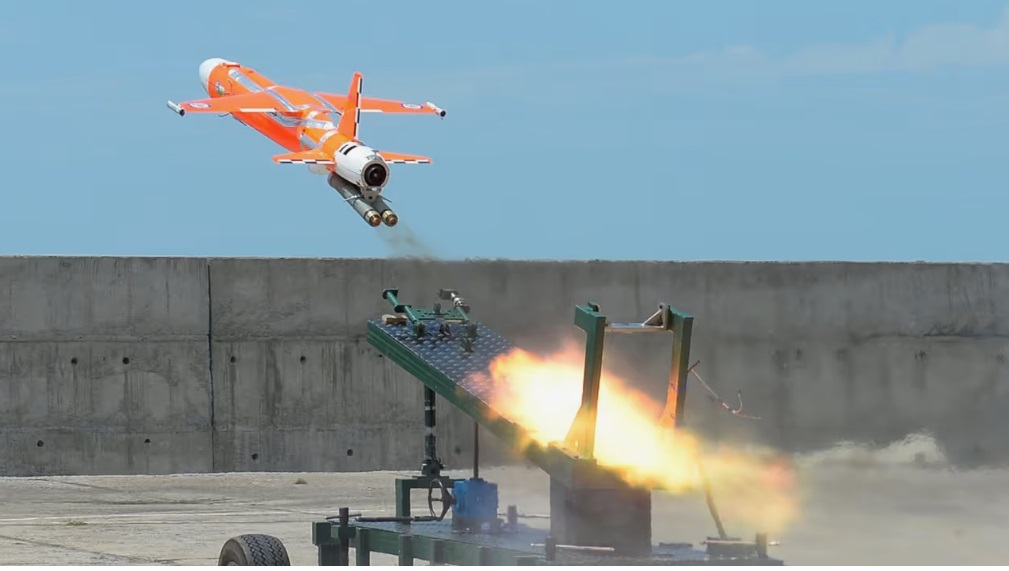
With drones reshaping modern warfare worldwide, India has developed an advanced autonomous swarm interceptor, YAMA. The system is made by the
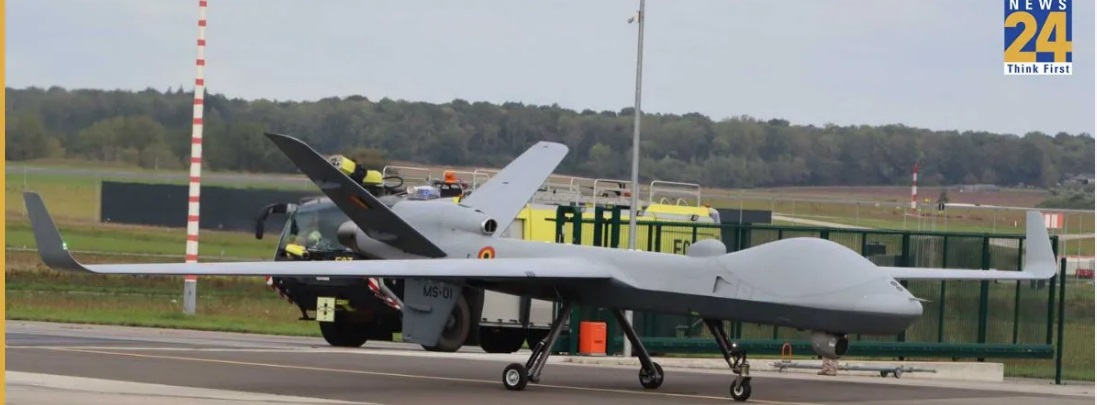

US General Atomics is preparing to introduce a new Airborne Early Warning (AEW) variant of its MQ-9B drone. If inducted, this could have a big positive impact on India’s long-range surveillance and air defence capabilities.
The CEO of General Atomics Global said the MQ-9B-AEW would be the first high-altitude, long-endurance drone equipped with an airborne early warning radar, a role initially performed by large, crewed AWACS aircraft.
What are MQ-9B Drones?
These drones have long battery life, can fly at substantial altitudes, and are designed for intelligence, surveillance, and reconnaissance, as well as precision strike missions. They have an in-air time of more than 30 hours, operate at more than 40,000 feet, and cover vast maritime and land areas.
India has already signed a USD 3 billion deal to obtain 31 MQ-9B drones from General Atomics for tri-service use.
The future AEW variant will integrate early warning radar onto the same long-endurance platform, efficiently turning the drone into a flying surveillance node which can detect aircraft, drones and missile threats over extended ranges.
Airborne early warning systems operate as airborne radar stations, tracking threats and transmitting data to commanders in real time. By mounting these systems on an unmanned drone rather than a large aircraft, militaries can achieve longer endurance, lower operational costs and reduced risk to personnel.
The CEO of the company said that modern conflict “rewards speed, integration and command clarity,” adding that drones help “shorten the sense-decide-act loop” by offering incessant, high-quality intelligence.
However, he cautioned that drones are not decisive on their own. “What they actually do is compress time. They expose movements that were hidden and make it harder for any force to manoeuvre without being detected.
He emphasised the requirement for a layered architecture, from small tactical drones near the front lines to medium ISR platforms and long-endurance systems operating over land and sea, backed by communications networks, electronic warfare protection and counter-drone capabilities.
“The prospect in India is not just to build platforms. It is to build an ecosystem, components, payload integration, software, training and sustainment. If those basics are in place, India will be more than a customer; it will be a strategic hub,” The CEO said, referring to General Atomics’ partnership with Larsen & Toubro to manufacture drone components in India.
Source: Money Control
Whether you're a beginner or looking to upskill, our training advisors can help you choose the right course.