
Is the Pilot Shortage Real? Opportunities and Challenges in Commercial Aviation in India
It was after the outburst of the pandemic that the airline and travel industry came to a standstill. But after the restrictions were lifted, travel s
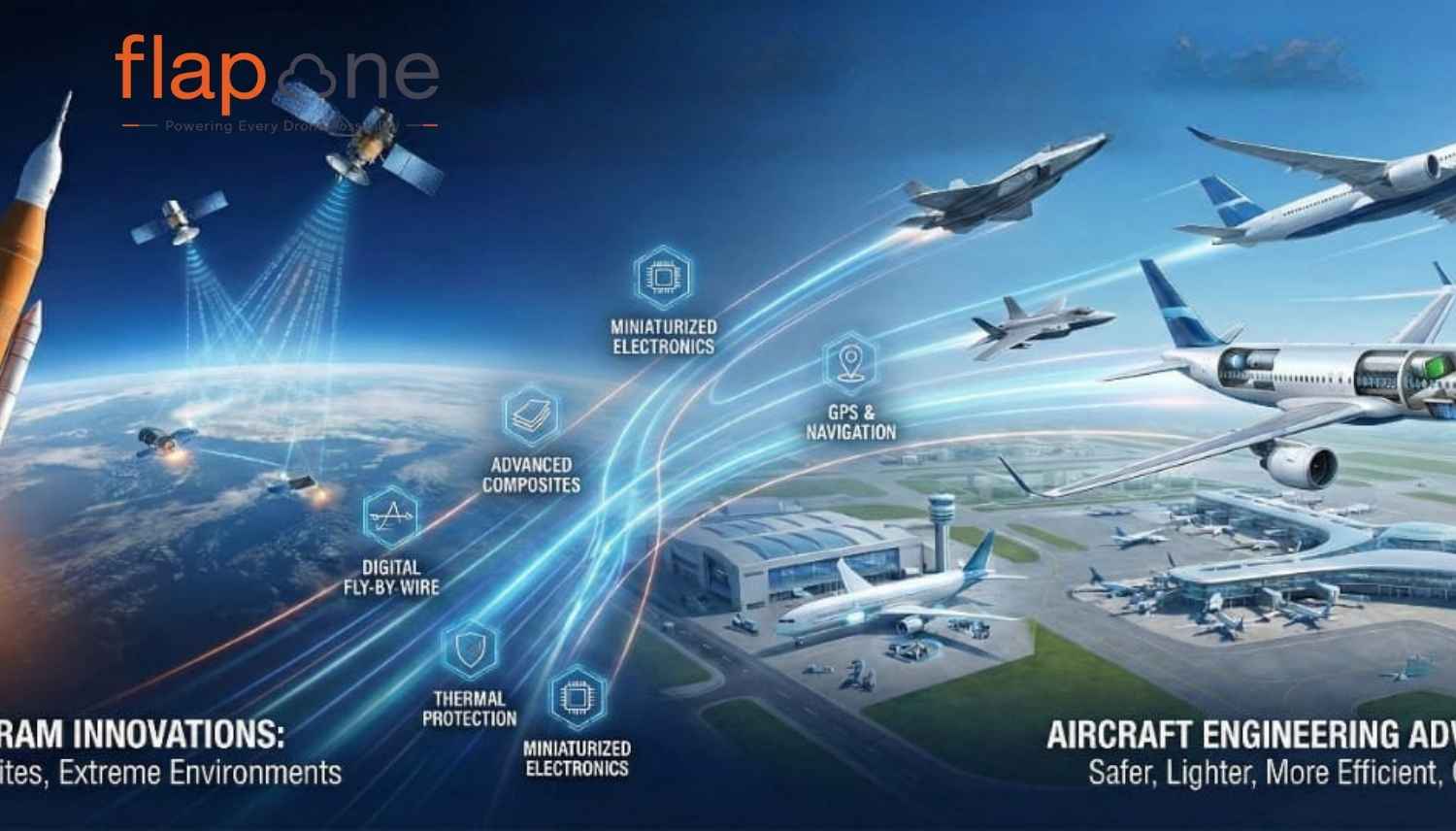
Aerospace dynamics within aerospace engineering is an important field that includes the principles and applications of motion, stability and control in aerospace systems. From a common commercial aircraft to a more complex spacecraft, aerospace dynamics can shape the design, performance, and safety of aerial vehicles operating in the atmosphere and in space. This blog will help you understand how space programs affect aircraft engineering and a lot more.
Aerospace dynamics is closely related to Newton's laws of motion. The laws provide an introductory framework for understanding the behaviour of moving objects and the forces acting on them. In aerospace engineering, these laws, coined by Issac Newton, govern the motion of spacecraft and aircraft, guiding the design and examination of propulsion systems, aerodynamic surfaces and flight control mechanisms.
Aerodynamic forces affect the characteristics of aircraft, while gravitational forces and orbital mechanics command the paths of spacecraft. As per these principles, aerospace engineers develop innovative aircraft and simulatiors to optimize the performance, stability and manoeuvrability of vehicles.
Aerospace dynamics principles are applied in military aircraft, commercial airliners, satellites and space probes. Aerospace dynamics is responsible for aircraft design and performance in commercial aviation. Fighter jets and combat helicopters also feature swept wings and thrust vectoring to achieve superior performance in air combat.
Similarly, aerospace dynamics allows the innovation and development of drones, allowing autonomous flight control and mission planning for surveillance and combat missions.
Specifically in space exploration, aerospace dynamics governs the operation and design of spacecraft navigating in space. Orbital dynamics governs the satellite and space probe trajectories, allowing detailed navigation and orbital manoeuvres for Earth's observation, satellite communication and scientific research. Also, aerospace dynamics impacts spacecraft design for space exploration, for instance, Mars rovers and deep-space probes, allowing complex manoeuvres, gravity assists and precision landings on distant celestial bodies.
Aerospace dynamics in aircraft engineering present their own challenges and opportunities for innovation in the near future. One significant challenge is developing innovative flight control systems that can ease the effects of turbulence, gusts and other aerodynamic disturbances encountered throughout flight. With sensor fusion and instantaneous data, engineers can improve aircraft stability and safety, particularly in challenging weather conditions.
Also, sustainable aviation calls for hydrogen fuel cells and electric propulsion, which offer lower emissions.
Aerodynamics is important in developing sustainable aviation solutions. reduce fuel use. The designs developed by the engineers are intended to improve aerodynamic performance and reduce the industry's carbon footprint.
The future of aerospace dynamics is bright, and people are optimistic about it and its role in aircraft design, due to progress in materials science, AI and space exploration. From the development of hypersonic aircraft capable of exceeding Mach 5 to the realization of manned missions to Mars and beyond, aerospace dynamics is at the centre of human ingenuity and exploration.
Aerospace dynamics is at the core of aerospace engineering and it is responsible for shaping the performance, design and operation of air vehicles flying through the sky and into space as well. Keeping in mind the principles of stability, motion, and control, aerospace engineers can unlock new paths of exploration and innovation that push the limits of human achievement in conquering the final frontier.
With technological advancements in aviation, many advanced aircraft are in airline fleets, and others are in the research and development phase and will soon become a reality. When there are more aircraft, there will be a need for more and more pilots to propel those wonderful machines. If your heart skips a beat on the thought of becoming a pilot, then you can enroll with us at FlapOne Aviation.
The evolution of aerospace technology also influences modern aviation and drone operations, creating demand for professionals with strong technical and practical knowledge. Choosing a DGCA Approved RPTO in India can help aspiring drone pilots receive structured training aligned with aviation regulations, operational safety, and industry requirements, preparing them for emerging opportunities across surveying, engineering, infrastructure, and other UAV applications.
From selecting the right drone to finding a course, our team can guide you through every step of your drone journey.