

How to Secure a Scholarship for Pilot Training: A Guide for Aspiring Aviators
To mitigate the costs of pilot training, consider obtaining scholarships. The landscape of scholarships encompasses merit-based awards to the ones ai
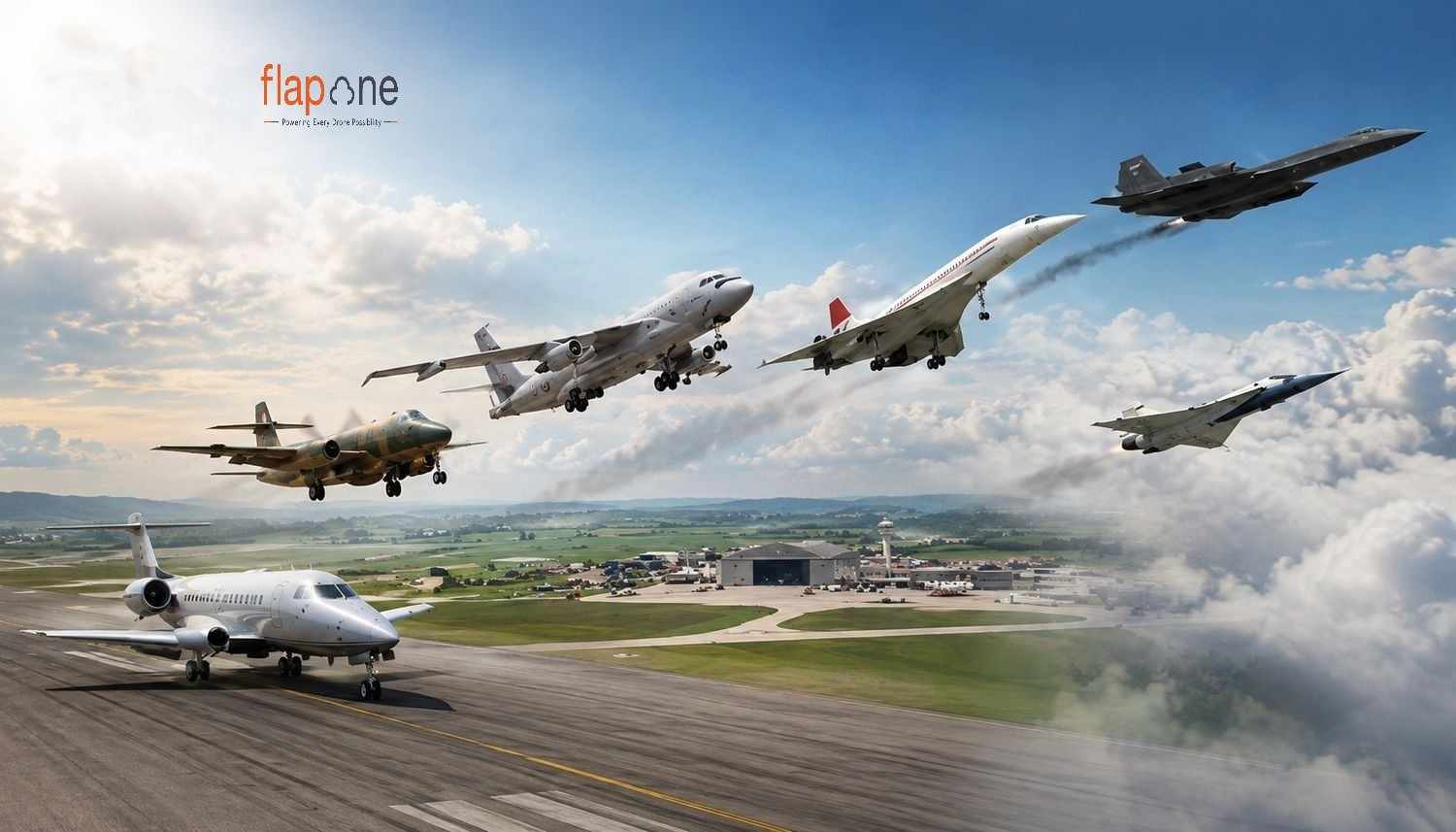
The evolution from piston engines to jet propulsion marks a notable moment in the history of aviation, significantly reducing travel times. By the late 1930s, the masters understood that propeller-driven aircraft were approaching a physical "ceiling." As the tips of the propeller approached the speed of sound, they encountered considerable drag and lost the ability to produce thrust effectively.
As a result, aviation innovators such as Sir Frank Whittle in the UK and Hans von Ohain in Germany are credited with the development of the gas turbine engine. The process of a jet engine is on the basis of the principle of "suck, squeeze, bang, blow, drawing in air, compressing, mixing it with fuel for ignition and then burning it at high velocities. This led to the first jet-powered flight of the Heinkel He 178 in the year 1939.
During the course of World War II, the focus shifted from the use of jet engines to exceeding the speed of sound, called Mach 1. At the time, several scientists thought the "sound barrier" was an impassable wall of air that would destroy any aircraft attempting to pierce it. With an Aircraft approaching Mach 1 (about 767 mph at sea level), air molecules cannot move out of the way fast enough, making penetrating shockwaves that manifest as high-pressure fronts.
Captain Chuck Yeager, on October 14, 1947, piloted the rocket-powered Bell X-1 to Mach 1.06, demonstrating that supersonic flight was possible through efficient "waist-thin" fuselage designs and all-moving tailplanes. This attainment opened the floodgates for the growth of supersonic interceptors and the eventual pursuit of high-velocity commercial travel.
The 1960s and 70s era is often referred to as the"Golden Age" of supersonic ambition, characterized by the race to bring Mach-speed travel to the public. This era birthed the Concorde, an icon of prestige and Anglo-French engineering. Travelling at Mach 2.04 (roughly 1,354 mph) and a height of 60,000 feet, the Concorde could cross the Atlantic in under 3.5 hours, half the time of a standard jet. To endure the extreme friction-induced heat, which could reach 127°C at the nose, the aircraft was built with a specific aluminium alloy and a "droop nose" to uphold perceptibility throughout takeoff.
Despite its technical triumph, the Concorde was ultimately retired in 2003 because of high operating costs, massive fuel consumption (burning 25,600 litres per hour), and environmental restrictions on its loud "sonic booms" over inhabited landmasses.
Today, we are observing a "Supersonic Renaissance" driven by modern materials and cutting-edge computational fluid dynamics. New aerospace firms are working to solve the noise problem that grounded the Concorde. NASA’s X-59 QueSST (Quiet SuperSonic Technology) is at present testing an exclusive airframe designed to dissipate shockwaves, turning a deafening sonic boom into a quiet "sonic thump" no louder than a car door closing.
Beyond supersonic travel, the future of flight is moving toward hypersonic speeds of more than Mach 5, where conventional aircraft propulsion reaches its limits. At these extreme speeds, traditional jet engines can no longer generate the required thrust, making advanced scramjet technology essential. Unlike conventional engines, scramjets have no moving parts and use the plane's incredible speed to compress incoming air for combustion. Combined with highly engineered wings that maintain lift and stability under intense aerodynamic forces, these innovations are redefining what is possible in modern aviation. The next generation of high-speed aircraft aims to deliver faster, quieter, and more efficient travel while improving overall performance and safety.
The transformation of the jet engine and the subjugation of supersonic flight represent human inventiveness and our refusal to be bound by the laws of friction and sound. From the blueprints of Whittle and von Ohain to the sleek, titanium hulls of the SR-71 Blackbird, each innovation has made the world closer together. While the retirement of the Concorde marked a pause in faster civil aviation, the existing increase in "quiet" supersonic technology and hypersonic research demonstrates that the appetite for speed still reigns supreme. Looking towards the end of this decade, the roar of jet engines is the soundtrack of global progress, promising a future in which no two points on Earth are several hours apart.
If you want to become a pilot, then you can come to us at Flapone Aviation to give wings to your dreams.
From selecting the right drone to finding a course, our team can guide you through every step of your drone journey.