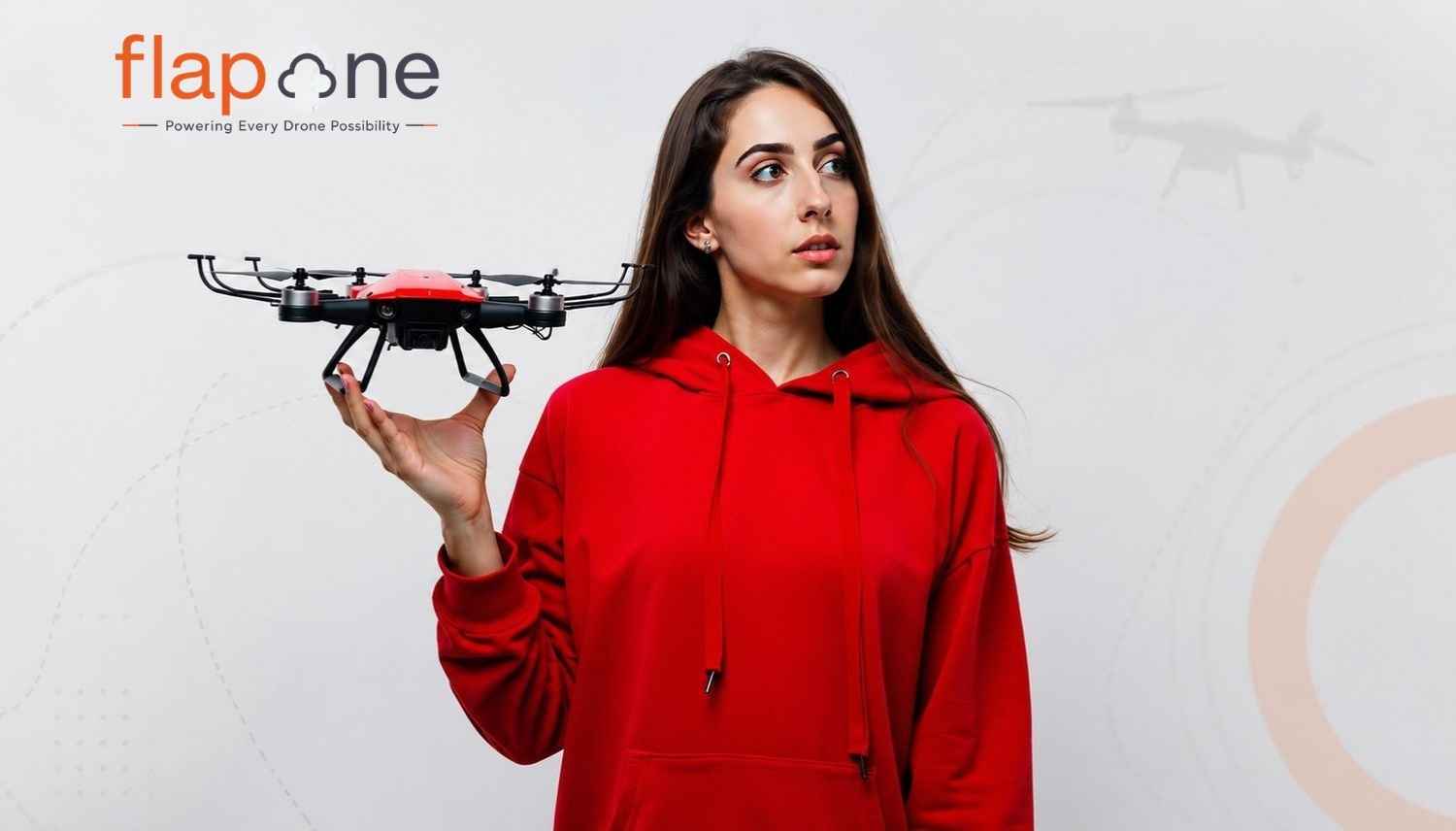
Women in Drone Industry: Breaking Barriers and Taking Up Opportunities
In today's world, women are not holding back in any field. When we say in any field, we mean it. Gone are the days when women's participation was limi
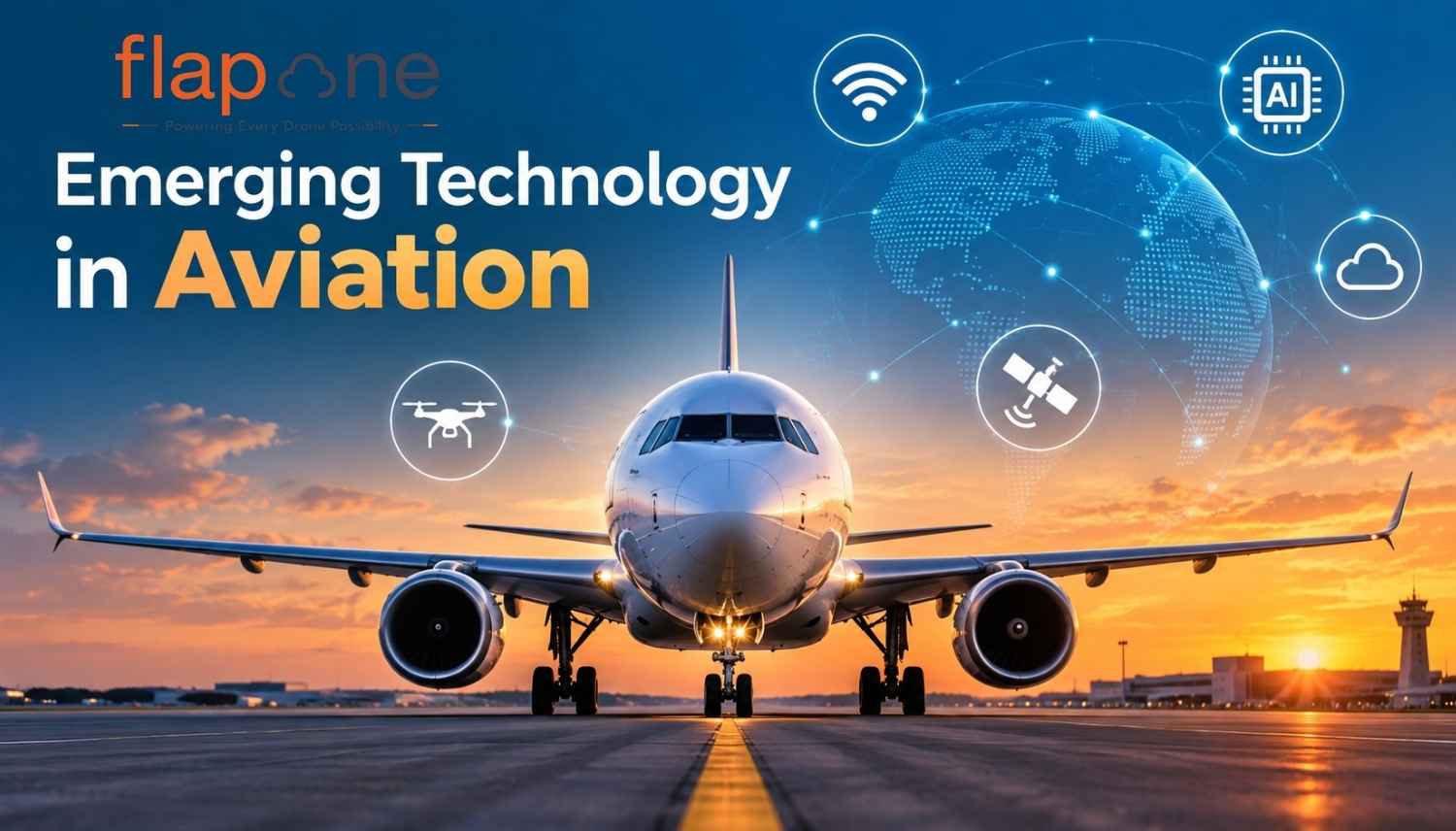
Aviation is a highly regulated industry, and technologies come and go, but some stick around and make a mark. These emerging technologies span a variety of industries, from pilot training and aircraft maintenance to airport infrastructure and beyond. What are the latest aviation technologies which every aspiring aviation student should know? This blog will tell you about all the emerging technologies in the aviation industry in 2026.
AI and ML algorithms have taken the aviation industry by storm and these technologies will have even more impact in 2026 and beyond. This is because, over time, these technologies are maturing and going from strength to strength; we’re seeing them take centre stage in extensive industry-wide deployments.
By leveraging big data, these technologies enable airlines to optimize routes, reduce fuel consumption and offer personalized passenger experiences through data-driven insights and automation. AI-powered systems also bolster safety and situational awareness, with spending in the aerospace and defence sector on AI and generative AI reaching USD 5.8 billion by 2029, 3.5 times higher than in 2025.
Cybersecurity is one trend that has emerged as the most urgent priority for aviation in 2026. The growing digitization of airlines, airports, and air traffic management systems has increased the sector’s susceptibility to cyberattacks at an alarming rate, to say the least.
There was a 600% surge in cyberattacks between 2024 and 2025, prompting new regulations and increased spending. As stated by the Allianz Risk Barometer (2025), 38% of aviation industry respondents identify cyber loss as their key concern, surpassing all other risks. Aviation cybersecurity spending will climb from USD 10 billion in 2025 to nearly USD 16 billion by 2032, reflecting the mounting threat environment.
Biometric technology revolutionized airport security and passenger processing, with 2026 seeing substantial advancements in acceptance rates and use cases. As stated by IATA’s November 2025 Global Passenger Survey, 74% of travellers are willing to share their biometric information to skip showing a passport or boarding pass at checkpoints and boarding. Half of passengers have already used biometrics at some point in their airport journey.
Systems like the “Smart Travel” initiative utilize palm vein scanning to streamline processes, allowing passengers to move through various stages without physical documents. This not only enhances security but also reduces wait times, making travel more efficient and convenient.
Aviation has always been at the forefront of simulation technology, but in 2026, Extended Reality, Virtual Reality and Augmented Reality are expanding beyond traditional training applications.
The AR/VR training market in aviation will reach USD 77 million by the end of this decade. Virtual and augmented reality can reduce aerospace training time by up to 75% and improve the readiness of pilots and technicians.
Contemporary VR training systems offer immersive, practical experiences for student pilots by recreating various flight conditions, emergencies and system failures in realistic environments. With VR, trainees find themselves in environments with lifelike 3D effects and 360-degree views of their surroundings, allowing them to better perceive distances, shapes and spatial relationships in virtual cockpits. Due to portable VR headsets, pilots can perform training anywhere, at any time, revolutionizing how flight schools approach training.
Digital twins simplify design workflows and project management, while XR systems support emergency response training, maintenance, and remote engineering collaboration. Airlines are progressively integrating these technologies into Multi-Crew Cooperation and Type Rating training stages to guarantee pilots can practice procedures and gain experience before ever stepping into an actual aircraft.
This technology will transform aerospace design and operations in the near future. Quantum algorithms can process information in ways impossible for classical computers, providing potential breakthroughs in:
Major aerospace companies are exploring quantum applications. Airbus is exploring quantum computing to support hydrogen fuel-cell propulsion for future zero-emission aircraft. Rolls-Royce has been exploring “quantum-inspired” computational fluid dynamics to improve engine aerodynamics. Boeing, NASA and SpaceX are all investing in quantum research for aerospace applications.
While quantum computing won’t transform aviation operations overnight, organisations that begin exploring use cases now will be positioned to capitalize as the technology matures. The present time is important for aerospace leaders to identify transformative optimization use cases.
Sustainability remains at the forefront of aviation technology in 2026, with Sustainable Aviation Fuels leading the charge toward decreasing the industry’s environmental footprint. They are produced from agricultural waste, algae and municipal waste, providing a cleaner alternative to conventional jet fuel. Carbon emissions can be reduced by up to 80% with sustainable aviation fuel.
The International Air Transport Association is looking to reach net-zero emissions by 2050, counting on SAF to account for 65% of the needed reductions. United, Delta, and British Airways have begun integrating SAFs into their fleets, significantly increasing their use over the next decade.
There are a lot of technologies in aviation and all these technologies will make a big difference and If you want to enter into the world of aviation, you can always come to us at FlapOne Aviation.
From selecting the right drone to finding a course, our team can guide you through every step of your drone journey.