
Top 10 Myths About Life as a Commercial Pilot
Many people in India aspire to become commercial pilots, but many misconceptions hold them back. From monetary concerns to educational fundamentals, h

The Indian Aviation industry will need about 37,000 pilots and 38,000 maintenance technicians due to a pilot shortage caused by the high cost of commercial pilot training and the growing number of retirements. If the airlines are to scale operations, meet the growing passenger demand and sustain safety and reliability as the industry grows. The female population comprised 14% of airline pilots in 2023, more than the global average, because of the supportive corporate policies.
Indian passenger numbers are increasing, and carriers are scaling up fleets to meet an unparalleled level of connectivity. There can be 300 million domestic fliers by the end of this decade and nearly 2,000 aircraft on order for major Indian carriers. IndiGo and Air India are adding hundreds of planes, signalling India’s intent to become a global aviation hub. Airports are being upgraded, routes expanded and business opportunities multiplying across manufacturing, services, tourism and logistics.
The demand for trained aviation professionals is exploding far faster than the supply. Today, India has roughly 11,000–12,000 commercial pilots, but it will need some 30,000 over the next 15–20 years.
More worrying for lasting development is the steady outflow of trained Indian aviation professionals to overseas employers.
Middle Eastern and Southeast Asian carriers have attracted Indian pilots and technicians. India’s aviation ministry is facing a shortage of captains for specific aircraft. Indian carriers and training institutions invest substantial resources in producing skilled personnel, but retention capacity is, to say the least, low.
Indian authorities have moved from diagnosis to action. Domestically, the government is planning to expand pilot training capacity, with plans to open more than 50 new training organizations over the next half a decade to cultivate pilots, engineers and crew at scale. These measures increase the talent pipeline, decrease dependence on foreign hiring and ensure India’s growth trajectory remains on course.
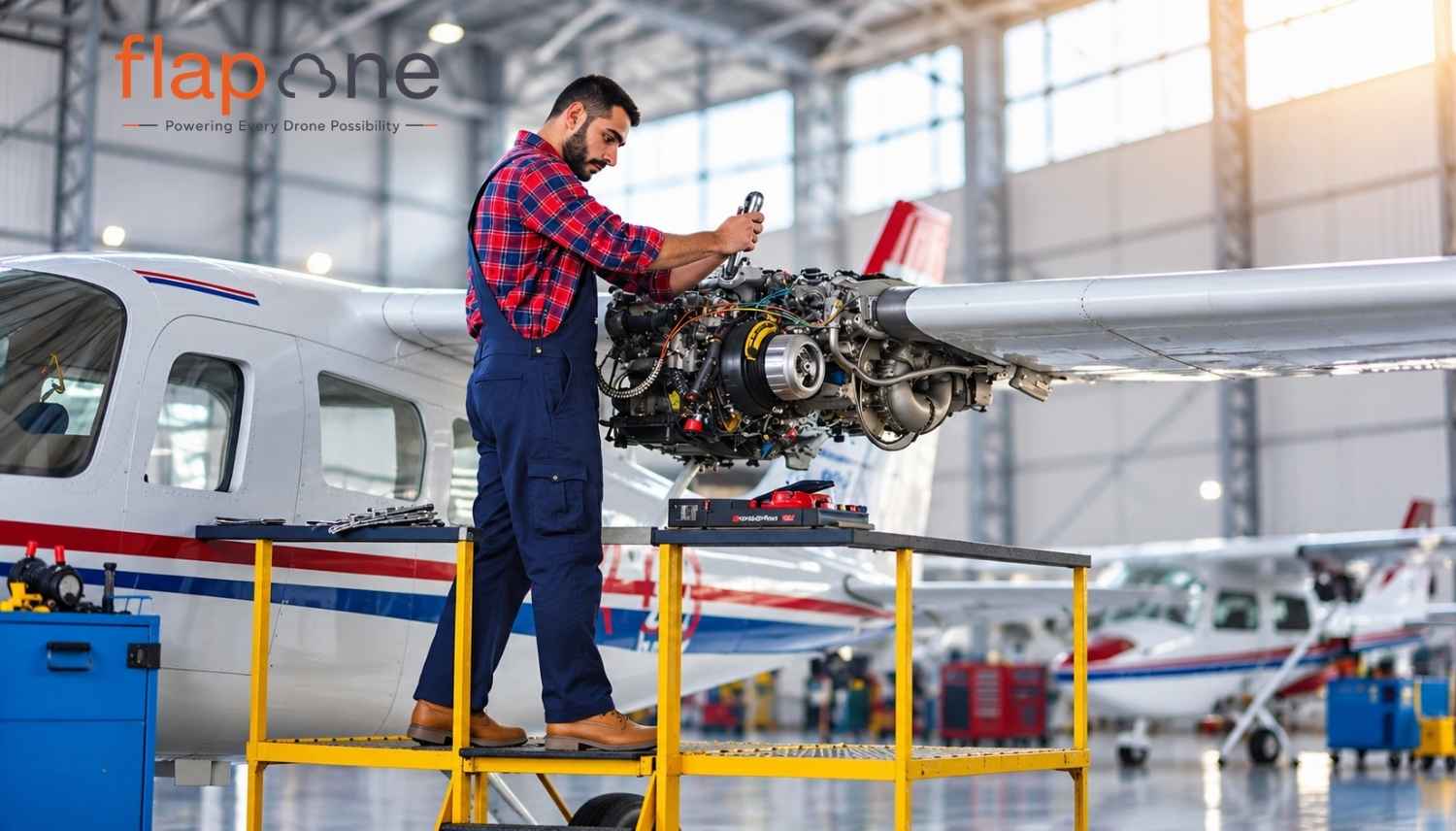
At present, about 3,500 aircraft maintenance engineers are produced in India annually from 57 DGCA-approved AME institutes. Seasoned AME institutes offer competitive packages and international opportunities, leaving domestic airlines to compete fiercely for talent. This increases the cost and difficulty of maintenance operations. India’s airports are still about 1,600 controllers short of what is the need of the hour.
Most of the reputed aviation training institutes in India are innovating through simulator-based training, collaborating with foreign MROs, and offering targeted scholarship programs. Favourable government policies can accelerate progress by improving skills development, streamlining certification processes, and establishing frameworks for the domestic retention of trained professionals.
India has more than 450 airstrips and airports, but fewer than 100 of them are operational. At the same time, metro-to-metro corridors have frequent flights and fierce competition. Tier-2 and Tier-3 cities, where approximately 275 million people remain largely disconnected from the opportunities in the Indian aviation industry.
The UDAN scheme was launched to democratize air access and has registered notable successes, but also difficulties in building a sustainable regional aviation sector. By 2024, about 52.3% of routes were fully operational; many active routes suffer low load factors.
India needs qualified commercial pilots, dispatchers, safety officers and licensed Aircraft Maintenance Engineers. A proactive strategy would be to establish joint academies that bring together state governments, airlines, and Flight Training Organizations. These academies offer DGCA-approved bridge programs tailor-made to elevate candidates with limited flying hours, for example, CPL holders with only 200 hours, through structured training and supervised experience.
India’s regional aviation sector is experiencing a transformative boom aimed at building a deep, diverse and future-ready aviation talent pipeline. If industry leaders, training institutions and state governments work together, India will not just cope with the skyrocketing demand for pilots and engineers but also create sustainable employment that uplifts smaller cities and energizes regional economies.
State-led skill development initiatives can quicken this alignment. By integrating aviation workforce programs into regional airport development strategies, state governments can create synergies, boosting local employment while supporting infrastructure growth. Policies that incentivize the establishment of training centres near new regional airports through land allotments, tax breaks or seed funding.
The aviation sector creates diverse employment opportunities that draw on a range of skills and educational backgrounds, empowering local populations with stable livelihoods. By unlocking connectivity for smaller cities, regional aviation catalyzes supply chain linkages, stimulates tourism and attracts business investment, fueling inclusive regional development.
India's aviation industry is witnessing unprecedented growth, creating exciting career opportunities across the sector. However, the rapid expansion has also led to a significant shortage of skilled aviation professionals, including pilots and aircraft maintenance engineers. If you aspire to build a successful career as a commercial pilot, airline pilot, or aircraft maintenance engineer, FlapOne Aviation provides industry-focused training, expert guidance, and the right pathway to help you achieve your aviation career goals with confidence.
From selecting the right drone to finding a course, our team can guide you through every step of your drone journey.