Different Parts of Drones and Their Functionality
Drones are the new cool; it will not surprise people if we say this statement, not only for India but for the world. There was a time when drones were
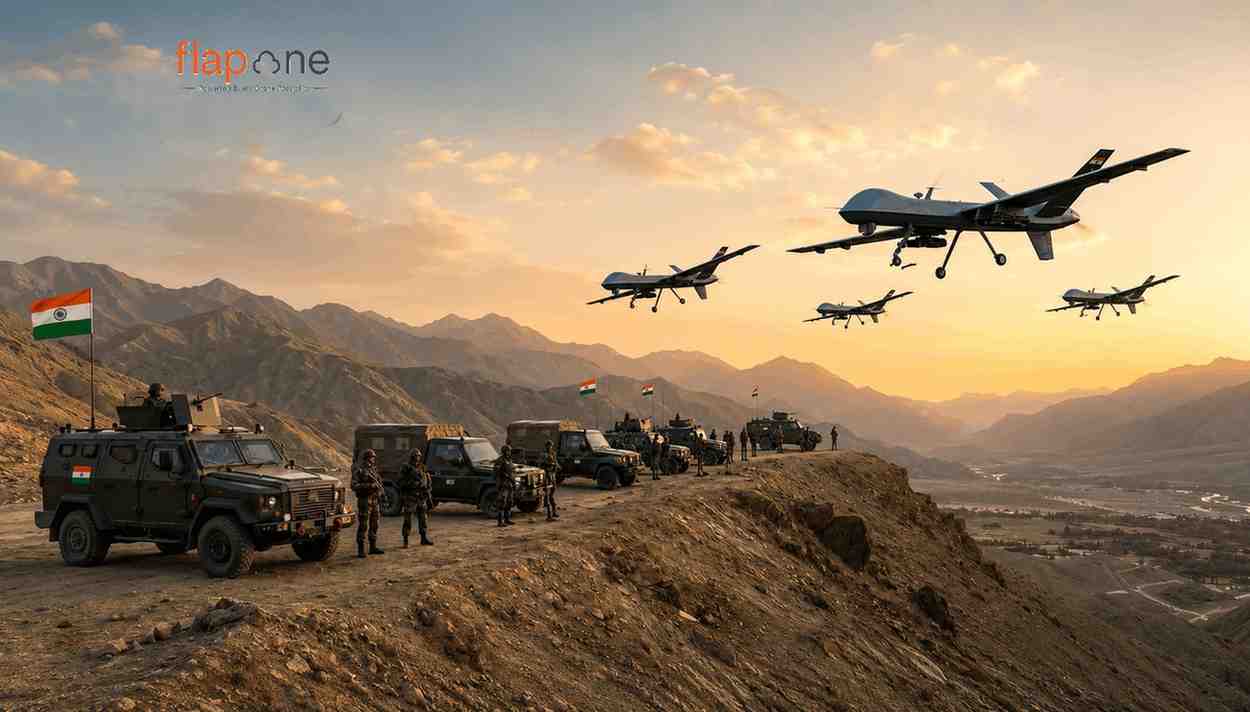
The Indian Army is preparing for a revolution in how it performs in future combat operations. In a disclosure pointing to a change in both military policy and defence manufacturing, General Upendra Dwivedi, Chief of Army Staff, has revealed that the force is no longer just buying drones but is now manufacturing them on a massive scale across all its operational commands.
He confirmed that each military command has been authorized to produce or induct thousands of combat drones moving away from reliance on slow, centralized procurement pipelines. The effort will strengthen self-reliance while ensuring that frontline units receive systems tailored to their specific operational needs.
Each command is either building or fielding about 5,000 drones. These are not standard or regular solutions but bespoke systems designed for unique operational environments.
The main thing for this push is a decentralized innovation model, as senior officers describe it. Instead of waiting for approvals and deliveries from a single procurement authority, individual commands are now authorized to design, build and acquire unmanned systems independently. The result is a distributed drone force that reflects local terrain, threat perceptions and mission profiles. With about 5,000 drones planned per command, the Army is creating a vast, flexible aerial arsenal that spans India’s borders, from the Himalayas to deserts and dense jungles.
The army general made it clear that the emphasis is on military drones. These are not short-range surveillance quadcopters or hobby platforms, but long-range strike drones and loitering munitions intended for contested airspace.
According to recent reports, the Army has already tested indigenous drones capable of striking targets over 100 kilometres away. These systems conduct precision attacks against high-value targets, suppress enemy air defences and maintain incessant surveillance deep inside hostile territory without revealing pilots or ground teams to risk.
To manage this increase in drone capabilities, the Indian Army is also restructuring its force. Open-source intelligence includes the creation of specialized formations, such as ASHNI Drone Platoons, Bhairav Battalions and Shaktibaan regiments. These are dedicated to operating, upholding and integrating drones directly into combat formations. Nowadays, drones are not just niche support assets; the Indian Army is integrating them into infantry and other active forces, ensuring they can come in handy in combat operations.
A key advantage of command-level drone production is the competence to engineer drones for specific surroundings.
The commands positioned at the high-altitude regions prioritize drones which are able to fly in thin air and can even fly in the most extreme conditions. The commands positioned in desert regions mostly use long-endurance drones with stabilized optics for vast, open terrain. Eastern commands are developing noiseless, low-visibility drones appropriate for dense forests. This method has enhanced rapid prototyping, allowing ideas to turn into reality much more quickly.
By positioning a large number of drones across electronic warfare, communications relay, decoy and armed strike missions, the Army will saturate and overcome the adversary's defences. This mass-drone approach is intended to maintain continuous battlefield awareness, apply pressure across several fronts and deny opponents the capability to adapt quickly.
The Army General's remarks highlight a change in India’s military thinking. With in-house drone production, the Army advances its ability to replace losses quickly, adjust designs as threats evolve and take the enemy by surprise. With drones taking centre stage, India’s future battle tactics will also be defined by factories and innovation hubs, along with the actual infantry and artillery.
Modern warfare has evolved significantly, with advanced technologies reshaping how military operations are conducted. Operation Sindoor highlighted the growing importance of combat drones by showcasing their effectiveness in real-world missions. Recognizing this shift, the Indian Army is actively enhancing its drone capabilities to strengthen surveillance, precision strikes, and tactical operations, ensuring it remains prepared for future combat scenarios.
If the rapidly advancing world of drone technology inspires you, now is the perfect time to build your skills. At FlapOne Aviation, one of the leading drone training institutes in Delhi-NCR, we offer industry-focused drone pilot training programs designed to equip aspiring professionals with the practical knowledge and hands-on experience needed for careers in commercial and defense-related drone operations.
Combat drones are increasingly discussed for their potential role in surveillance, reconnaissance, and situational awareness. Their effectiveness depends on mission requirements, operational safety, and reliable technology. Related civilian applications include Asteria A200-XT Small Category Drone for Surveillance & Inspection and Drone Search and Rescue Operations Services, which demonstrate how unmanned aircraft can support specialised observation and search activities beyond military contexts.
Not sure which drone fits your needs? Our experts can guide you to the perfect UAV for your mission.