India will Become a Big Dealer of Drones, Will the Picture Be Hit or Is This a Warning?
When it comes to drones, they are not an exception in today’s time, but have become a commonality in many industries worldwide. India is not
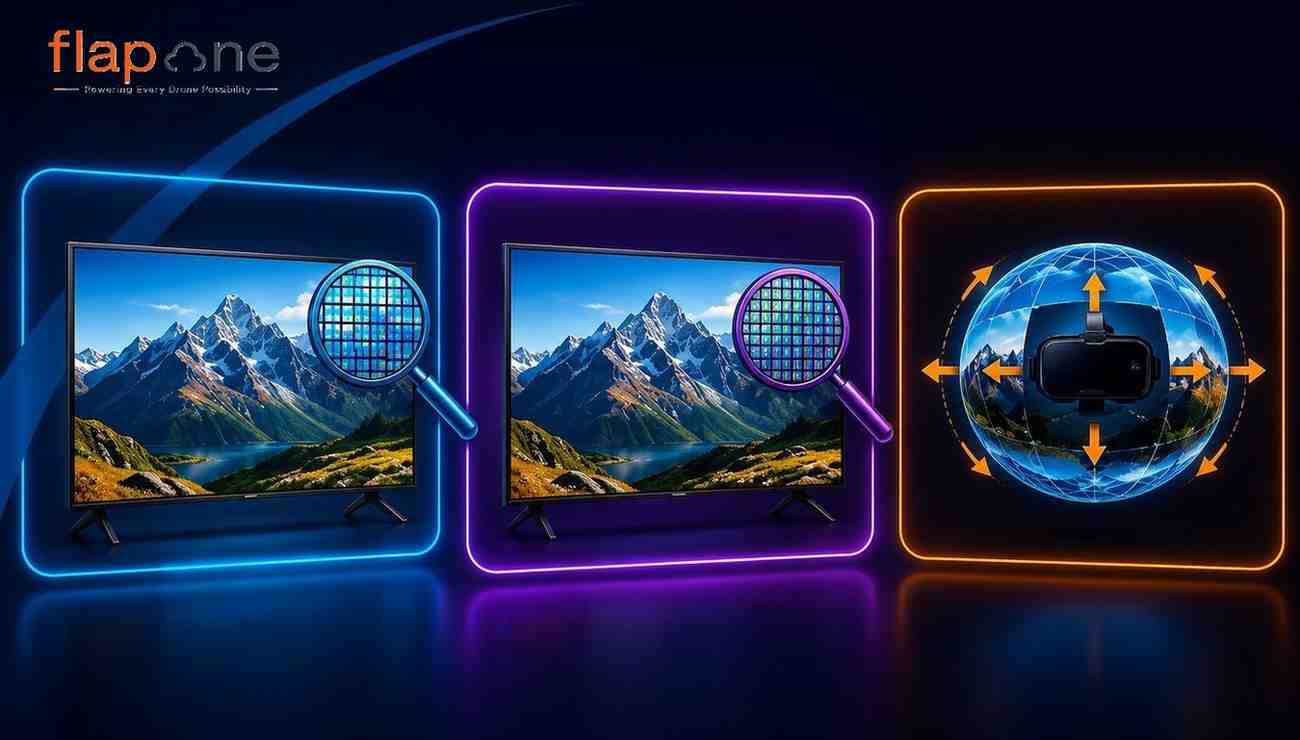
Camera innovation has played an important role in the rapid development of drone technology in recent years. Initially, drones had just low-resolution cameras, mostly for recording aerial views. With the passage of time, improvements in image sensors, processing capabilities and storage technology transformed drone cameras. Today, 4K, 8K, and 360° cameras have made drones very effective for filmmaking, surveying, security, education and industrial applications.
4K cameras are the first major revolution in drone camera development. This resolution of about 3840 × 2160 pixels raised the aerial footage quality to an altogether new level. While 1080p cameras used before 4K showed a lack of detail at a distance, 4K cameras accurately capture the details of buildings, roads and natural landscapes. This not only improved the visual quality of drone videos but also made processes, for example, cropping and zooming in post-production, more flexible.
The advent of 4K cameras led to a rapid increase in the commercial use of drones. It allowed detailed, attractive presentations of properties in the property sector while snowballing accuracy in surveying and mapping. 4K imaging also enhanced decision-making processes in agriculture and infrastructure projects. Despite this, some challenges remained with 4K technology, for example, large file sizes, the need for more storage, and the necessity of high-capacity systems for editing.
Following 4K, the next stage of drone camera innovation emerged as 8K. With a resolution of around 7680 × 4320 pixels, it captures four times the detail of 4K. 8K drone cameras are useful for applications needing tremendously fine detail, for example, industrial inspection, scientific research and high-end filmmaking. This has transformed drones from mere visual tools into accurate analytical instruments.
The foremost advantage of 8K cameras is that many useful frames can be extracted from a single shot, decreasing the necessity for reshoots. This saves time and cost in film and documentary production. Though the challenges related to 8K are equally significant. Tremendously large file sizes, the requirement for high-performance processing systems, limited flight time and the difficulty of instantaneous transmission are key hurdles.
While 4K and 8K drone cameras focused on image clarity and detail, the 360° drone camera has transformed the viewing experience. 360° cameras capture the whole surrounding environment instantaneously, freeing viewers from the limitations of a single fixed frame. Footage recorded with a 360° camera on a drone can be viewed interactively, proving chiefly useful in tourism, education and virtual presentations.
The use of 360° drone cameras has increased rapidly in immersive storytelling, virtual tours, and training programs. Having a comprehensive aerial view of a location in a single recording offers viewers an immersive experience. Though this technology also has some limitations, for example, the intricate process of stitching together multi-camera footage and the decrease in resolution when zooming in on a specific direction. Despite these limitations, the mounting demand for immersive content means that the standing of 360° drone cameras is continually increasing.
Drone camera innovation isn't limited to resolution. Sensor size, lens quality and onboard image processing also intensely impact the final output. Larger sensors provide better dynamic range and low-light performance, while superior lenses guarantee image sharpness and colour accuracy. The processing algorithms used in contemporary drone cameras allow noise reduction and efficient compression.
A superior camera is only effective if the footage is smooth and stable. This is attained through multi-axis gimbals and digital stabilization technology. This is particularly critical in 8K and 360° recording, where even slight vibrations are clearly visible in great detail. Cutting-edge stabilization technology gives drone camera output a professional quality.
The expansion of drone cameras has altered workflows in several industries. Cinematic aerial shots have become common in the film and media industry, while data precision has improved in surveying, agriculture and environmental monitoring. Though the beginning of high-resolution cameras has also raised privacy and principled concerns, making accountable use and clear regulations even more important.
In the years to come, drone camera innovation will become advanced. AI-based image processing, Improved processing, better battery and faster wireless connectivity will make drone cameras more accomplished and accessible. The 8K and 360° technology will become common as 4K is today.
The rapid evolution of drone camera technology—from stunning 4K and ultra-detailed 8K resolution to immersive 360° imaging—has transformed the way we capture, analyze, and share visual content. Modern drones are no longer just flying devices; they have become powerful tools for photography, filmmaking, surveying, agriculture, construction, real estate, and public safety.
As drone technology continues to advance, professionals and enthusiasts can expect even greater image quality, intelligent automation, and creative possibilities. Investing in the right drone camera and developing the necessary flying skills can open exciting career opportunities across multiple industries.
If you're ready to build a career in the drone industry or want hands-on training with advanced camera drones, Flapone Aviation is here to help. Learn from experienced instructors, gain practical flight experience, and take the first step toward becoming a certified drone pilot with confidence.
Not sure which drone fits your needs? Our experts can guide you to the perfect UAV for your mission.