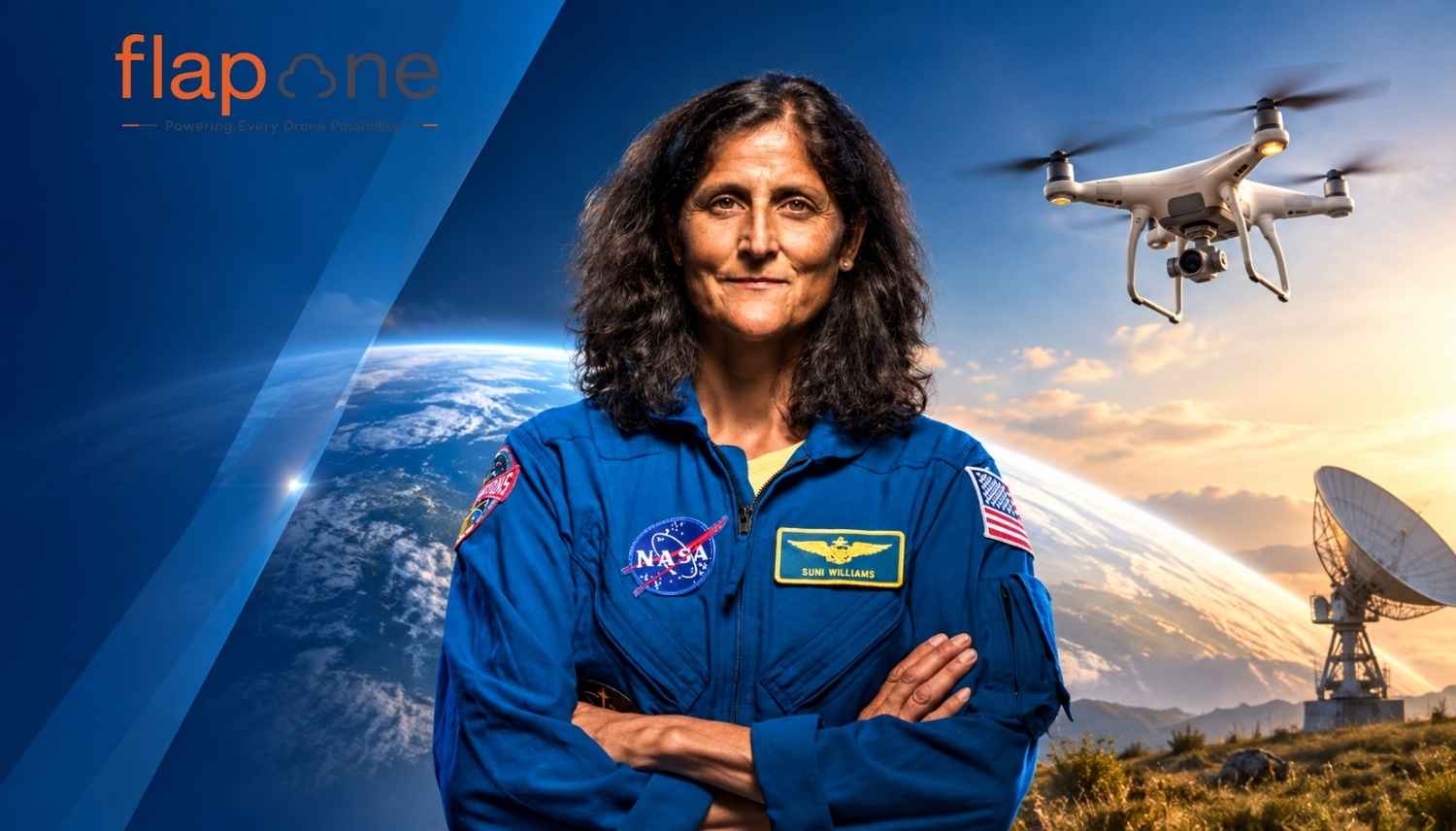
Sunita Williams, Butch Wilmore Return Home After 9 Months in Space
Post a startling journey that lasted more than 9 months in space, NASA astronauts Sunita Williams and Butch Wilmore finally returned to Earth on Tuesd
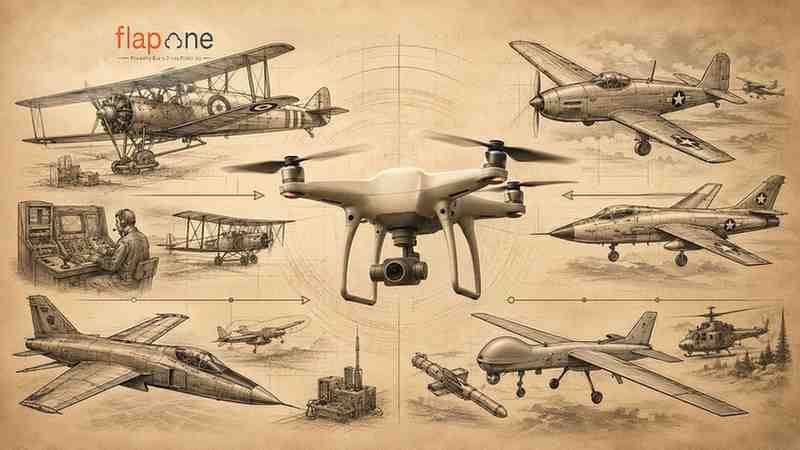
It is known that drones were first introduced only for military purposes, but with time, a lot of innovations have taken centre stage, and the applications of drones have also changed quite a bit. Today, drones such as small quadcopters and octocopters are used for commercial purposes, including monitoring climate change, delivering goods, aiding search-and-rescue operations, and filming and photography.
Obviously, drones remain a core element for the military worldwide. The American forces have thousands of drones today, as opposed to just a few years ago. This is, though, shadowed by the number of drones in private use. As stated by the FAA, more than 855,000 drones were registered in the U.S. by 2023. But where did it all begin? Let’s find out.
A drone is “an unmanned ship or aircraft guided by remote or onboard computers, according to a leading dictionary. In layman's terms, a drone is an unmanned flying object, controlled remotely or operating entirely autonomously.
The concept of drones first burst onto the scene in1849 when Austria attacked Venice using unmanned balloons laden with explosives. Austrian forces surrounding Venice launched about 200 combustible balloons over the city.
Each balloon carried between 11 and 14 kg of bombs. These bombs were released from their carrier balloons. Luckily for the Venetians, only one bomb found its mark, as most balloons were blown off-course because of a change in wind direction.
No doubt that this event was innovative in military technology, but the use of balloons does not meet the present definition of drones, particularly military drones.
The basic concept of drones was considered by military technologists over 170 years ago. This thinking drove the development of drone technology over the coming centuries and decades.
The early development of quadcopters took place in 1907, when brothers Louis and Jacques Bréguet, along with a French physiologist, Professor Charles Richet, developed their gyroplane, a forerunner of the helicopter. The copter's design was visionary. Although it achieved the first vertical flight of a piloted aircraft, it only reached 0.6 meters. It was also not a free flight, as four men were required to steady the structure.
The first pilotless aircraft was advanced in 1916 by Archibald Low during World War I. Ruston Proctor Aerial Target: military drones did not require a pilot and had a radio guidance system. The Germans would later acclimate this technology for their V-1 rocket program during WWII.
The British government did not appreciate Low’s work; although the Germans understood its importance, they made two attempts to assassinate Low. Shortly, the U.S. Army built the Kettering Bug, which used gyroscopic controls and was known as an “aerial torpedo.”
After the First World War, drone technology advanced even further in the 1930s. At this time, the U.S. Navy experimented with radio-controlled aircraft, leading to the expansion of the Curtiss N2C-2 Drone in 1937. In 1935, the British advanced “Queen Bee,” a radio-controlled target drone.
Radioplane OQ-2, a remote-controlled aeroplane developed by engineer Walter Righter and British actor Reginald Denny in the 1930s, became the first mass-produced UAV in the U.S. Approximately 15,000 drones were produced for the military during the war.
Although radio-controlled aircraft were patented by Edward M. Sorensen, an invention that used a ground terminal to track the aeroplane’s movements, earlier RC aircraft could operate only within the controlling pilot's visual range.
The most distinguished event in the Second World War involving drones was the emergence of the German army's V-1 “Doodlebugs”. These were the world’s first cruise missiles.
They were used in a terror bombing in London to dishearten the British public. Their guidance system used an autopilot to control height and airspeed; yaw and pitch were controlled by the gyroscope; the azimuth was maintained with a magnetic compass.
In the future, the next step in drone technology happened during the Vietnam War. This war saw the first extensive deployment and use of drones as dedicated reconnaissance UAVs.
In the latter part of the 1950s, the U.S. spy plane, the SR-71 Blackbird, was still under development and spy satellites were not yet ready for deployment. What was required were dedicated UAVs to gather information safely in combat areas. Some models were there, for example, the Ryan 147Bs, but they had to be piggybacked onto C-130s and parachuted into friendly territory to recuperate any information they gathered.
The requirement for drones arose in several other nations worldwide, which started exploring the use of UAVs for several military applications. New drones became more advanced, with improved endurance and the capability to operate at higher elevations.
Because of innovations in transistor technology at the time, radio-controlled components could be miniaturized to be sold to civilians at a reasonable cost. This led to a boom in RC planes throughout this decade.
Planes appeared in kit form, allowing people to build and fly drones. Hobbyists also started RC aircraft clubs.
The U.S. attained a breakthrough in the mass production and military drone supply, but drones were often considered unreliable and expensive. This viewpoint changed in 1982 when Israeli forces used drones to win over the Syrian Air Force with minimal losses.
A joint project by Israel and the U.S in 1986 led to the expansion of the RQ2 Pioneer, a medium-sized reconnaissance aircraft. Also, throughout this period, drone developers started focusing on alternative power sources for drones. One source was solar power. This led to the advance of some interesting solar-powered drones, as well as the AeroVironment HALSOL.
Mini and micro drones surfaced in 1990, and the Predator drone was introduced in 2000. This was used for launching missiles in Afghanistan. In the future, AeroVironment Inc. developed various small fixed-wing surveillance drones, such as the Raven, Wasp and Puma.
2006 was another crucial year in the history of drones. This was the year the FAA formally issued the first commercial drone permit. Consumer applications were slow to take off, with few people applying for permits in the first few years.
The last decade has seen an explosion in drone innovation and commercial interest. Before this, drones were mainly used for military purposes or by hobbyists. Beginning in the early 2010s, a host of new uses for drones were proposed, including delivery vehicles. In the middle of the decade, the FAA saw an enormous growth in demand for drone permits, with about 1000 commercial drone permits issued in 2015.
This tripled in one year and has grown exponentially since. Camera drones are common in commercial photography and videography. This results from merging radio-controlled aircraft and smartphone technology.
The rapid growth in smartphone use has reduced the prices of accelerometers, microcontrollers and camera sensors, making them ideal for use in fixed-wing hobbyist aircraft. Additionally, advances allowed a drone with four or more rotors to be controlled by regulating the speed of individual rotors. Improving the steadiness of multirotor aircraft opened up new potential for their use in many ways.
The usage of DIY drones is also becoming prevalent due to their smaller size and transportability. DIY drones can be used by police forces and fire services for surveillance. However, the rising use of unregulated drones has also raised questions about safety and privacy. With the war in Ukraine, extensive use of drones is seen for several roles in combat as disposable reconnaissance craft or bomb delivery platforms.
The future of drones looks highly promising. For military applications, drones will become smaller and lighter with longer battery life and flight times. There will be further expansions in drone capabilities.
Drones are also deployed for home security and crowd management. Miniaturization will also play a big role in the future of drones. They will also become smaller over time and with the development of technology. Micro-drones can become common in military and commercial applications in the future.
Perhaps microscopic drones can make their way as well. Further development in AI and ML will allow drones to make decisions.
As drone technology continues to evolve, drones are becoming smaller, smarter, and more efficient. Their growing capabilities are driving widespread adoption across various industries, including agriculture, logistics, infrastructure, surveillance, healthcare, and aerial mapping. In the coming years, the increasing use of advanced drones is expected to transform business operations and create new opportunities across multiple sectors.
With drones coming a long way, there is no doubt that the future will be ruled by drones. If you want to make the most of drones and want to become a drone pilot, join us at FlapOne Aviation.
From selecting the right drone to finding a course, our team can guide you through every step of your drone journey.