India will Become a Big Dealer of Drones, Will the Picture Be Hit or Is This a Warning?
When it comes to drones, they are not an exception in today’s time, but have become a commonality in many industries worldwide. India is not
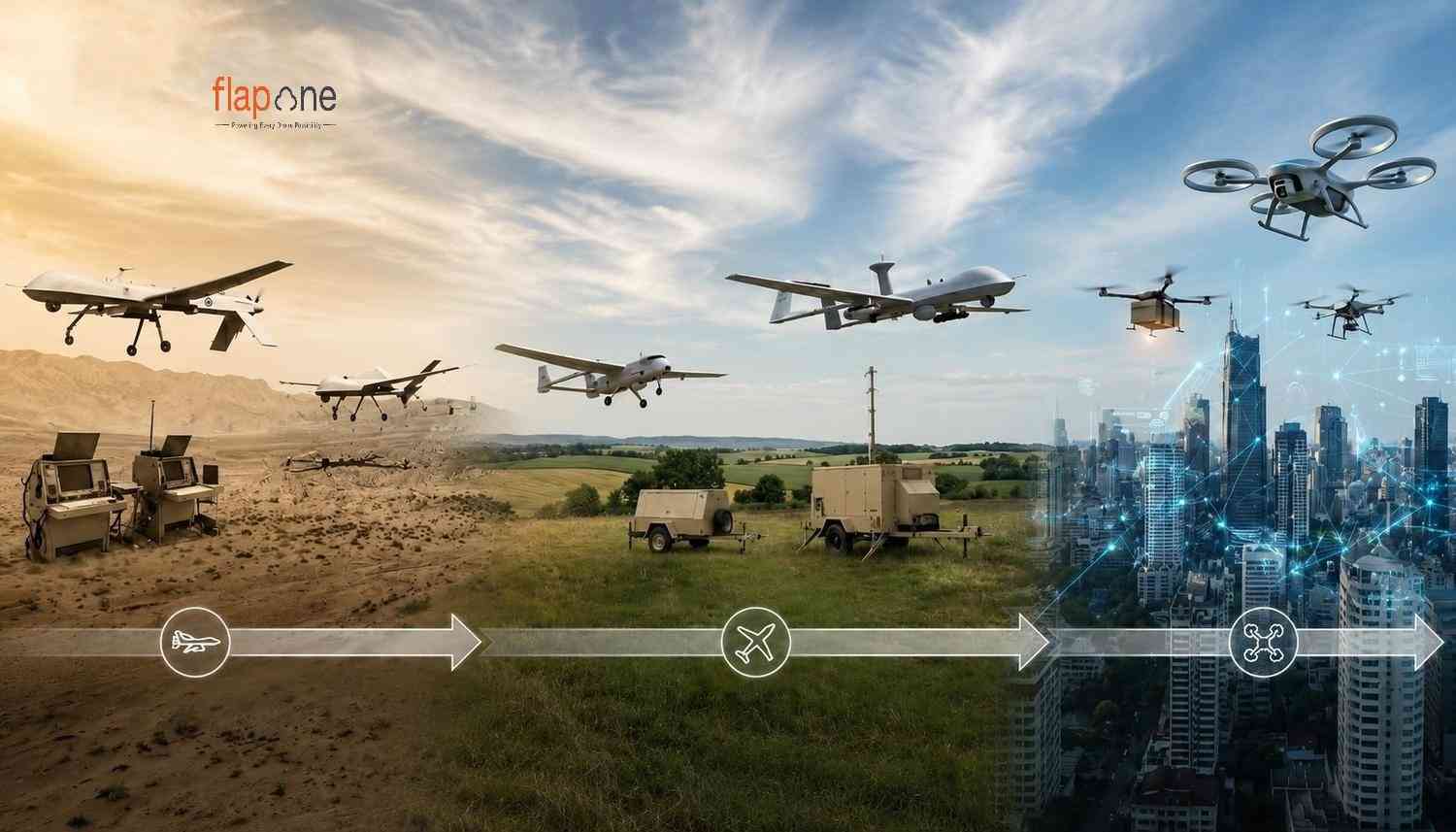
The Remotely Piloted Vehicle or the RPV concept took shape from a need to remove the human pilot from dangerous missions. While modern drones are associated with 21st-century warfare, the structure for these systems was drafted almost over a century. The earliest drones were not autonomous.
The line of modern drones began in earnest during World War I, with the expansion of the Kettering Bug and the Hewitt-Sperry Automatic Aeroplane. These were amongst the first successful attempts to make a vehicle that could be controlled without a pilot. The term "drone" dates back to the 1930s British de Havilland DH.82B Queen Bee. This drone was used as a target for anti-aircraft gunners, demonstrating that a remote pilot could perform manoeuvres and climb and descend via radio signals.
Engineers found that a drone was useful; the latency between issuing a command and the aircraft's response had to be minimized. The struggle to perfect these radio links directly shaped the high-bandwidth, low-latency encrypted frequencies used by modern consumer and military drones.
With the escalation of the Cold War, the role of RPVs shifted from targets to eyes in the sky. The 1960s saw the beginning of the Ryan Firebee, a sophisticated RPV that could be launched from a "mother ship" or the ground. During the Vietnam War, these drones flew for thousands of missions to photograph sensitive areas where manned flight was extremely risky. This period was vital because it brought about the concept of the "sensor payload."
For the first time, the value of the RPV was not just the flight, but the data it carried. This required the expansion of miniaturized cameras and ultimately, the capability to transmit video in real-time. The contemporary drone’s main function as a data-gathering tool, whether for reviewing a wind turbine or mapping a farm, is a direct development of the Firebee’s reconnaissance missions.
In the late 1970s and early 1980s, Israeli engineers took RPV technology a notch further by concentrating on "tactical" portability and instantaneous video feeds. Throughout the 1982 Lebanon War, the Mastiff and Scout RPVs offered commanders with live battlefield views. This was a paradigm shift; it was no longer about taking a photo and developing it later, but about seeing what was happening now.
This period shaped contemporary systems by proving that RPVs did not need to be gigantic, jet-powered machines. Small, fiberglass airframes with lawnmower-style engines were adequate. This "small-format" philosophy is the direct predecessor of the modern quadcopter. The Israeli success also emphasized the need for mobile, intuitive Ground Control Stations, leading to the expansion of screen-based interfaces that drone pilots use today.
The most important way RPVs shaped contemporary systems was by recognizing the limits of human piloting. As missions became longer, human fatigue became a failure point. This led to the transition from RPV (Remotely Piloted) to UAS, in which the vehicle started to take over the "inner loop" of flight.
In contemporary systems, the pilot no longer adjusts every flap and aileron to stay level; an onboard computer does so that many times per second. The human now acts as the mission commander, providing sophisticated guidance while the drone handles the physics of flight. This transition was only possible because RPV data showed engineers precisely which parts of flight were most challenging for humans to manage remotely, allowing them to automate those precise tasks first.
The technological jump from RPVs to contemporary drones is best demonstrated by the change in competencies and market reach:
Modern drones now integrate AI, GPS navigation, and lightweight carbon-fibre engineering, yet their foundation remains the Remotely Piloted Vehicle (RPV). Just as an aircraft or plane relies on balanced thrust, lift, efficient engines, and well-designed wings for stable flight, today's drones combine proven aviation principles with intelligent automation. Rather than replacing the RPV, modern technology has enhanced it with a digital brain, transforming a remote-controlled machine into a smart aerial partner.
If drones inspire your passion for aviation and you want to master safe and professional drone operations, Flapone Aviation is the ideal place to begin. Through expert guidance and practical training, you'll gain the knowledge and hands-on experience needed to understand modern drone technology and the principles that power every successful flight.
Not sure which drone fits your needs? Our experts can guide you to the perfect UAV for your mission.