Rise of Waterproof and Weatherproof Drones in the Contemporary Scenario
Drones have gained a strong reputation in the military because they are used in various industries, not just in India but worldwide. T

The world is buzzing with a word of late and that is autonomous. Be it newspapers or digital media, one can often find some or the other thing about fully autonomous vehicles if you are still wondering what autonomous means or whether we should call it fully autonomous. It means anything that can propel itself on its own and make independent decisions without the need for any human intervention.
The same is true of drones. Today, drones also have some autonomous features, and with constant technological upgrades, they are moving towards a future where no remote pilots are needed to operate them; they are self-sufficient in real-time decision-making, such as self-navigation, self-repair planning, and adaptive mission changes. We can say that this kind of autonomy in drones will take time. But all said and done, this is the future of drones, and we cannot predict when it will become a reality. The speed of tech upgrades will make this possible, real soon, I suppose.
Come, let us discuss in detail the advantages of fully autonomous drones and the industries that will benefit from them.
Autonomy is credited to various technologies, but two of the technologies at the forefront are Artificial Intelligence (AI) and Machine Learning (ML) and this is true for drones as well. When a drone is autonomous, the autonomy will handle takeoff, landing, aerial inspections, and surveys, all without a drone operator. Some autonomous features are being integrated every other day, and R&D is also happening at a rapid pace, so it can be said that the day when drones can make all the decisions on their own is not far off.
An important element of an autonomous drone is its GPS receiver. GPS technology allows the drone to pinpoint its exact location on Earth by receiving signals from orbiting satellites. With this information, the drone can navigate to precise waypoints, maintain a fixed position in the air or follow a pre-programmed flight path. Some cutting-edge drones have additional satellite navigation systems, for example, GLONASS, to improve accuracy and reliability.
Many new-age cameras and LiDAR are being used to bolster their autonomous capabilities. These sensors can allow drones to perceive their surroundings and avoid obstacles in real time. For instance, a drone with a forward-facing camera can use algorithms to identify and track objects in its path. A drone with a LiDAR sensor can generate a detailed 3D map of its environment by releasing laser pulses and measuring the time it takes for the light to return.
Autonomous drones are revolutionizing maintenance, overseeing operations, ensuring business continuity following severe weather or incidents and maintaining compliance. By disregarding human error and the overhead costs of piloted drones, autonomous drones are reforming the approach to these tasks.
Safer and Frequent Equipment and Site Inspection
The implementation of autonomous drones facilitates improved, regular and precise monitoring of hazardous locations and equipment. These autonomous drones allow visual and thermal inspections, granting access to difficult-to-reach areas.
Faster Emergency Response
Fully autonomous drones provide instantaneous aerial footage, enhancing safety measures, streamlining emergency response and bolstering security competencies, thus offering considerable benefits. Owing to the quick response of autonomous drones that are not tied to harsh terrain, assistants can be dispatched to emergency sites while keeping employees out of harm’s way. Autonomous drones with thermal imaging and computer vision can alert employees to fire and gas leaks. These drones can come in handy in routine detection and tracking to prevent possible threats, leveraging onboard sensors and computer vision.
More Efficient and Accurate Surveying and Mapping
Autonomous drones can conduct site surveys and map terrains efficiently. With integrated elevated map detection, autonomous drones can navigate challenging areas without human involvement. Apart from mapping, they can also calculate area, volume and linear measurements of a site.
Tighter Security
These drones can improve security patrols for gate inspections, parking lot monitoring, and inventory inspections, without requiring supplementary staff. When facing shutdowns, seamlessly intensify security operations with fully autonomous drones that demand minimal on-site human presence.
Stricter Compliance
Autonomous drones can survey industrial sites, collecting data to support environmental accountability by providing recurring data and averting equipment failures that could result in environmental disasters. The activity of auditing collected over time with high precision could modernize regulatory compliance.
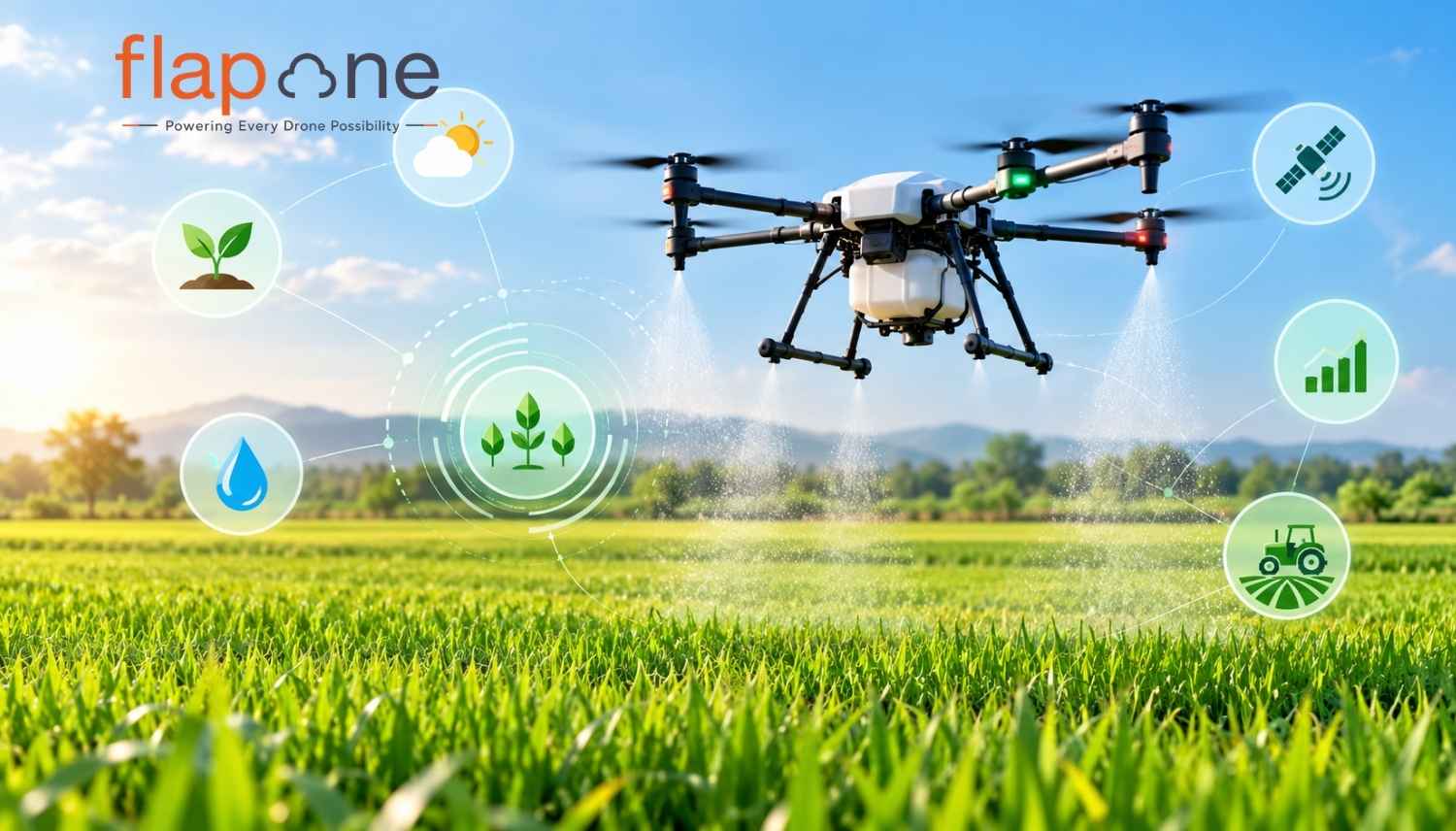
Autonomous drones can improve workload and time were minimized with the help of these coded drones. These drones are deployed to monitor signs of crop growth and transport the required amount of fertilizer autonomously. These drones use live feeds to monitor crop growth and determine which require extra nutrients. Then the drones dispense an appropriate amount of fertilizer.
Autonomous agricultural drones use superior sensors. By hovering over the crops, the drones detect pests and insects and automatically spray insecticides and pesticides. This automated approach is more efficient at addressing crop-eating insects, offering considerable value for the investment.
With the progression of autonomous drones, filmmakers have access to 4K recording capabilities and superior multi-camera setups.
Autonomous drones excel not only in shooting stationary objects but also in capturing fast-paced action sequences and other moving objects effortlessly. Major film productions rely on autonomous drones programmed to follow precise scenes or individuals, allowing panned and zoomed motion shots of buildings, skyscrapers and action scenes, along with aesthetically pleasing cinematography.
Talking of surveying and mapping, a lot of manpower is needed for this process, and it also takes a lot of time, leaving people associated with it fatigued to the point. In addition to that, it is not easy to do away with the risks associated with manual surveying and mapping. Autonomous drones can eliminate the risks associated with handling heavy equipment, thereby mitigating injuries to humans.
The reservations associated with autonomous drones make the realization of fully autonomous drones nearly impossible. The practical reality is more challenging, as autonomous drones might struggle to operate entirely independently without human assistance. Currently, several limitations affect the realization of fully autonomous drones, including battery performance, payload, communication and motor thrust, which should be accounted for when paving the way for autonomous drones.
As the human-machine partnership draws closer with every passing day, the strengths of both humans and technology complement each other, enabling diverse perspectives in any given situation. The concept of fully autonomous drones might seem unrealistic to many, but every reality of today was once considered unrealistic. So, fully autonomous can become a reality any time soon.
We at FlapOne Aviation are the pioneers of drone and aviation training and if you want to become one, contact us or even visit us directly.
Not sure which drone fits your needs? Our experts can guide you to the perfect UAV for your mission.