Why are DGCA Exams Important for Pilots in India?
Many want to become pilots and achieve their aspirations, but they should pass pilot exams. The pilot written exam, conducted by the DGCA in India, is
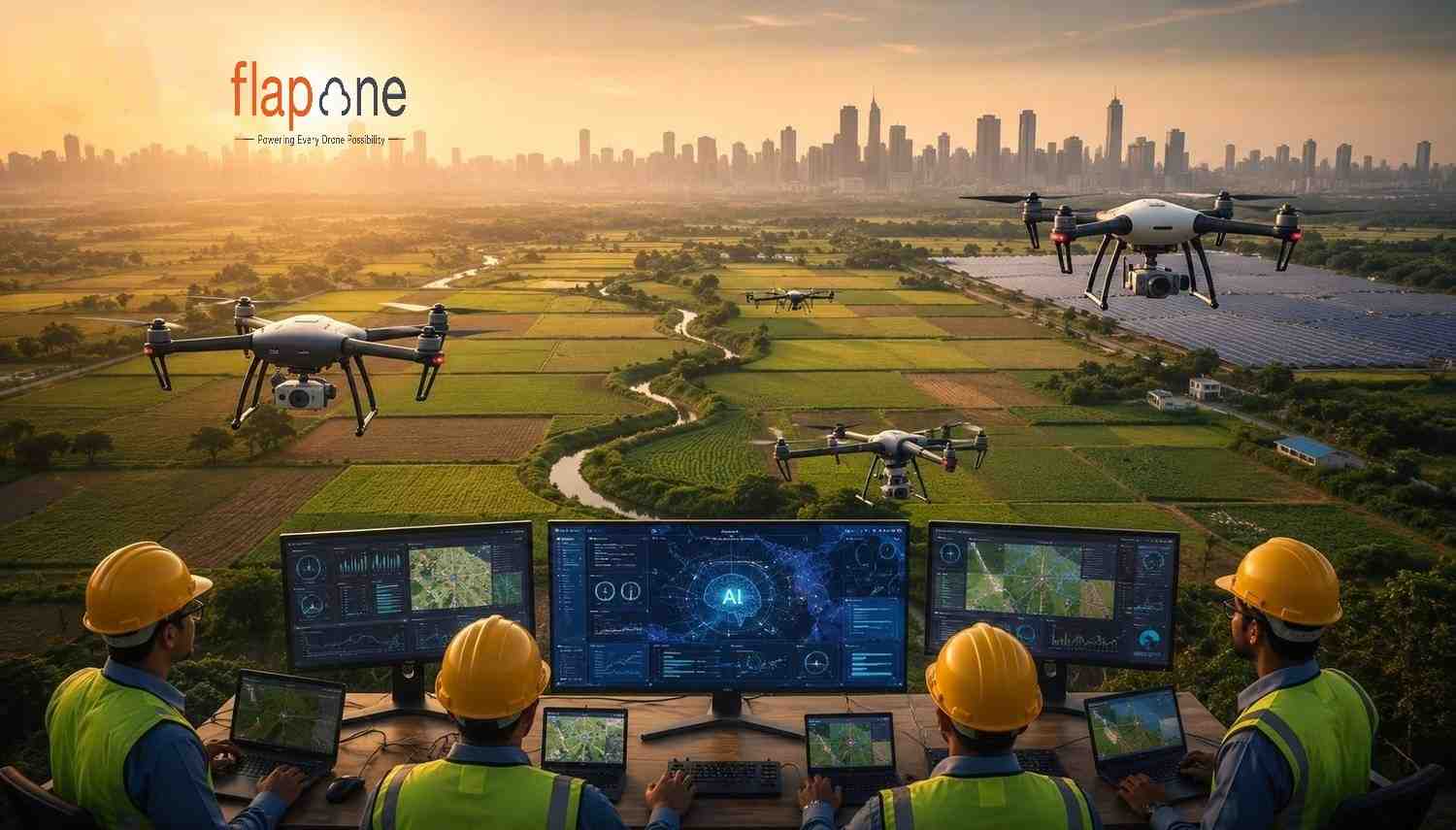
The integration of AI and ML is a revolution. Drones can be used in various applications worldwide. With AI and ML, the functionality of drones reaches an entirely new level of capability and efficiency by increasing autonomy, decision-making capability and enabling real-time data processing. Transforming drones can enable them to perform complex tasks independently. The AI market in drone technology is on the rise and will reach USD 84 billion by the end of this decade.
This blog will discuss the advantages and challenges of using AI and
ML-integrated drones.
Increased
Autonomy Made Possible
Fully autonomous drones have been the talk of the town for some time now. We are not yet certain about the fully
autonomous ones, but AI algorithms certainly allow for increased autonomy in
drones. With the intelligence of AI, they can navigate complex environments,
make independent decisions based on data and adjust their ways of operation
according to the conditions. This is what makes the operations more effective
and increases the number of tasks that can be executed with the help of drones.
AI Integration Enables Better Situational
Awareness
Modern drones with AI are all equipped with sensors that can process data,
allowing them to understand their surroundings proficiently. This improved
situational awareness enables drones to recognize obstacles, identify objects,
and respond appropriately in various situations.
Intelligent
Navigation and Path Planning
AI drones utilize advanced navigation techniques, enabling them to plan the
efficient flight paths autonomously. Using simultaneous localization and
mapping (SLAM) and reinforcement learning, drones can navigate through
challenging terrains with the help of AI, eliminating the requirement for GPS.
This is useful when drones operate in forests or mountains, where GPS signals
may be unavailable.
Real-Time
Data Analysis and Decision-Making is Made Easy
With the integration of AI and ML in drones, vast amounts of data can be
analyzed in real-time. Drones can process information gathered during flights, leading
to rapid decision-making that enhances the effectiveness of the mission. Timely
information can make a difference in search and rescue operations. During the aftermath of natural disasters,
AI-powered drones can become a valuable tool for quickly surveying the area and
locating survivors more efficiently.
Swarm
Intelligence Can Make a Difference During Wars
AI enables multiple drones to work together in small groups as a coordinated
swarm. Communication is established
between the drones in a group, allowing the execution of complex missions more
efficiently. This is very important in
military operations or monitoring large areas.
Predictive
Maintenance Can be Greatly Improved
AI and ML-based systems can monitor the performance of drones by analyzing
sensor data and flight patterns to predict potential maintenance issues before
they occur. This capability increases the lifespan of drones while reducing
maintenance costs. Anticipating failures before they happen allows operators to
schedule repairs in advance, ensuring that there is reduced ot no downtime for
drones.
Agriculture
Agriculture is a prime application of
drones in India, particularly in rural areas.
With the incorporation of AI, drones can monitor crop health, improve
pesticide application and assess soil conditions. Multispectral imaging, along
with AI analysis, allows farmers to identify problem areas, resulting in
increased yields quickly.
Logistics and Supply
AI-powered drones can also carry packages more efficiently by navigating
obstacles and optimizing routes in real-time. Companies like Flipkart and
Amazon are seeking drone delivery systems that use AI to handle packages and
optimize routes. With drones, the speed of package delivery can be greatly
increased.
Emergency Services
AI drones can be useful for responding
to disasters, as they offer aerial views of affected areas, deliver supplies or
assist in search-and-rescue missions. During natural disasters, drones with thermal
imaging cameras can locate hotspots or people much faster.
Military Uses
Regarding defence applications, AI
enhances target detection and tracking capabilities, providing autonomous
operation that minimises risks for manned aircraft pilots. Reconnaissance
drones can swiftly analyze large landscapes and identify potential threats.
Regulatory
Hurdles for Drone Operations
Integrating AI into drones in the airspace raises significant regulatory
concerns regarding safety and privacy. Governments are still developing
frameworks allowing for safe commercial use while addressing concerns about
privacy violations.
Technical
Limitations
While AI improves the performance of drone, battery life and payload capacity,
pose a lot of barriers to acceptance. With further research, solutions, for
instance, improved batteries or hybrid power systems, will become available.
Data
Security Can Sometimes Be Breached
Since drones generate large amounts of data, the safety and privacy of this
data are crucial. Cybersecurity measures protect data from unauthorized access.
Future progressions could comprise sophisticated AI algorithms, longer flight
times and augmented payload capacities. This development will redefine the
operations of industries and cut through innovative solutions.
As drone technology continues to evolve, the integration of Artificial Intelligence (AI) and Machine Learning (ML) is making drone operations smarter, safer, and more efficient. Just as an aircraft or plane depends on balanced thrust, lift, powerful engines, and well-designed wings for a stable flight, modern drones rely on advanced technology and skilled pilots for precise performance. To unlock their full potential, proper training and a valid drone pilot license are essential. At Flapone Aviation, we provide affordable commercial drone services and DGCA-approved drone pilot training, helping aspiring pilots gain practical skills and industry-ready expertise.
Artificial intelligence and machine learning are transforming drone services by helping analyse aerial data, automate workflows, and improve operational efficiency. Businesses can explore Drone Services in India to understand the growing applications of UAV technology across industries. For projects requiring accurate spatial data, Drone Mapping and Surveying Services can support land analysis, infrastructure planning, and informed decision-making.
Whether you're a beginner or looking to upskill, our training advisors can help you choose the right course.