How to Choose a Drone for Capturing Your Travel Adventures?
Drones have become an important advancement for travellers who want to take stunning aerial shots of their adventures. Whether hiking in the mountains
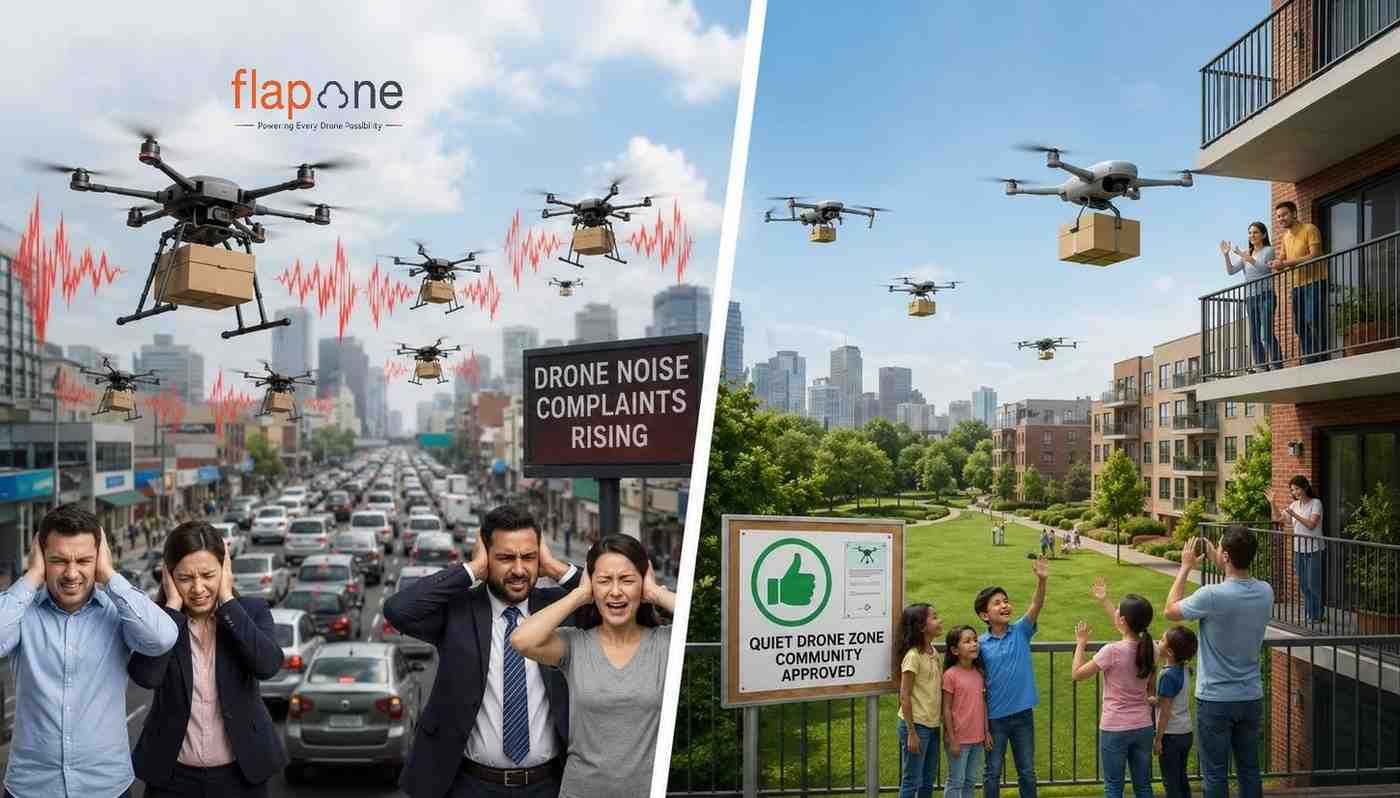
Drones are increasingly common across industries, including agriculture, mapping, surveillance, disaster response, medical delivery and even in households. Anything becomes popular because it has been accepted by the general public. Still, as drones proliferate, it is important to determine how people will respond to the regular hearing of the hovering of drones in the sky. Increasing drone noise can contribute to noise pollution, and it remains to be seen how widely it is accepted by the general public. It is important to understand drones with respect to noise and to identify future measures to further reduce it.
If you are to define noise pollution, it is an excessive sound that annoys and disrupts your life. It is among the most prevalent forms of environmental pollution, particularly in India. The reasons for increasing levels of noise pollution are many, such as rapid urbanization, traffic congestion, continuous construction, industrial operations etc. The permissible noise limits for residential, commercial, industrial and silent zones, such as hospitals and schools, have been defined by the Central Pollution Control Board. Yet these limits are regularly breached, resulting in increased noise pollution.
If one has excessive exposure to noise pollution, it can wreak havoc on one's life. There can be many health issues like increased blood pressure, anxiety, sleep disorders and even reduced concentration. Constant exposure to noise in children can lead to issues with learning and cognitive development. For elderly people, it can worsen existing health conditions.
In a country like India, where population is not a limiting factor, urban living spaces are severely overcrowded in most parts, and noise from streets enters homes. In contemporary contexts, a quiet personal space is a luxury. Any additional sound that feels uncontrollable will attract attention and elicit annoyance.
Drones are rapidly making their presence felt in the technological landscape of India. With the government introducing initiatives to increase the acceptance of drones, relaxing the much stricter drone regulations and also the increased private-sector investment, their popularity has gone up significantly. Drones are now proving their worth in almost all industries, such as agriculture, construction, photography and videography.
However, drones produce a distinct noise, which is high-pitched and directional. It is readily apparent to people, especially when the background noise is relatively low. This difference is significant because annoyance is not just due to loudness. It’s also about predictability, familiarity and meaningfulness for listeners.
Drone noise varies with the size, design, payload, and flight pattern of the drones. Small drones produce noise resembling heavy traffic or household appliances when flying at low altitudes. Larger drones, with a heavier payload, tend to produce a lot more noise than their smaller counterparts.
Altitude is also taken into account when assessing sound levels. Lower-flying drones, particularly during takeoff, landing, or hovering, generate more noise than higher-flying drones. In residential areas, even moderate drone noise can feel disruptive, especially at odd hours, when there is little to no background noise.
Public acceptance is of great importance for any emerging technology. People may see benefits such as faster deliveries, improved emergency response and better infrastructure monitoring, but that doesn’t automatically mean they want drones flying over their homes. As per research, noise is one of the strongest predictors of public resistance to drone operations. Even people who support drones in principle often express distress when envisioning recurrent drone flights near their homes.
Noise is seldom experienced in isolation. When people hear drone noise, they often associate it with concerns about privacy, surveillance, safety, and control. The sound turned out to be a symbol of something larger.
Even when a drone is operating safely, it can elicit stress or discomfort because people don’t fully comprehend its purpose or its role. This can further exacerbate annoyance because people are already frustrated by their lack of understanding of the purpose of drones, making the noise seem more disturbing than it actually is.
All the drone operations in India are overseen by the aviation regulatory authority, DGCA, under the Drone Rules, 2021. The rules focus on airspace management, safety, licensing and operational permissions. They had a major role in encouraging innovation and investment.
There are still no laid-down rules regarding the permissible noise standards for drones. The scene for drones is very different from vehicles or industrial machinery; drones have no clearly defined acoustic limits with regard to the diverse environments.
As the drone count increases, this gap will become more pronounced. Integrating noise considerations into drone policy, for example, time-of-day restrictions, altitude requirements, and designated corridors, could improve public acceptance.
Engineers are constantly working on reducing drone noise. This can be achieved through improvements in propeller design, motor efficiency and flight control algorithms, which have led to the making of quieter drone models.
Some research emphasizes improving sound quality rather than merely reducing volume, thereby making drone noise less sharp and more easily masked by background noise. Others develop route-planning strategies that keep drones away from schools, hospitals, and residential zones during quiet hours.
As India seeks to develop drone infrastructure, low-noise designs could do considerable good for the same.
An increasing number of people are accepting of drones upon understanding their purpose and benefits. If people are informed in advance about drone flights and given a say in their positioning, resistance will decrease substantially. Apart from that, they will begin trusting that drones are here to make their lives easy and not to disrupt them in any way.
Drones have the potential to transform transportation, emergency response, agriculture, logistics, and infrastructure management by delivering reliable aerial solutions to both urban and remote regions. Just like an aircraft or plane relies on balanced thrust, lift, efficient engines, and well-designed wings to achieve a safe and stable flight, drones also depend on advanced engineering and responsible operation for optimal performance. However, as drone usage continues to grow, minimizing noise pollution remains essential to ensuring public trust and widespread acceptance. By combining innovative technology with thoughtful regulations and skilled pilot training, the drone industry can create safer, quieter, and more sustainable operations that benefit communities without unnecessary disruption. At FlapOne Aviation, aspiring drone pilots receive industry-focused training, practical flying experience, and comprehensive knowledge of aviation principles to build successful careers in one of the world's fastest-growing industries. Join FlapOne today and take the first step toward becoming a certified drone professional.
Not sure which drone fits your needs? Our experts can guide you to the perfect UAV for your mission.