
Why Aviation Is a Smart Career Shift for Mid-Level Professionals?
In today's time, when the technological, economic and corporate world is constantly changing, mid-level professionals, people with 7 t
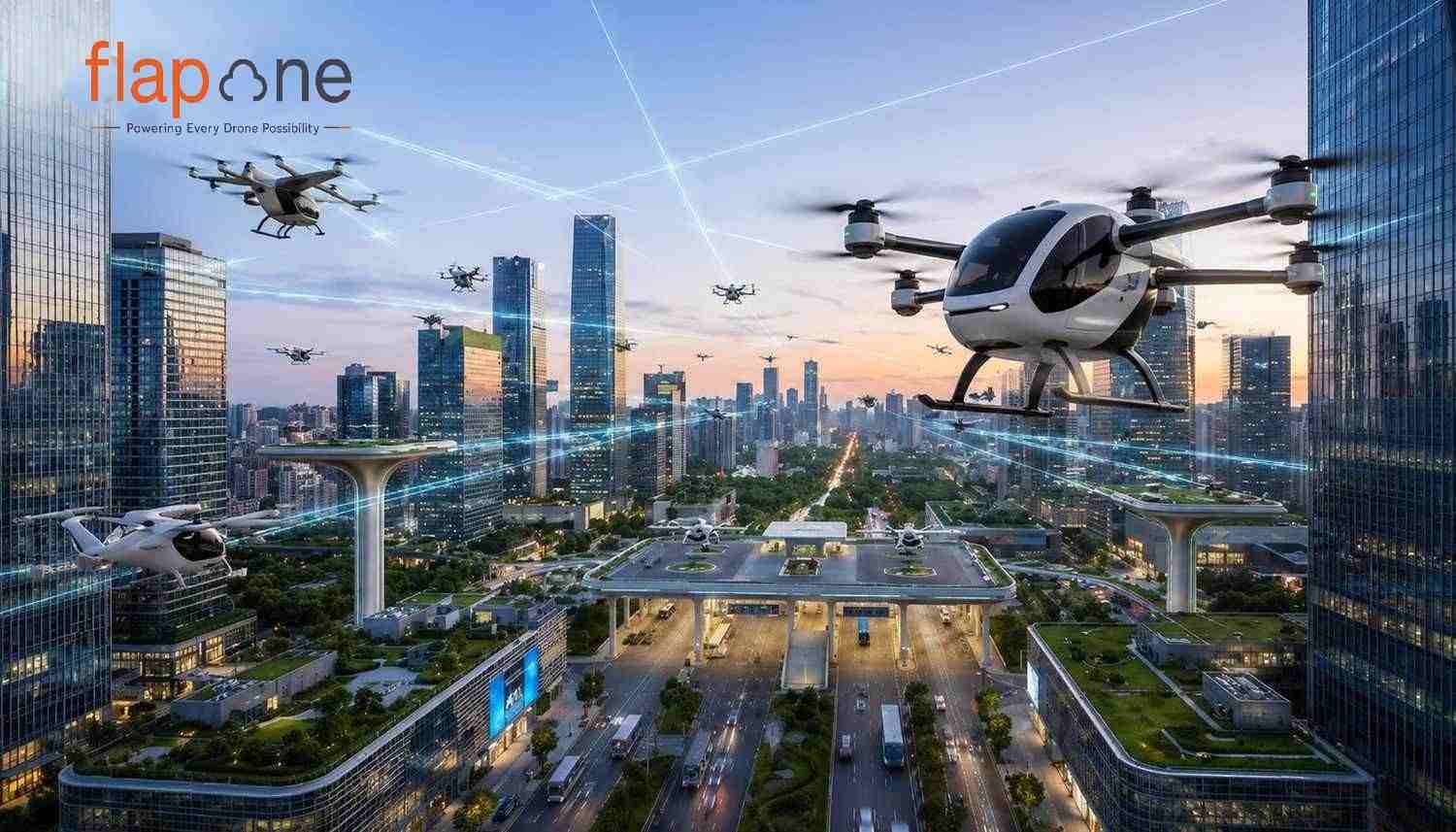
Flying cars, for long, were only a part of dreams and Science fiction, but of late they have become a reality for the world to cherish. Urban Air Mobility will transform how people and goods move within cities. This developing field comprises many advanced aircraft, mostly air taxis. This will enhance the overall travel experience for people, especially in urban areas, where traffic congestion will not impede their ability to reach their destination.
UAM provides a solution by intelligently leveraging the underutilized third dimension, the airspace, to evade these terrestrial bottlenecks. Air taxis and flying cars do not get stuck in jams, so people can save a lot of time in travelling and reach their destination on time. This can transform urban planning altogether by connecting city points and unlocking new potential for businesses, improving the economic vitality of the people living in metro cities.
The feasibility of urban air mobility is mainly based on advances in several technical domains. Electric Vertical Take-Off and Landing aircraft provide quieter, more sustainable operations than traditional helicopters. Advances in battery energy density and fast-charging competencies are vital, allowing these vehicles to achieve practical ranges and quick turnarounds important for urban service.
Beyond propulsion, the sophistication of autonomous flight systems is essential, promising improved safety and competence by reducing human error and optimizing flight paths. Along with robust sensor fusion, cutting-edge navigation and lightweight materials for aircraft construction, these innovations allow the creation of safe, dependable and commercially viable flying cars that were considered unimaginable just a decade ago.
Despite rapid technological progress, the successful adoption of UAM hinges significantly on the expansion of comprehensive regulatory frameworks. Aviation authorities establish certification standards, air traffic management protocols, and operational guidelines precisely tailored to these new aircraft and their exclusive operating environments. This comprises formulating new airspace rules that integrate urban air mobility operations safely accompanied by the prevailing aviation spectrum.
Alongside the physical infrastructure essential to support UAM, the UAM itself is a colossal undertaking. The construction of “vertiports”, chosen landing and take-off sites within urban areas, accompanied by charging stations and maintenance facilities, is vital. These vertiports must be tactically positioned, integrated with existing public transport networks, and designed to manage passenger flow efficiently, guaranteeing seamless multimodal journeys connecting the ground with the sky.
The beginning of Urban Air Mobility will catalyze considerable financial growth, foster new industries and create employment opportunities across manufacturing, operations, software development, and infrastructure. Early adopter markets will see the first deployments, mainly focusing on airport transfers, inter-city connections, and niche logistics services, before expanding to broader public accessibility.
The global air taxi market will reach USD 4,555 million by 2033 as per a report by IMARC. The rising urbanization, traffic congestion, technological progressions, the increasing investment by the aviation companies are the major drivers for the market. The increased investment is driven by its accelerating research, development, and commercialization efforts to make this technology more widespread and commercially viable.
Uran air mobility is here to stay and will gain widespread societal acceptance due to its potential in the present and the future. Yes, there are concerns encircling this technology as well, including noise pollution, safety concerns and all these should be managed for the betterment of urban air mobility. Also, community engagement initiatives are vital to familiarizing the public with the benefits and operative realities of air taxis and flying cars. The development of Urban Air Mobility systems that are environmentally friendly and accessible at the same time will bring greater acceptance and help make these transportation solutions a commonality in the spectrum of urban transportation.
Urban Air Mobility is transforming the future of city transportation by combining advanced aircraft, innovative engines, efficient wings, and the principles of lift, thrust, and stable flight. While regulatory frameworks, infrastructure, and public acceptance remain key challenges, this technology has the potential to redefine urban travel. If your goal is to understand how a plane flies or to build a career in aviation, FlapOne Aviation offers professional training to help turn your passion for flight into reality.
From selecting the right drone to finding a course, our team can guide you through every step of your drone journey.