
Insights on Indigo

Explore articles and updates related to Indigo in the aviation and drone industry.

22 Crore Fined on IndiGo for Massive Flight Disruptions in December
Indigo FDTL

22 Crore Fined on IndiGo for Massive Flight Disruptions in December

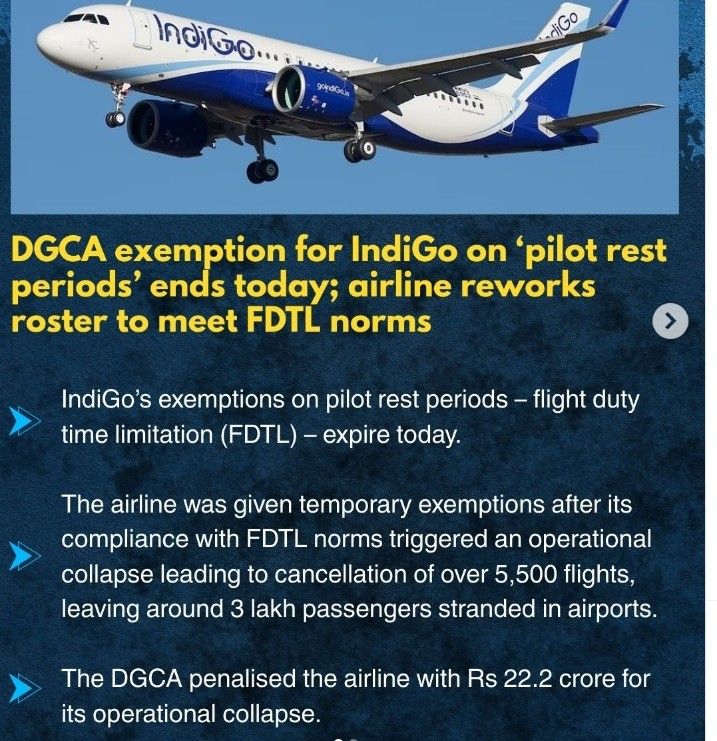
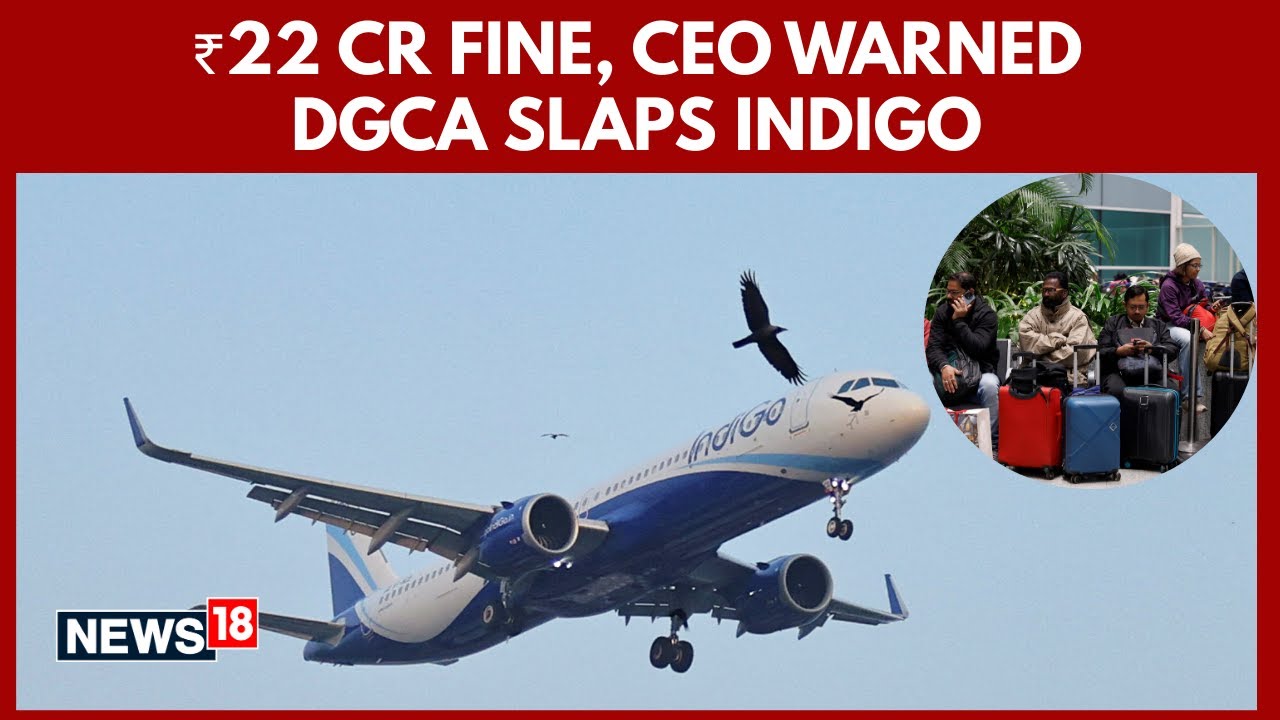
A Rs 22.20 crore penalty has been imposed on IndiGo and action has been taken against its management for the massive flight disruptions in December 2025. The chairman and members of InterGlobe Aviation Ltd, the firm that owns Indigo, confirmed they have received the DGCA's orders and will take appropriate action. Why did the Disruptions Happen? An inquiry committee, set up by the DGCA on the directions of the Ministry of Civil Aviation, found that the main causes were over-optimization of operations, insufficient regulatory preparedness, weak software systems and inadequacies in management oversight at IndiGo. IndiGo was unable to maintain adequate operational buffers and did not implement the revised flight duty time limitation (FDTL) norms as required. Crew rosters were designed to maximize use, relying heavily on deadheading, tail swaps and long duty hours, which decreased the time for recovery and compromised working efficacy. Action Against Management The DGCA issued a caution to the IndiGo CEO for insufficient overall oversight and crisis management. A warning is issued to the accountable manager for failing to evaluate the impact of the winter schedule 2025 and revised FDTL norms. A warning was issued to the senior vice president, directing that he be relieved of his current operational responsibilities. Warnings were also issued to the deputy head of flight operations, the AVP of crew resource planning and the director of flight operations for lapses in supervision, workforce planning and roster management. IndiGo has been told to take action against other personnel recognized internally and submit a compliance report to the DGCA. How was the Penalty Calculated? 1.80 crore was levied on the airline as a one-time penalty for six violations of the Civil Aviation Requirements, such as failing to adhere to FDTL norms, inappropriate control of operations and insufficient management oversight. A fine of 20.40 crore was levied on the airline by the regulatory authority for non-compliance with the revised FDTL provisions for an extended period of 68 days, spanning from 5th December 2025 to 10th February 2026. The total fine was Rs 22.20 crore.   Apart from this, the airline will also give a bank guarantee of Rs 50 crore under the IndiGo Systemic Reform Assurance Scheme. Passenger Relief and Reforms IndiGo restored its operations quickly post-disruption. Along with refunds and mandatory compensation to passengers, the airline issued a 'Gesture of Care' voucher of Rs 10,000, valid for a year, to all who suffered due to flight delays or cancellations of over 3 hours during the disruption. The MoCA conducted an internal inquiry within the DGCA for the identification and implementation of systemic improvements. Source: NDTV

Saheel Singh 19 Jan 2026
Why India’s Aviation Crisis Caused a Meltdown?
Airline Crisis Indigo

Why India’s Aviation Crisis Caused a Meltdown?

When the market is controlled by just two airlines, one company’s internal crisis turns into a national emergency. IndiGo’s lack of pilots, triggered by the rollout of fatigue-management rules, should have troubled one airline. As an alternative, it paralyzed India’s entire aviation network. Fares rose to Rs 40,000-80,000, refunds were delayed for days and substitute carriers could not absorb the shock. In a competitive market, passengers would have choices. In India’s duopolistic one, they had none. The fatigue rules were not the villain. Pilot fatigue is a safety threat and aligning India’s Flight Duty Time Limitations with global norms is long overdue. But the transition was mishandled on all sides. Regulators announced the rules approximately two years ago, then delayed and re-delayed enforcement, only to abruptly push through implementation, leaving airlines scrambling. IndiGo, undervalued the number of supplementary pilots it needed. This combination is why passengers ended up paying the price. What’s missing from the conversation is the structural cause; India’s aviation industry lacks depth. When just two airlines, IndiGo and Air India, hold over 90 per cent of the market share, the complete system hinges on their capability to function flawlessly. In India, passengers face a system where, when “one airline hesitates, everyone suffers.” And consumers suffered immensely. People missed job interviews, medical appointments and weddings. Some reached only to determine their flights had been cancelled, with no SMS alert. Refunds trickled in only after government orders. A nation aiming to become the world’s third-largest aviation market cannot function with outdated passenger protection norms. India needs a clear and enforceable Air Passenger Bill of Rights, one that guarantees automatic funds, timely alerts and fair compensation for final cancellations, without burdening airlines under knee-jerk regulations. But consumer rights alone won’t fix a market with little competition. For honest resilience, India must remove barriers that make it hard for new airlines to scale: high ATF taxes that wear away margins, slot allocation policies that reward incumbents, and regulatory unpredictability that discourages investment. The government says India has room for 5 major airlines. That won’t happen without policy reforms that make market entry easier. IndiGo’s crisis wasn’t just about fatigue rules. India’s aviation future hinges on embracing what every competitive, consumer-friendly market eventually learns: choice is stability. If India wants a resilient aviation ecosystem, it must start allowing competition. The skies need more carriers, more capacity and more consumer choice. Then, this won’t be the last time passengers pay for a crisis they didn’t create. Source: Asia News Network

Saheel Singh 26 Dec 2025
IndiGo Can Use Planes Wet-Leased from Turkey Only Till Next March: Government
Leased Planes Turkey

IndiGo Can Use Planes Wet-Leased from Turkey Only Till Next March: Government

The government on Monday, 21st December 2025, said the extension for IndiGo to wet-lease aircraft from Turkey will only be next March, “with a sunset clause that no additional extension will be given. Post Operation Sindoor, India withdrew security clearance for the Turkish ground handling company Celebi & it had to withdraw from nine airports, including Delhi & Mumbai. The government had also asked IndiGo to return the two wide-body aircraft leased from Turkish Airlines by Aug 31. Though later, the deadline for returning these two wide bodies was extended to the end of next February. Indian carriers have therefore taken aircraft on wet lease from several carriers, including those from Turkey. IndiGo has been authorised to operate aircraft on a wet lease from Turkey, with the most recent extension valid until March 2026 and a sunset clause stating that no further extensions will be granted. This is based on the undertaking submitted by Indigo Airlines in the instant case, where they have sought a last time extension, since their long-range aircraft are to be delivered by February 2026,” it added. Source: MSN

Saheel Singh 25 Dec 2025
IndiGo Fallout: Government Gives NOC to 2 upcoming Airlines
Indigo New Carriers

IndiGo Fallout: Government Gives NOC to 2 upcoming Airlines

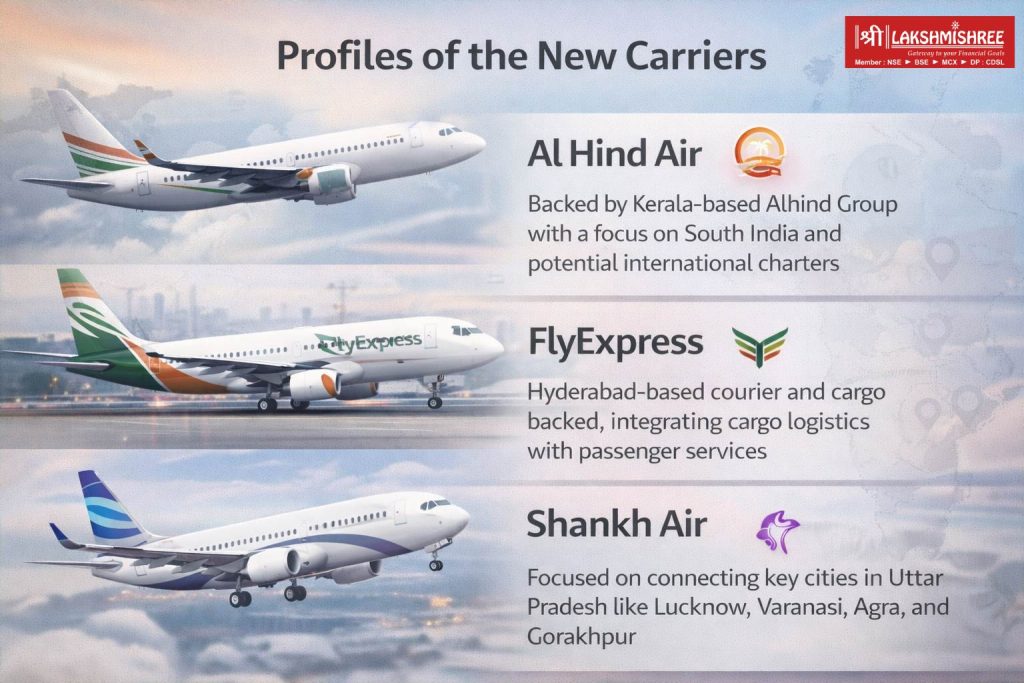
Seeing the consequences of a duopoly in Indian skies earlier this month when IndiGo schedule collapsed, the aviation ministry has stepped up its efforts to guarantee Indian flyers have more choices when it comes to airlines. It has delivered NOCs to 2 proposed airlines this week. “Over the last week, I met teams from new airlines ambitious to take wings in Indian skies, Shankh Air, Al Hind Air and FlyExpress. While Shankh Air has by now received the NOC from the Ministry, Al Hind Air and FlyExpress have established theirs this week. The ministry has endeavoured to increase the number of airlines in Indian aviation, which is amongst the fastest-growing aviation markets in the world, through the policies of the Modi government. Schemes such as UDAN have allowed smaller carriers Star Air, India One Air, Fly91, etc. to play a vital role in the regional connectivity within the nation and there is more scope for further growth,” Union aviation minister Ram Mohan Naidu said on Tuesday. The aviation industry needs the government to take a close look at factors that have led to India having among the highest airline operating costs globally, namely high jet fuel prices and taxes. “In the Indian aviation ecosystem, nearly all stakeholders, barring airlines, make money. That’s why we keep seeing airlines collapse frequently over the last three decades, and even longer. A new airline can be floated, but the same remaining airborne because of numerous factors like high-cost structure, taxes, lack of management bandwidth and thin funding is a big challenge,” said an old timer. To be sure, airline collapses are a worldwide phenomenon and not limited to India. The added worrying factor here is the cost-hostile environment for airlines. “Flying is no longer a luxury and the dream that it remains in the reach of the common man makes it obligatory to have cost and tax rationalization,” said a senior airline official. Source: MSN

Saheel Singh 25 Dec 2025
half-star-solid phone