5G Connectivity, Making Data Transmission via Drones Lightning-Fast
Drones have become equally popular among hobbyist pilots and industry professionals who want to take this to new heights. They support rescue operatio
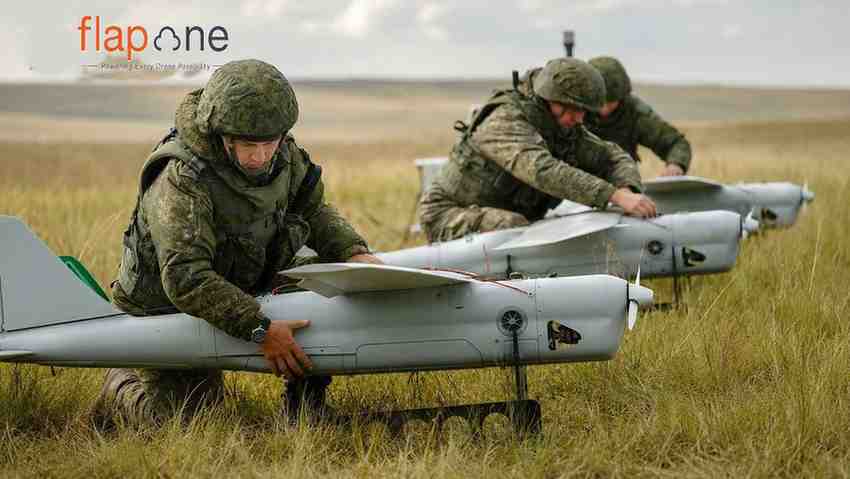
To combat the evolving global threats and the growing complexity of modern military operations, the Indian Armed Forces are undergoing a significant transformation. In this regard, drones are at the heart of its strategic operations. Drones are now an integral part of the Indian military; they are not just used for monitoring hostile terrain but also as part of the attacking force, with precision strikes.
As of 2024, approximately 50% of the drones used in military warfare operations worldwide were fixed-wing. The reasons behind this were long-range, durability, and payload capacity.
The rotary-wing drones are growing at the fastest rate of all types of drones used for military operations. The primary reasons for this are the user-friendly integration, urban warfare capabilities, transportation support and strike operations. They can be flown relatively easily in defence areas due to their VTOL (vertical takeoff and landing) capability, which increases their use in highly populated areas, such as Gaza.
Drones entered the Indian Military setup in the 1990s, when Israeli drones, the Searcher and Heron, were inducted. These were used for surveillance along the LoC and the LAC, providing insights during cross-border tension. Military drones are also used in anti-insurgency operations in Jammu and Kashmir (J&K) and the North-East. With drones becoming more common, India opened the gates for innovative warfare drones, both through foreign procurements and indigenous innovation.
With the beginning of the ‘Make in India’ and ‘Atmanirbhar Bharat’ initiatives, home-grown drone platforms can meet the demands of modern warfare. The DRDO is developing drones that offer both surveillance and combat capabilities, thereby reducing the country's dependence on imports.
In recent years, India has been involved in several drone deals. The most distinguished among these is the USD 3.5 billion deal signed with the US for 31 MQ-9B Predator drones. These drones have got advanced surveillance payloads, Hellfire missiles and precision-guided munitions. They can be operated for more than 35 hours.
Apart from that, India is now utilising the Heron TP variants, which are suitable for long-range surveillance and combat operations. These are deployed on the northern borders for monitoring the movements of Chinese troops.
Indian companies, Solar Industries and Alpha Design, have developed Nagastra-1 and SkyStriker, which can deliver precision kamikaze strikes on targets. These platforms gained acceptance among the people of India during Operation Sindoor.
The Indian Military launched Operation Sindoor in May 2025 in response to a terror attack in Pahalgam, J&K, which was the most notable step in the journey of India’s drone warfare. Here, India executed a large-scale drone attack for the very first time. Over ten days, the Indian military deployed a multi-layered drone strategy to recognize, track and eliminate terror infrastructure across the border. Nagastra-1R and SkyStriker carried out precision strikes on enemy hideouts. Simultaneously, surveillance drones from Zuppa and DRDO offered instantaneous battlefield imagery to command centres.
The Indian Air Defence systems neutralized more than 600 Pakistani drones. The Akashteer air-defence command system, combined with Akash and Barak-8 missiles, had a 100% interception success rate. This operation underlined the efficiency of India’s air defence network when combined with drones. Also, it highlighted the unified integration of AI, GPS-denied navigation and satellite communication systems within the military’s drone operations. This operation firmly established drones as the backbone of India’s future warfare strategy.
In conventional warfare, there is a need for the deployment of large numbers of ground troops, armoured vehicles, and manned aircraft to gain an advantage during a military operation. Drones, on the other hand, are a safer and more effective alternative, reducing the chances of direct combat for soldiers.
Drones can operate without any hassle in mountains, deserts and also maritime zones. Drones can also be used for a considerable amount of time, allowing for persistent surveillance. Additionally, the use of drones in warfare enhances the speed and enables better decision-making.
India's expanding drone fleet reflects a strategic blend of imported technology and indigenous innovation, supporting a wide range of tactical and surveillance missions. Unlike a traditional aircraft or plane, military drones rely on advanced propulsion systems, efficient engines, aerodynamic wings, and optimized thrust and lift to maintain stable flight during long-endurance operations. Among India's most advanced platforms, the MQ-9B Predator stands out for its long-range capabilities, precision surveillance, and multi-role performance. Alongside upgraded Heron TP and legacy Searcher drones, it plays a critical role in border security, intelligence gathering, and reconnaissance. On the indigenous front, the TAPAS-BH-201 represents India's growing self-reliance in drone technology, offering medium-altitude, long-endurance capabilities designed for Intelligence, Surveillance, and Reconnaissance (ISR) missions.
India has also strengthened its tactical strike capabilities with advanced loitering munitions such as the SkyStriker and Nagastra-1R, both of which demonstrated exceptional performance during Operation Sindoor by accurately identifying and neutralizing enemy targets. In addition, surveillance drones developed by Zuppa and Garuda Aerospace are increasingly deployed for counterinsurgency operations, border monitoring, and disaster response. Similar to how a conventional aircraft depends on balanced thrust, lift, powerful engines, and well-designed wings for efficient flight, these unmanned systems integrate cutting-edge technologies to deliver superior operational performance. Their seamless integration with air defence systems such as Akashteer and SAMAR highlights India's transition toward a modern, network-centric warfare ecosystem.
The Indian government aims to establish a drone ecosystem that meets both military and civilian requirements. The market for defence drones will reach more than INR 90,000 crore by the end of this decade.
Tamil Nadu is a hub for drone manufacturing, with notable companies including Big Bang Boom Solutions, Dhaksha Unmanned Systems, and Zuppa Geo Navigation. The drones manufactured by these companies are used for reconnaissance, agriculture and defence.
Drones have brought about a revolution in military warfare. From advanced surveillance to precision strike capability, from cross-border operations to native manufacturing, drones are making their presence felt in India’s military doctrine. The era of drone warfare has started in India and it is here to stay. With drones being used in nearly every industry, the demand for drone pilots is increasing, not just in India but worldwide. If you want to become a drone pilot, enroll at Flapone Aviation, one of the finest drone training academies in India.
Beyond military applications, drone technology also supports public safety, emergency response, and industrial monitoring. FlapOne’s Drone Search and Rescue Operations Services highlights how drones can assist teams in locating people and assessing difficult-to-access areas. For surveillance and inspection applications, the Asteria A200-XT Small Category Drone for Surveillance & inspection provides another example of how drone technology can support operational visibility.
Our experts can help assess your needs and suggest the right drone services for your industry.