Why Aviation Is a Smart Career Shift for Mid-Level Professionals?
In today's time, when the technological, economic and corporate world is constantly changing, mid-level professionals, people with 7 t
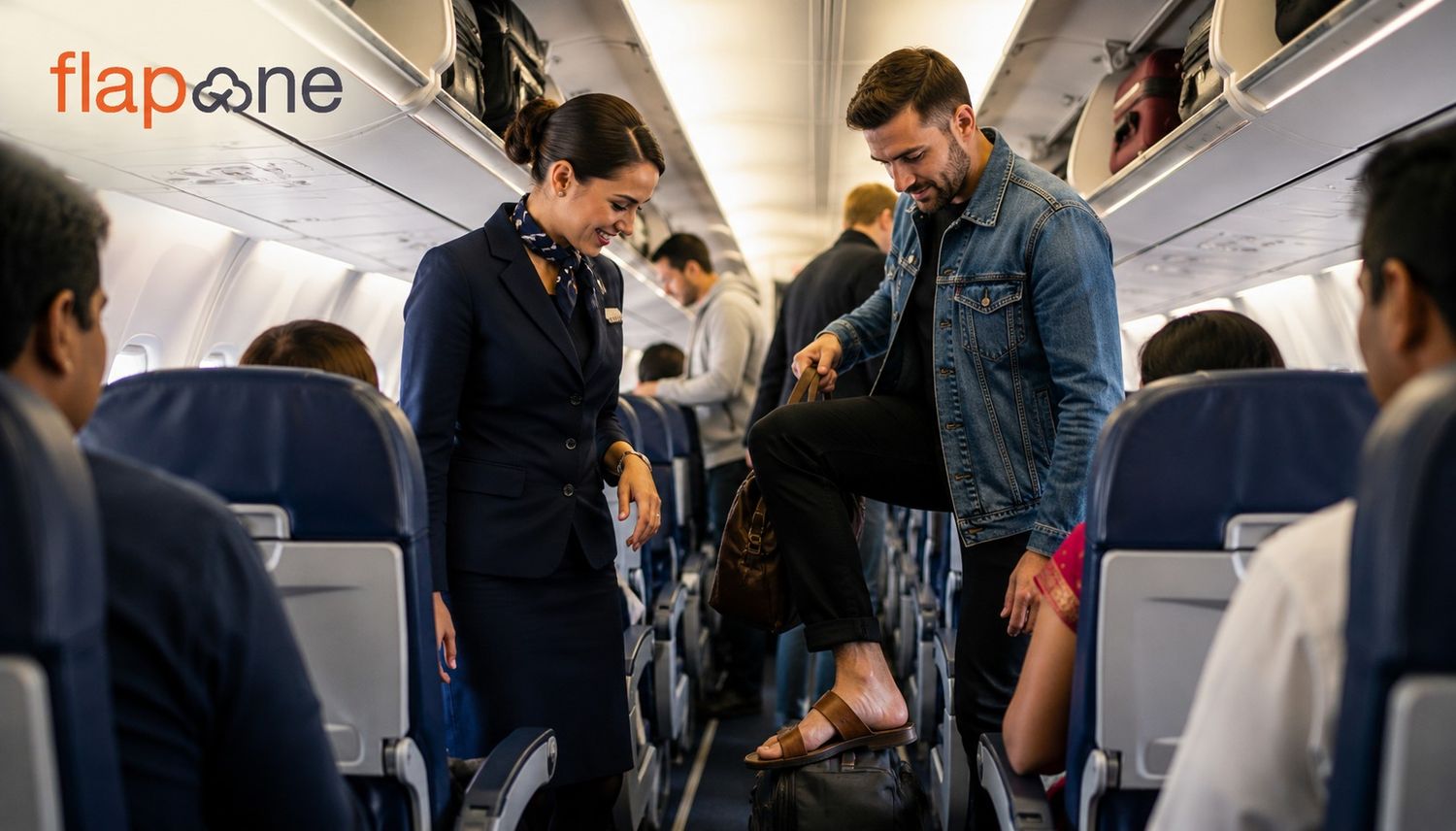
There are many perceptions about a person's footwear. Some people believe that it is possible to peep into one's character, just by looking at their shoes, whereas others believe that the shinier the shoes, the luckier or more charismatic they are. Charlie Chaplin, the world-famous comedian, is iconic for his "Tramp" character, featuring oversized shoes that represented his poverty and resilience. His most famous shoe-related moment is in The Gold Rush (1925), where he cooks and eats his own shoe, which was actually made of liquorice. So, this proves that shoes play a big role in judging a person, but things are quite different when you board a plane and the crew looks at your shoes.
Upon boarding a plane, a person is not just greeted by the crew members. In fact, they discreetly observe your shoes, but they don't judge a person, which is mostly the case with shoes. So, the question arises: why does the crew look at a person's shoes while boarding? We will answer this question in this blog.
While this gesture might seem trivial at most times, it really meets well-established safety requirements. Flight attendants must quickly evaluate whether passengers are prepared to handle a possible evacuation. The shoes you wear can certainly enable or complicate your mobility in an emergency.
When a plane needs to be evacuated in seconds, every second matters. Improper footwear, for example, bulky boots, stiletto heels or slippery sandals, can slow movement, cause falls, or inconvenience fellow passengers. The fact is that some pairs can cause damage to the safety equipment.
This is chiefly the case with evacuation slides, inflatable devices that allow for fast exit from the aircraft in an emergency. Thin heels risk puncturing these vital structures. This is why safety instructions frequently specify that high heels are not allowed throughout an evacuation.
Along with safety, the choice of footwear can affect the health of the passengers, particularly on long-haul flights. Cabin pressure differs from that on the ground, which can worsen some circulatory problems, for example venous thrombosis, wearing shoes that are too tight or ill-fitting surges this risk.
Finally, another frequently overlooked aspect is hygiene. Some passengers tend to remove their shoes during the flight, particularly when wearing flip-flops or sandals. Though walking barefoot in the cabin, particularly toward the lavatories, exposes passengers to contaminated surfaces. Crew members are conscious of these behaviours and, for everyone's safety, also perceive the types of shoes that can end up on the ground. This is a good way in which patterns requiring monitoring can be recognized.
According to airline specialists, it is always better for people to follow some recommendations regarding the footwear they wear on a flight. For comfortable travel and safety, it's always better to:
Checking passengers' shoes is a preventative approach in rigorous aviation safety training. Flight attendants play a vital role in handling risks on board. It is always better to wear cozy sneakers over studded sandals or beach sandals upon boarding a plane. Safety should always be given more heed than style. If you want to play the fashionista when you land, pack a spare pair in your hand luggage.
If becoming a pilot has always been your dream, there's no better time to take the first step. At FlapOne Aviation, we provide industry-focused pilot training, experienced instructors, and the guidance you need to earn your pilot license with confidence. We also assist aspiring aviators in exploring available scholarships and financial support options, making aviation training more accessible. Start your journey today and turn your passion for flying into a successful aviation career with FlapOne Aviation.
From selecting the right drone to finding a course, our team can guide you through every step of your drone journey.