Insights on Pilot

Explore articles and updates related to Pilot in the aviation and drone industry.

PM Modi Pitches for Investments in Fast-Growing Indian Aviation Sector
Pilot Training Aircraft Training

PM Modi Pitches for Investments in Fast-Growing Indian Aviation Sector

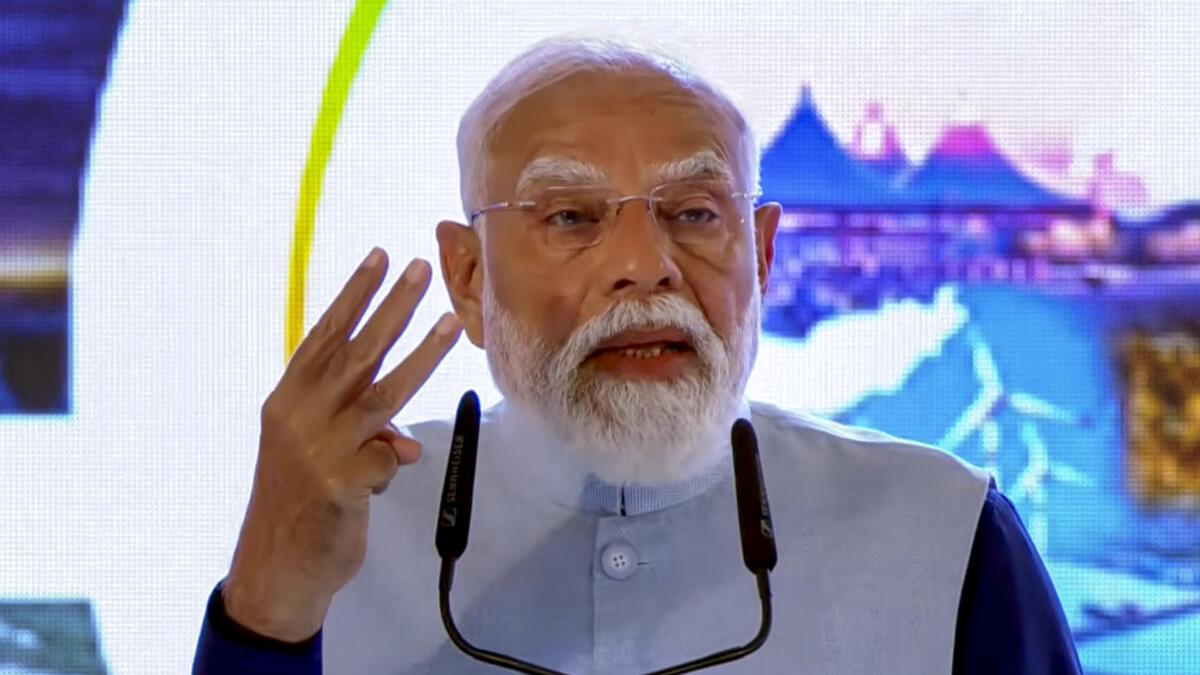
Stressing the growth potential and policy stability, PM Modi on Wednesday told investors that there are enormous prospects in aircraft manufacturing, pilot training , advanced air mobility and aircraft leasing areas in India. India is amongst the world’s fastest-growing civil aviation markets, with air traffic demand rising and airlines have ordered over 1,500 planes. At the Wings India 2026 aviation summit here, the PM said the government is working on all essential regulatory reforms to accelerate and improve cargo movement. Modern warehouses are being built to enable faster, more efficient cargo handling, which is particularly significant as India emerges as a key, competitive transhipment hub, Modi said. “I need all investors to explore the prospects in India’s warehousing sector, freight forwarding, express logistics and e-commerce,” the PM said. As he stated, there are very few nations like India that offer such a large scale for the aviation sector, such political stability, and such technological ambition. Urging everyone to take full benefit of the “golden opportunity”, Modi invited investors to be lasting partners and co-pilots on India’s flight to success. In 2014, there were 70 airports; now there are over 160. By 2047, India will have over 400 airports, Modi said, stressing that air travel is no longer exclusive but inclusive. The government’s UDAN scheme aims to offer affordable air travel. “Because of the UDAN scheme, 15 million passengers, or about 1.5 crore passengers, have travelled on routes that didn’t even exist before,” Modi said. With government reforms, India is becoming a key aviation gateway between the Global South and the rest of the world, Modi said, adding that this is a significant prospect for investors and manufacturers in the aviation sector. “Aircraft manufacturing, aircraft training ,advanced air mobility, aircraft leasing, these are industries where India presents itself with huge possibilities,” the PM said. While India is becoming a major global aviation hub, Modi said it is important that the country not be dependent on others for aviation-related needs. “We must strengthen the path of self-reliance. This will also be obliging for companies that are investing in India,” Modi said, and mentioned that the country is starting to manufacture military and transport aircraft.   Source: NDTV

Saheel Singh 29 Jan 2026
Boeing to Deliver 25 New Aircraft to Indian Airlines in 2026
Boeing 737 Max Aircraft

Boeing to Deliver 25 New Aircraft to Indian Airlines in 2026

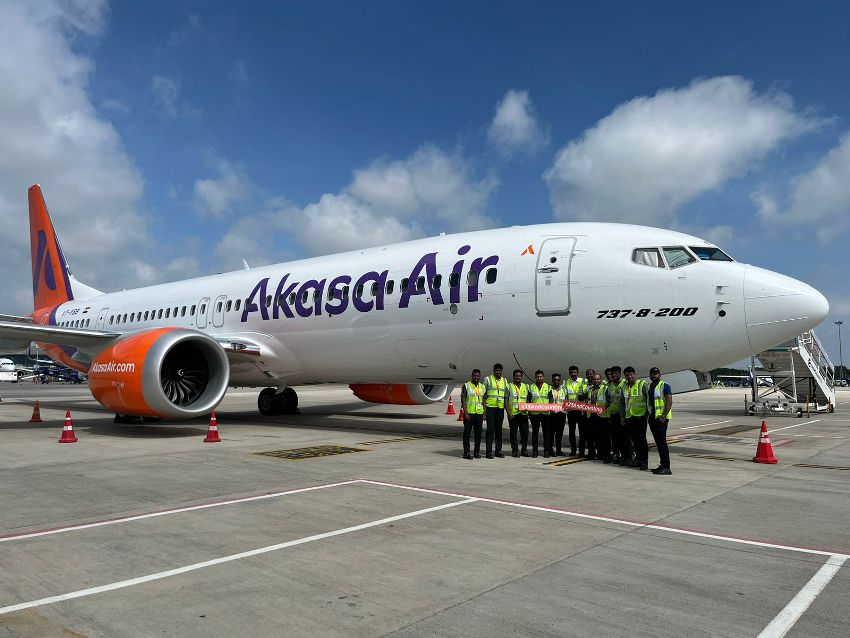
Boeing plans to deliver about 25 aircraft to Indian airlines in 2026, banking on a development in the production rate of its prevalent 737 Max jets, a senior company executive said on 28 th January 2026. Speaking at the Wings India aviation event, Boeing’s MD for the Indian subcontinent, Ashwini Naidu, said aircraft deliveries to India will average around two planes a month, with no delays presently anticipated. Future deliveries will include 737 Max aircraft for Akasa Air and Air India Express, as well as wide-body 787-9 Dreamliners for Air India. Indian carriers had taken delivery of 19 Boeing aircraft in 2025. Deliveries of the 737 Max had slowed earlier after the Federal Aviation Administration capped Boeing’s monthly production at 38 aircraft following a safety incident in January 2024. Though regulatory approval granted in October to increase production to 42 aircraft per month has improved delivery prospects, particularly for high-growth markets such as India. Boeing has recognized India as the fastest-growing aviation market globally. The company estimates that passenger traffic across India and South Asia will grow at about 7% over the next two decades. To deal with this demand, regional airlines will need about 3,300 new aircraft by 2044, as stated by Boeing’s latest Commercial Market Outlook. Apart from aircraft, Boeing plans significant demand for a skilled aviation workforce. The India and South Asia region will need about 141,000 new aviation professionals over the next 20 years, including pilots, technicians and cabin crew, as airlines expand their fleets and networks to support lasting growth. Source: BW BusinessWorld

Saheel Singh 29 Jan 2026
Indian Army Gears Up for Drone Warfare with 20 New 'Shaktibaan' Regiments
Defence Drones Drone Defence

Indian Army Gears Up for Drone Warfare with 20 New 'Shaktibaan' Regiments

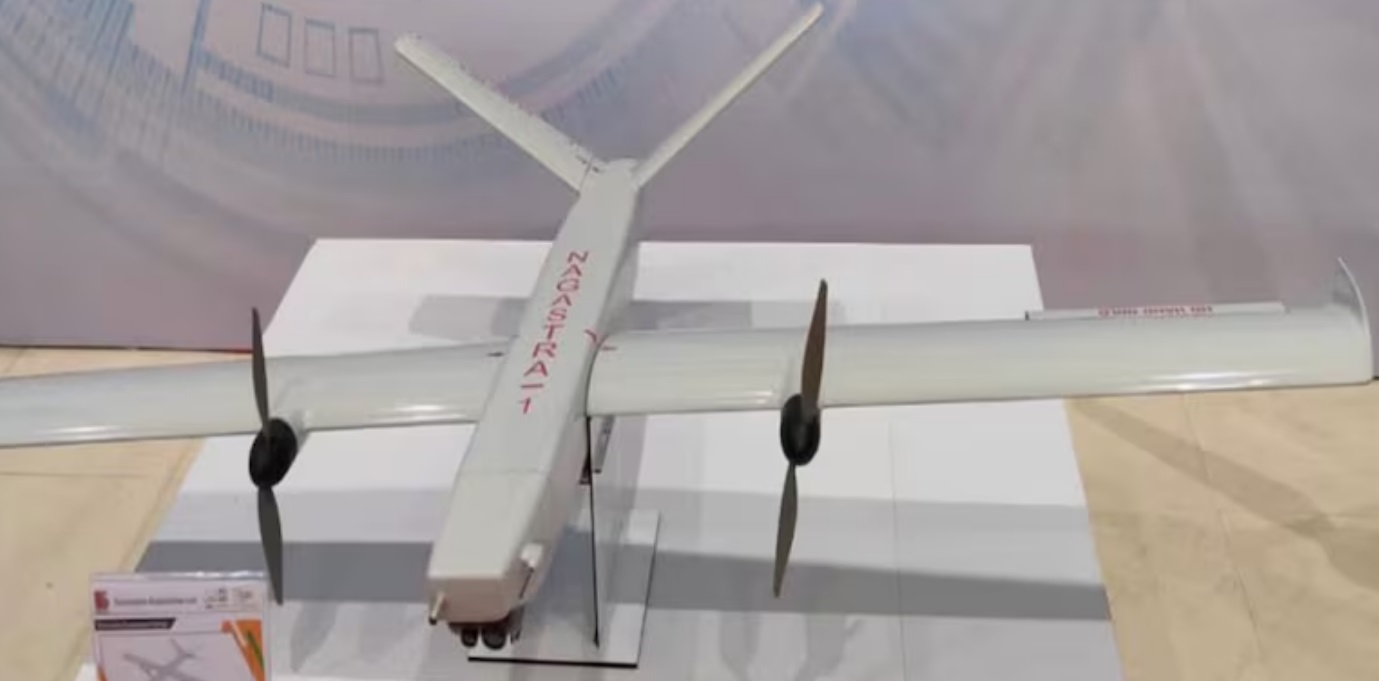
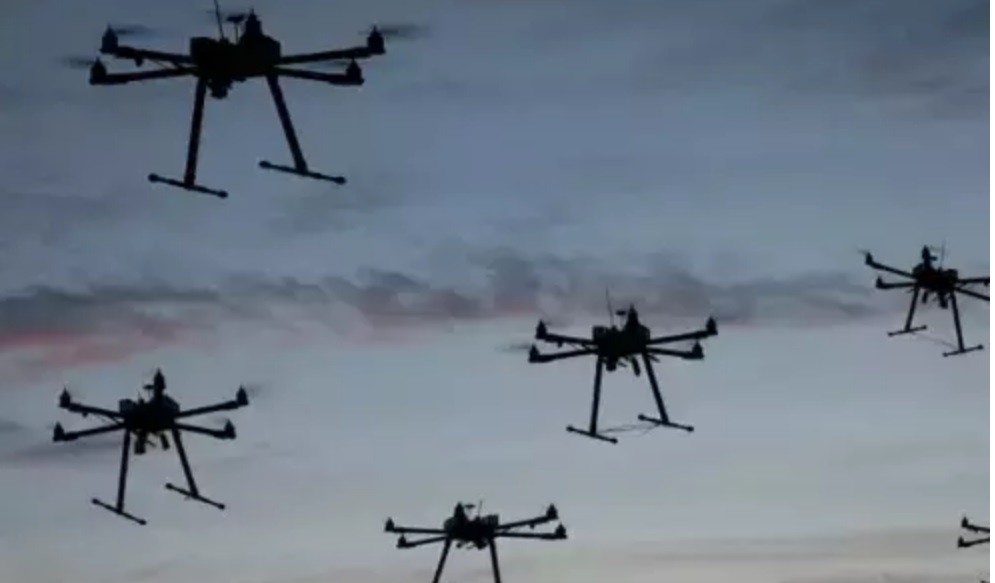
To boost its drone warfare capability, the Indian Army is raising 15 to 20 Shaktibaan regiments with swarm drones, loitering munitions and long-range drones, which can strike targets from 5 km to 500 km. These regiments will function under the Artillery of the Indian Army. The move is part of a substantial force restructuring intended by General Upendra Diwedi, the Army Chief, to prepare the force for contemporary warfare. The new regiments will bridge the gap in striking targets between 50 km and 500 km. For ranges more than 400–500 km, the Army already fields BrahMos supersonic cruise missiles and is initiating the Pinaka multi-barrel rocket system, which has a 120-km range. To prepare the first Shaktibaan regiments, the Army will shortly issue a tender under an advance procurement process for about 850 loitering munitions accompanied by their launchers. Indian manufacturers will supply the systems under the fast-track route, with deliveries expected in the next two years. Indian defence firms, for example, Solar Defence and Aerospace, Adani Defence and RapheM will be key contenders for the project, which will be around Rs 2,000 crore. The Army has already trained over one lakh drone operators and has started equipping its formations with a wide range of drone-based weapons. Together with the Shaktibaan regiments, the Regiment of Artillery will also raise 35 to 40 Divyastra batteries within artillery divisions, each with multiple types of strike-capable drones. The Infantry is also experiencing parallel modernization by raising Ashmi platoons in every infantry battalion. Furthermore, a new Special Forces unit, Bharav, is created to improve special operations capability at the Corps headquarters level, with each operative trained to launch drones for precision strikes. Throughout Operation Sindoor, Indian forces widely used loitering munitions, for example, Sky Striker, Nagastra, Harpy and Harop, to target enemy positions and Pakistani military bases following the growth of hostilities by Pakistan. Source: ANI

Saheel Singh 12 Jan 2026
Hyderabad Gears Up for Drone Day Jan 16, 17
Drone Day Drone Training

Hyderabad Gears Up for Drone Day Jan 16, 17

Telangana Tourism will sponsor a two-day drone event at the Gachibowli Stadium on January 16 and 17, 2025, featuring high-speed drone racing together with the traditional Makar Sankranti kite-flying festivities. TGTDC MD Kranti Valluru told Deccan Chronicle, “A virtual tourism experience centre is also being set up at the venue. The drone show will endorse Telangana’s tourist destinations. ” He added that Telangana Tourism is funding the festival, formally called the Whoopmasters Drone Day, Hyderabad Chapter Showcase Race. The stadium's outdoor field will be altered into an LED-lit racecourse. Whoop masters India, which has conducted more than 16 national races, as per MultiGP standards, said the showcase was intended as a unique spectator sport. Essential attractions include standard FPV racing, where pilots fly five-inch FPV drones at speeds over 100 km/hr; drone soccer, a team-based aerial sport in which drones are enclosed in protective spherical cages and endurance FPV racing, a relay-format event that tests pilots' stamina and strategy over extended laps. Freestyle drone stunts and a synchronized drone light show will additionally improve the spectacle of the event. Source: The Deccan Chronicle

Saheel Singh 08 Jan 2026
Indian Army Creates Modern Warfare Force 'Bhairav' with More than One Lakh Drone Operatives
Defence Drones Drone Pilot

Indian Army Creates Modern Warfare Force 'Bhairav' with More than One Lakh Drone Operatives

At a time when the Centre is pushing for restructuring the defence forces, the Indian Army has undergone one of the most significant transformations to meet modern warfare challenges, creating a pool of more than one lakh drone operators across the force. Bhairav, the latest Special Force raised by the Indian Army, is formed to meet the challenges of contemporary warfare, as all operatives can handle drones and use them in real operations to target bases and formations in enemy territory. The Bhairav battalions, raised by Army Headquarters with lessons from global and individual conflicts in mind, have been formed to provide a dedicated force for high-speed, offensive operations, performing Special Forces tasking at several levels as required. The Indian Army has, by now, raised about 15 battalions, which are assigned to diverse formations along both borders and plans to raise about 25 more in the near future. The Bhairav battalions would also bridge the gap between the Para Special Forces and the regular Infantry battalions. The Bhairav would also be tasked to perform Special Operations at strategic to operational depth. “Modern warfare is altering at a rapid pace.   Today’s conflicts are hybrid and there is a need for a fully equipped force with contemporary technology to cope with the Challenges. The Bhairav battalions are also formed as part of the force restructuring, which is raised because of the needs of modern technology, new thought process and according to the latest operational requirements,” Commanding Officer of the 2 Bhairav Battalion said. “I am the CO of the Desert Bhairav Battalion of the Southern Command of the Indian Army. The desert presents its own challenges, requiring specialized skill sets, endurance and technology to be used effectively. That is why Bhairav is a technology-driven system which can work self-reliantly and perform multidomain operations in the future,” he added. Explaining about the development of the unit, the CO said, “The desert Bhairav Battalion is formed on the concept of ‘Sons of the Soil’ as most of the troops are from Rajasthan who can comprehend the terrain, language, weather and the area. The battalion has been built on the legacy of Rajanghan's valour and gallantry and that is our biggest strength. We can counter any challenge in the desert sector.” Source: Times of India

Saheel Singh 07 Jan 2026
'Regret incident': Air India Issues Statement After Pilot Found Drunk on Vancouver, Delhi flight; Initiates Probe
Aviation Regulation Alcohol Regulation

'Regret incident': Air India Issues Statement After Pilot Found Drunk on Vancouver, Delhi flight; Initiates Probe

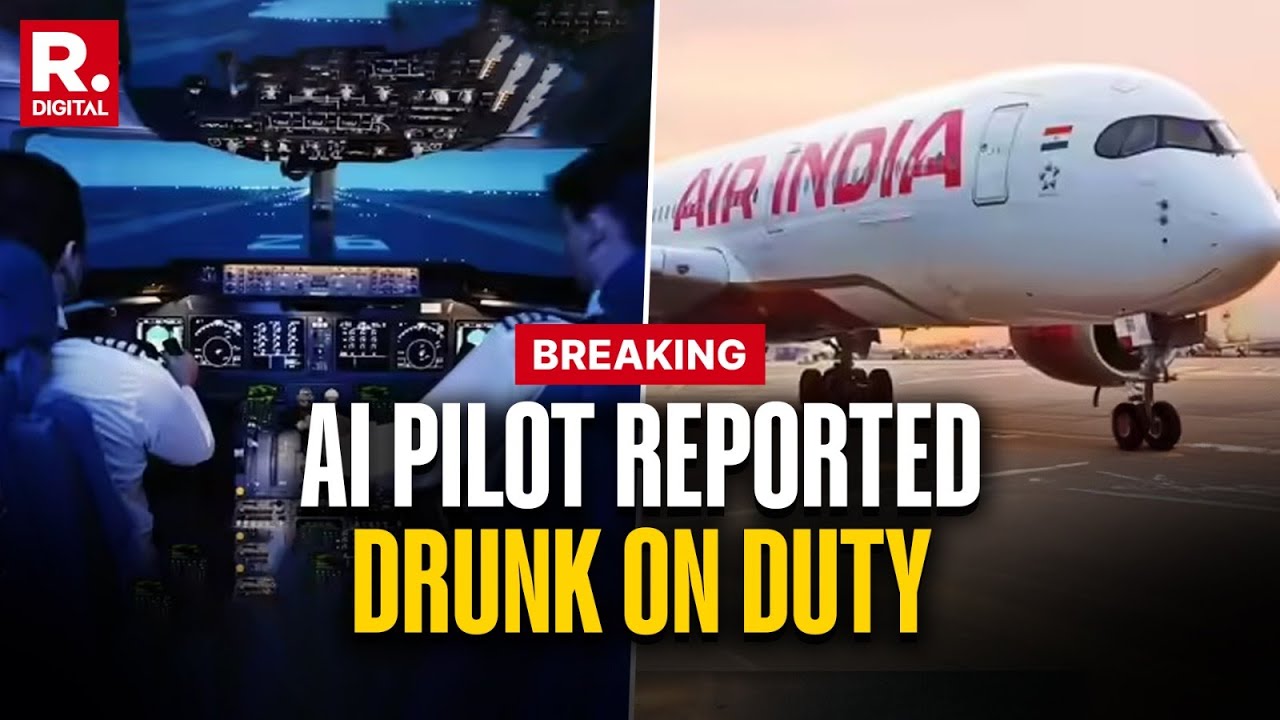
Air India said it regretted the occurrence after one of its pilots on a Vancouver–Delhi flight on December 23 was found to be drunk by Canadian authorities. Flight AI186 was delayed at Vancouver airport after the cockpit crew member was offloaded ahead of departure. In a statement, an Air India representative said Canadian authorities had flagged the issue, after which the pilot was taken for additional inquiry. “Consistent with safety protocols, an alternate pilot was rostered to operate the flight, resulting in the delay. Air India regrets the inconvenience caused to its passengers and is fully cooperating with the local authorities,” the airline said. The spokesperson added that the pilot had been taken off flying duties throughout the enquiry and that strict action would be taken if any violation were confirmed. “Pending the consequence of the investigation, any confirmed violation will attract strict punitive action as per the company policy,” the statement said. Air India said that there is a zero-tolerance policy on violations and said safety is its highest priority. The incident was highlighted after Transport Canada informed Air India that the pilot failed a breathalyzer test before operating the flight. In a letter dated December 24, Transport Canada said the incident resulted in a violation of Canadian aviation regulations and the conditions set out in Air India’s foreign air operator certificate. It also asked Air India to conduct a detailed investigation under its safety management system and to submit a report on the steps taken by January 26, 2026. It also said enforcement action could be pursued by Canadian authorities. The flight operated a long-haul route that now includes a refuelling stop due to Pakistan airspace restrictions. AI186 was to take flight from Vancouver to Vienna with one set of pilots, after which another crew would take over for the Vienna–Delhi leg. Source: Times of India

Saheel Singh 02 Jan 2026
ideaForge and C-DAC Collaborate to Deploy Drones for Faster Emergency Response
Emergency Response Drones Drone Partnership

ideaForge and C-DAC Collaborate to Deploy Drones for Faster Emergency Response

ideaForge Technology Limited has signed an MoU with the Centre for Development of Advanced Computing. This partnership will integrate drone technology into India’s emergency response network, refining the efficiency of Dial 112 services and evolving research in next-gen drones, semiconductor and data-driven technologies. Partnership to Enhance Emergency Response Through Drone Technology   The strategic partnership will combine ideaForge’s FLYGHT platform, a ready-to-deploy Drone-as-a-Service solution, with C-DAC’s Emergency Response Support System. ERSS lets citizens access police, fire and medical assistance through a single nationwide number. With India’s average emergency response time nearing 20 minutes, deploying drones as quick first responders will improve efficiency. FLYGHT drones can be dispatched ahead of ground teams to transport instantaneous situational consciousness, accelerate threat assessment and improve both responder and citizen safety, even in traffic conditions. FLYGHT Platform: On-Demand Drone Services for Public Safety The FLYGHT platform lets government agencies and organizations access drone capabilities without owning hardware, managing software, or training specialized personnel. Its pay-per-use model makes drones more accessible. Beyond emergency response, FLYGHT drones are deployed for: ·       Traffic Management ·       Assessment of disaster in Urban areas ·       Inspection of assets and infrastructure ·       Inspection of sanitation facilities and environment ·       Public safety and security operations Collaborative Innovation in Deep-Tech and UAV Research The MoU also lays the basis for joint research and innovation between ideaForge and C-DAC. Key areas of collaboration comprise: ·       Assessment and incorporation of the indigenous VEGA processor into UAV platforms. ·       Expansion of VEGA-based system-on-chip architectures for flight control systems. ·       Research into autonomous swarm drones, AI-led analytics and trailblazing computing applications. Both organizations will do research, development and training programs, aimed at speeding up India’s deep-tech ecosystem and endorsing indigenous innovation.   Leadership Insights on the Collaboration Sachin Pukale, AGM, Product Management at ideaForge, stated :   “Integrating FLYGHT with ERSS will allow Automated Aerial Dispatch of drones, reaching incidents within minutes and providing critical situational consciousness to ground responders. This association demonstrates our commitment to leveraging indigenous technology to improve national security and public welfare.”   The C-DAC team added: “This partnership lets us harness drone-generated data for faster, data-driven decision-making in emergencies. Together, we ensure that drone data is efficiently processed, analyzed and secured, allowing AI-led analytics, autonomous operations and instantaneous situational awareness.”   Supporting India’s Atmanirbhar Bharat Vision   The collaboration aligns with India’s priorities of secure digital infrastructure, data sovereignty, and indigenous technology development. By integrating aerial intelligence with safe computing frameworks, the partnership guarantees that drones are operationally effective while following to national security and public safety standards.   This initiative will accelerate drone adoption in emergency response, advance India’s deep-tech capabilities and support Atmanirbhar Bharat by endorsing scalable, secure and indigenous solutions.   Source: BIS Infotech

Saheel Singh 29 Dec 2025
Lakhpati Didi and Namo Drone Didi Schemes Make Women Self-Reliant in Gujarat
Drone Training Drone Didi

Lakhpati Didi and Namo Drone Didi Schemes Make Women Self-Reliant in Gujarat

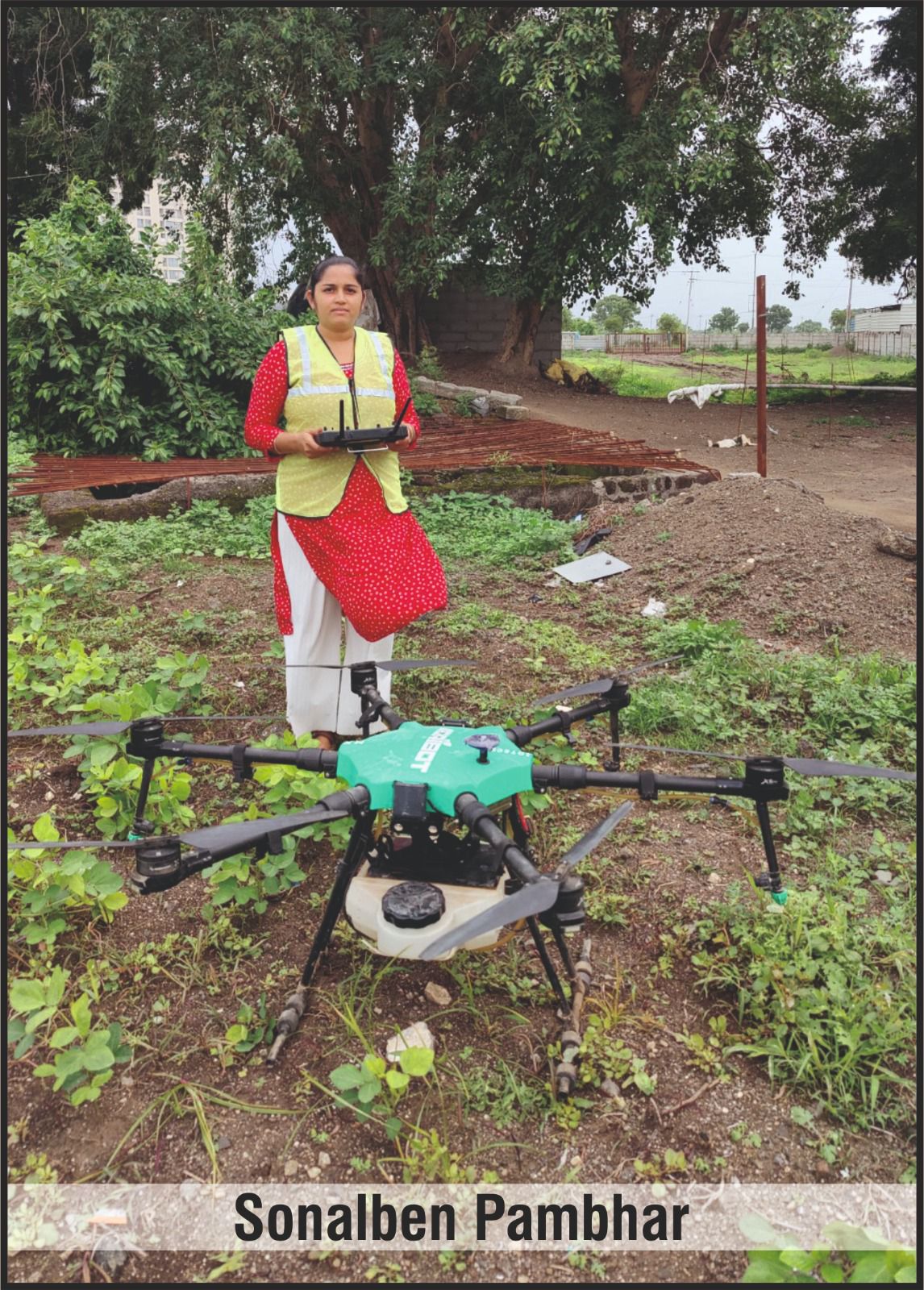
The government has launched several initiatives to guarantee that expansion of drones reaches even the remotest areas of Gujrat and to strengthen women's participation in India's development journey. The Lakhpati Didi Yojana was launched by the government in 2023 to empower 3 crore women by 2027 financially. In Gujarat, the scheme has been competently implemented under the leadership of CM Bhupendra Patel, resulting in 5.96 lakh women earning over Rs 1 lakh by December 2025, earning the title of Gujarat's Lakhpati Didis. The CM stated that, guided by the PM's vision, Gujarat has accepted several successful initiatives to strengthen women's empowerment. He added that with the effective implementation of the Lakhpati Didi scheme, the state is well-positioned to enable 10 lakh women to become Lakhpati Didis in the near future. Kankuben Garva from Kutch earns an annual income of over 10 lakhs The Lakhpati Didi programme, launched by the Gujarat government at the grassroots level, has had a transformative impact on women's incomes. Kankuben Garva comes from a family engaged in handicrafts. Through her contribution to the Saras Mela, she extended the platform for showcasing Kutch handicrafts, creating new market scenarios. With support from a Rs 1.5 lakh Community Investment and a Rs 4 lakh loan, she opened a shop by finding other women from her self-help group. Today, her products are promoted beyond the state, and she continues to scale up her initiative through sales on prominent online platforms, for example, Amazon. Earning more than Rs 10 lakh, Kankuben attributes her success largely to the constant support from the state government under the Livelihood Mission. Bhavanaben Gains a New Identity Through the Namo Drone Didi Yojana Bhavanaben Bharatkumar Chaudhary, of Kankrej taluka of Banaskantha district, has earned a different identity in the region as a Drone Didi. Educated up to the bachelor's level, she is engaged in animal husbandry and agriculture. Selected under the Namo Drone Didi Yojana, she received specialized training in pesticide spraying using drones and is now extensively recognized as a Drone Didi across Kankrej taluka. While continuing to live and work in her village, she is realizing her aspirations and motivating other women to become Aatmanirbhar. Under the Namo Drone Didi Yojana, women aged 18-60 years, with a Class 10 qualification, are qualified to train and work as drone pilots. Identification of over 10 lakh potential Lakhpati Didis in Gujarat At present, trained Community Resource Persons in the state have identified 10.74 lakh women with the potential to become Lakhpati Didis. To systematically capture details of their prevailing livelihood activities, accessible resources, spending and income, the Ministry of Rural Development, Government of India, has developed a Digital Livelihood Register. On the basis of data from the Digital Livelihood Register, the recognized Lakhpati Didis are getting need-based support, including training, assets, monetary assistance and marketing support. How does the Lakhpati Didi scheme Work? The scheme supports rural women related to self-help groups in starting income-generating activities to help them earn Rs 1 lakh or more annually. Women can start businesses in agriculture, animal husbandry, handicrafts and other nearby pertinent sectors. To enable this, several government schemes offer support through training, monetary assistance and market linkages, allowing sustained income growth. As stated by the guidelines of the Central Government, income calculation for a Lakhpati Didi comprises the following details: * Total annual income from agriculture and related activities. * Income from non-farm activities, manufacturing, trading and services. * Income of any family member, salaried/employed. * Income received from farm and non-farm labour work. * Monetary Amounts received through the assistance of government schemes. * Income earned through commissions and honorary salaries. Training of more than 10,000 Community Resource Persons by 248 Master Trainers. To guarantee the successful application of the scheme, the Gujarat government has taken more than a few steps. At the taluka level, 248 Master Trainers have been chosen, who have trained over 10,000 Community Resource Persons to date. These CRPs will support women related to self-help groups. Throughout this process, data are frequently updated in the Digital Livelihood Register, enabling effective monitoring and the provision of training, monetary support, and market linkages to women entrepreneurs.  Source: AWAZ

Saheel Singh 29 Dec 2025
UP Farmers Learn AI, Drone Tech Through ‘Kisan Pathshala’
Drone Training Drone Pilot

UP Farmers Learn AI, Drone Tech Through ‘Kisan Pathshala’

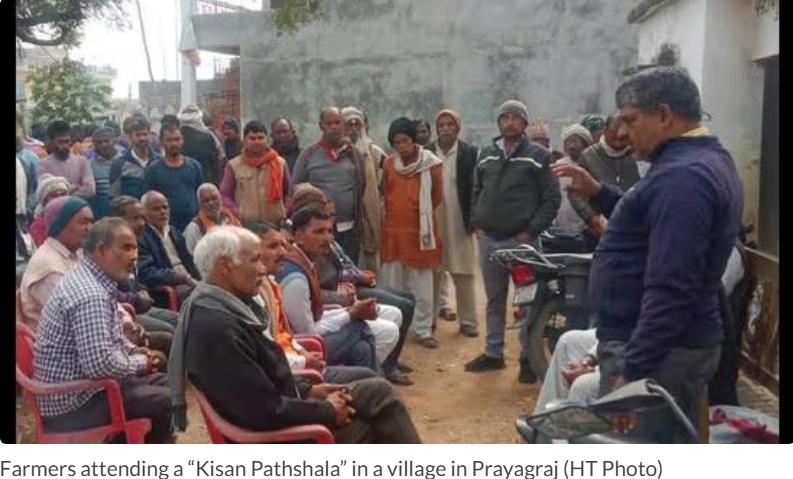
For the first time, women agricultural volunteers recognized as Krishi Sakhis have been allocated key roles alongside farmers, officials from the state agriculture department said. The programme emphases on improving technical knowledge, endorsing modern farming practices and raising consciousness about government schemes amongst cultivators, officials from the state agriculture department said. Farmers in UP are being trained in AI and drone-based farming through the “Kisan Pathshala” programme, an initiative of the state government which links traditional agriculture with contemporary practices, officials said on 20 th December 2025. For the first time, women agricultural volunteers recognized as Krishi Sakhis have been allocated key roles alongside farmers, officials from the state agriculture department said. The programme emphasises improving technical knowledge, endorsing modern farming practices, and raising awareness about government schemes amongst cultivators, officials from the state agriculture department said. In Prayagraj district, Kisan Pathshalas are being organized in 575 villages, benefiting farmers and expanding access to technology-based agricultural solutions, officials said. Deputy director of agriculture in Prayagraj, Pawan Kumar Vishwakarma, said the programme began on December 14. Officials said that drones with multispectral sensors help in crop monitoring, soil assessment and recognizing water stress or nutrient deficiencies. AI-based precision spraying enables targeted use of fertilizers and pesticides, while early detection of pests allows suitable treatment. Data analysis also assists in yield prediction, irrigation planning and nutrient management. The state budget has emphasized strengthening the agricultural sector and growing farmers’ incomes. Officials said access to advanced techniques and technology is vital to attain this goal. The Department of Agriculture is conducting the sessions as part of the initiative “The Million Farmers School 8.0.” He said the initiative decodes budget provisions into on-ground training by connecting farmers with modern technology. Participants are given guidance on cutting-edge practices, including the use of drones and AI in agriculture. The sessions also include interactions with trained “Namo Drone Didis” and experts and resource persons specializing in AI-based farming applications. This year, skilled women farmers are attending the sessions as special guests, accompanied by two progressive male farmers who are sharing their experiences. Officials said farmers’ learning will also be evaluated through a competition, with top performers getting seed and pesticide packets. Source: Hindustan Times

Saheel Singh 29 Dec 2025
Why India’s Aviation Crisis Caused a Meltdown?
Airline Crisis Indigo

Why India’s Aviation Crisis Caused a Meltdown?

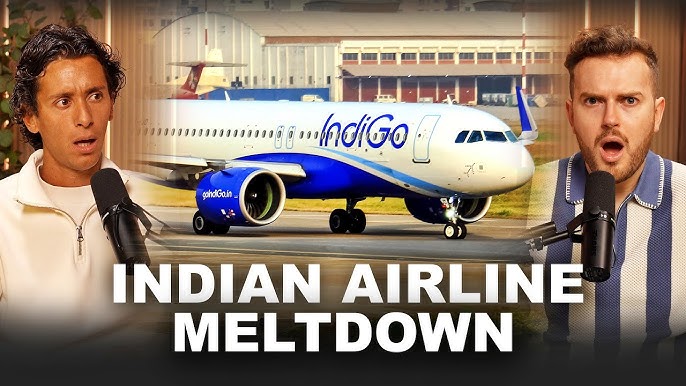
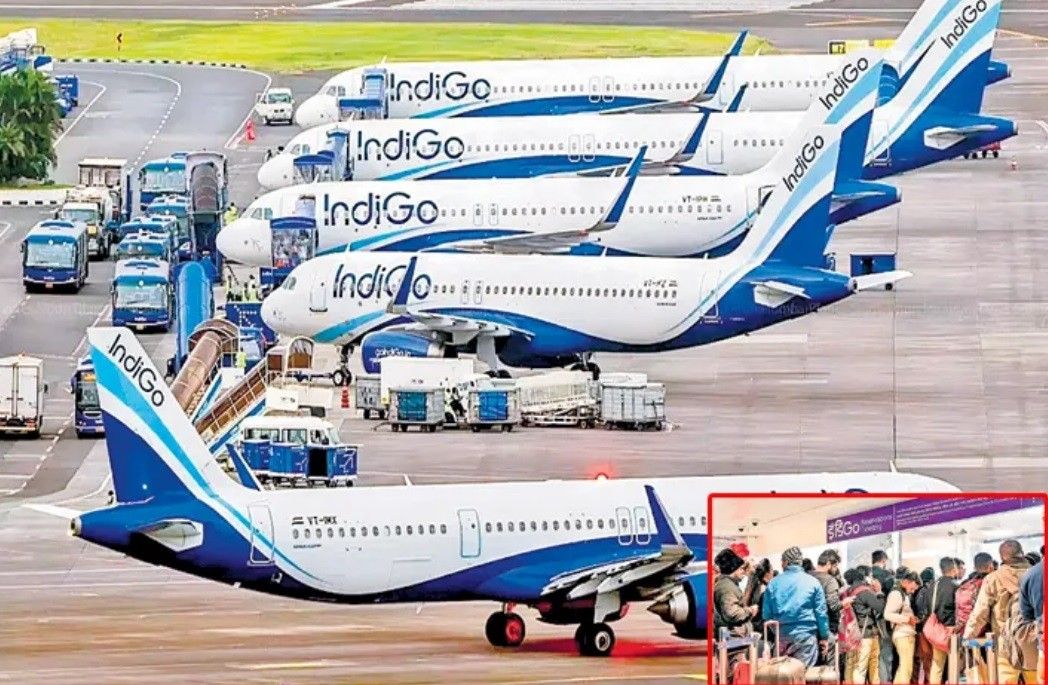
When the market is controlled by just two airlines, one company’s internal crisis turns into a national emergency. IndiGo’s lack of pilots, triggered by the rollout of fatigue-management rules, should have troubled one airline. As an alternative, it paralyzed India’s entire aviation network. Fares rose to Rs 40,000-80,000, refunds were delayed for days and substitute carriers could not absorb the shock. In a competitive market, passengers would have choices. In India’s duopolistic one, they had none. The fatigue rules were not the villain. Pilot fatigue is a safety threat and aligning India’s Flight Duty Time Limitations with global norms is long overdue. But the transition was mishandled on all sides. Regulators announced the rules approximately two years ago, then delayed and re-delayed enforcement, only to abruptly push through implementation, leaving airlines scrambling. IndiGo, undervalued the number of supplementary pilots it needed. This combination is why passengers ended up paying the price. What’s missing from the conversation is the structural cause; India’s aviation industry lacks depth. When just two airlines, IndiGo and Air India, hold over 90 per cent of the market share, the complete system hinges on their capability to function flawlessly. In India, passengers face a system where, when “one airline hesitates, everyone suffers.” And consumers suffered immensely. People missed job interviews, medical appointments and weddings. Some reached only to determine their flights had been cancelled, with no SMS alert. Refunds trickled in only after government orders. A nation aiming to become the world’s third-largest aviation market cannot function with outdated passenger protection norms. India needs a clear and enforceable Air Passenger Bill of Rights, one that guarantees automatic funds, timely alerts and fair compensation for final cancellations, without burdening airlines under knee-jerk regulations. But consumer rights alone won’t fix a market with little competition. For honest resilience, India must remove barriers that make it hard for new airlines to scale: high ATF taxes that wear away margins, slot allocation policies that reward incumbents, and regulatory unpredictability that discourages investment. The government says India has room for 5 major airlines. That won’t happen without policy reforms that make market entry easier. IndiGo’s crisis wasn’t just about fatigue rules. India’s aviation future hinges on embracing what every competitive, consumer-friendly market eventually learns: choice is stability. If India wants a resilient aviation ecosystem, it must start allowing competition. The skies need more carriers, more capacity and more consumer choice. Then, this won’t be the last time passengers pay for a crisis they didn’t create. Source: Asia News Network

Saheel Singh 26 Dec 2025
Enord Secures Landmark Multi-Crore Indian Army Order for Indigenous VR Drone Training Simulators
Drone Simulators Drone Training

Enord Secures Landmark Multi-Crore Indian Army Order for Indigenous VR Drone Training Simulators

Enord Pvt. Ltd., a ground-breaking AI-on-Edge drone technology startup, has secured a multi-crore contract from the School of Artillery, Deolali, Nashik, Indian Army, for the supply of Made-in-India Standalone VR Drone Training Simulators. The order has been placed under the Emergency Powers Revenue 2025 mandate, marking a significant milestone in India's drive in the direction of Aatmanirbhar Bharat in defence technology. Under the contract, Enord will transport 700+ VR drone simulators to Category-A establishments of the Indian Army, spanning 19 units across the country. The disposition will be carried out in three phases, with full completion targeted for Q2 2026, enabling fast, scalable enhancement of drone training infrastructure. The simulators are intended to offer high-fidelity, immersive training for military drone operators without dependence on live drones. The system supports FPV flying, ISR mission rehearsal, emergency response drills, and intricate tactical scenarios, significantly reducing operational risk, cost, and equipment wear while quickening pilot readiness. The award follows an extensive assessment and qualification process, including field trials, thorough performance assessments and strict country-of-origin compliance checks. These audits underline the Army's emphasis on secure, indigenous supply chains. Commenting on the accomplishment, CoFounder and CEO of Enord, said, "This contract is a decisive vote of confidence in young Indian entrepreneurs and in indigenous defence technology. It validates that Indian-built systems can meet and surpass the operational expectations of our armed forces. Guided by our vision of 'Creating Ease,' we are delivering this project on schedule and building a lasting partnership with the Indian Army." Founded on January 29, 2021, Enord emerged from leading incubators across IITs, IIITs, and IIMs. The company focuses on emerging intelligent, autonomous drone and simulation systems that go beyond conventional GPS-based navigation. Its proprietary AI Pilot architecture enables instantaneous perception and decision-making at the edge, letting systems function effectively in GPS-denied and complex environments. With this order, Enord strengthens its position as a key contributor to India's indigenous defence ecosystem, advancing skill development, self-reliance and next-generation military training capabilities. Source: ANI

Saheel Singh 24 Dec 2025
Delhi Court Asks Aviation Body to Explain Relaxations in Pilot Fatigue Rules
Pilot Fatigue Aviation Laws

Delhi Court Asks Aviation Body to Explain Relaxations in Pilot Fatigue Rules

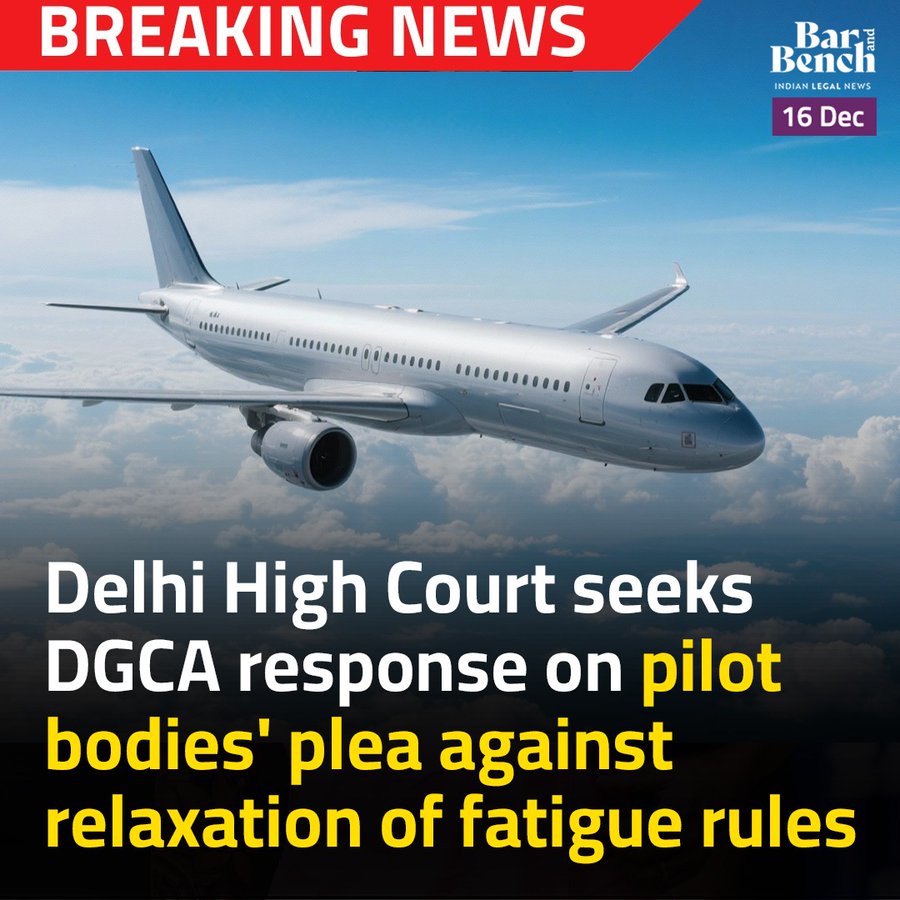
The Delhi High Court sought a response from the DGCA on a plea by the Indian Pilots Guild seeking contempt action against authorities for allegedly not fully realizing the new flight duty time limitation norms accepted by the court earlier this year. The plea supposed that airlines were granted extensions and relaxations in pilot fatigue management rules in violation of the Civil Aviation Requirement 2024 framework. Justice Amit Sharma issued notice to the Directorate General of Civil Aviation on the Indian Pilots Guild's contempt petition and asked it to file a response. The court listed the matter for additional hearing on April 17. In its plea, the association sought the initiation of contempt proceedings against the authorities for their alleged wilful and deliberate non-compliance with the court's earlier orders. It said the new Flight Duty Time Limitation norms were meant to address fatigue management for the flying crew; however, by granting variations, exemptions, and relaxations to airlines, DGCA has defied the undertaking and directions of the high court and jeopardized flight and passenger safety. "By approving non-compliant FDTL schemes and granting variations, exceptions and relaxations to the airlines, the actions of the respondents in the implementation of the FDTL CAR constitute wilful non-compliance of the directions of this court...," the plea said. DGCA's counsel opposed the contempt plea, arguing that the court had not frozen the CAR's filings. While application timelines were binding, the regulator retained constitutional powers under the Aircraft Act and Rules to grant temporary, case-specific exemptions. DGCA's counsel argued that such relaxations were limited, subject to review and that the CAR remains in force. Earlier this year, DGCA, in its affidavit before the high court in an alternative matter, said the new FDTL norms will be implemented in a phased manner. Of the 22 proposed clauses, 15 were implemented on July 1, and the remaining are to take effect on November 1, 2025. The watchdog's revised CAR 2024 related to the FDTL provides for more rest time for pilots, among concerns over pilot fatigue. Primarily, the new norms were to take effect on June 1, 2024. The court's decision followed pleas filed by the Indian Commercial Pilots Association, the Indian Pilots Guild, and the Federation of Indian Pilots concerning the regulator's revised FDTL norms. In November 2025, the Federation of Indian Pilots also filed a contempt petition, claiming that the DGCA had deliberately failed to comply with the High Court's directions. The federation demanded that, despite assurances to the court, the regulator allow airlines extensions and relaxations and clear fatigue management schemes that did not align with the CAR 2024 norms or the agreed timelines. Source: NDTV

Saheel Singh 17 Dec 2025
Civil Aviation Ministry Issues Alert for Northern India Airports Amid Dense Fog, Travellers Should Check Flights
Aviation Training Aircraft Flying

Civil Aviation Ministry Issues Alert for Northern India Airports Amid Dense Fog, Travellers Should Check Flights

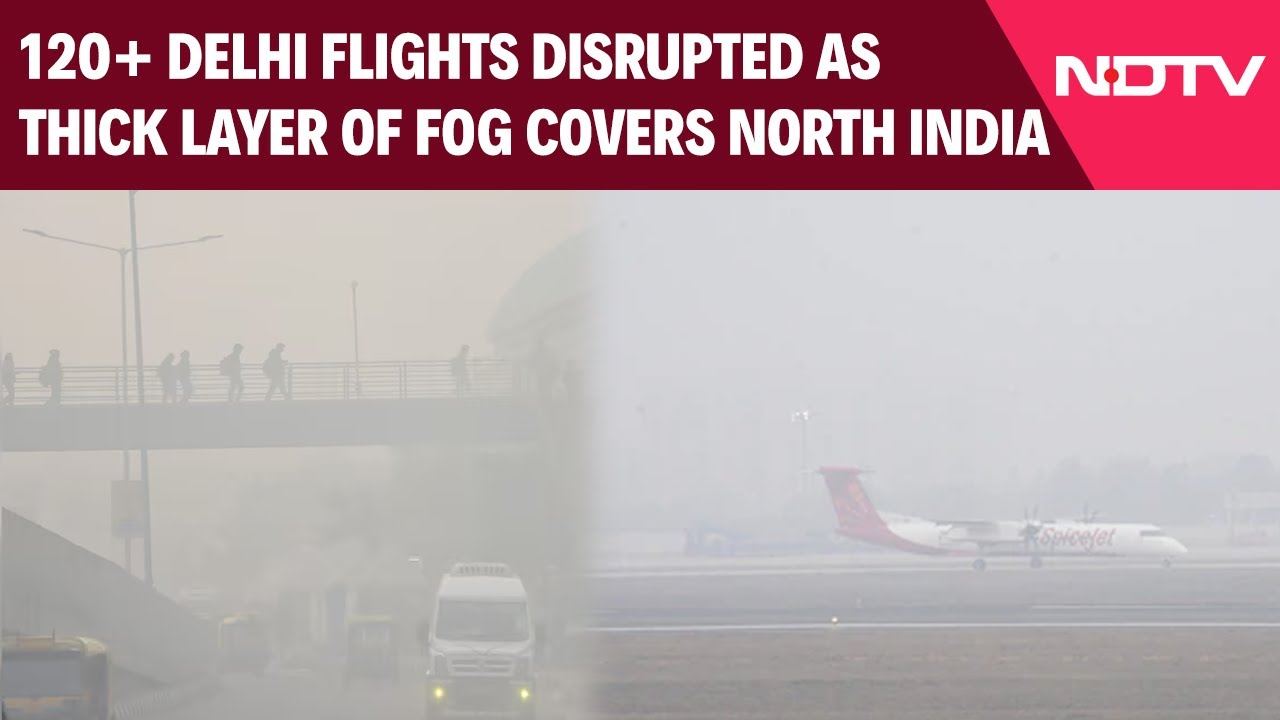
The Civil Aviation    Ministry issued a heavy fog alert for airports across north India, warning that dense fog has reduced visibility and disturbed flight operations, particularly in Delhi. Passengers should check their flight status with the airline before leaving and monitor updates on the airline's website or application. Travellers should allow extra time for their journeys because of possible fog-related delays. On X, the Ministry of Civil Aviation wrote, "Heavy Fog Alert for Northern India, Delhi & other airports in Northern India are experiencing dense fog, affecting visibility. Passengers should check the latest flight status with their airline. Check flight information on the airport website. Please allow extra travel time. Safety is top priority. Our teams & ATC are working diligently to minimize disruptions. I appreciate your patience." The Ministry emphasized that safety is a top priority. Passengers were patient and cooperative during the ongoing adverse weather conditions. In the meantime, IndiGo Airlines also issued an advisory about low-visibility conditions over the national capital, noting that dense fog has affected operations at Delhi and several other airports in northern India. "Low visibility (below minima), because of dense fog, has severely impacted operations at Delhi and airports across northern India, which is beyond our control. Our teams are closely monitoring the situation and coordinating with Delhi airport, in line with established safety protocols," IndiGo said in the press statement. The airline said that while operations are being adjusted according to prevailing weather conditions, some flights may be delayed, and others could be cancelled proactively during the day to prioritize safety and avoid extended waiting times at airports. “We have issued advisories to our customers and proactively informed them to minimize inconvenience," the statement read. IndiGo further urged passengers to regularly check flight status on official airline websites and mobile applications to stay updated on any delays or cancellations before travelling to the airport. Source: Business Line

Saheel Singh 15 Dec 2025
How Women Drone Pilots in Rural Maharashtra are Cultivating a Green Habit Among Farmers?
Drone Didi Drone Jobs

How Women Drone Pilots in Rural Maharashtra are Cultivating a Green Habit Among Farmers?

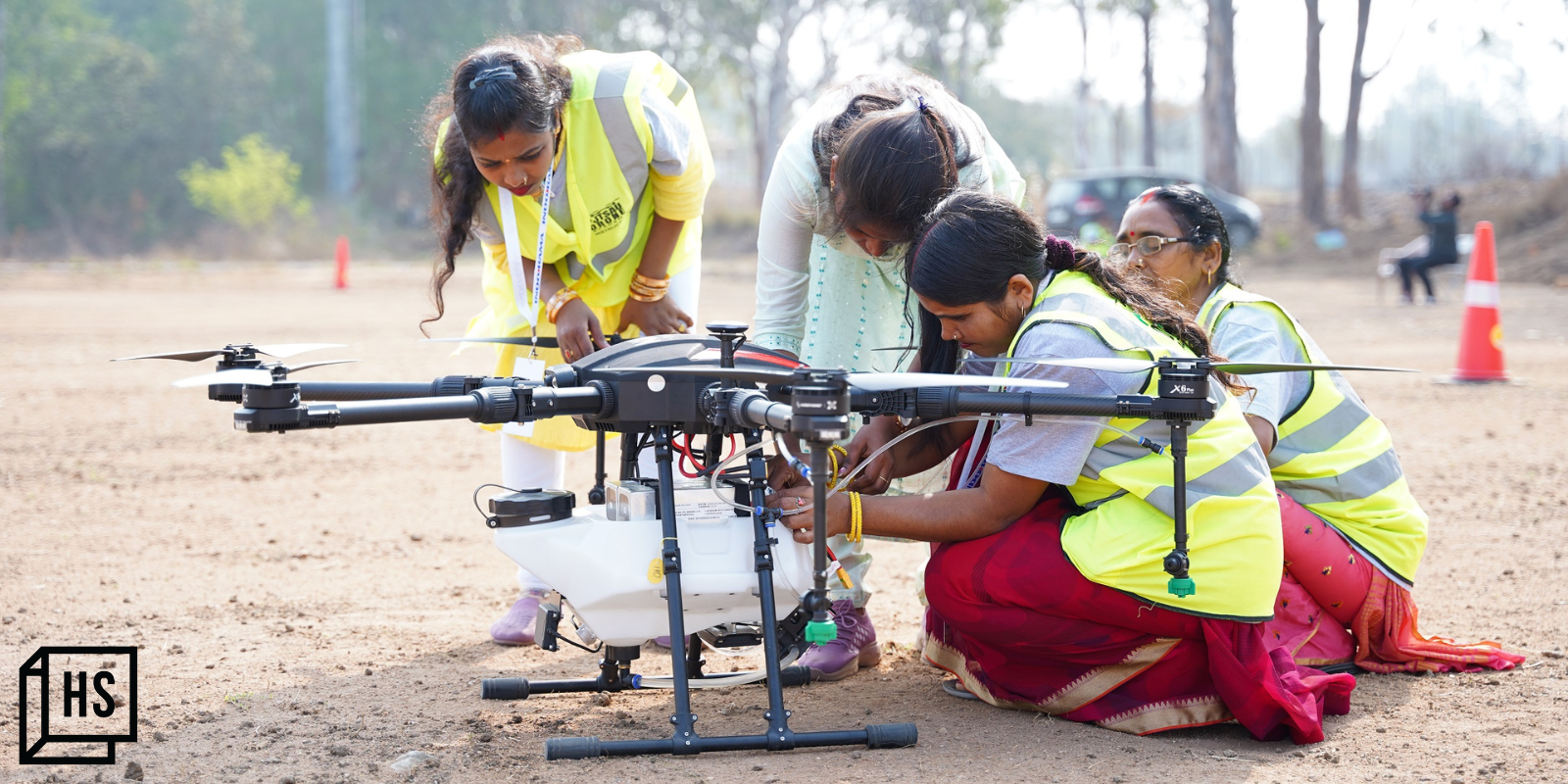
Seema Khandade had never seen a woman operate a drone before. Today, she is flying high as one of the farmers who have become drone operators in Maharashtra and among the few who are using the drones to endorse climate-friendly agriculture. Since then, she has become one of the contacts for farmers from neighboring areas who want their fields sprayed. “I go out into the fields on my four-wheeler and start working the remote to lift and control the drone. Soon, a crowd gathers to watch me because the drone is new, as is seeing a woman handle it,” says Khandade. Khandade, who is part of ProRISE, a project by Pune-based Watershed Organization Trust (WOTR), which works in watershed management and climate-resilient rural development, uses it to endorse biological options from her farmer-producer company (FPC). “FPCs are endorsing drones not just as a technology but also as a tool to promote biological options. Farmers might have bought chemical options, but a drone operator can sway them to using green alternatives,” says Sandeep Jadhav, Director, WOTR. Reduced Labour, Lower Chemical Use In India’s agricultural belts, many women have become drone pilots all over India as part of the ‘Drone Didi’ scheme. As said by the plan, 15,000 drones would be provided to women self-help groups, with an expenditure of Rs 1,261 crore for the 2023-24 to 2025-26 period. ProRISE, supported by the Walmart Foundation, a philanthropic and social impact organization, aims to take drone use in agriculture to the next level. Launched in 2023, the project has three drones being operated by three women, each associated with a diverse FPC. The initiative, rolled out in Jalna, Solapur and Dharashiv districts, has reached 2,100 farmers, with approximately 29 per cent more expected to benefit by next month. As stated by Jadhav, early results show clear advantages of reduced labour and time, lower chemical use and more effective pest control. For example, it takes Khandade just about seven minutes for a round of spraying one acre and she charges Rs 500 per acre. This income is a revenue source for the FPC, and she gets a share. “Since we are working with 74 FPCs across four states, we have found that FPCs are concerned about businesses and not the ecosystem around them. When farmers use drones for agriculture, they do not differentiate between harmful chemicals and biological options. We wanted FPCs to continue profiting in their businesses, while not overlooking the ecosystem or the biological aspect of farming. This was our emphasis when we started working with 11 FPCs as part of the drone programme under ProRISE,” says Jadhav. Experts from WOTR told FPCs that, ultimately, failing to look after soil health would affect farmers’ productivity. Business will suffer, and FPCs themselves will be affected. Their profit-making is dependent on the health of the soil and farming practices, they were informed. The programme reached out to rural women to encourage them to become drone pilots. They were trained and certified, while men participated by handling potential challenges, such as safety issues when travelling to remote farms, carrying the heavy drone and navigating difficult terrain. With the project taking off, women like Khandade are now in control. Source: The Indian Express

Saheel Singh 15 Dec 2025
India's Drone, Space-Tech Boom to Add over 200,000 jobs by 2033: Report
Drone Jobs Drone Photography

India's Drone, Space-Tech Boom to Add over 200,000 jobs by 2033: Report

India's aerospace, drones, and space tech industry will expand over five-fold to USD 44 billion by 2033 and create more than 2 lakh new jobs for engineers, researchers, and data scientists, a report said on Friday. As reported by workforce solutions provider Adecco India, the aerospace, drones, and space tech industry is quickly evolving from a research-driven domain into a developed industry, driven by government reforms, private-sector participation and international collaborations. The nation's drone and space-tech industry will create over 2 lakh new jobs for engineers, researchers, data scientists and business professionals, amongst others, the report added.  Moreover, new-age roles such as Space Policy Analysts, Robotics Engineers, Avionics Specialists, and GNC experts are emerging as important to India's space ambitions, it stated. The insights and numbers presented are derived from data collected across over 100 Adecco clients, supplemented with market research sources. "With robust government vision and a vibrant startup ecosystem, India will become a global space hub, and this will create a wave of prospects for talent across engineering, research, data and business domains," Adecco India Director and Head of General Staffing Deepesh Gupta said. Regions, for example, Bengaluru, Hyderabad, Chennai, Ahmedabad, Pune, will drive maximum prospects, with wages for niche roles in avionics, cryogenics, Attitude Determination and Control Systems, Remote Sensing Specialists, Space Habitat Engineer commanding a 20-30 per cent premium compared to technical fields, Gupta added. Central to this growth are reforms, for example, the Indian Space Policy 2023, a thriving base of 250+ space startups, and a breakthrough of Rs 1,000 crore VC fund under IN-SPACe to fuel innovation and private-sector participation. "Diversity will be a cornerstone of India's space workforce. Initiatives, for example, the WISE Fellowship, Vigyan Jyoti Programme, ISRO Young Scientist Programme (YUVIKA), and the SAMRIDH Scheme, are already allowing more women to enter technical fields, research, and entrepreneurship. Upcoming milestones that will accelerate talent demand across the ecosystem comprise the Gaganyaan mission, India's contribution in the Axiom-4 ISS program, and the expansion of the nation's own space station. At present, the Indian space economy is contributing around 2 per cent to the global market. The government has set a target of scaling this to USD 44 billion by 2033, including USD 11 billion in exports, positioning India to command 7-8 per cent of the global space economy, according to the report. Source: Business Standard

Saheel Singh 15 Dec 2025
Government Orders IndiGo to Curtail Flight Schedule by 10%, Double of What the Regulator DGCA had Ordered
Aviation Training Pilot Training

Government Orders IndiGo to Curtail Flight Schedule by 10%, Double of What the Regulator DGCA had Ordered

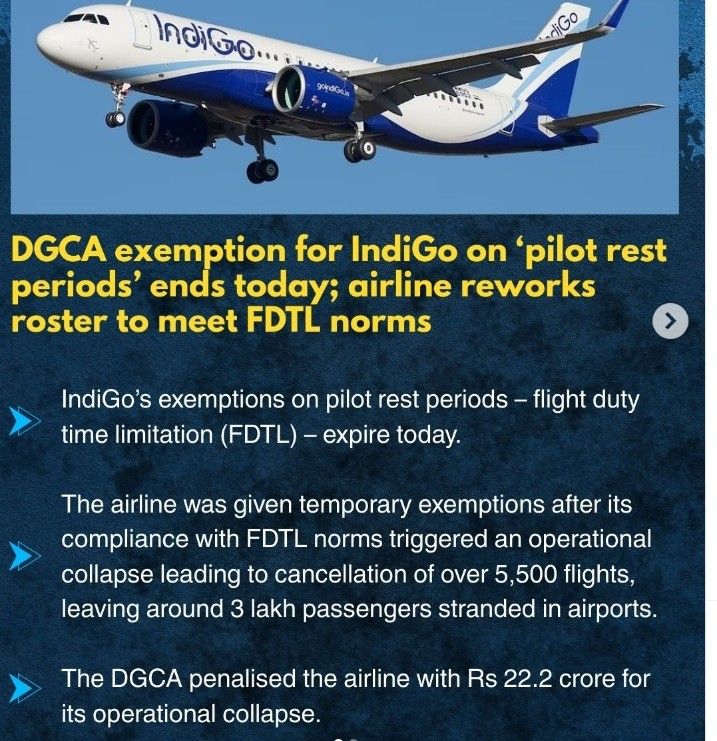
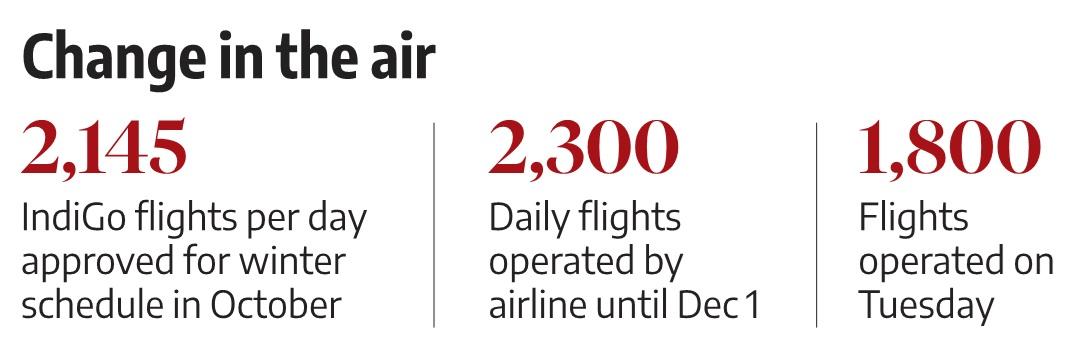
The government on 9 th March 2025, ordered IndiGo to reduce its schedule by at least 10 per cent, doubling the curtailment from 5 per cent that the aviation watchdog (DGCA) had ordered following network-wide disruptions at the country’s largest airline, which led to scores of daily flight cancellations since the middle of last week. The Ministry of Civil Aviation communicated the decision in a meeting with IndiGo CEO Pieter Elbers. IndiGo is India’s largest airline, with a domestic market share of nearly 65 per cent, and its schedule includes over 2,300 daily flights, around 2,150 of which are domestic. A 10% curtailment in domestic flights would mean that the airline’s daily scheduled domestic flights would come down to fewer than 1,950. According to sources, the freed-up slots may be offered to other carriers if they have additional capacity to deploy. “The Ministry considers it necessary to curtail the overall Indigo routes, which will help in stabilizing the airline’s operations and lead to reduced cancellations. A 10% curtailment has been ordered. While abiding with it, Indigo will continue to cover all its destinations as before,” Civil Aviation Minister K Rammohan Naidu said Tuesday in a post on X. Naidu said that Elbers was “summoned” to the ministry to provide an update on the airline’s stabilization measures. “During the last week, many passengers faced severe inconvenience due to Indigo’s internal mismanagement of crew rosters, flight schedules and inadequate communication. While the enquiry and necessary actions are underway, another meeting with Indigo’s top management was held to review the stabilization measures. CEO Pieter Elbers was summoned to the Ministry to provide an update. He confirmed that 100% of the refunds for flights affected till 6th December have been completed. A strict instruction to accelerate the completion of the remaining refunds and baggage handover was given,” Naidu said. In a statement, earlier today, IndiGo announced that its operations have stabilized and normalized. IndiGo operated over 1,800 flights on Tuesday, operating to all destinations on its network, and its on-time performance is back at over 80 per cent. The airline expects to operate around 1,900 flights on Wednesday. Sources close to the airline said that IndiGo was looking to gradually increase its flights to its regular levels over the next few days. But it will now have to abide by the government-ordered schedule curtailment. “IndiGo can confirm that after days of significant and steady improvement across the network, we have reinstated our operations across our network. This means all flights published on our website are scheduled to operate with an adjusted network. Also, nearly all bags that were stuck at airports have been delivered to our customers, and the teams are working on delivering the remaining at the earliest,” IndiGo said in a statement before the MoCA’s 10% schedule curtailment decision was announced. Earlier, the DGCA had ordered a 5% curtailment of IndiGo’s flight schedule, or around 110-115 daily flights, especially on high-demand and high-frequency routes. The regulator directed IndiGo to submit the revised and truncated schedule by 5 pm on December 10. A further rationalization of IndiGo’s flight schedule could be on the cards and will depend on IndiGo’s daily flight operations, sources indicated. Following the announcement from MoCA, the DGCA revised its order to IndiGo to reflect 10% curtailment. The airline’s weekly domestic flights increased to 15,014 in the winter schedule, which took effect on October 26, from 14,158 in this year’s summer schedule. IndiGo, however, faced crew shortages, primarily due to its inadequate preparation for the second phase of the new crew rest and duty norms that took effect on November 1. This led to widespread network-wide disruption in the airline’s operations. In view of the disruption, which brought India’s aviation ecosystem to its knees, pilot associations and aviation experts strongly criticized and questioned the DGCA’s earlier decision to allow an increase in flights in the airline’s winter schedule. The new Flight Duty Time Limitation rules stipulate more rest for pilots and the rationalization of their flying duties, particularly late-night operations, in a bid to better manage pilot fatigue, a key risk to aviation safety. These new norms, which were stipulated in January last year, were delayed in implementation and took effect in two phases, on July 1 and November 1, with the second phase rollout hitting IndiGo particularly hard. The new norms meant that airlines either had to hire more pilots to maintain their schedules or curtail them in line with the new requirements. With the second phase of the new FDTL norms taking effect on November 1, IndiGo started feeling the heat with a higher-than-usual number of cancellations and flight delays throughout November. As delays compounded, with a few other external factors also at play, disruptions became widespread over the past few days. According to the DGCA, IndiGo informed the regulator that it had 1,232 flight cancellations in November, 755 of which were due to crew and FDTL-related constraints. In review meetings, IndiGo also accepted that the disruptions “have arisen primarily from misjudgment and planning gaps in implementing” the second phase of the new FDTL rules, and that the actual crew requirement for the new rules exceeded what it had anticipated, as per the DGCA. The massive disruption at IndiGo threw commercial flight operations out of gear all over the country. Given the scale of the disruption, the DGCA on Friday granted IndiGo a temporary one-time exemption from some night operations-related changes in the new FDTL norms for its Airbus A320 pilots. The temporary rollback, which will be in place till February 10, is likely to help IndiGo to get its act together and stabilize operations from hereon. The DGCA has also granted a few other temporary relaxations to IndiGo. But the government and the regulator have turned up the heat on IndiGo by initiating a DGCA inquiry into the disruption. A show cause notice was also issued to the airline’s CEO, Pieter Elbers and its COO, Isidre Porqueras. Civil Aviation Minister K Rammohan Naidu has blamed lapses on IndiGo’s part for the disruption and said that strict action will be taken based on the inquiry report to “set an example”. He said that sufficient notice was given by the DGCA to all airlines for the implementation of the new FDTL rules. In an answer to the show-cause notices issued by the DGCA to IndiGo’s CEO, Pieter Elbers and chief operating officer Isidre Porqueras, the airline said that it is realistically not possible to identify the precise causes of the disruption at this stage because of the intricacy and vast scale of operations, and a comprehensive root cause analysis is being done. But it did share some preliminary contributing factors, whose combination led to the disruption. “The airline suggests that the disruption resulted from a combination of the following factors, which coincided in lesser or greater measure: 1.  Minor technical glitches. 2.  Schedule changes linked to the start of the winter season. 3.   Adverse weather conditions. 4.  Increased congestion in the aviation system. 5. Implementation of and operation under the updated crew rostering rules,” the DGCA had said in a release. “IndiGo notes they had been engaging with the DGCA regarding challenges in implementing the Flight Duty Time Limitations Phase II and were seeking variations, exemptions, or extensions. The disruptions began in early December when the compounding factors resulted in a lower On-Time Network Performance, which affected crew availability,” the regulator said, adding that it is in the process of examining IndiGo’s response and “appropriate action as deemed appropriate will be taken in due course”, the regulator had said. Source: The Indian Express

Saheel Singh 10 Dec 2025

From Drones to Missiles, An Indigenous Air Defence System will be Deployed in the Capital to Monitor Every Threat
Drone Training Drone Defence

From Drones to Missiles, An Indigenous Air Defence System will be Deployed in the Capital to Monitor Every Threat

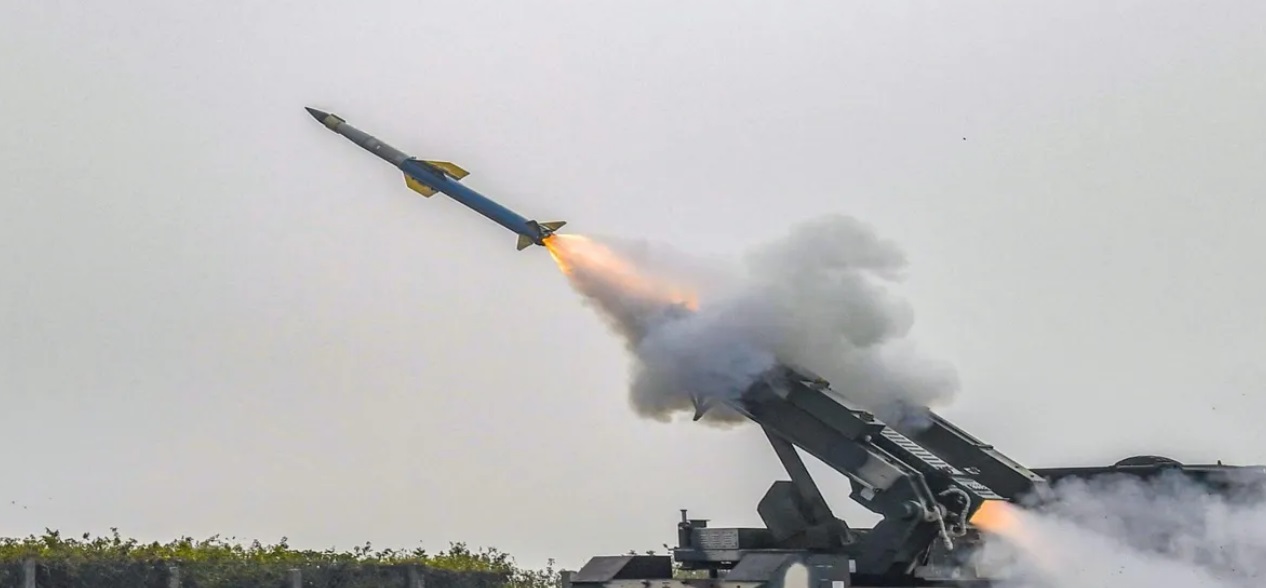
Given the recent escalation of tensions between India and Pakistan, the need to further strengthen the capital's strategic security was felt. In response, a decision has been made to deploy a new indigenously developed air defence system to protect Delhi-NCR from potential aerial threats, including drones, fighter aircraft, and missiles. This system will be based entirely on indigenous technology. DRDO and IAF to Jointly Develop IADWS India is developing the Integrated Air Defence Weapon System in collaboration with the Defence Research and Development Organization. The Indian Air Force will command and operate this system. It will utilize two major indigenous weapon systems: the Quick Reaction Surface-to-Air Missile and the Very Short-Range Air Defense System. Together, the system will be able to target and destroy any high-speed aircraft, enemy missiles, or advanced drones approaching the capital.   Source: Zee News

Saheel Singh 10 Dec 2025

IndiGo Chaos Exposes Cracks in India's Aviation Monopoly
Aviation Training Aircraft Flying

IndiGo Chaos Exposes Cracks in India's Aviation Monopoly

IndiGo has plunged the country's skies into turmoil, cancelling over 2,100 flights since December 1 and stranding many passengers. The collapse started quietly but intensified rapidly. On December 5 alone, IndiGo axed over 1,000 flights over half of its daily schedule, plunging its on-time performance to a dismal 8.5%. Airports in Delhi, Mumbai, Bengaluru, Hyderabad, and Chennai have become scenes of desperation, with harassed travellers sleeping on the floor, clashing with security, and venting fury on social media. By Sunday, another 650 flights were grounded; however, the airline vowed stabilization by December 10. At the heart of the debacle are stringent new Flight Duty Time Limitation rules enforced by the DGCA, aimed at ensuring that pilots and crew receive acceptable rest for safety. Weekly rest periods were extended from 36 to 48 hours and daily flying was capped at 8 hours. Night landings were slashed from six to two per week. Pieter Elbers, IndiGo CEO, credited the chaos to a "system reboot" and external factors such as weather and tech glitches, promising refunds and a return to normality between December 10 and 15. But critics, including the Airlines Pilots Association of India, decry it as a deliberate ploy: mass cancellations to pressure regulators into rollbacks. On December 5, the government obliged, granting IndiGo a one-time exemption until February 10, allowing layovers to count toward rest and relaxing night-duty curbs, a move slammed as prioritizing profits over passenger safety. A Viral Critique: From Anti-Corruption Protests to Corporate Cronyism? The crisis has boosted online discourse, with popular YouTuber and commentator Dhruv Rathee's latest video, widely shared on X by activist Jennifer Fernandes, framing it as the bitter fruit of unchecked monopolies during Prime Minister Narendra Modi's tenure. In the nearly three-minute clip, viewed more than 4,000 times since Saturday, Rathee juxtaposes footage of irate crowds at terminals with clips of the 2011 Jantar Mantar anti-corruption protests, once led by a young Modi. "From Jantar Mantar’s scripted 'anti-corruption' theatrics to Modi’s full-blown monopoly model, the arc is complete," Fernandes captioned the post, echoing Rathee's narrative. The video details how IndiGo's 65% market share, alongside Air India's 30%, has crushed competition, recalling a vibrant era of carriers like Jet Airways, SpiceJet, and Kingfisher. Opposition Fires Salvos: "Ease of Doing Business or Cronyism?" The DGCA has issued show-cause notices to Elbers and COO Isidro Porqueras, demanding explanations within 24 hours. IndiGo's board, meanwhile, activated a crisis management group led by Chairman Vikram Singh Mehta. The government capped fares on unaffected routes and deployed extra trains to ease the backlog, but stranded passengers like those at Ranchi's Birsa Munda Airport continue to seethe. As IndiGo scrambles to hire crew and refund tickets, orders that must be completed by Monday, the episode underscores deeper woes in India's aviation boom: a near-oligopoly in which one carrier's stumble grounds a nation. For Fernandes and Rathee, it's a stark reminder that the "ensuing tragedy witnessed by us all in real time" isn't just logistical; it's a fallout of power consolidated in a few hands. With operations limping toward recovery, the question lingers: Will this "first blood" from electoral bond ghosts force real reform, or just more exemptions?   Source: The Hindu

Saheel Singh 09 Dec 2025
Russia Deepens Ties with India, Seeks Joint Drone Production – ISW
Drone Training Drone Pilot

Russia Deepens Ties with India, Seeks Joint Drone Production – ISW

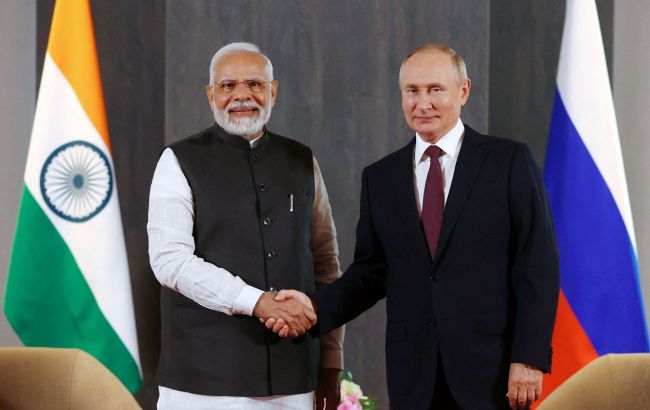
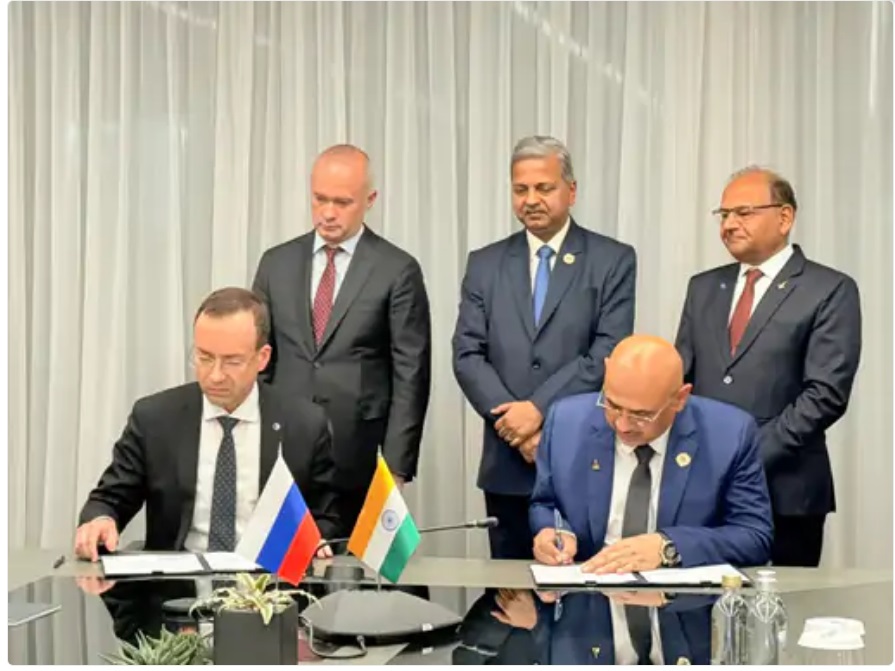
The Kremlin is increasingly relying on India to compensate for its labour shortage and also wants New Delhi to support the production of drones that Russia seeks to use in the war, according to a report by the Institute for the Study of War (ISW). The head of the Russian state defence conglomerate Rostec, Sergey Chemezov, said on December 5 that Russia is in talks with India to localize the production of Russian drones, including the Lancet, in India. The day before, Russian dictator Vladimir Putin said in an interview with India Today that Russia not only sells weapons to India but also transfers technologies for shipbuilding, rocket production, and the aviation sector. The dictator claims that India is using Russian Su-57 fighter jets and is producing T-90 tanks and jointly developed BrahMos missiles on its territory. Analysts note that such statements by Putin and the head of Rostec indicate that Moscow may be considering expanding cooperation with India to include joint drone production. Russia is likely planning to use these drones in its war against Ukraine, possibly in exchange for transferring new Russian technologies and combat experience to India. It is also known that a delegation from the Smolensk FPV Drone Piloting Centre has arrived in India to carry out tasks within the framework of the Russian-Indian strategic partnership. On December 5, Russian Deputy Prime Minister Denis Manturov said that Russia can accept an "unlimited number" of labour migrants from India under a new bilateral labour mobility agreement signed that day in New Delhi. According to Manturov, the Russian industrial sector is short 800,000 workers, and the trade, construction, and services sectors are short 1.5 million workers. The deputy prime minister said it will take Russia more than a year to create the conditions needed to receive, employ, and process the documents of Indian migrants. At the same time, the head of the occupation authorities in the Kherson region, Volodymyr Saldo, said on December 6 that possible cooperation with Indian partners was discussed at a recent international investment forum in Moscow. Saldo claims that the occupation authorities are ready to attract Indian labour migrants to “strengthen the region’s agricultural industry” and are prepared to cooperate with Indian partners to integrate the occupied Kherson region into “international trade corridors.” Russia–India cooperation As a reminder, India has faced economic and trade losses due to its cooperation with Russia, predominantly in the milieu of Russia’s war against Ukraine and sanctions pressure from the US and the EU. Because of its close ties with Russia, the US in 2025 raised tariffs on most Indian goods to 50 per cent, including “additional” tariffs linked to purchases of Russian energy resources and weapons. This has negatively affected Indian manufacturers who target the American market. For this reason, in December 2025, India plans to reduce exports of Russian oil to the lowest level in the past three years. Earlier, RBC-Ukraine stated that Indian energy giant Reliance Industries totally stopped imports of Russian oil on November 20. As an alternative, the Indian conglomerate Reliance Industries acquired millions of barrels of oil from Middle Eastern nations and the US after American sanctions were imposed on two Russian producers. In addition, the media reported that India plans to discuss purchasing Russian fighter jets and missile defence systems during a visit by Russian dictator Vladimir Putin. It is also known that India will lease a nuclear attack submarine from Russia for 10 years. The deal is worth 2 billion dollars. Source: RBC Ukraine

Saheel Singh 08 Dec 2025
Indian Armed Forces to Procure More Satellite-Linked Heron Mk II UAVs Under Emergency Procurement
Defence Drones Drone Pilot

Indian Armed Forces to Procure More Satellite-Linked Heron Mk II UAVs Under Emergency Procurement

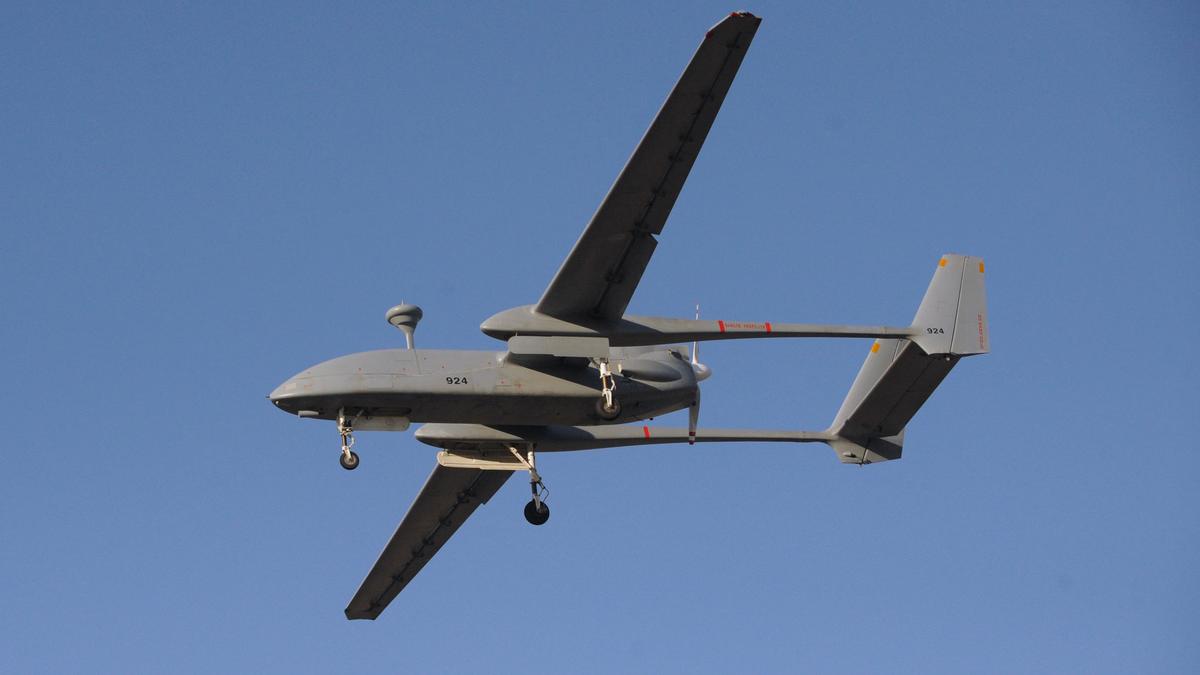
To improve their unmanned capabilities in the wake of Operation Sindoor, the Indian armed forces have signed contracts for additional satellite-linked Heron Mk II drones under emergency procurement, sources in the Israeli defence industry said. As stated by the sources, the Army and Air Force, which by now operate Heron Mk II drones, have placed further orders, while the Indian Navy is obtaining them for the first time. The Navy will soon transition to the more cutting-edge Heron Mk II platform. According to existing guidelines, under emergency procurement, the armed forces can obtain weapons systems and entire systems worth up to INR 300 crore. To improve their unmanned capabilities in the wake of Operation Sindoor, the Indian armed forces have signed contracts for supplementary satellite-linked Heron Mk II drones under emergency procurement, sources in the Israeli defence industry said. According to sources, the Army and Air Force, which already operate Heron Mk II drones, have placed additional orders, while the Indian Navy is acquiring them for the first time. The Navy, which has long depended on Israeli-made Searcher UAVs for surveillance, will soon transition to the more cutting-edge Heron Mk II platform. According to existing guidelines, under emergency procurement, armed forces can obtain weapons systems worth up to INR 300 crore. A senior Israeli defence official informed that drones have become an integral part of contemporary warfare, with about 70% of battlefield operations conducted by drones. They play a significant role in countering air defence systems, allowing the detection, tracking and neutralization of high-value threats. The Heron family, particularly the Heron Mk II, is a key component of this evolving combat environment due to its versatility and proven reliability. The Indian Army has positioned these drones at forward bases in the northern sector. The Heron Mk II is a MALE UAV capable of carrying a payload of close to half a tonne and sustaining over 24 hours of continuous flight. With Synthetic Aperture Radar, electro-optical systems and SIGINT sensors, the platform offers comprehensive ISR capabilities in challenging weather conditions. Its fully automated take-off and landing systems, in addition to encrypted satellite communication, allow remote operations, flexible mission planning and disposition across varied theatres without ground-based line-of-sight control. In line with India’s push for defence indigenization, numerous Israeli defence industries, including state-owned defence manufacturers, are working with defence PSUs and private partners to improve local production. The companies are also making training, maintenance and integration competencies within India, the official said. Israeli manufacturers are preparing for future Indian tenders under the “Make in India” framework and discovering deeper partnerships to meet compliance requirements. In September this year, the defence ministry issued a Request for Proposal for a major acquisition of 87 MALE drones, with an emphasis on an indigenous “Make in India” programme that also consents foreign partnerships. Source: The Hindu

Saheel Singh 02 Dec 2025
India’s 900-km Loitering UAV to Fly on Homegrown Wankel Engines, Reducing Foreign Reliance
Drone Flying Drone Pilot

India’s 900-km Loitering UAV to Fly on Homegrown Wankel Engines, Reducing Foreign Reliance

India is planning to develop cutting-edge long-range drones and 150-kilogram class loitering munitions powered by indigenous Wankel rotary engines, strengthening its strategic drive toward self-reliance in defence technologies. The initiative will reduce the need for foreign suppliers of propulsion systems. This segment is a bottleneck in India’s drone ecosystem, despite key progress in domestic airframe, software and weapons development. The first system to appear from this effort is a 150-kilogram loitering munition-drone hybrid platform, tentatively named ‘Loitering Munition-UAV’. Early specifications specify a standoff strike range of about 900 kilometres and an in-air time of about 9 hours per mission. If validated in trials, the platform would fall into the long-loiter category, providing deep-reach precision-strike capability, extended surveillance, target tracking and instantaneous engagement flexibility. The CSIR-National Aerospace Laboratories will partner with a private company to advance and manufacture long-range drones, marking a shift toward deeper industry participation in strategic drone programmes. The partnership signals a move away from largely PSU-led prototypes to a model combining a state-backed R&D strength with private-sector speed, scale and production capability. Wankel rotary engines are a favoured power source for small- and medium-sized drones worldwide because of their compact size, high power-to-weight ratio, low vibration signature and mechanical simplicity compared to traditional piston engines. India’s decision to localize this technology is significant because these engines power many imported loitering systems at present in use or under assessment by the country. Indigenizing the propulsion stack ensures that future Indian unmanned platforms can operate with sovereign supply-chain security, resist geopolitical leverage and integrate more seamlessly with classified mission systems. This would benefit defence PSUs and startups alike by lowering development costs, shortening iteration cycles, and enabling deeper integration with domestically developed strike, navigation and sensor packages. It may also unlock India's export potential in the unmanned-propulsion market, mainly amongst countries seeking non-Western supply alternatives. The headline range figure of 900 kilometers will also depend on aerodynamic efficiency, flight profile optimization, and fuel tank design, making full-scale validation during flight trials essential. The strategic value of the programme lies not only in the 150-kilogram strike platform itself, but in providing a domestic propulsion system that future drone families could inherit. Once flight-tested and production-qualified, the Wankel engine could expand into maritime-surveillance UAVs, swarm-drone nodes and potentially heavier rotary-powered loitering or cruise-type platforms. For now, the announcement carries significant signaling; India is committing to indigenous propulsion in the long-range unmanned-strike segment. The next milestones that will shape market and military confidence will be prototype flight trials, thermal-performance benchmarks, real-world endurance validation and the decision to transition the programme into scaled production.   Source: Indian Express

Saheel Singh 02 Dec 2025
India Plans More Incentives for Aircraft Leasing in GIFT City
Aircraft Flying Aircraft Pilot

India Plans More Incentives for Aircraft Leasing in GIFT City

India will extend the tax holiday on profits earned by aircraft leasing firms in its state-of-the-art finance hub to 15 years, said people familiar with the matter, to gain a larger share of the global leasing market, which Ireland presently dominates. Plane leasing companies based in Gujarat International Finance Tec-City (GIFT City) currently obtain a 10-year tax waiver. Expanding this benefit by 5 years will make GIFT City more attractive to lessors, who make the bulk of their profits in the latter years, when there’s little depreciation charge, the people said. They did not want to be identified because the discussions are private. Profit is much lower,1% or so, throughout the early years of a plane leasing cycle, but it surges to as much as 40% in the later years, the people added. As of January, 33 aircraft lessors were registered in GIFT City, and over 60 aircraft and engines have been leased through them. 31, as stated by a KPMG report. The policy change, part of India’s budget proposals announced in February, is an effort to help the imminent finance hub gain market share in the USD 187 billion global aircraft leasing business. Competition is aggressive, with around half of the world’s leased aircraft currently managed from Ireland, and China, Singapore, and Malaysia all vying for a larger share of the market. India’s commercial aircraft leasing market was about USD 4.7 billion in 2023 and will grow at an annual rate of 11.8%. India’s aviation ministry and the PIB did not instantly respond to emails seeking a comment on the plan to extend the tax benefits. Pet Project The move to lure more aircraft lessors to GIFT City follows its recent success in enticing global financial institutions, such as Mitsubishi UFJ Financial Group Inc. and HSBC Holdings Plc, with a heap of tax incentives. The two-decades-in-the-making pet project of PM Narendra Modi, GIFT City, is India’s attempt to challenge financial centres, for example, Singapore, Hong Kong and Dubai. The proposed tax holiday extension, if implemented, would benefit the aircraft leasing firms of the largest local carriers, IndiGo’s InterGlobe Aviation Financial Services IFSC Pvt. and Air India’s AI Fleet Services IFSC Ltd. A spokesperson for Akasa Air said the smaller budget carrier has also applied for endorsements to set up a leasing entity in the low-tax hub. India’s policy change will also benefit subsidiaries of global companies. Rolls-Royce’s RRPF Engine Leasing (India) IFSC Pvt., CRJ Aviation Leasing (IFSC) Pvt. and Willis Lease Finance India IFSC Pvt. are amongst those registered at GIFT City, as stated by a regulatory website. Source: Economic Times

Saheel Singh 01 Dec 2025

India's First Fully Mobile, AI-Enabled Anti-Drone Patrol Vehicle Launched
Drone Flying Drone Pilot

India's First Fully Mobile, AI-Enabled Anti-Drone Patrol Vehicle Launched

In a substantial upgrade to India's border defence strategy, Indrajaal Drone Defence on 26 November 2025 announced the launch of the 'Indrajaal Ranger', the nation's first Anti-Drone Patrol Vehicle. This innovative, fully mobile, AI-enabled counter-drone system will detect, track, and neutralize hostile drones while they are actively in motion, addressing a critical national security vulnerability. The 'Ranger' is a combat vehicle intended to break away from traditional, stationary anti-drone solutions. Its core competence lies in delivering on-the-move drone detection, instantaneous patrolling and instantaneous interception- a requirement driven by the growing sophistication of cross-border threats. The company's insistence to develop the ADPV was heightened by recent national security incidents that highlighted drones as a key channel for illegal activity. Incidents involving ISI-linked weapon smuggling deep into Indian territory and the reliable neutralization of hundreds of Pakistani drones this year, serving as the main transport for India's massive Rs 3-lakh-crore drug-trafficking network, made the requirement for a fast, mobile response undeniable. Speaking at the launch, Lieutenant General Devendra Pratap Pandey (Retd), PVSM, UYSM, AVSM, VSM, praised the innovation. "India's youth deserve a safer nation, free from the shadow of international crime networks," said Lt Gen. Pandey. "Technologies like the Anti-Drone Patrol Vehicle are not just machines; they are shields protecting our children, our farmers and our future. With this new Ranger launch, India and the brave men guarding our borders will be truly grateful for such a transformative contribution." The Indrajaal Ranger will deliver a transformative layer of national security. By cutting off logistical supply routes and monetary channels for criminal operations, it weakens recruitment pipelines of smuggling and extremist networks, reinstating a sense of safety and dignity to vulnerable border communities. Indrajaal is an autonomous counter-UAS and air-defence technology company. Its proprietary autonomy engine, SkyOS, fuses multi-sensor intelligence and instantaneous decision-making into a unified C5ISRT framework.  This lets the company create dynamic "security domes" that protect intricate environments, such as airports, refineries, and military formations, at unprecedented scale. The company has already achieved operational success and is well-positioned for national-level rollouts, having obtained ARDTC certification for the disposition of Counter-UAS systems. Source: NDTV

Saheel Singh 28 Nov 2025

DGCA Stiffens Fatigue Rules, Mandates Airlines to Train Roster Planners and File Quarterly Reports
Aircraft Pilot Aircraft Flying

DGCA Stiffens Fatigue Rules, Mandates Airlines to Train Roster Planners and File Quarterly Reports

DGCA mandates flight fatigue management training for schedulers and dispatchers who prepare rosters for pilots and seeks to strengthen measures to address persistent fatigue concerns among cockpit crews. Also, the DGCA, in a circular dated November 20, has directed airlines to submit quarterly fatigue reports, comprising the number of crew trained in fatigue management and the number of fatigue reports received, accepted or rejected. The airlines should also state the reasons for rejecting any fatigue reports. IndiGo and Air India had initially opposed the implementation of the new norms. The second phase, with some relaxations, of the revised norms came into force from November 1. "The fatigue off should be no less than 24 hours and include one local night and must have a fatigue risk management policy, an education and awareness training program, a fatigue reporting system, a system for monitoring flight crew fatigue and an incident reporting process. As stated in the circular, an audit was conducted of all scheduled operators to evaluate the implementation of the first phase of the FDTL (Flight Duty Time Limitation) norms from July, and it was found that the operators were uncertain of the scope of Annual Fatigue Training to be implemented. The annual fatigue training would be defined in the operations manual and would have at least 1 hour of training scheduled during the Annual Ground Training for operators. "The training might be combined with schedulers, dispatch staff and all personnel responsible for the implementation of various provisions of this Civil Aviation Requirement. The fatigue training should be conducted by trained staff and should comprise its effect on the flight crew and measures to mitigate crew fatigue," the circular said. Airlines will issue a fatigue reporting policy as a circular to all stakeholders, the DGCA said, adding that the operators should have an independent Fatigue Review Committee that will analyze and recommend measures to ease fatigue. Source: Economic Times

Saheel Singh 28 Nov 2025

Safran to Triple its India Ops Revenue to Over €3 Billion by 2030
Aircraft Flying Aircraft Pilot

Safran to Triple its India Ops Revenue to Over €3 Billion by 2030

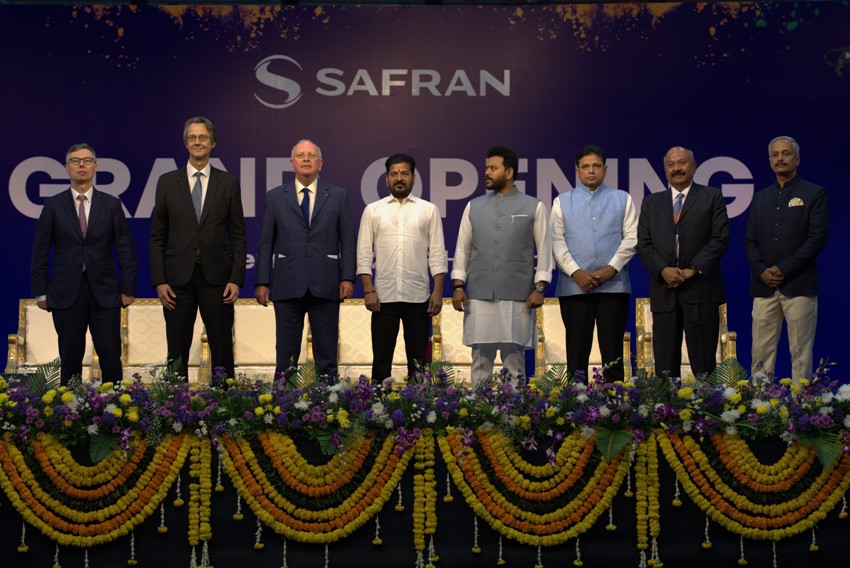
Safaran, a France-based aerospace and defence group, is planning to triple its revenue in India to more than 3 billion euros by 2030, its CEO said. It will multiply its sourcing in the country by five. "Safran will triple its revenue in India to more than 3 billion euros by 2030, of which our sites in India will generate half. Simultaneously, Safran will multiply by five its sourcing in the country," group CEO Olivier Andriès said. The company inaugurated its largest MRO centre for LEAP engines in Hyderabad and announced two defence investments to support the country's Rafale program. The LEAP engines power Airbus A320neo and Boeing 737 MAX aircraft, two of the most prevalent aircraft in the global aviation industry. Safran has ramped up its Indian associations across both defence and civil aerospace, with several pacts signed with private and government-owned entities. The CEO Andriès said, "The two new MRO centers in Hyderabad dedicated to the LEAP and M88 engines and our new joint venture with BEL underscore India’s importance to our Group. We’re proud to support the fast growth of India’s civil and defence aerospace markets and contribute to India’s Make in India policy and strategic autonomy." The new LEAP engine MRO centre signifies a total investment of €200 million and will be operational in 2026. The 45,000-square-meter facility aims to ramp up to 300 LEAP shop visits a year and to boast a next-gen test bench. It will support the fast growth of the CFM International LEAP fleet, which powers most of the latest-generation narrowbody aircraft. India is CFM’s third-largest market, with 5 Indian carriers operating over 400 LEAP-powered aircraft and 2,000 engines on order, Safran said. The new site will have more than 250 people at launch and up to 1,100 at full capacity. In Safran's new MRO shop dedicated to the M88 engine, the company will power Dassault Aviation Rafale fighter jets in India. The M88 engine facility is also situated in Hyderabad, adjacent to the LEAP engine centre. With a €40 million investment, the facility will provide MRO services for over 600 engine modules a year and will employ up to 150 people at full capacity. This defence MRO facility is said to prioritize engines on aircraft operated by the Indian Air Force, while it will also perform MRO for other M88 export customers. India recently ordered 26 Rafale M naval variants and already operates 36 Rafale and 47 Mirage 2000 fighters. On November 24, Safran signed a Joint Venture and Cooperation Agreement with Bharat Electronics Limited to manufacture Safran Electronics & Defense’s “Hammer” modular air-to-surface weapon. It can be integrated with multiple aircraft types, including the Rafale and the Indian Army’s single-seat HAL Tejas. Safran CEO Andriès also flagged two other investments announced in February 2025, totaling more than €30 million. This includes an engineering centre in Bangalore specializing in avionics and actuators, now operational and having about 250 employees. Another project is an electronics and actuation manufacturing capacity in Bangalore with 400 employees, starting operations in 2026. Source: Economic Times
Saheel Singh 28 Nov 2025
Andhra Pradesh Launches India's First Drone City with Aerpace
Drone Technology Drone Pilot

Andhra Pradesh Launches India's First Drone City with Aerpace

The Andhra Pradesh government has inked a strategic partnership with Aerpace Industries to launch what is being billed as India's first 'Drone City' in the Orvakal region, near Kurnool. The project spans roughly 300 acres, chosen for its proximity to Kurnool airport and its feasible connectivity to a growing high-tech expansion corridor. As stated by the announcement, the site will be a complete ecosystem for drone manufacturing, component research, pilot training and testing infrastructure. Aerpace Industries, which brings experience in defence drones, heavy-lift platforms, logistics drones, and AI-enabled systems, has been in discussion with the Andhra Pradesh government through its financial development board for some time. The discussions covered technical assessments, design planning and capability demonstrations. With this partnership now formalized, Aerpace intends to set up a full-scale campus within the Drone City for the production of both civilian and defence drones, support component development, and conduct pilot training. Besides manufacturing, the initiative will have an integrated pipeline of certification and regulatory compliance mechanisms, as well as research into next-generation autonomous platforms, energy systems and improved operational reliability. The training programmes will build a skilled workforce of drone pilots and technicians, thus creating employment prospects and strengthening the regional human capital base in the unmanned systems sector. Drone City line up with Andhra Pradesh's broader objectives of developing innovation, attracting cutting-edge investments and positioning the state as a hub for the aerospace and pioneering mobility sectors. Building domestic capacity in drone manufacturing and related technologies will help the state reduce its dependence on imports and improve homegrown competitiveness in logistics, emergency response, defence and industrial operations . The site selection, Kurnool, and Orvakal seem strategic, allowing rapid testing and deployment in a bounded space without the constraints of an urbanized setting. This partnership is a bold step by the Andhra Pradesh government into the fast-emerging unmanned aviation technologies. By leveraging Aerpace's domain expertise and making a dedicated physical ecosystem, the state is betting on drones as an important axis of future growth, employment and technological leadership. Source: Silicon India

Saheel Singh 27 Nov 2025
What’s New in the Proposed Drone Bill 2025?
Drone Pilot Drone Products

What’s New in the Proposed Drone Bill 2025?

In September 2025, India’s Ministry of Civil Aviation unveiled a Draft Civil Drone Bill, 2025 and the drone industry’s reaction was immediate and visceral. Rather than applause for a long-pending, dedicated drone law, the proposal triggered swift and significant reaction from startups, tech associations and even hobby clubs. Critics argued that the new bill marked a step backwards from the liberal approach that had pushed India’s drone boom since 2021.   Why are Drones So important? The drone sector matters because it can touch many areas, from food production to public safety to healthcare to national security. It’s why India is working on making a booming drone ecosystem and why China is building a low-altitude economy. Before 2021, drones existed in a legal purgatory. The few operators who tried to navigate the system faced 25 forms, 72 fee types and a permission process so opaque that most gave up. The government saw drones as potential security threats, but not much else. Then came the Drone Rules of 2021. The government had become more open to trying out how drones could be configured for the national economy. Now, drones can be used for many purposes and can be of various types, but the rules categorized them and introduced a tiered system based on one simple metric: weight. Nano drones were exempt from registration entirely. This registration gives each drone a “unique registration number”. Hobbyists could also fly micro drones (250g-2kg) without a pilot license. The impact was instant. While drone startups multiplied, the DGCA approved 116 training schools, minting over 16,000 certified pilots. The 120-crore PLI scheme attracted manufacturers, and an import ban on finished drones forced global players to assemble in India. In three years, India went from a drone desert to one of the largest drone markets in the world. The Plot Twist of 2025 In contrast to the 2021 framework, the 2025 bill, while claiming to be more relaxed, is more restrictive. Industry stakeholders have highlighted several problems with it. Universal Registration : Under the new bill, even a small toy drone must be registered before it can be sold. This shifts compliance upstream to manufacturers, who build registration into every product. The toy drone market, worth crores and a gateway for young engineers and students, might shrink as a result. Mandatory Pilot Licensing for Everyone : A person flying a micro-drone would need a Remote Pilot Certificate, just as the self-help group working under the Namo Drone Didi scheme would. For potential entrepreneurs who plan to fly their own drones for testing, this is a letdown. Type Certification Before Manufacturing : No drone can be manufactured, assembled, sold, or operated without DGCA certification. You can’t even build a prototype to test. Criminal Penalties for Paperwork Errors : Flying an unregistered drone is a cognizable offence.   One can be arrested and have one's drone seized without a warrant. Under the 2021 rules, such violations were subject to administrative fines. Universalinsurance : Every operator must have third-party insurance covering 2.5 lakh for death and 1 lakh for injury, on a no-fault basis. For a researcher or a rural SHG operating on a limited budget, this is a tall ask. It seems like the new bill puts a price on innovation, rather than regulating with balance. Why This Matters Beyond Drones The controversy reveals a deeper tension in India’s economic policy. Since 2014, the government has supported “ease of doing business” and “Make in India.” The 2021 drone rules were advancing both those goals. The 2025 bill, though, represents a reversal of that. The US Federal Aviation Administration frees recreational flyers from licensing. The EU’s Open Category requires a simple online test for low-risk drones. China also lets hobbyists fly without pilot certificates. India’s draft bill would make it an outlier. The economic stakes are huge. Agriculture alone seems to need thousands of drones for the Kharif season. The defence sector is building an indigenous drone arsenal worth thousands of crores. Logistics companies are betting on drones that could revolutionize e-commerce delivery. All this needs a pipeline of innovators students tinkering in labs, startups repeating in green zones, SHGs learning by doing. In March 2021, the government notified the UAS Rules, 2021, a predecessor to the existing draft that was so restrictive it was dead on arrival. Industry pushed back so fiercely that within months, the government scrapped it and replaced it with the liberalized Drone Rules we have today. The 2025 draft has faced near-universal criticism. NASSCOM has called for withdrawing the bill entirely. The consultation period, which was set at just two weeks, has been extended. Industry bodies are pushing for precise amendments: restoring R&D exemptions, decriminalizing minor violations, creating a classified penalty system and so on. There is a possibility that the bill will either be heavily revised or, like its 2021 predecessor, quietly shelved. The Ministry of Civil Aviation comprehends that India’s drone dream cannot survive if the very people building it are treated as criminals. This sets a precedent for how India controls emerging technologies, and we’ll be asking this question a lot more as AI and humanoids rise. The 2021 rules showed what happens when regulators trust citizens: innovation explodes and India becomes competitive. The 2025 bill shows what happens when fear trumps that trust. This new bill straddles the old line between regulation and innovation. The question is whether we require regulation that pre-emptively protects us from a future that doesn’t exist or regulation that lets us build it. Source: www.civilaviation.gov.in

Saheel Singh 24 Nov 2025
Indias Domestic Aviation Demand Strengthens in October 2025
Aviation Training Aircraft Pilot

Indias Domestic Aviation Demand Strengthens in October 2025

India’s aviation landscape for October 2025 indicates that domestic air passenger traffic, ICRA's projections, and passenger load factor trends reflect underlying resilience in the nation’s travel ecosystem. There is a noticeable rise in overall travel interest, driven mainly by renewed confidence among leisure travellers, improved fleet availability, and seasonal tourism peaks that frequently inspire movement across key states and cities. According to the latest analysis by ICRA, passenger movements across Indian airports have been supported not only by higher flight occupancy but also by sustained recovery in aviation-related operations, which have contributed significantly to travel and tourism in the country. In October, domestic air passenger traffic in India grew in line with broader improvements across the national aviation network, suggesting the sector has efficiently adapted to operational challenges. Encouraging numbers in capacity deployment, combined with consistently strong interest amongst travellers heading to established and emerging destinations, have helped create a stable foundation for the aviation outlook. This expansion is significant for India’s travel sector, where air connectivity is important in linking tourism hubs and supporting regional economies. Steady Growth Reflected in India’s Domestic Aviation Activity The domestic aviation sector in India has been observed moving through a phase of renewed momentum in October 2025, with ICRA estimating that passenger traffic reached 14.28 million during the month. This signified a 4.5% increase over the 13.6 million passengers who travelled in October 2024. The month-on-month growth of 12.9% compared to September 2025 further indicated that the aviation landscape is benefiting from a surge in holiday travel, festival-related movement, and improved connectivity across the country’s major travel corridors. India’s domestic aviation network, supporting vital tourism flows across states such as Goa, Rajasthan, Himachal Pradesh, Kerala, and Jammu and Kashmir, has anchored the resurgence of intra-country travel. With improving convenience and accessibility, the sector has played a central role in revitalizing local tourism economies that depend heavily on air-linked visitors. Passenger Load Factors Highlight Sustained Travel Demand The average passenger load, one of the strongest indicators of aviation demand, stood at 84.7% during October 2025. This marked an improvement over the 82.4% recorded in October 2024. This shift is a clear reflection of strong, consistent consumer appetite for travel within India. A high PLF has also been advantageous for airlines operating in the country, allowing more efficient seat use and improving operational stability. Tourist-heavy routes, for example, those connecting Delhi to Leh, Mumbai to Kochi and Bengaluru to Port Blair, have contributed to these strengthened load factors. Seasonal demand for hill stations and beach destinations has a big role in shaping this positive trajectory. Return of Grounded Aircraft Helps Ease Operational Pressure In October, domestic capacity deployment rose 1.7% year on year, with a 10.8% consecutive increase. These improvements were due to the return of grounded aircraft to service and by airlines' improved fleet utilization. India’s aviation sector has been experiencing periodic constraints due to supply chain delays, upkeep requirements and global market uncertainties. The reintroduction of grounded aircraft has therefore been instrumental in stabilizing seat availability across the country. This enhanced capacity has supported tourism-dependent regions where flight frequencies are vital for maintaining tourist arrivals. Improved seat supply has also helped travellers visiting pilgrimage sites, wildlife reserves, luxury resort destinations and remote hill regions in India that depend heavily on-air connectivity. Performance Overview for the First Seven Months of FY26 From April to October 2025, India’s domestic air passenger traffic is projected at 94.45 million, a modest year-on-year increase of 1.6 per cent. Though this increase has been measured against the more robust recovery phase witnessed in FY25, it has nevertheless indicated stability in the sector among various global and domestic challenges. In the corresponding seven months of FY25, domestic air passenger traffic was about 1,653.8 lakh, which reflected a stronger 7.6% year-on-year expansion. This earlier growth aligned with ICRA’s projections of 7-10% for FY25. Broader financial sentiment, temporary disruptions and evolving passenger behaviour patterns in business and leisure travel have influenced the shift from high to moderate growth in FY26. External Factors Shaping the Aviation Environment While travel demand remains healthy, ICRA has highlighted numerous factors that could shape growth consequences in the near future. Cross-border tensions have introduced doubts into aviation routes, while ATC disruptions have added operational intricacy to flight scheduling. Also, a mild softening in business travel sentiment has been observed due to shifting corporate priorities, remote-work dynamics, and ongoing global market conditions. Despite these influences, tourism-driven demand continues to anchor the domestic travel ecosystem. Enthusiasm amongst holidaymakers has remained high, particularly as India offers diverse travel landscapes that attract both repeat and first-time flyers. Augmented interest in short-haul trips, experiential tourism and flexible weekend travel has helped preserve consistent passenger movement across domestic airports. Stability Expected for FY26 Aviation Outlook ICRA has placed a Stable outlook on India’s aviation industry for FY26. Domestic traffic growth is projected at 4 to 6%, while international traffic is projected to rise by 13 to 15%. These projections confirm that India’s aviation system is well-positioned for gradual, sustained growth, supported by strong fundamentals such as airport upgrades, enhanced airline efficiency, and expanding networks serving key tourism circuits. International travel demand linked to routes connecting India to Southeast Asia, the Middle East and Europe has also been contributing to a positive aviation environment. As new flights and restored routes, such as Air India’s planned resumption of Delhi–Shanghai operations, become available, India’s position in the global travel network is expected to strengthen further. Source: Travel and Tour World

Saheel Singh 19 Nov 2025
DroneNova India to Launch Nation's First Drone Soccer League at ESFE 2025
Drone Pilot Drone Training

DroneNova India to Launch Nation's First Drone Soccer League at ESFE 2025

DroneNova India Pvt. Ltd. has announced the launch of India's first-ever Drone Soccer League (DSL) and opened enrolments for its on-campus Drone STEM Workshops. The initiatives will be unveiled at the upcoming Education Supply & Franchise 2025, where DroneNova is the official sponsor. The ESFE 2025, scheduled from December 11 to 13, 2025, at the Bombay Exhibition Centre, Mumbai, will bring together the most influential leaders, educators and policy influencers shaping the future of Indian education. The event will have the likes of Dr Niranjan Hiranandani as Guest of Honour, alongside distinguished speakers Sonal Pinto, Director, Ryan Group of Schools; Lina Ashar, Founder, Dreamtime Learning and Syed Sultan Ahmed, Chairperson, TAISI. The three-day expo will provide transformative solutions for India's quickly evolving education ecosystem. DroneNova's revolutionary Drone Soccer League, a first-of-its-kind initiative, transforms classrooms into live arenas of innovation. With the help of this program, students will pilot safe, sub-250g drones in a net-caged field, learning physics, coding, teamwork and strategy in an appealing, competitive environment. We want to make India a global hub for drone-based experiential education that inspires curiosity, collaboration and creativity in every learner," said Himansshu Jainn, Founder, DroneNova India. "Every flight is a science lesson; every goal is a leadership moment. With Drone Soccer, students don't just learn concepts, they live them." The program aligns with the priorities of NEP 2020 on experiential learning and 21st-century skill-building, complements Skill India pathways and adheres to India's evolving Drone Policy framework. Intended as a turnkey offering, it offers schools with equipment, safety infrastructure, certified trainers and curriculum-linked modules aligned with NEP, IB MYP, and IGCSE standards, ensuring both academic depth and operational ease. To catalyze a national movement, DroneNova is inviting 10 visionary institutions to join as "Founding Partner Schools" DroneNova India to Launch Nation's First Drone Soccer League at ESFE 2025. Advertorial Disclaimer: visionary institutions to join as Founding Partner Schools, who will obtain exclusive benefits as well as priority workshop scheduling, lifetime partnership privileges and guaranteed regional qualifier slots for the Drone Soccer League. By sponsoring ESFE 2025, DroneNova India will showcase how drones, STEM and sport can converge to redefine classroom learning and inspire a new generation of innovators. Source: ANI

Saheel Singh 19 Nov 2025
Air India Pilots Grounded Over Expired Licences, Unchecked Training
Aircraft Flying Aviation Training

Air India Pilots Grounded Over Expired Licences, Unchecked Training

Scheduling lapses continue to trouble Air India, nearly five months after the DGCA reprimanded the carrier for regulatory violations. Two pilots have now been grounded, one for flying with a lapsed English Language Proficiency license and another for operating a flight without completing mandatory corrective training after failing a proficiency check. Two Air India Pilots Grounded The latest incidents highlight persistent gaps in Air India’s rostering and compliance monitoring systems. The airline confirmed that an Airbus A320 co-pilot operated a flight despite failing his Instrument Rating–Pilot Proficiency Check and skipping the required retraining. As stated by the procedure, pilots who fail the PPC must complete corrective training and undergo another evaluation before returning to flight duty. Air India stated that both the co-pilot and the scheduling officer responsible were “off-rostered” as soon as the error was detected, and disciplinary action was initiated. The airline said the event had been reported to the DGCA for review. In another case, a senior captain commanded an A320 flight despite holding an expired ELP certificate, a mandatory qualification for operating any commercial flight. Air India confirmed the violation with TOI, grounding the pilot and reporting the incident to the regulator. Regulator’s Ongoing Oversight The DGCA has sought a detailed report from Air India on both incidents, calling them serious breaches of flight safety compliance. The regulator had earlier identified “systemic failures” in Air India’s scheduling processes, including lapses in licensing, rest, and recency requirements. Following a June 12 incident involving a near miss after takeoff from Delhi, the DGCA had warned Air India of strict enforcement measures. The regulator removed three senior officials from their crew scheduling duties and warned that future violations could result in heavy penalties or the suspension of the airline’s operator license. Systemic Accountability and Future Compliance Aviation safety experts are of the opinion that repeated oversights indicate deeper issues in Air India’s internal monitoring mechanisms. They contend that compliance systems must flag expired qualifications automatically before any pilot is rostered for duty. While Air India has taken internal action and reinforced its audit processes, the recurrent nature of these errors continues to raise concerns over the dependability of its flight operations management. The DGCA’s constant scrutiny suggests that stricter enforcement could follow if systemic improvements are not apparent soon. Source: Times of India

Admin 18 Nov 2025
Air India introduces ‘Flexi Contract for Pilots’ to Help Balance Operations
Commercial Pilot Aviation Training

Air India introduces ‘Flexi Contract for Pilots’ to Help Balance Operations

Air India has devised a “Flexi Contract for Pilots,” a new work model that allows flight crews to select shorter duty patterns while upholding smooth operations. The airline says the plan will match pilots’ preferences with roster needs, focusing on work-life balance without compromising competence. Under the policy, Line Pilots and Line Training Captains on A320, B777 and A350 fleets are eligible. Junior First Officers, Type Rating Instructors and Direct Entry pilots are not. The contract provides two fixed patterns: for wide-body aircraft, 15 days on and 15 days off; for narrow-body aircraft, 20 days on and 10 days off. Annual leave line up with these rosters–eight privilege and four sick leaves for wide-body pilots and 12 privilege plus six sick leaves for narrow-body colleagues. The tenure of the contract will be 12 months, which can be extended at the company’s discretion. After the contract ends, pilots return to their original terms. Air India states that selection is made through an Expression of Interest process, with seniority and operational requirements guiding the final list. An exit needs three months’ notice. If a pilot is selected for a fleet or command upgrade, the pilot returns to the original contract from the start of training; if an upgrade is refused, the prevailing career policy on freezes applies. The company might also revert a pilot to the old contract if required and this does not change the pay terms that applied before switching to flexi terms. Pay follows a calculator shared with crew, with minimum monthly availability set at 12 days for wide-body and 15 days for narrow-body to obtain 40 hours of pay under the new structure. Flying more than 40 hours is paid at the same rate as on the original contract. Trainer, wide-body, deadhead and layover allowances stay protected. Car lease and NPS EMIs are adjusted against flexi salary components. On off-days, pilots remain exclusively engaged with the airline and are not permitted to take on outside work. Leave bidding under the flexi track runs on an ad-hoc system, and previous bids are forfeited. Total bid points throughout the tenure are 20 for wide-body and 30 for narrow-body. Loss of License coverage continues, including on off-days. Medical insurance remains unchanged. Seniority is protected, and base and merit/demerit processes remain as per the current policy. When pilots return to the old contract, they join the next regular leave-bidding cycle. The process runs in two cycles, one beginning in January 2025 and the other in March 2025. Slots are allocated by seniority. As stated in the plan, commanders have 50 A320 slots at Bengaluru, Delhi, and Hyderabad, 30 B777 slots at Mumbai and Bengaluru, and 20 A350 slots at Delhi. First officers have 20 A320 slots at Bengaluru, Mumbai and Hyderabad, 70 B777 slots at Delhi, Mumbai and Bengaluru and A350 slots to be announced for Delhi. Source: The Print

Admin 18 Nov 2025
Drone Kabaddi will be Launched in Uttarakhand
Drone Training Drone Products

Drone Kabaddi will be Launched in Uttarakhand

In Operation Sindoor, the Indian Army's military action against terrorist bases in Pakistan involved the use of indigenous drones to a large extent. In this regard, the Uttarakhand government has conceptualized the sport of Drone Kabaddi to provide technical training to the state's youth and offer them employment opportunities. In future, trained players can be utilized as drone pilots in crisis situations like disasters, war exercises, etc. Drone Kabaddi is likely to be launched in Uttarakhand for the first time in the country. All preparations for its rules and drone selection have been completed. It will launch soon. Being a mountainous state, Uttarakhand is highly vulnerable from a disaster perspective. Sometimes, situations arise where human power cannot be utilized even if desired. In such complex situations, only technology is useful. However, technology also requires skilled personnel to operate and control it. Similarly, the Sports Department has signed an agreement with D-Town Robotics Pvt., a drone manufacturing company. With the technical support of Drone Kabaddi, a Kabaddi module has been integrated to provide drone training to young people, enabling them to train with drones while fully engaging in the game. Youth From All Walks of Life Can Participate Youth from all walks of life can participate in Drone Kabaddi. District, state, national, and international competitions will be held, allowing players to showcase their talent. A minimal fee will be charged for training, and they will be trained by skilled coaches. Rules of Drone Kabaddi Drone Kabaddi is played inside a net court. One drone acts as an attacker on one side, while five drone defenders are on the other side, with two drones remaining in reserve so that the reserves can be used if a drone is touched. The game is played in five sets of 30 seconds each. In each set, the attacking drone must enter the defender's court, touch them, and then return. In this, the attacker's points increase, and if they are unable to touch the defender, the defender's points increase. If the attacker penetrates the defender's court to the end and returns without touching them, bonus points are earned. The drone is operated entirely by players using a remote. These drones are entirely covered, so they are not damaged by collisions or falls. Sourc e: Dainik Jaagran

Admin 18 Nov 2025
Mumbai To Launch Drone-Based Delivery System in Early 2026
Drone Flying Drone Pilot

Mumbai To Launch Drone-Based Delivery System in Early 2026

Mumbai is set to launch a futuristic drone delivery system, where residents will receive daily essentials, packages and e-commerce orders via drones. The delivery service will commence in the first quarter of 2026 in a Wadala society, marking Mumbai's first residential drone delivery initiative. Drone Firm, Developer Partner for Smart Urban Living A drone delivery company and a real estate developer have come together to acquaint with smart, sustainable urban living solutions in Mumbai. Skye Air will present the first drone delivery infrastructure in Mumbai for the residents of Wadala's Siddha Sky housing society, with its first skye-pod installation at the society. The residents will receive daily essentials, packages, and e-commerce orders via drones at a designated Skye-Pod zone set up on the premises for safe and seamless collection. According to Skye Air, each drone can cover 1km in 60 seconds, with a maximum range of 30 km, offering residents doorstep deliveries in minutes. The company has claimed to leverage its flagship drone, Skye Ship One, which can lift 10kg of shipment in one flight through coordinated drone corridors, the Skye Tunnel. The first phase of drone-enabled delivery services is scheduled to commence in the first quarter of 2026, marking Mumbai's first residential drone delivery initiative. Successful Operations in NCR, Bengaluru Skye Air claims to deliver more than 2 lakh monthly shipments in Delhi-NCR, serving 27 locations in Gurugram, two in Faridabad and one each in Ghaziabad and Bengaluru. They have partnered with delivery platforms like Bluedart, Flipkart, Shiprocket, and others, guaranteeing that residents enjoy faster, safer and greener delivery experiences right at their doorstep. The initiative will also reduce traffic congestion, minimise carbon emissions and promote sustainable logistics by taking a portion of last-mile delivery off Mumbai's crowded roads. ‘A Defining Step for Mumbai,’ Says Skye Air CEO Ankit Kumar, founder and CEO of Skye Air, said, "We are marking a defining step in shaping the future of drone-powered deliveries in Mumbai. With advanced skye-pods and AI-based route optimization via Skye UTM, we are setting a new standard for tech-enabled urban mobility, transforming the residential complex into a smart logistics node. This is more than a delivery revolution; it is the beginning of a new era in smart city infrastructure." Drone Delivery to Cut Congestion and Emissions Capt. Eshaan Khullar, vice president at Skye Air, said, "Mumbai, like most major metros, faces rising challenges from traffic congestion, delivery delays and increasing carbon emissions. With over five lakh daily last-mile deliveries across the city, traditional logistics systems are struggling to keep pace with demand. Drone-based delivery offers a futuristic, sustainable solution, making faster, safer, and contactless access to goods while significantly reducing on-road traffic and pollution.” Source : Free Press Journal

Admin 18 Nov 2025
The Asia Pacific region will Require 19,560 New Planes over 20 years: Airbus
Aviation Training Pilot Training

The Asia Pacific region will Require 19,560 New Planes over 20 years: Airbus

The APAC will require 19,560 new narrow-body and wide-body planes over the next two decades, mainly driven by demand from India and China, Airbus said. The demand, Airbus said, represents 46% of the global requirement for 42,520 new aircraft over two decades. India and China are powering a major portion of the growth, Airbus Asia Pacific President Anand Stanley said. With increasing passenger traffic, the APAC will experience an annual passenger growth rate of 4.4 per cent, surpassing the global average of 3.6%. India is one of the world's fastest-growing civil aviation markets, and airlines have placed important orders as they expand their fleets to meet the increasing demand for air travel. Presenting the forecast during the Association of Asia-Pacific Airlines' Annual Assembly of Presidents in Bangkok, Airbus stated that the region will require around 3,500 wide-body aircraft over the two decades. This number represents 43% of global demand in the larger size aircraft categories. According to the forecast, the APAC region will require approximately 16,100 single-aisle aircraft, accounting for 47% of the new deliveries globally throughout the specified period. “Nearly 68% of the aircraft deliveries will support fleet expansion, while 32% will replace older models, making a substantial contribution to decarbonization efforts. "The next-gen Airbus wide-body aircraft offers an immediate 25% improvement in fuel efficiency and a corresponding reduction in carbon emissions," Airbus said. Stanley said the APAC region is entering an exciting phase of growth. In addition to passenger growth, network development, the penetration of low-cost carriers, and infrastructure are the major drivers of air travel. Source: The Hindu

Saheel Singh 18 Nov 2025
Indian Army, IAF To Induct 16 Laser-Based Anti-Drone Systems With 2 Km Range
Drone Training Drones In Military

Indian Army, IAF To Induct 16 Laser-Based Anti-Drone Systems With 2 Km Range

At a time when the Indian armed forces are looking to strengthen their capabilities against enemy drones, the Indian Air Force and the Indian Army are set to place orders for 16 indigenous drone detection and interdiction systems, which will be capable of targeting unmanned aerial systems at a range of 2 km with a laser and disabling them. The Defence Ministry will clear the DRDO’s Integrated Drone Detection and Interdiction System, which can hit enemy drones with laser beams at a range of 2 km. The 10-kilowatt laser beam would double the distance at which they can engage drones with a laser, as the first system was capable of targeting at around 1 km only. The DRDO is developing long-range laser-based drone detection and interception systems, as the Pakistanis used a large number of drones in the Operation Sindoor against Indian targets, which were foiled in a big way. The DRDO has also successfully test-fired the direct energy weapon system, which can target systems at a range of 5 km, and is carrying out its trials with the involvement of the Indian defence forces. A 30-kilowatt laser-based direct energy weapon will achieve the 5 km strike capability. India, for the first time this April, showcased its capability to shoot down fixed-wing aircraft, missiles, and swarm drones using a 30-kilowatt laser-based weapon system. By doing so, India joined the list of selected countries, including the US, China, and Russia, that have shown such a capability. The Centre for High Energy Systems & Sciences CHESS, a lab of DRDO, had conducted a successful field demonstration of the Land version of Vehicle-mounted Laser-directed weapon DEW MK-II(A) at Kurnool in Andhra Pradesh. It successfully defeated the fixed-wing Unmanned Aerial Vehicle and swarm drones, causing structural damage and disabling the surveillance sensors. India needs the IDDS in large numbers, as the role of drones in the recent wars, both within and outside the country, has shown a significant use of drones by enemy forces. DRDO chief Dr Samir V. Kamat had said that the DRDO is also working on other high-energy systems, including high-energy microwaves, electromagnetic pulses, and various technologies that will provide the Star Wars capability. Source: ANI

Admin 17 Nov 2025
India Eyes 30,000 Pilots to Power Economic Lift-Off
Aviation Training Aircraft Flying

India Eyes 30,000 Pilots to Power Economic Lift-Off

India’s growing civil aviation sector is on a collision course with a massive workforce shortage, as Union Civil Aviation Minister K Ram Mohan Naidu revealed India will need an additional 30,000 pilots to manage the expansion of the domestic fleet. The strict requirement stems from the pending orders placed by Indian carriers for about 1,700 new aircraft from manufacturers, for example, Boeing and Airbus. Speaking at the CII Partnership Summit, Naidu quantified the scale of the impending challenge. He explained that to operate a single commercial aircraft on a proper schedule, the industry requires between 10- 15 pilots. Multiplying this ratio across the 1,700 aircraft on order translates directly to a demand for about 25,000 to 30,000 new aviators in the near future, as these planes enter service. The minister highlighted the contrast between future demand and current capacity. India currently operates a fleet of approximately 834 commercial aircraft, with a total pilot strength of around 8,000. Crucially, Naidu pointed out that 2,000 to 3,000 of these licensed pilots are not actively flying, further worsening the immediate operational gap. The shortfall necessitates an urgent and significant overhaul of the country’s training infrastructure. Naidu focused that the existing ecosystem of Aviation Training Organizations is inadequate to meet this future demand, as they produce limited CPLs annually. He emphasized the importance of scaling the training ecosystem to guarantee that a lack of trained professionals does not deter the rapid growth of the market.   The minister also stated that every job created in the aviation sector in India generates approximately 15 indirect jobs, making the push for pilot training a vital component of employment generation and financial growth. The government is looking to augment training capacity and is also considering a FedEx-style model of dedicated cargo airports to lift the air freight sector. Source: News 18

Saheel Singh 17 Nov 2025
India’s First Drone Surveillance System During Elections Takes Flight in Hyderabad
Drone Pilot Drone Training

India’s First Drone Surveillance System During Elections Takes Flight in Hyderabad

At 11 a.m. on November 11, 2025, Basti Dawakhana in Hyderabad’s Borabanda area was bustling. The crowd was not there for a health check-up. Voters had assembled to cast their votes in the Jubilee Hills Assembly by-election and a drone was hovering above the heads of the people. A 33-year-old man, Deepak, controlled the drone using a mobile attached to a remote. Deepak, a licensed drone pilot from the Chennai Drone Academy, was part of a team of operators deployed across the constituency for the country’s first-ever drone surveillance initiative throughout an election. “About 40 to 45 people from the Chennai Drone Academy have come here to fly drones. Our academy was approached, and we were sent to Hyderabad,” said Mr Deepak. The live video feed from his drone camera was transmitted to the District Election Office and monitored by the Election Commission of India. Deepak explained that he was authorized to fly the drone up to 50 metres in height, in compliance with airspace restrictions near Begumpet Airport. “We have to follow all safety protocols and cannot exceed that limit,” he said. The initiative is part of a drone surveillance programme introduced by the Hyderabad District Election Office, marking a first-of-its-kind experiment in the Indian electoral process. 139 drones were deployed across 407 polling stations, each operated by a trained drone pilot from different parts of the country. “The drones offer real-time visual monitoring of sensitive locations, crowd movements and any potential violations”, said the District Election Officer and Greater Hyderabad Municipal Corporation Commissioner, R.V. Karnan. At the Natco Government High School in Borabanda, another pilot, Suresh, was operating two drones, including a DJI Mavic 4, the more advanced models used for surveillance. “This drone costs about INR 4.5 lakh and has three lenses that can zoom to a very large distance. Elsewhere, at a polling booth in Krishna Nagar, Hyderabad-based Rahul had temporarily landed his drone to recharge it. “The drone can stay in the air for about 20 minutes. Each of us carries three battery packs. When the low-battery warning appears, the drone is brought down, the battery is replaced, it is let cool for a few minutes and then it is put back in the air,”. As the byelection progressed, voters across Jubilee Hills looked up in curiosity at the whirring machines above them. Source: The Hindu

Saheel Singh 11 Nov 2025
Indian Air Force Soldiers will Train with this Aircraft, Equipped with Numerous Features
Aircraft Flying Airline Pilot

Indian Air Force Soldiers will Train with this Aircraft, Equipped with Numerous Features

The first Hindustan Turbo Trainer-40 series production aircraft, TH 4001, manufactured by Hindustan Aeronautics Limited, flew in Bengaluru on Friday. This aircraft plays a vital role in training the next generation of fighter pilots in the Indian Air Force. The IAF has signed a contract with HAL for the supply of 70 HTT-40 aircraft. The HTT-40 made its first flight in 2016 and obtained certification in 2022. What are the Special Features of the HTT-40? This is a fully acrobatic, two-seater turboprop aircraft. This aircraft was developed by HAL's Aircraft Research and Design Centre, with the needs of the Indian Armed Forces in mind. This aircraft is intended for basic flight training, acrobatics, instrument flying and night flying. It features an advanced glass cockpit, contemporary avionics and state-of-the-art safety features, as well as a zero-zero ejection seat. Maximum Speed of 450 km/h This aircraft has a maximum speed of 450 km/h. The aircraft can fly up to 6 km. The HTT-40 made its first flight on May 31, 2016 and achieved system-level certification on June 6, 2022. The Indian Air Force has signed a contract with HAL to supply 70 aircraft. Delivery of all 70 aircraft will be completed by 2020. The deal also includes a full mission simulator, which will help pilots practice several flight profiles on the ground. A Step Towards 'Atmanirbhar Bharat' The development of the aircraft is an essential step towards increasing self-reliance in India's defence and aviation industries. This aircraft has the government's vision of an 'Atmanirbhar Bharat'. Developed by HAL using indigenous technology, this aircraft will not just enhance the strength of the Indian Air Force but will also take the nation's defence production to new heights. The successful flight of the HTT-40 and the commencement of its production mark a breakthrough for the Indian defence sector. Source: India TV

Admin 07 Nov 2025
India's Drone Warfare Roar Leaves Pakistan Sweating, Army Launches Powerful Attack in 'Vayu Samanvay II
Drone Piloting Drone Training

India's Drone Warfare Roar Leaves Pakistan Sweating, Army Launches Powerful Attack in 'Vayu Samanvay II

The Indian Army completed the 'Vayu Samanvay II' exercise in the desert terrain. During the exercise, the Southern Command conducted drills in drone and anti-drone warfare. The exercise aimed to address future emerging aerial threats and further strengthen capabilities and response efficiency. The exercise was conducted in the desert region bordering Pakistan. Through this drill, the Army sent a clear message to neighbouring countries China and Pakistan: It is fully prepared to respond to any suspicious activity along the border. Real-Time Battlefield-Like Environment The Ministry of Defence stated that the drill was conducted in realistic war-like conditions. It comprised an electronic warfare environment and a multi-domain operation setup. Coordination among ground and air resources was established through command-and-control centres. Response tactics were then tested. Its objective was to prepare the Army for the next-gen battlefield and evaluate its capabilities. Drone vs. Drone Technology Confrontation The two-day exercise tested the fundamentals of drone and counter-drone operations. Held near India's border with the desert, the exercise examined emerging aerial threats and tested the effectiveness of surveillance, jamming and response systems. Indigenous Technology and Joint Operations Air Coordination-II also established coordination among several branches of the Indian Army. Indigenous technologies and systems were tested in field-level operations. This exercise is a crucial step in further refining tech-enabled operations in border areas. Army Statement Lieutenant General Dheeraj Seth, GOC-in-Chief of Southern Command, praised the success of the exercise. He said that it will significantly help the Indian Army in rapidly integrating drone and counter-drone systems. This demonstrates the Indian Army's readiness to adopt modern technology in a multi-domain battlefield. He said the Army is continuously working on defence modernization and innovation to meet emerging threats on every front. The Indian Army is building a tech-driven and combat-ready force for future warfare. Source : Zee Hindustan

Admin 07 Nov 2025
IIT Bombay Researchers Develop GPS-Free Control Scheme for Autonomous Drone Swarms
Drone Technology Drone Training

IIT Bombay Researchers Develop GPS-Free Control Scheme for Autonomous Drone Swarms

A new control scheme developed by Dwaipayan Mukherjee and Chinmay Garanayak at IIT Bombay enables drones to fly in coordinated swarms without relying on GPS, inter-drone communication, or centralized control systems. The method uses bearing-only measurements obtained through onboard cameras to regulate relative positions and maintain formation. The researchers applied the scheme to Vertical Take-Off and Landing UAVs, which can lift off without a runway and hover mid-air. These drones are appropriate for surveillance and monitoring. “Autonomy in a swarm is an important task,” Mr Mukherjee said. “This means that vehicles in a swarm can decide their ‘actions’ on the basis of variables they can measure with their on-board sensors, rather than having to rely on some global information being fed to them or some human/centralized computer deciding what their action ought to be. This is where our paradigm differs from usual ones,” he added. The planned ‘bearing-only’ control scheme lets each drone use its onboard camera to observe its immediate neighbours and calculate bearing information. “In bearing-only control, the goal is to attain formation control using only interagent bearing measurements,” Mr. Garanayak said. The system does not need GPS or communication with other drones or a central computer. A new control scheme advanced by Professor Dwaipayan Mukherjee and research scholar Chinmay Garanayak at IIT Bombay allows drones to fly in coordinated swarms without relying on GPS, inter-drone communication, or centralised control systems. The method uses bearing-only measurements obtained through onboard cameras to regulate relative positions and uphold formation. The researchers applied the scheme to VTOL UAVs, which can lift off without a runway and hover mid-air. These drones are suitable for operations in confined spaces, such as surveillance and monitoring. “Autonomy in a swarm is an important task,” Mr. Mukherjee said. “This means that vehicles in a swarm can decide their ‘actions’ based on variables they can measure with their on-board sensors, instead of having to rely on some global information being fed to them or some human/centralized computer deciding what their action ought to be. This is where our paradigm differs from usual ones,” he added. The proposed ‘bearing-only’ control scheme allows each drone to use its onboard camera to observe its immediate neighbours and calculate bearing information. “In bearing-only control, the goal is to achieve formation control using only interagent bearing measurements,” Mr. Garanayak said. The system does not require GPS or communication with other drones or a central computer. Camera-based measurements are less prone to noise than conventional distance sensors, simplifying the drone’s sensor system and reducing battery requirements and overall weight. The scheme is designed to operate in areas where GPS is unavailable, making it suitable for stealth-mode operations, such as covert military missions. VTOL drones are underactuated systems that have six degrees of freedom, but fewer directly controllable degrees of freedom. While they can move vertically and rotate around three axes, lateral and forward-backwards movements must be indirectly controlled. “Many of the results in the literature do not address the underactuated dynamics of VTOL vehicles and only focus on the kinematic model. This motivated us to consider the fully underactuated model of the VTOL UAV and explore its applicability to formation control,” Mr. Mukherjee said. Underactuated systems require dynamic models that include position, orientation, velocities, forces, torques, and inertia. Previous attempts to apply bearing-only control to such models have often failed due to instability or breakdowns under certain conditions. Mr Mukherjee and Mr Garanayak proposed a control mechanism that ensures convergence and maintains the desired formation, even when drones start from imperfect positions. They have offered rigorous mathematical proof to support the reliability of the system.  A new control scheme developed by Dwaipayan Mukherjee and Chinmay Garanayak at IIT Bombay allows drones to fly in coordinated swarms without relying on GPS, inter-drone communication or centralized control systems. The method makes use of bearing-only measurements obtained through onboard cameras to determine relative positions and uphold formation. The researchers applied the scheme to VTOL drones, which can lift off without a runway and hover mid-air. These drones are suitable for operations in confined spaces, such as surveillance and monitoring. “Autonomy in a swarm is a critical task,” Mr. Mukherjee said. “This means that vehicles in a swarm should be able to decide their ‘actions’ based on variables they can measure with their on-board sensors, instead of having to rely on some global information being fed to them or some human/centralized computer deciding what their action ought to be. This is where our paradigm differs from usual ones,” he added. The proposed ‘bearing-only’ control scheme allows each drone to use its onboard camera to observe its immediate neighbours and calculate bearing information. “In bearing-only control, the goal is to achieve formation control using only interagent bearing measurements,” Mr. Garanayak said. The system does not require GPS or communication with other drones or a central computer. Camera-based measurements are less prone to noise than conventional distance sensors, simplifying the drone’s sensor system and reducing battery needs and overall weight. The scheme is designed to operate in areas where GPS is unavailable or communication may be jammed, making it suitable for stealth-mode operations, such as covert military missions. VTOL drones are underactuated systems, which means they have six degrees of freedom but fewer directly controllable degrees of freedom. While they can move vertically and rotate around three axes, lateral and forward-backwards movements must be indirectly controlled. “Many of the results in the literature do not address the underactuated dynamics of VTOL vehicles and only focus on the kinematic model. This motivated us to consider the fully underactuated model of the VTOL UAV and explore its applicability to formation control,” Mr. Mukherjee said. Underactuated systems require dynamic models that include position, orientation, velocities, forces, torques, and inertia. Previous attempts to apply bearing-only control to such models often fail due to instability or breakdowns in certain conditions. Mr. Mukherjee and Mr. Garanayak developed a control mechanism that ensures convergence and maintenance of the desired formation, even when drones start from imperfect positions. They have provided rigorous mathematical proof to support the reliability of the system.  Their work addresses two operational scenarios. In the first, drones maintain formation at constant velocity using bearing and bearing-rate data. In the second, where formation and velocity vary over time, drones incorporate their own velocity measurements in addition to bearing data. The system can handle arbitrary time-varying configurations, allowing drones to navigate narrow passages, reconfigure into single-line formations, and adapt to changing mission requirements.  The researchers plan to test the control scheme experimentally, using a drone swarm. On the future roadmap, they aim to address collision avoidance with theoretical guarantees. “Most existing algorithms rely on  ad hoc  collision avoidance schemes that do not come with any theoretical guarantees. Collision avoidance with objects in the environment and among drones is a challenge we are trying to tackle at a theoretical level,” Mr Mukherjee said.  Source: The Hindu

Admin 07 Nov 2025
NASSCOM Opposes New Drone Bill, Calls for Stronger Enforcement Under Existing Rules
Drone Rules Drone Pilot

NASSCOM Opposes New Drone Bill, Calls for Stronger Enforcement Under Existing Rules

The National Association of Software and Service Companies has questioned the requirement in the government’s proposed Civil Drone Bill, 2025, saying it could undo the liberalization achieved under the present regulatory framework. What the Draft Civil Drone Bill Proposes The Civil Aviation Ministry released the draft Bill in September, seeking to start a statutory framework for drones. The Bill will replace the Drone Rules, 2021 and sets out provisions for: Registration and Type Certification of all Drones, with no exemptions for small or hobby models. Compulsory safety and security features to be agreed upon by the government. Obligatory third-party insurance for all drone operators. Criminal consequences for violations, along with imprisonment of up to three years in some cases. Authority for law implementation to detain drones and related apparatus for up to seven days if a violation is suspected. The bill also establishes a compensation mechanism for drone-related accidents Why NASSCOM says a New Law isn’t Needed? NASSCOM’s central argument is that there is “no clear justification” for a complete legislative overhaul. The industry body said the Drone Rules, 2021, together with the Bharatiya Vayuyan Adhiniyam, 2024, already provide a comprehensive framework for safety, accountability and oversight. Instead of introducing a new statute, NASSCOM argued, the government should focus on better enforcement of existing rules. What the Draft Civil Drone Bill proposes The Ministry of Civil Aviation released the draft Bill in September, seeking to create a statutory framework for drones. The Bill will replace the Drone Rules, 2021, and sets out provisions for: Drone Registration, with no exemptions for small drones. Mandatory safety and security features to be arranged by the government. Compulsory third-party insurance for all drone operators. Criminal penalties are levied for violations, including imprisonment of up to three years in some cases. Authority for law implementation to detain drones and related equipment for up to 7 days if a violation is suspected. The bill also introduces a compensation mechanism for drone accidents Why NASSCOM says a New Law isn’t Needed NASSCOM’s central argument is that there is “no clear justification” for a comprehensive legislative overhaul. The industry body said the Drone Rules, 2021, together with the Bharatiya Vayuyan Adhiniyam, 2024, already provide a comprehensive framework for safety, accountability, and oversight. Instead of introducing a new statute, NASSCOM argued, the government should emphasize better implementation of current rules. Exemptions for Educational Projects, Hobbyists Removed : The Drone Bill eliminates earlier exemptions for nano drones, hobbyist models and educational projects, compelling students and researchers to get certification and registration. Criminalization of Minor Offences : The bill recommends imprisonment and criminal liability for procedural violations that may not include safety risks. Lack of Focus on Innovation : The bill lacks provisions to support R&D, domestic manufacturing or export incentives. NASSCOM warned that these provisions could create uncertainty and discourage startups from entering the drone sector. What are the Recommendations of the Industry Body? Instead of scrapping the Drone Rules, 2021, NASSCOM has suggested targeted amendments to strengthen enforcement and compliance mechanisms. Its proposals include introducing a graded penalty framework that distinguishes between civil and criminal offences; establishing a drone claims tribunal to handle accident-related disputes; allowing the digital levy and the payment of penalties through online systems, and so on. Why This Matters? India’s drone industry will reach $USD 4.9 billion by the end of this decade, growing at a 44% CAGR. NASSCOM argued that the sector's growth depends on regulatory certainty and ease of doing business. The Ministry of Civil Aviation is yet to announce a timeline for finalizing the Bill.

Saheel Singh 07 Nov 2025
Will Dassault be Ready to Manufacture Rafale Fighter Jets in India?
Aviation Training Aircraft Flying

Will Dassault be Ready to Manufacture Rafale Fighter Jets in India?

The Indian Air Force has submitted a proposal to the Defence Ministry to purchase 114 Rafale fighter jets. The proposal is at present under consideration within the Ministry. No decision has been made yet on whether to purchase the Rafale. Given the dwindling number of fighter jets in the Indian Air Force, the government is under pressure to reach a swift conclusion. In the meantime, a report recently emerged suggesting that China might delay delivering J-35 stealth fighter jets to Pakistan at India's request. The report specified that India had requested China not to transport the J-35 so soon. France ready to manufacture Rafales in India! A report in The Print states that French Ambassador Thierry Mathou has given positive signals regarding the production of Rafales in India. He stated that France has already signed two deals with India for fighter jets and is ready to sign a new one. He added that France understands the importance of India to achieve self-reliance in the defence sector. "When we compare our approach with other stakeholders in these areas, our industry is totally in the Make in India mood," he said, adding that discussions on the issue will take place soon. He added, "And I can tell you that we are very keen not only to sell Rafales, but also to manufacture Rafales in India." Is it possible that India won't buy the Rafale? Some defence experts, speaking to Navbharat Times, said that "rather than signing a $22-25 billion deal with France, it may be better to take a little risk and wait for the Tejas-2. Then, the AMCA program will also be available by 2035." Though, there are more than a few caveats. For instance, if the Tejas-2 is built by 2032, what will be its production speed? How will the Indian Air Force be ready for a two-front war with a limited number of advanced fighter jets? The Indian Air Force currently has approximately 29-30 squadrons, whereas the requirement is for 42 squadrons. Though, if India is truly focused on the indigenous Tejas, the country may block the Rafale deal. This is why questions are being raised: is this why France is reluctant to manufacture the Rafale in India? Source: Navbharat Times

Saheel Singh 05 Nov 2025
SJ-100 Civil Aircraft to be Manufactured in India Using Russian Technology
Aircraft Flying Aviation Training

SJ-100 Civil Aircraft to be Manufactured in India Using Russian Technology

Russian SJ-100 civil commuter aircraft will now be manufactured in India. HAL has signed a Memorandum of Understanding with Russia's United Aircraft Corporation for this purpose. This could prove to be a game-changer for the UDAN scheme, which provides air connectivity to smaller cities and towns. This MoU was signed in Moscow on October 28th. Prabhat Ranjan of HAL and Oleg Bogomolov of PJSC-UAC signed it in the presence of HAL Chairman and Managing Director DK Sunil and PJSC-UAC Director General Vadim Badeka. The last full-fledged passenger aircraft manufacturing project in India ran from 1961 to 1988. This HAL project was named AVRO HS748. After that, we started importing aircraft. This tie-up with Russia could reduce India's dependence on imports. Background of HAL and PJSC-UAC HAL (Hindustan Aeronautics Limited): An Indian state-owned company that manufactures military aircraft primarily, such as the Tejas fighter jet, but is now entering civil aviation. HAL states that this MoU is part of its "diversification." PJSC-UAC (Public Joint Stock Company United Aircraft Corporation): Russia's state-owned aerospace joint manufacturer of military and civil aircraft. They possess the full technology and experience of the SJ-100. UAC has built over 200 SJ-100 aircraft, which are flying with 16+ commercial airline operators. This partnership extends Russia and India's long-standing defence tie-up into the civilian sector. HAL will receive the "rights" to manufacture the SJ-100, enabling local production in India. SJ-100 Aircraft : Twin-engine, narrow-body commuter plane This plane is ideal for short-haul routes, carrying 75-100 passengers. Its range is approximately 3,500 kilometres. It is successful in Russia.   Aircraft Model SJ-100 (Sukhoi Superjet 100) – Twin-engine, narrow-body regional jet Passenger capacity up to 100 passengers Range approximately 3,000 km (short- to medium-haul routes) Global production 200+ aircraft in service India Partner Hindustan Aeronautics Limited (HAL) · Russia Partner United Aircraft Corporation (UAC) Projected Indian demand for 200+ regional jets in the next 10 years SJ-100 – Benefits for India HAL says, "The SJ-100's production in India will be a game-changer for the UDAN scheme. This plane is fuel-efficient, and local production will reduce costs." Under the UDAN (Ude Desh Ka Aam Nagrik) scheme, small cities like Gorakhpur, Deoghar, and Port Blair are being connected. Regional Connectivity: India requires over 200 such jets within the next 10 years. 100+ new airports are being built under the UDAN scheme. The SJ-100 will be their lifeline. Jobs and Skills: Local manufacturing will create thousands of jobs. Engineers, technicians, and the supply chain will receive a boost. Reduced Import Dependence: Currently, India imports 90% of its planes. This MoU will increase self-reliance. It can be called a perfect example of "Make in India." International Reach: There is a demand for 350+ aircraft in the Indian Ocean region. The SJ-100 can connect tourist destinations like the Maldives or Sri Lanka. HAL CMD DK Sunil said, "This MoU will give a new direction to India's civil aviation." Russia's UAC DG Vadim Badeka called it a strategic partnership. Financial and Technical Details Financial details have not yet been revealed, but it is estimated that the production cost of the SJ-100 will be $20-25 million (approximately INR 170-200 crore) per unit. Russia will provide HAL with design, engine, and assembly support. Production Roadmap In the short term, a joint working group will be established following the signing of the MoU. Prototype testing and certification are expected to occur within 1-2 years. In the long run, the goal is to produce over 200 SJ-100s within the next decade. These could be exported not only to India but also to the Asia-Africa markets.   Source: Dainik Bhaskar

Saheel Singh 04 Nov 2025
National Aviation Safety Centre To be Established in India; Aircraft Accident Investigations will be Improved
Pilot Training Aviation Training

National Aviation Safety Centre To be Established in India; Aircraft Accident Investigations will be Improved

India is planning to establish a National Aviation Safety Centre to train aircraft accident investigators and aviation professionals. The government of India has announced the establishment of a National Aviation Safety Centre in the country. This centre will train aviation professionals and aircraft accident investigators. This centre will be based on global best practices and will be the first of its kind. Civil Aviation Secretary Samir Kumar Sinha said that the number of professionals working in regulatory and investigative roles in the country is being doubled. This initiative is a long-term vision towards creating a world-class safety infrastructure and human resources. Aircraft safety is a shared responsibility. Sinha was speaking at the inaugural ceremony of the 13th Asia-Pacific Accident Investigation Group meeting in Delhi. India is hosting this meeting for the first time, with approximately 90 aircraft accident investigation experts participating in the same. During the opening ceremony, participants observed a two-minute silence to honour the 260 people who were killed in the Air India plane crash in Ahmedabad on June 12. The Aircraft Accident Investigation Bureau (AAIB) is investigating the accident. AAIB Director General GVG Yugandhar stated that the lack of trained investigators is a major challenge faced by almost all countries worldwide. India has advanced aerospace and materials testing laboratories that can assist other countries. The meeting will last four days and aims to strengthen the aircraft accident investigation system further. Source: Amar Ujala

Saheel Singh 29 Oct 2025
Flights Ready to Take off from Noida Airport, Target is to Complete the Project in 15 Days
Aircraft Flying Airline Pilot

Flights Ready to Take off from Noida Airport, Target is to Complete the Project in 15 Days

The dream of Noida International Airport is now on the verge of turning into reality for everyone to see. The sprawling Noida International Airport in Jewar is now just two steps away from opening for the general public. Officials said on Monday that the remaining work of the airport includes removing construction materials from roads and open spaces, landscaping, horticulture and putting finishing touches, such as painting. Another primary task is obtaining an aerodrome license from the DGCA, which is mandatory for every commercial airport. Finishing Work to Be Completed in 15 Days Shailendra Bhatia, the Nodal Officer for Noida International Airport Limited (NIAL), said, "Yamuna International Airport Private Limited (YIAPL) has been instructed to complete all the remaining work within 15 days before the scheduled opening date." This includes cleaning the terminal and other buildings, removing debris from roads and beautifying the area. Chief Minister Yogi Adityanath visited the site on Saturday and directed that the airport should be fully ready for operations within two weeks. DGCA License Soon, Trial Flights Ready Airside security clearance from BCAS was received in September. Now, the DGCA will conduct system testing and trial flights. Bhatia said, "The license will be issued after all safety standards are verified, after which the opening date of the airport will be decided. " First phase on 3,300 Acres, Delhi to Get Relief This greenfield airport, which spreads across 3,300 acres in the first phase, is one of India's largest projects. So far, 6,700 acres of land have been acquired, and another 5,100 acres will be added in the next three months. Once the operations begin, pressure on Delhi's IGI Airport will be significantly reduced, and North India will gain a new aviation hub. Source: Hindustan

Saheel Singh 29 Oct 2025
Pilot Training Centre to Open at MP Airport, Direct Flights to Delhi
Pilot Training Pilot Qualification

Pilot Training Centre to Open at MP Airport, Direct Flights to Delhi

Along with air services, a pilot training centre will open at the Rewa Airport in Madhya Pradesh. Preparations have begun after getting permission from the Civil Aviation Department. Starlingwings Aviation Company has been entrusted with the accountability for the pilot training centre, which will establish its own station and set up in the airport premises. Training for flying small aircraft will be offered here, with plans to expand to larger aircraft in the future. As stated by the Airport Authority, the initial setup of the training centre might take 1 to 1.5 years, as it will develop hangars, classrooms, technical facilities and other resources. Ample space is presently available on the airport premises and land acquisition will be introduced for future expansion. Rewa-Delhi Air Service Proposed from the 26th Work is also progressing quickly towards expanding air services from Rewa Airport. A direct ATR-72 flight service from Rewa to New Delhi will begin on October 26th. Indore will also be added to this service, offering significant relief to Rewa passengers. Falcon Aviation previously conducted pilot training at the Rewa airstrip. Then, an accident occurred when a plane crashed near a house in the village, killing one person. Several other minor incidents have also occurred. Ongoing Controversy Concerning Falcon Aviation Before the airport in Rewa was constructed, Falcon Aviation conducted pilot training at the airstrip. Falcon Aviation was permitted to provide training for 30 years. During the airport's construction, the company's setup was removed. Falcon Aviation was also asked to conduct pilot training at the Panna airstrip as an alternative. Falcon Aviation objected, stating that the contract was violated. The matter has also reached the court, where both sides have presented their arguments. The Airport Authority states that the opening of a pilot training centre in Rewa will accelerate the expansion of flight services. Services are Expanding - Director, Airport Authority Bhopal Flight services are expanding at Rewa Airport. ATR-72 services will commence soon. Preparations are also ongoing to establish a pilot training academy, for which permission has been sought. This might take some time as the essential resources are developed. Ramji Awasthi, Director, Airport Authority Bhopal. Source : Patrika

Admin 27 Oct 2025
You will be on the Radar as soon as the Drone is Flown, and the Portal will have Data on Every Purchase, an Order from the Yogi Government
Drone Pilot Drone Flying

You will be on the Radar as soon as the Drone is Flown, and the Portal will have Data on Every Purchase, an Order from the Yogi Government

Flying a drone without permission will no longer be easy. You'll be on radar as soon as you fly it. The UP government has taken a major step in the realm of security. Under this initiative, the seller is required to provide complete information on the portal, from the drone's purchase to its intended use. As a pilot project, this system has been implemented in 10 police Commissionerate districts, including Gorakhpur, Ayodhya and Mathura. Later, it will be implemented across the state. The online portal "Unified Drone Application and Authorization Network (UP UDAN), developed under the state's "Drone Operations Security Policy-2023," is now officially live. The portal is available at https://udaan.up.gov.in and will operate under the operational support period until August 4, 2026. Through this, all processes related to drone operations, permits, sales and monitoring will be recorded and controlled online on a single platform. Flying drones without registration has been prohibited. Security Headquarters, Lucknow, has directed the Police Commissioners of the state's Police Commissionerate districts and the Senior Superintendents of Police of Gorakhpur, Ayodhya, and Mathura to conduct a registration drive for drone operators and sellers in their respective districts and submit action reports to Headquarters. A "Drone Register" should be maintained in each district, and all drone information should be recorded on the "UP UDAN" portal. Officials say this system will not only strengthen security and surveillance, but it will also play a vital role in surveys, traffic monitoring, and disaster relief operations. Immediate Action will be taken on Illegal or Suspicious Flights. Omninet Technology Private Limited has developed this portal. According to the platform, it will make drone operations transparent and accountable. A digital record will be maintained for every registered drone, and security agencies will be able to take immediate action on any illegal or suspicious flight. Districts Included in the Pilot Project Under the pilot project, the following districts have been included in this system: Gorakhpur, Lucknow, Ayodhya, Mathura, Kanpur, Prayagraj, Varanasi, Agra, Gautam Buddha Nagar, and Ghaziabad. Later, there are plans to implement it across the state. What Did the Police Say? City SP Abhinav Tyagi said that all police station in-charges have been instructed to register drones compulsorily. So far, 171 drones have been registered in Gorakhpur, and registration for the remaining is ongoing. The government has issued guidelines regarding where and at what altitude registered drones should be flown. Legal action will be taken against those who fly drones in violation of these instructions. Source: Hindustan

Saheel Singh 27 Oct 2025
Delhi's Drone Didi’s Take Flight: The Police's State-of-the-art Initiative to Keep a Close Eye on Delhi
Drone Pilot Drone Training

Delhi's Drone Didi’s Take Flight: The Police's State-of-the-art Initiative to Keep a Close Eye on Delhi

The West District of Delhi Police has launched an initiative called "Netra-Netra-Nari," an important step toward both modern policing and women's empowerment within the police force. In this project, female constables will be positioned to operate cutting-edge surveillance drones in tremendously crowded market areas throughout the vital festive season. These Drone Didis are now an important part of instantaneous security operations in busy areas like Rajouri Garden, Moti Nagar, Tilak Nagar and Kirti Nagar. Their main role of the same is to influence drone technology for inclusive aerial surveillance, providing irreplaceable understandings that ground teams cannot achieve. Exactly, they are tasked with monitoring the movements of large crowds, detecting suspicious activities, controlling traffic congestion from above and identifying any unfortunate incidents. The main strength of this initiative lies in its competence: video captured by pioneering drones is sent directly to the district's control rooms. This instantaneous data flow lets field units respond quickly and coordinate professionally, reducing response time to potential security breaches or violations of law and order. As senior police officials stated, this move advances overall policing efficiency by leveraging modern knowledge and also reflects the growing role of women in tech-driven security and leadership positions. The observers state that by putting women in command of erudite surveillance systems, the Delhi Police is not only strengthening security in jam-packed public spaces but also setting an example for gender inclusion in policing across the nation. Source : News 18

Saheel Singh 24 Oct 2025
Air India-Airbus Pilot Training Centre inaugurated in Gurugram to Train 5,000 pilots over the Next Decade
Pilot Training Pilot Qualification

Air India-Airbus Pilot Training Centre inaugurated in Gurugram to Train 5,000 pilots over the Next Decade

More than 5,000 new pilots will be trained during the course of the next 10 years in the advanced pilot training centre at Gurugram, which was inaugurated on Tuesday by Ram Mohan Naidu, Civil Aviation Minister. The advanced facility is a joint venture between Airbus and Air India. Naidu said, “Through this joint venture, ten trailblazing simulators, including India’s first A350 simulators, will be installed with a planned investment of more than Rs 1,000 crore.” Billing it as a milestone for India’s quickly growing aviation ecosystem, the Minister added, “ This landmark facility will guarantee self-reliance in pilot training, advancing PM’s vision of Atmanirbhar Bharat. ” An official release from the airline said the Air India-Airbus training centre will support the growth of commercial aviation in India. “It is intended to train pilots for the Airbus 320 and A350 aircraft and its courses are approved by both the DGCA and the European Union Aviation Safety Agency.” The 12,000 sqm centre now has two Rull Flight Simulators for the Airbus A320 family aircraft. It will have six A320 simulators and two A350 simulators progressively, the release said. In the words of, JürgenWestermeier, President & Managing Director, Airbus India and South Asia, “This is more than a joint venture; it is a strategic investment in the future of the Indian aerospace industry. India is a powerhouse for Airbus, and this hi-tech facility is a testament to our belief in its enormous potential.” Campbell Wilson, MD & CEO, Air India, said: “Air India is expanding with 570 new aircraft on order and the new pilot training centre at our Aviation Training Academy in Gurugram, a part of which is being executed with Airbus, will help train pilots who will fuel Air India’s ambition of becoming a top-notch airline. This capacity is a step forward in our transformation journey and in making Air India and the Indian aviation industry more self-sufficient.” The existing Air India Aviation Training Academy, which was opened in 2024, is already the largest aviation training academy in South Asia. It is presently training more than 2,000 aviation professionals.   As per the release, within the next few years, it will train more than 50,000 aviation experts. It features the best equipment for immersive training in Safety and Emergency Procedures (SEP), accompanied by grooming, service training, voice and accent training for cabin crew. Moreover, Air India is also setting up South Asia’s largest Flying Training Organisation (FTO) at Amravati in Maharashtra, which will graduate 180 commercial pilots annually, it added.

Saheel Singh 06 Oct 2025
half-star-solid phone